
African animals in U.S. zoos
African animals are the wildlife native to Africa and its surrounding seas and islands. Lying almost entirely within the tropics, the continent is home to lions, cheetahs, giraffes, zebras, rhinoceroses and elephants, has a longer list of hoofed mammals than any other continent, and is the only home of gorillas, chimpanzees and bonobos.
Most widely held
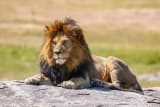 LionPanthera leoAt 92 zoos · Vulnerable
 African Spurred TortoiseCentrochelys sulcataAt 69 zoos · Endangered
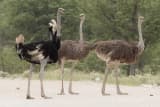 OstrichStruthio camelusAt 59 zoos · Least Concern
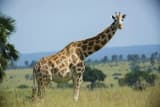 GiraffeGiraffa camelopardalisAt 57 zoos · Near Threatened
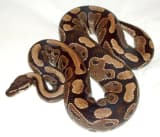 Ball PythonPython regiusAt 50 zoos · Near Threatened
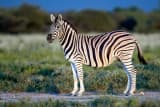 ZebraEquus quaggaAt 48 zoos
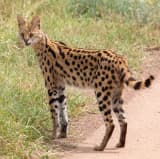 ServalLeptailurus servalAt 42 zoos · Least Concern
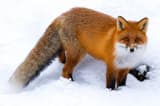 Red FoxVulpes vulpesAt 41 zoos · Least Concern
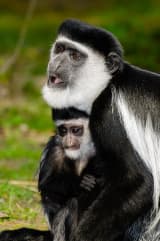 Black-and-white ColobusColobus guerezaAt 39 zoos · Least Concern
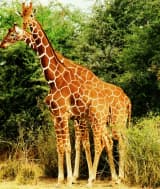 Reticulated giraffeGiraffa reticulataAt 39 zoos · Endangered
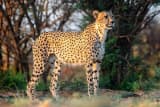 CheetahAcinonyx jubatusAt 38 zoos · Vulnerable
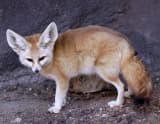 Fennec FoxVulpes zerdaAt 38 zoos · Least Concern
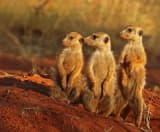 MeerkatSuricata suricattaAt 37 zoos · Least Concern
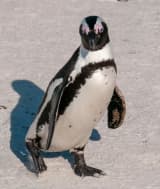 African penguinSpheniscus demersusAt 35 zoos · Critically Endangered
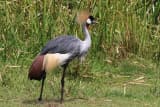 Grey Crowned CraneBalearica regulorumAt 32 zoos · Endangered
 African Wild DogLycaon pictusAt 31 zoos · Endangered
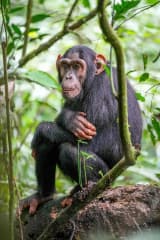 ChimpanzeePan troglodytesAt 29 zoos · Endangered
 African Crested PorcupineHystrix cristataAt 27 zoos · Least Concern
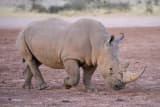 White RhinocerosCeratotherium simumAt 26 zoos · Near Threatened
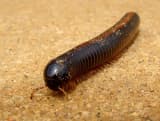 Giant African MillipedeArchispirostreptus gigasAt 25 zoos · Least Concern
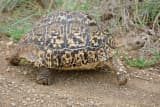 Leopard TortoiseStigmochelys pardalisAt 24 zoos · Least Concern
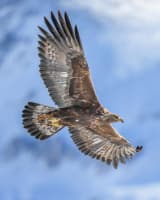 Golden EagleAquila chrysaetosAt 23 zoos · Least Concern
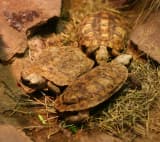 Pancake TortoiseMalacochersus tornieriAt 23 zoos · Critically Endangered
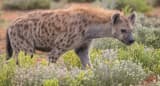 Spotted HyenaCrocuta crocutaAt 22 zoos · Least Concern
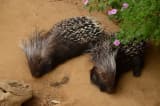 Cape PorcupineHystrix africaeaustralisAt 21 zoos · Least Concern
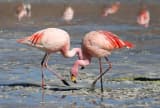 FlamingoPhoenicopteridaeAt 21 zoos
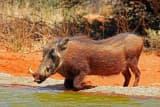 WarthogPhacochoerus africanusAt 21 zoos · Least Concern
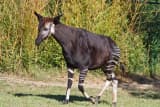 OkapiOkapia johnstoniAt 20 zoos · Endangered
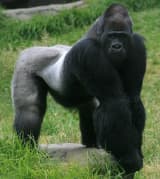 GorillaGorilla gorillaAt 19 zoos · Critically Endangered
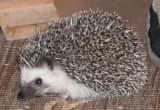 HedgehogAtelerix albiventrisAt 19 zoos · Least Concern
 Southern Ground HornbillBucorvus leadbeateriAt 18 zoos · Vulnerable
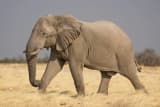 African ElephantLoxodonta africanaAt 17 zoos · Endangered
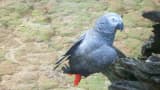 African Grey ParrotPsittacus erithacusAt 17 zoos · Endangered
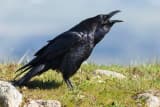 Common RavenCorvus coraxAt 17 zoos · Least Concern
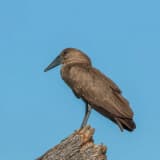 HamerkopScopus umbrettaAt 17 zoos · Least Concern
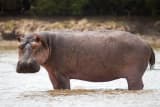 HippopotamusHippopotamus amphibiusAt 17 zoos · Vulnerable
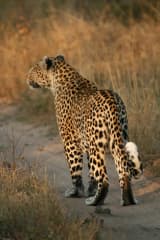 LeopardPanthera pardusAt 17 zoos · Vulnerable
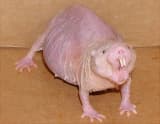 Naked Mole-ratHeterocephalus glaberAt 17 zoos · Least Concern
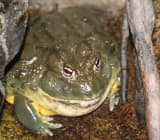 African BullfrogPyxicephalus adspersusAt 16 zoos · Least Concern
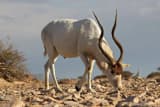 AddaxAddax nasomaculatusAt 15 zoos · Critically Endangered
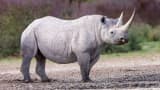 Black RhinocerosDiceros bicornisAt 15 zoos · Critically Endangered
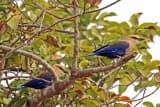 Blue-bellied RollerCoracias cyanogasterAt 15 zoos · Least Concern
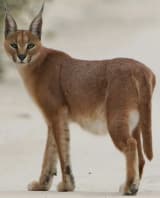 CaracalCaracal caracalAt 15 zoos · Least Concern
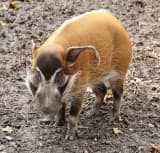 Red River HogPotamochoerus porcusAt 15 zoos · Least Concern
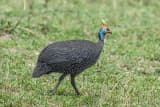 Helmeted GuineafowlNumida meleagrisAt 14 zoos · Least Concern
 Kenyan Sand BoaEryx colubrinusAt 14 zoos · Least Concern
 Taveta Golden WeaverPloceus castaneicepsAt 14 zoos · Least Concern
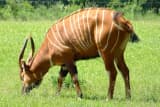 BongoTragelaphus eurycerusAt 13 zoos · Near Threatened
More animals in this collection, A–Z
- AardvarkOrycteropus afer
- African Pygmy GooseNettapus auritus
- African SpoonbillPlatalea alba
- Allen's Swamp MonkeyAllenopithecus nigroviridis
- AoudadAmmotragus lervia
- Bat-eared FoxOtocyon megalotis
- Black Crowned CraneBalearica pavonina
- Black-crowned Night HeronNycticorax nycticorax
- Blue CraneGrus paradisea
- Blue DuikerPhilantomba monticola
- BonoboPan paniscus
- BontebokDamaliscus pygargus pygargus
- Cape Thick-kneeBurhinus capensis
- Cattle EgretBubulcus ibis
- CichlidCichlidae
- Common ElandTaurotragus oryx
- Crested GuineafowlGuttera pucherani
- De Brazza's MonkeyCercopithecus neglectus
- Demoiselle CraneAnthropoides virgo
- Dwarf MongooseHelogale parvula
- Egyptian TortoiseTestudo kleinmanni
- ElephantElephantidae
- Emperor ScorpionPandinus imperator
- FalconFalconidae
- FoxVulpes
- Gaboon ViperBitis gabonica
- Golden-breasted StarlingLamprotornis regius
- Greater KuduTragelaphus strepsiceros
- Hadada IbisBostrychia hagedash
- Hamadryas BaboonPapio hamadryas
- Honey BeeApis mellifera
- HornbillBucerotidae
- ImpalaAepyceros melampus
- KlipspringerOreotragus oreotragus
- Kori BustardArdeotis kori
- Lappet-faced VultureTorgos tracheliotos
- Lesser FlamingoPhoeniconaias minor
- MallardAnas platyrhynchos
- MandrillMandrillus sphinx
- Marabou StorkLeptoptilos crumenifer
- Marbled TealMarmaronetta angustirostris
- Northern Bald IbisGeronticus eremita
- Northern ShovelerSpatula clypeata
- NyalaTragelaphus angasii
- OtterLutrinae
- Patas MonkeyErythrocebus patas
- PenguinSpheniscidae
- Peregrine FalconFalco peregrinus
- PorcupineHystricidae
- Pygmy HippopotamusChoeropsis liberiensis
- Red-billed HornbillTockus erythrorhynchus
- RhinocerosRhinocerotidae
- Ring-necked DoveStreptopelia capicola
- Rock HyraxProcavia capensis
- Ross's TuracoMusophaga rossae
- Ruppell's Griffon VultureGyps rueppelli
- Sacred IbisThreskiornis aethiopicus
- Saddle-billed StorkEphippiorhynchus senegalensis
- Sand CatFelis margarita
- Scimitar-horned OryxOryx dammah
- Silvery-cheeked HornbillBycanistes brevis
- SitatungaTragelaphus spekii
- Somali Wild AssEquus africanus somaliensis
- Speckled MousebirdColius striatus
- Spur-winged LapwingVanellus spinosus
- Straw-colored Fruit BatEidolon helvum
- Superb StarlingLamprotornis superbus
- TarantulaTheraphosidae
- Trumpeter HornbillBycanistes bucinator
- UromastyxUromastyx
- Violet TuracoMusophaga violacea
- Von der Decken's HornbillTockus deckeni
- WaterbuckKobus ellipsiprymnus
- Wattled CraneBugeranus carunculatus
- West African Dwarf CrocodileOsteolaemus tetraspis
- White StorkCiconia ciconia
- White-faced Whistling DuckDendrocygna viduata
- White-headed Buffalo WeaverDinemellia dinemelli
- WildebeestConnochaetes taurinus
Why Africa's wildlife is so rich
Africa straddles the equator and lies almost entirely within the tropics, which favors both variety and abundance of wildlife. Its tropical position also spared it from Pleistocene glaciations, and the continent shows much less evidence of loss in the Pleistocene megafaunal extinction. One suggested reason is that its large animals evolved alongside early humans and had time to develop defenses.
Long isolation after the breakup of Gondwana left Africa with lineages found nowhere else. Three mammal orders are endemic, including the Tubulidentata, whose only living member is the aardvark. Despite its pig-like snout, the aardvark's closest relatives are elephant shrews, tenrecs and golden moles in the group Afrotheria. Africa also has a longer list of hoofed mammals than any other continent and the largest number of living bovids, from duikers and impala to wildebeest and the eland.
Savanna, rainforest and desert
The East African plains are famous for their diversity of large mammals. Dry grasslands hide less obvious residents too: the naked mole-rat lives underground in colonies with breeding and non-breeding castes, a system otherwise associated with ants and termites, and it can live more than 37 years.
Central Africa's forests hold a different cast. The okapi, whose striped legs suggest a zebra, is actually the giraffe's only living relative and lives in the canopy forest of the northeast Democratic Republic of the Congo. All four of Africa's great apes are endemic to the continent: two gorillas, the chimpanzee and the bonobo. Today's forest fauna has a double origin, descended partly from ancient forest species and partly from steppe animals that adapted to forest life.
Birds and fish
More than 2,600 bird species live in Africa at least part of the year. Ostriches, guineafowl and mousebirds belong to families found only in the Afrotropics. The ostrich is the largest living bird, and the helmeted guineafowl is the best-known member of its family. Africa is also the main winter destination for Palearctic birds: of the species that leave temperate Europe and Asia for winter, 98 percent fly south to Africa.
Africa is the richest continent for freshwater fish, with about 3,000 species. The East African Great Lakes hold more than two-thirds of the world's estimated 2,000 cichlid species.
Animals under pressure
Several of the continent's best-known animals are in steep decline. The black rhinoceros is Critically Endangered, with poaching and habitat loss the main threats and three subspecies already declared extinct. The African penguin was reclassified as Critically Endangered in 2023, hit by overfishing of the sardines and anchovies it eats, habitat loss, climate change and oil spills. The okapi faces logging, bushmeat hunting, illegal mining and armed groups that block conservation work.
Recovery is possible. The scimitar-horned oryx was declared extinct in the wild in 2000, survived in captive-breeding programs, and returned to Endangered in 2023 after a reintroduction in Chad. Amphibians are also at risk: an IUCN-led assessment found that only about half of Afrotropical amphibians are of least concern.
Common questions
What animals are native to Africa?
Africa is home to lions, leopards, cheetahs, giraffes, zebras, hippopotamuses, rhinoceroses, elephants and many kinds of antelope, along with more than 1,100 mammal species and more than 2,600 bird species in all.
What animals are found only in Africa?
Four great ape species, the western and eastern gorillas, the chimpanzee and the bonobo, are endemic to Africa. So are three whole orders of mammals, including the aardvark, and bird families such as the ostriches, guineafowl and mousebirds.
What is the largest animal in Africa?
The African bush elephant is the continent's biggest mammal, with bulls standing 3.04 to 3.36 m (10 to 11 ft) at the shoulder; the smaller African forest elephant is second. The common ostrich, also African, is the largest living bird.
Are there penguins in Africa?
Yes. The African penguin lives on the coasts and offshore islands of South Africa and Namibia and is the only penguin species in Africa. It is now listed as Critically Endangered.
What is the difference between a black rhino and a white rhino?
The clearest difference is the lip, not the color. The black rhinoceros has a pointed, hooked lip for browsing leaves and twigs, while the white rhinoceros has a square lip for grazing grass.
Which African animals are most endangered?
Species listed as Critically Endangered include the black rhinoceros, the African penguin and the western gorilla. The scimitar-horned oryx was declared extinct in the wild in 2000 and was moved back to Endangered in 2023 after a reintroduced herd took hold in Chad.
Sources
Last reviewed