- Where to see one
- 4 U.S. zoos in our directory hold falcon, confirmed against each zoo's own animal list.
- Native range
- All continents except Antarctica
- Size
- From about 15–24 cm (5.9–9.4 in) in the Seychelles kestrel, the smallest falcon, to up to 65 cm (26 in) in the gyrfalcon, the largest
Conservation status
Not Evaluated
This species has not been assessed for the IUCN Red List, so it sits outside the threat scale entirely.
Varies by species; assessed one species at a time on the IUCN Red List
About the falcon
Falcons are birds of prey in the genus Falco, a group of roughly 40 species found on every continent except Antarctica. The genus was formally described in 1758 by Carl Linnaeus, who took the name from the Latin falx, meaning "sickle," a reference to the shape of the birds' claws. Falcons belong to the family Falconidae, which also includes caracaras and a handful of other species sometimes loosely called falcons, but true falcons are not closely related to hawks and eagles at all. Genetically, they sit in a different branch of the bird family tree entirely — a group called Australaves whose nearest relatives are, somewhat surprisingly, parrots and songbirds.
The clearest anatomical difference between falcons and hawk-like raptors is how they kill. Falcons use their beaks, equipped with a notched "tomial tooth" on the side of the bill, while hawks, eagles, and other members of the unrelated family Accipitridae rely on their feet and talons. Adult falcons have thin, tapered wings built for speed and quick changes in direction; young falcons in their first year of flying have longer flight feathers that make them fly more like a general-purpose bird while they build the aerial skills adults use to hunt. As with many birds of prey, female falcons are typically larger than males, a pattern that lets a mated pair take a wider range of prey sizes between them. Falcons also have exceptional eyesight — the visual acuity of one species has been measured at 2.6 times that of human eyes — and they are extraordinarily fast in flight. Peregrine falcons have been recorded diving at up to 320 km/h (200 mph), with the fastest recorded dive reaching a vertical speed of 390 km/h (240 mph), making them the fastest-moving animals on Earth.
Behavior and diet
Diet
Varies by group — insects, small vertebrates, birds, and other terrestrial prey
Falcons are generally grouped into three or four loose categories based on size, coloring, and diet. Kestrels are usually small, stocky, and mainly brown above; they feed chiefly on terrestrial vertebrates and invertebrates of a suitable size, such as rodents, reptiles, and insects, and some species hover in place while hunting. A second group, the hobbies, are somewhat larger, marked by dark slate-gray plumage and a black patch near the cheek, and they feed mainly on smaller birds caught on the wing. The third group centers on the peregrine falcon and its relatives — powerful, medium-sized birds, often gray with barred undersides, that hunt mid-sized birds and other terrestrial vertebrates at high speed. Closely related to this group are the hierofalcons, four or so species with more reddish or brown tones and hawk-like patterning on their undersides.
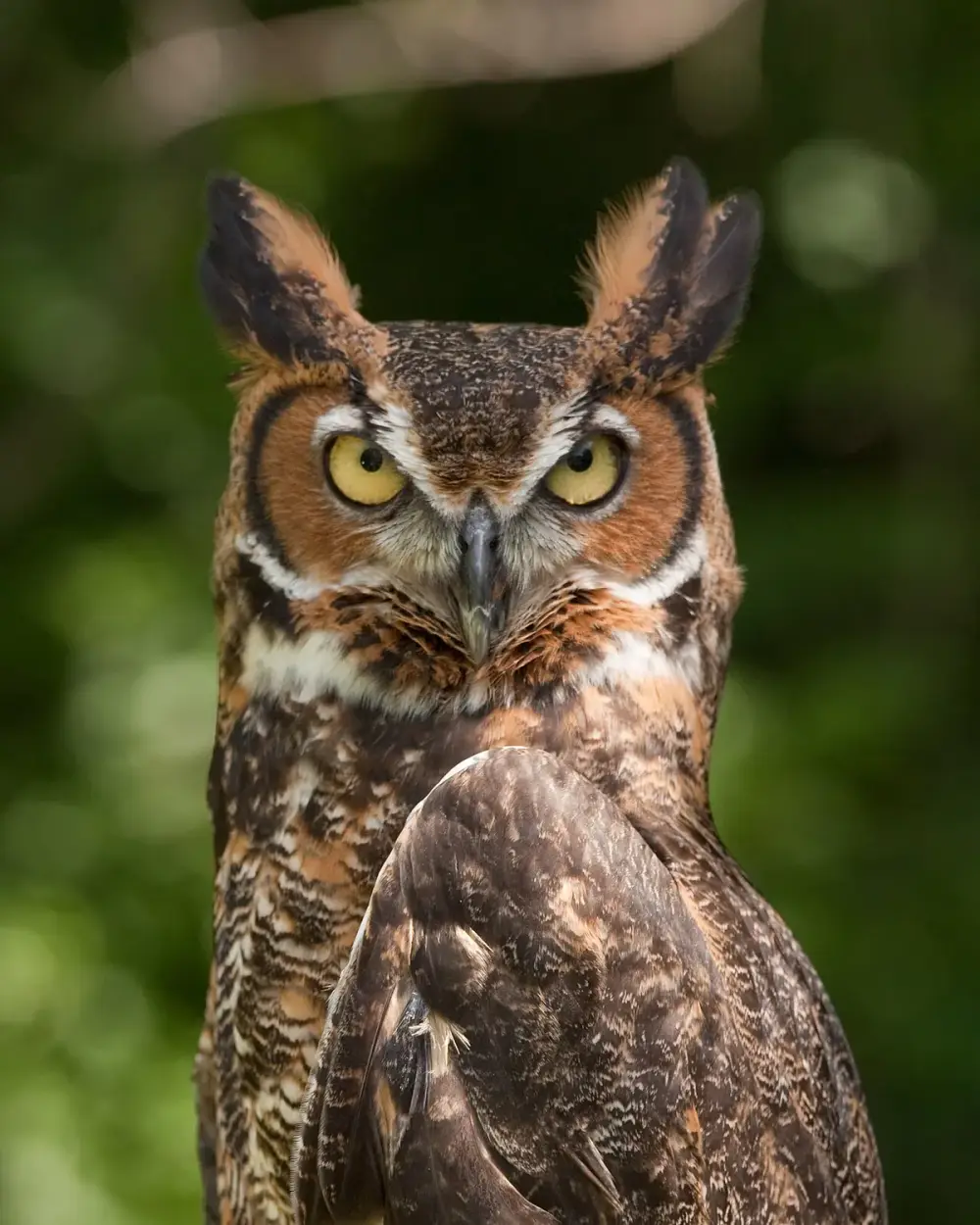
Male falcons are traditionally called tercels, from a Latin word for "third," reflecting an old belief that only one in three eggs in a nest would hatch a male; a young falcon still in its downy stage is called an eyas. The practice of hunting with trained falcons, falconry, has given the language several of these specialized terms. Falcons are not closely related to owls or hawks in behavior any more than in ancestry, and their hunting style — precision strikes at speed, delivered with the beak rather than the feet — sets their whole approach to catching prey apart from other raptors of similar size.
Range and habitat
Falcons are found on every continent except Antarctica, though closely related raptors did live there during the Eocene, tens of millions of years ago. Given the distribution of fossil and living Falco species, researchers believe falcons probably originated in North America, Africa, or possibly the Middle East or Europe. The oldest known falconid fossil is estimated at about 55 million years old, and one or more falcon lineages had reached North America by the Early Pliocene. From there, falcon groups spread and diversified across multiple continents, with different lineages — kestrels, hobbies, and the larger peregrine and hierofalcon groups — settling into distinct regions and habitats worldwide.
Conservation status
Falcons have no single conservation status, because the IUCN Red List assesses each of the roughly 40 species separately. Widespread species such as the peregrine falcon and the American kestrel are listed as Least Concern.
At least one falcon is already gone. The Réunion kestrel (Falco duboisi), known from the island of Réunion in the Indian Ocean, went extinct around 1700.
Where to see falcon in the U.S.
4 zoos across 2 states
Find the closest one
Rank the 4 zoos holding falcon by how far they are from you. Your location is used in your browser to sort this list and is never sent to us.
Alaska· 2
Massachusetts· 2
AZAThe Association of Zoos and Aquariums. Accredited members have passed an independent inspection of animal care and welfare, safety, conservation and education, repeated every five years. Many smaller facilities never apply, so “not accredited” isn't a verdict on its own. What accreditation means · How we check this
Built from each zoo's own published animal list.
Falcon: common questions
Are falcons endangered?
It depends on the species, since the IUCN assesses each of the roughly 40 falcons separately. Widespread species such as the peregrine falcon and American kestrel are Least Concern, while the Réunion kestrel went extinct around 1700.
How big does a falcon get?
Size varies widely by species. The Seychelles kestrel, the smallest falcon, measures about 15–24 cm (5.9–9.4 in), while the gyrfalcon, the largest, reaches up to 65 cm (26 in).
What does a falcon eat?
Diet depends on the group: kestrels take rodents, reptiles, and insects; hobbies feed mainly on smaller birds; and the peregrine falcon group hunts mid-sized birds and other terrestrial vertebrates, often at high speed.
Where do falcons live in the wild?
Falcons are found on every continent except Antarctica. Different groups — kestrels, hobbies, and the peregrine and hierofalcon lineages — are distributed across different regions worldwide.
Which U.S. zoos have falcons?
Five U.S. zoos list falcons, including the Alaska Raptor Center and Alaska Zoo in Alaska, and Franklin Park Zoo in Massachusetts.