
Animals of Madagascar & the Indian Ocean islands in U.S. zoos
Madagascar's wildlife has evolved in isolation since the island split from India about 88 million years ago, and roughly 90 percent of its plant and animal species, including the lemurs and the cat-like fossa, live nowhere else. Nearby Indian Ocean islands have their own native animals, such as the Aldabra tortoise of the Seychelles and the Rodrigues flying fox.
Most widely held
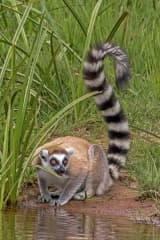 Ring-tailed LemurLemur cattaAt 118 zoos · Endangered
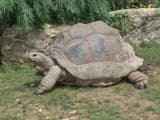 Aldabra TortoiseAldabrachelys giganteaAt 51 zoos · Vulnerable
 Madagascar Hissing CockroachGromphadorhina portentosaAt 50 zoos
 Black-and-white Ruffed LemurVarecia variegataAt 45 zoos · Critically Endangered
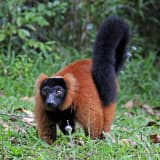 Red Ruffed LemurVarecia rubraAt 37 zoos · Critically Endangered
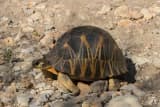 Radiated TortoiseAstrochelys radiataAt 27 zoos · Critically Endangered
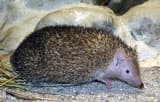 Lesser Hedgehog TenrecEchinops telfairiAt 20 zoos · Least Concern
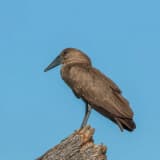 HamerkopScopus umbrettaAt 17 zoos · Least Concern
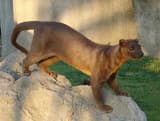 FossaCryptoprocta feroxAt 11 zoos · Vulnerable
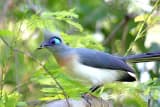 Crested CouaCoua cristataAt 10 zoos · Least Concern
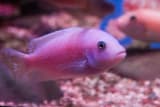 CichlidCichlidaeAt 9 zoos
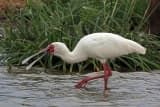 African SpoonbillPlatalea albaAt 8 zoos · Least Concern
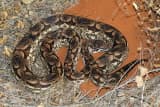 Dumeril's BoaAcrantophis dumeriliAt 8 zoos · Least Concern
 Henkel's Leaf-tailed GeckoUroplatus henkeliAt 8 zoos · Vulnerable
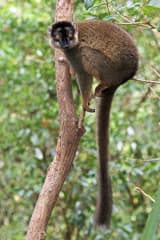 Brown LemurEulemur fulvusAt 7 zoos · Vulnerable
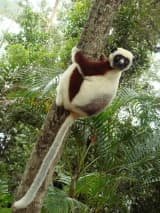 Coquerel's SifakaPropithecus coquereliAt 7 zoos · Critically Endangered
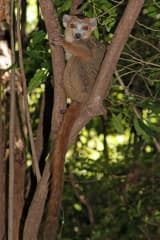 Crowned LemurEulemur coronatusAt 7 zoos · Endangered
 Madagascar Giant Day GeckoPhelsuma grandisAt 7 zoos · Least Concern
 Mongoose LemurEulemur mongozAt 7 zoos · Critically Endangered
- Tomato FrogDyscophus antongiliiAt 7 zoos · Least Concern
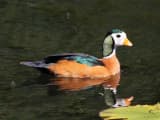 African Pygmy GooseNettapus auritusAt 6 zoos · Least Concern
 Madagascar Giant Hognose SnakeLeioheterodon madagascariensisAt 6 zoos · Least Concern
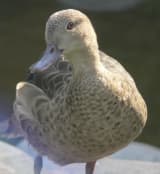 Madagascar TealAnas bernieriAt 6 zoos · Endangered
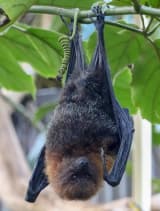 Rodrigues Flying FoxPteropus rodricensisAt 6 zoos · Endangered
An island that evolved on its own
About 135 million years ago, the breakup of Gondwana split a landmass made of Madagascar, Antarctica and India away from Africa and South America. Madagascar then separated from India about 88 million years ago. Since then its plants and animals have evolved in relative isolation, which is why some ecologists call it the "eighth continent" and why Conservation International counts it as a biodiversity hotspot.
Many groups common on the African mainland never arrived. All of the island's native land mammals that cannot fly descend from ancestors that crossed the sea by rafting or swimming, likely helped by currents. With no monkeys to compete with, lemurs spread into almost every habitat and split into more than 100 species. The ring-tailed lemur is the living lemur best adapted to moving on the ground, while Coquerel's sifaka can leap up to 11 m (35 ft) between trees.
The nearby islands of the western Indian Ocean have their own animals. The Aldabra tortoise is native to Aldabra atoll and other islands of the Seychelles, and the Rodrigues flying fox lives only on Rodrigues, a small island belonging to Mauritius. The mongoose lemur is one of only two lemur species found outside Madagascar, on the Comoro Islands of Mohéli and Anjouan, where it was introduced.
Lookalikes that are something else
Isolation produced animals that resemble mainland species without being related to them. The fossa looks like a small cougar, but it belongs to Eupleridae, a family made up entirely of Madagascar's native carnivores, all descended from one ancestor. It climbs head-first down tree trunks on unusually flexible ankles. The lesser hedgehog tenrec is covered in spines like a hedgehog, yet it sits in an entirely different family, Tenrecidae.
Reptiles and invertebrates are just as distinctive. More than 90 percent of the island's reptiles are endemic, and two-thirds of the world's chameleon species live there. Henkel's leaf-tailed gecko has a flattened tail that gives its genus, Uroplatus, its name, and the wingless Madagascar hissing cockroach defends itself by forcing air out through breathing holes to hiss.
Rainforest, dry forest and spiny forest
The humid east was once covered in rainforest. The red ruffed lemur lives only in the rainforests of the Masoala Peninsula in the northeast. The west holds dry deciduous forest with baobabs and tamarinds, home to Coquerel's sifaka in the northwest, and the southwest has spiny forest found nowhere else. The radiated tortoise grazes the dry brush and thorn forest of the south, and the Madagascar teal depends on mangroves along the west coast. Grassland now dominates the central plateau, which was once largely forested.
Forest loss and hunting
Since people arrived about 2,350 years ago, Madagascar has lost more than 90 percent of its original forest. Slash-and-burn farming known as tavy, larger cattle herds, charcoal for cooking and coffee growing all played a part. Illegal logging of precious woods inside protected forests continues. Rosewood logging has intensified since 2009 and has eaten into the red ruffed lemur's small range.
Hunting and trade add to the damage. Elephant birds and numerous giant lemurs vanished after humans arrived. A 2012 assessment found 90 percent of lemur species threatened, the highest share of any mammal group. The radiated tortoise is Critically Endangered, and in 2018 more than 10,000 of these tortoises were found in a single house in Toliara. Several of these animals are managed in zoos through Species Survival Plan breeding programs, including the red ruffed lemur and the radiated tortoise. Their wild status is tracked on the IUCN Red List.
Common questions
What animals live only in Madagascar?
Lemurs, the fossa, many of the island's birds and nearly all of its reptiles are found nowhere else. About 90 percent of all plant and animal species in Madagascar are endemic, and more than 90 percent of its reptiles are.
Why does Madagascar have so many unique animals?
Because it has been cut off from other land for a very long time. Madagascar split from India about 88 million years ago, and all of its native land mammals that cannot fly descend from ancestors that rafted or swam over from Africa.
Are there monkeys in Madagascar?
No, Madagascar has no native monkeys. In their absence, lemurs adapted to a wide range of habitats and split into more than 100 species.
Are all lemurs endangered?
Nearly all of them are at risk. A 2012 assessment found 90 percent of lemur species threatened with extinction, the highest proportion of any mammal group, and at least 17 lemur species have died out since people reached the island.
Is the fossa a cat?
No. Despite looking like a small cougar, the fossa belongs to Eupleridae, a family made up entirely of Madagascar's native carnivores, all descended from a single ancestor that reached the island.
What is the biggest threat to Madagascar's wildlife?
Habitat loss. Madagascar has lost more than 90 percent of its original forest since humans arrived about 2,350 years ago, mainly to slash-and-burn farming, cattle grazing and charcoal making, and hunting adds to the pressure.
Sources
Last reviewed