
Ocean animals in U.S. zoos and aquariums
Ocean animals are species whose native home is salt water, from coral reefs and seagrass beds to cold coastal seas. More than 242,000 marine species had been documented by 2023, and the ocean provides about 90% of Earth's living space by volume. They range from jellyfish and reef fish to rays, seals, sea lions and penguins.
Most widely held
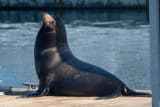 California Sea LionZalophus californianusAt 18 zoos · Least Concern
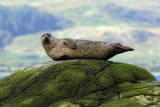 Harbor SealPhoca vitulinaAt 15 zoos · Least Concern
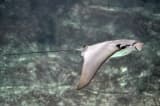 Cownose RayRhinoptera bonasusAt 13 zoos · Vulnerable
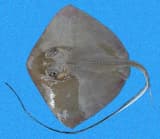 Southern StingrayHypanus americanusAt 10 zoos · Near Threatened
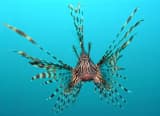 LionfishPterois volitansAt 8 zoos · Least Concern
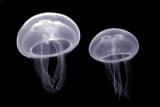 Moon JellyAurelia auritaAt 8 zoos
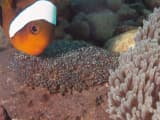 ClownfishAmphiprion ocellarisAt 7 zoos · Least Concern
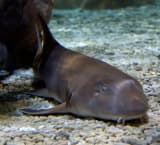 Bamboo SharkChiloscyllium punctatumAt 6 zoos · Near Threatened
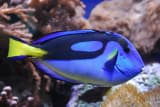 Blue TangParacanthurus hepatusAt 6 zoos · Least Concern
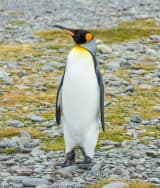 King PenguinAptenodytes patagonicusAt 6 zoos · Least Concern
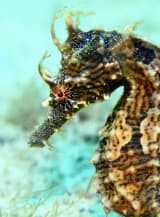 Lined SeahorseHippocampus erectusAt 6 zoos · Vulnerable
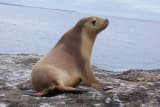 Sea LionOtariidaeAt 6 zoos
 White-spotted Bamboo SharkChiloscyllium plagiosumAt 6 zoos · Near Threatened
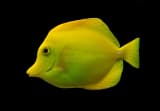 Yellow TangZebrasoma flavescensAt 6 zoos · Least Concern
Life in salt water
By volume, the oceans provide about 90% of the living space on Earth. Marine life spans everything from microscopic plankton to whales 33 m (108 ft) long, and new species are still being described at a rate of about 2,300 a year.
Ocean animals live in very different ways. Some, like the moon jelly, spend their adult lives drifting with the current in coastal waters. Others, like the harbor seal and the king penguin, hunt at sea but come ashore to rest and breed.
The main ocean habitats
Coral reefs are among Earth's most diverse ecosystems. They cover less than 0.1% of the ocean's area, about half the size of France, yet shelter at least a quarter of all marine species. The clownfish lives among the stinging tentacles of host sea anemones on Indo-Pacific reefs, while the blue tang prefers exposed outer reefs and channels with strong currents.
Shallow coastal waters are just as important. The lined seahorse grips seagrass, floating seaweed and mangrove roots from Nova Scotia's southern waters to Venezuela. The cownose ray moves through estuaries such as the Chesapeake Bay in summer, and the southern stingray can keep breathing while lying flat on the sea floor or half-buried in sediment.
Cooler coastal and subantarctic seas are home to seals, sea lions and penguins. Marine mammals are an informal group united only by their reliance on the ocean. Seals and sea lions are semiaquatic: they spend most of their time in water but return to land to mate, breed and molt. The California sea lion is an eared seal with visible ear flaps and large front flippers, while the harbor seal is a true seal with no external ears.
Pressures on marine life
Commercial hunting drove several marine mammals to extinction, including the Steller's sea cow and the Japanese sea lion. After hunting ended, some species recovered, but about 23% of marine mammal species are still threatened today, meaning they fall in one of the three threatened categories of the IUCN Red List. Bycatch in fishing nets, ship strikes, pollution and underwater noise all add pressure. Some harbor seal populations, for example, have been reduced by disease and conflict with people.
Coral reefs are in steep decline. Shallow tropical reefs have declined by 50% since 1950, threatened by warming and acidifying water, excess nutrients, overfishing and harmful land use, including polluted runoff. Rising sea temperatures cause coral bleaching, which can kill the coral if conditions don't improve.
Fishing pressure reaches beyond reefs. Overfishing drove the cownose ray onto the IUCN list as Vulnerable in 2019, and because it matures late, its numbers recover slowly. Invasive species are a growing problem too: the red lionfish, native to the Indo-Pacific, became invasive along the U.S. East Coast and across the Caribbean after aquarium fish were released.
Common questions
How many marine species are there?
More than 242,000 marine species had been documented as of 2023, and perhaps two million more are yet to be described. Researchers name about 2,300 new marine species each year.
Why are coral reefs called the rainforests of the sea?
Because they are among Earth's most diverse ecosystems. Shallow coral reefs cover less than 0.1% of the ocean's area but are home to at least 25% of all marine species.
What is the difference between a seal and a sea lion?
Sea lions are eared seals, with visible ear flaps and proportionately larger front flippers that they use to propel themselves through the water. True seals, such as the harbor seal, have no visible ear flaps.
Are marine mammals endangered?
Some are. About 23% of marine mammal species are currently threatened. Past commercial hunting drove several to extinction, and bycatch, ship strikes, pollution and habitat degradation threaten them today.
What are the biggest threats to ocean animals?
Overfishing, pollution, warming and acidifying seas, and invasive species are major threats. Shallow tropical coral reefs have declined by 50% since 1950.
Are lionfish native to the Atlantic?
No. The red lionfish is native to the Indo-Pacific. Released from aquariums, it has become invasive along the U.S. East Coast, in the Gulf of Mexico and across the Caribbean.
Sources
Last reviewed