- Where to see one
- 6 U.S. zoos in our directory hold somali wild ass, confirmed against each zoo's own animal list.
- Native range
- Somalia, Somaliland, the southern Red Sea region of Eritrea, and the Afar Region of Ethiopia
- Estimated wild population
- About 600 individuals
Conservation status
IUCN Red List category CR — step 5 of 7.
About the Somali wild ass
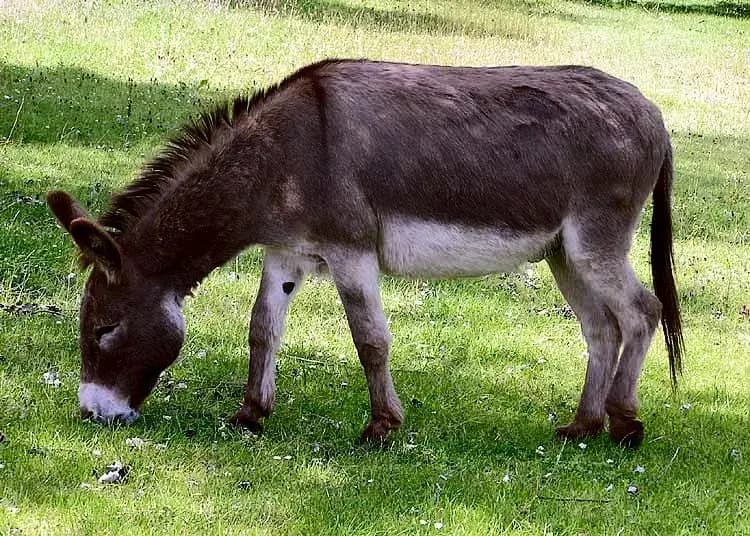
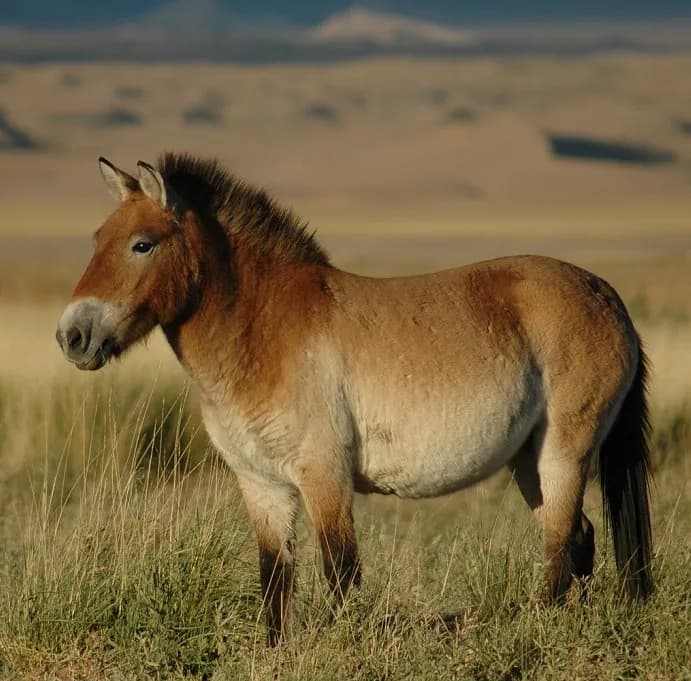
The Somali wild ass is a subspecies of the African wild ass, distinguished by the zebra-like stripes running down its legs. It's one of the rarest large mammals in the world: an estimated 600 individuals remain in the wild, confined to a narrow slice of the Horn of Africa across Somalia, Somaliland, the southern Red Sea region of Eritrea, and Ethiopia's Afar Region. Roughly another 200 live in captivity in zoos worldwide, making the managed population a meaningful share of the animal's total numbers.
The subspecies faces an extremely high risk of extinction in the wild, and the IUCN Red List classifies it as critically endangered. Notably, some domestic donkeys in Italy trace their ancestry to the Somali wild ass dating back to Ancient Rome, in contrast to donkeys elsewhere in Europe, which usually descend from the Nubian wild ass.
Behavior and diet
Diet
Grazing, weaned onto grass in the first weeks of life
Somali wild asses live in what's known as a fission-fusion society, shaped by the limited resources of their arid habitat. Most adults live alone, though small herds of females with their young form at times, and in years or areas with more rainfall and richer resources, individuals will temporarily fuse into larger herds before splitting apart again. Stallions hold territories that can stretch up to nine square miles, marking the boundaries with dung piles they return to repeatedly. Females move freely through a stallion's territory, but stallions will fight off rival males that try to mate with females inside it — though a resident stallion has been observed tolerating other males entering to graze, as long as they show no interest in his harem.
Breeding follows a seasonal pattern typical of equids: Somali wild asses give birth in spring after a gestation of about a year. The foal is standing and moving with its mother within hours of birth, and progresses quickly from there — nibbling grass by around five days old and grazing regularly by two weeks, though it still depends on its mother's milk for hydration at that stage. Full weaning happens at 12 to 14 months, after which the foal still stays close to its mother, wandering off mainly to play or feed alongside other foals in the herd.
Range and habitat
In the wild, the Somali wild ass survives only in a limited stretch of the Horn of Africa: Somalia, Somaliland, the southern Red Sea coastal region of Eritrea, and the Afar Region of Ethiopia. A protected population in Eritrea, supported mainly by Zoo Basel, numbered 47 individuals as of a count before 2014, living in the mountains between the Buri Peninsula and the Dallol Depression near the Ethiopian border. Outside its native range, a protected population also exists at the Yotvata Hai-Bar Nature Reserve in Israel, a reserve established in 1968 specifically to bolster populations of endangered desert species.
Conservation status
The Somali wild ass is listed as critically endangered, facing an extremely high risk of extinction in the wild with only around 600 animals remaining. Zoo Basel in Switzerland leads coordinated breeding efforts, managing the European studbook for the subspecies and coordinating both the European Endangered Species Programme and the global species committee for the Somali wild ass since 2004; the zoo has kept the animals since 1970 and recorded its first birth in 1972, with every Somali wild ass in captivity today descending from that original Basel group. In the United States, six institutions breed the subspecies: Dallas Zoo, Saint Louis Zoo, San Diego Zoo Safari Park, Zoo Miami, Denver Zoo, and White Oak Conservation in Yulee, Florida. The San Diego Zoo Safari Park holds the largest population in North America, with eleven animals descended from a founding herd sent from Basel in 1981; the park has produced 49 foals since its first birth there in 1986. White Oak Conservation received its herd in 2008 as part of an international effort to save the subspecies from extinction and has since produced 18 foals.
Where to see somali wild ass in the U.S.
6 zoos across 4 states
Find the closest one
Rank the 6 zoos holding somali wild ass by how far they are from you. Your location is used in your browser to sort this list and is never sent to us.
California· 2
Massachusetts· 2
Missouri· 1
Wisconsin· 1
AZAThe Association of Zoos and Aquariums. Accredited members have passed an independent inspection of animal care and welfare, safety, conservation and education, repeated every five years. Many smaller facilities never apply, so “not accredited” isn't a verdict on its own. What accreditation means · How we check this
Built from each zoo's own published animal list.
Somali Wild Ass: common questions
Is the Somali wild ass endangered?
Yes — it's listed as critically endangered, with an estimated 600 individuals left in the wild.
Where do Somali wild asses live in the wild?
In Somalia, Somaliland, the southern Red Sea region of Eritrea, and Ethiopia's Afar Region.
What does a Somali wild ass eat?
It grazes on grass; foals begin nibbling grass within days of birth and are grazing regularly by two weeks old.
How are zoos helping the Somali wild ass?
Zoo Basel in Switzerland manages the European breeding program, and in the U.S. six institutions — including the San Diego Zoo Safari Park, Saint Louis Zoo, and Denver Zoo — breed the subspecies as part of a global effort to prevent its extinction.
Which U.S. zoos have Somali wild asses?
Six zoos in our directory list the Somali wild ass, including the San Diego Zoo, San Diego Zoo Safari Park, and Saint Louis Zoo.