
European animals in U.S. zoos
European animals are the wildlife native to Europe, the western part of the Palearctic realm. Lying in the temperate zone, Europe is less species-rich than the tropics but varied, from Arctic tundra and boreal forest to Alpine peaks and the Mediterranean. In many parts of the continent, most large animals and top predators were hunted out.
Most widely held
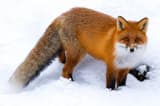 Red FoxVulpes vulpesAt 41 zoos · Least Concern
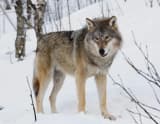 Gray WolfCanis lupusAt 39 zoos · Least Concern
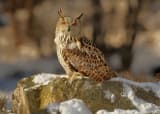 Eurasian Eagle-OwlBubo buboAt 30 zoos · Least Concern
 African Crested PorcupineHystrix cristataAt 27 zoos · Least Concern
 Golden EagleAquila chrysaetosAt 23 zoos · Least Concern
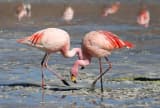 FlamingoPhoenicopteridaeAt 21 zoos
 Fallow DeerDama damaAt 18 zoos · Least Concern
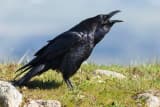 Common RavenCorvus coraxAt 17 zoos · Least Concern
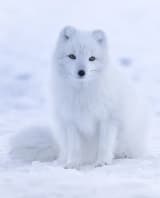 Arctic FoxVulpes lagopusAt 16 zoos · Least Concern
 Brown BearUrsus arctosAt 16 zoos · Least Concern
 Harbor SealPhoca vitulinaAt 15 zoos · Least Concern
 Northern PintailAnas acutaAt 15 zoos · Least Concern
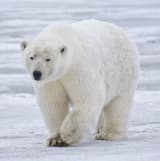 Polar BearUrsus maritimusAt 15 zoos · Vulnerable
 ReindeerRangifer tarandusAt 15 zoos · Vulnerable
 Snowy OwlBubo scandiacusAt 15 zoos · Vulnerable
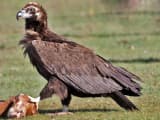 Cinereous VultureAegypius monachusAt 12 zoos · Near Threatened
 European Glass LizardPseudopus apodusAt 12 zoos · Least Concern
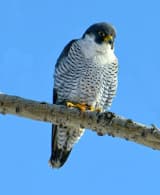 Peregrine FalconFalco peregrinusAt 12 zoos · Least Concern
 PorcupineHystricidaeAt 12 zoos
 Eurasian LynxLynx lynxAt 11 zoos · Least Concern
 OtterLutrinaeAt 11 zoos
 Black-crowned Night HeronNycticorax nycticoraxAt 10 zoos · Least Concern
 Honey BeeApis melliferaAt 10 zoos
 Marbled TealMarmaronetta angustirostrisAt 10 zoos · Near Threatened
 Cattle EgretBubulcus ibisAt 9 zoos · Least Concern
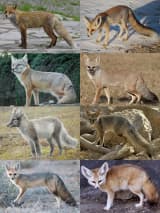 FoxVulpesAt 9 zoos
 White StorkCiconia ciconiaAt 9 zoos · Least Concern
 MallardAnas platyrhynchosAt 8 zoos · Least Concern
 Mute SwanCygnus olorAt 7 zoos · Least Concern
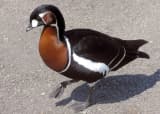 Red-breasted GooseBranta ruficollisAt 7 zoos · Vulnerable
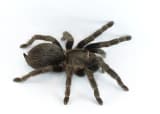 TarantulaTheraphosidaeAt 7 zoos
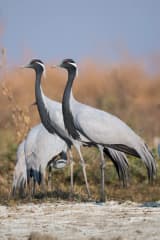 Demoiselle CraneAnthropoides virgoAt 6 zoos · Least Concern
 Northern ShovelerSpatula clypeataAt 6 zoos · Least Concern
 WolverineGulo guloAt 6 zoos · Least Concern
 FalconFalconidaeAt 4 zoos
A temperate continent shaped by ice
Europe is the western end of the Palearctic realm, which stretches across temperate Eurasia. Because it lies in the temperate zone, its wildlife is not as rich as that of the tropics, but its many habitats and its links to Asia keep it diverse. Asian animals colonized Europe in large numbers once the continent joined Asia, and many older European lineages, including early primates, died out.
The Pleistocene ice ages pushed animals back and forth. When the last glaciers retreated about 10,000 years ago, brown bears were among the first large mammals to recolonize the land. Today Europe has about 270 mammal species, 78 of them endemic, but no endemic mammal orders.
From tundra to the Mediterranean
Arctic tundra covers the far north of Scandinavia, Svalbard and northernmost Russia. Typical animals there include reindeer, the only deer in which females normally grow antlers, along with the Arctic fox and snowy owl. Farther south, forest once covered 80 to 90 percent of the continent, and boreal and mixed forests still remain. The Eurasian lynx, the largest of the four lynx species, hunts roe deer and hares in these forests and mountains. The wolverine survives in the Scandinavian Mountains.
Mountains are refuges. The Carpathians hold Europe's largest populations of brown bears, wolves and lynxes, and the Pyrenees have endemic species such as the Pyrenean desman. Around the Mediterranean, forests have largely given way to shrublands, and about 90 percent of the region's endemic mammal genera disappeared after farming began. Dry, open hills from the Balkans eastward are home to the legless European glass lizard.
Birds on the move
About 800 bird species are recorded in Europe, 445 of them breeding there. Many are migrants: of the Palearctic breeding birds that leave for the winter, 98 percent fly south to Africa. The white stork breeds across Europe and winters in sub-Saharan Africa or on the Indian subcontinent. The red-breasted goose breeds in Arctic Siberia and winters mostly on farmland near the Black Sea. Large raptors include the Eurasian eagle-owl, one of the world's largest owls, and the cinereous vulture, the largest Old World vulture.
Living alongside people
Europe's animals have lived beside farming peoples for millennia. In many places most large animals and top predators were hunted out, and today's megafauna is much reduced. The main causes of biodiversity loss are intensive agriculture, construction and extractive industries, overexploitation and introduced species. More than a third of Europe's freshwater fish species are at risk of extinction.
Some species are being brought back. The European beaver, hunted almost to extinction, is being reintroduced across the continent, and brown bears were returned to the Pyrenees in 1996. Others remain in trouble: changes in farming and industrialization drove the white stork out of parts of Europe in the 19th and 20th centuries, and the red-breasted goose, Vulnerable on the IUCN Red List, gathers more than 80 percent of its population at just five winter roost sites.
Common questions
What animals are native to Europe?
Native mammals include the brown bear, gray wolf, Eurasian lynx, red fox, wild boar, red and roe deer, moose, reindeer, chamois and European bison (wisent). Birds include the white stork, golden eagle, Eurasian eagle-owl and peregrine falcon.
What is the largest predator in Europe?
The brown bear, followed by the Eurasian wolf. Bears live mainly in the Balkans, Scandinavia and Russia, with small populations elsewhere, and polar bears can be found on Svalbard.
Are there wolves and bears in Europe?
Yes, though Europe's larger carnivores, wolves and bears, are now considered endangered. The Carpathian Mountains hold Europe's largest populations of brown bears, wolves and lynxes.
Are there monkeys in Europe?
Only one primate besides humans lives in Europe: the reintroduced Barbary macaque. In prehistory it was more widespread in southern Europe.
Is the European glass lizard a snake?
No. Despite having no legs, the European glass lizard is a true lizard in the family Anguidae, and at up to about 140 cm (4.6 ft) it is the largest member of that family.
Why has Europe lost so much wildlife?
People have farmed Europe for millennia. Over half of its original forest has been cleared, and intensive agriculture, construction, mining, overexploitation and introduced species are the main causes of biodiversity loss today.
Sources
Last reviewed