- Where to see one
- 7 U.S. zoos in our directory hold tarantula, confirmed against each zoo's own animal list.
- Native range
- The Americas from the United States to South America, Africa, much of Asia, Australia, and parts of southern Europe
- Size
- Body 5–11 cm (2–4.5 in); leg span 8–30 cm (3–12 in)
- Lifespan
- Females 30 to 40 years; males usually live about 18 months after maturing
- Number of species
- About 1,193 in 187 genera
- Venom
- All are venomous, but none is deadly to humans
Conservation status
Not Evaluated
This species has not been assessed for the IUCN Red List, so it sits outside the threat scale entirely.
No single status; the family holds about 1,193 species, each with its own standing
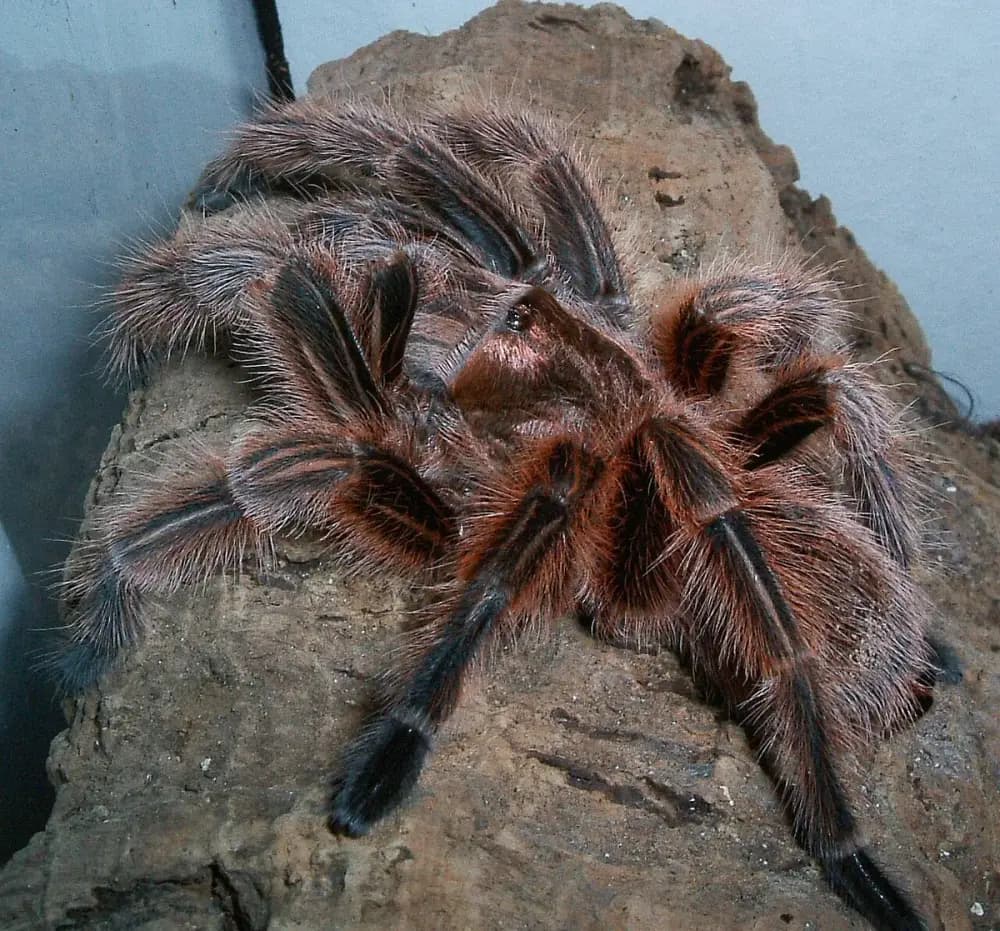
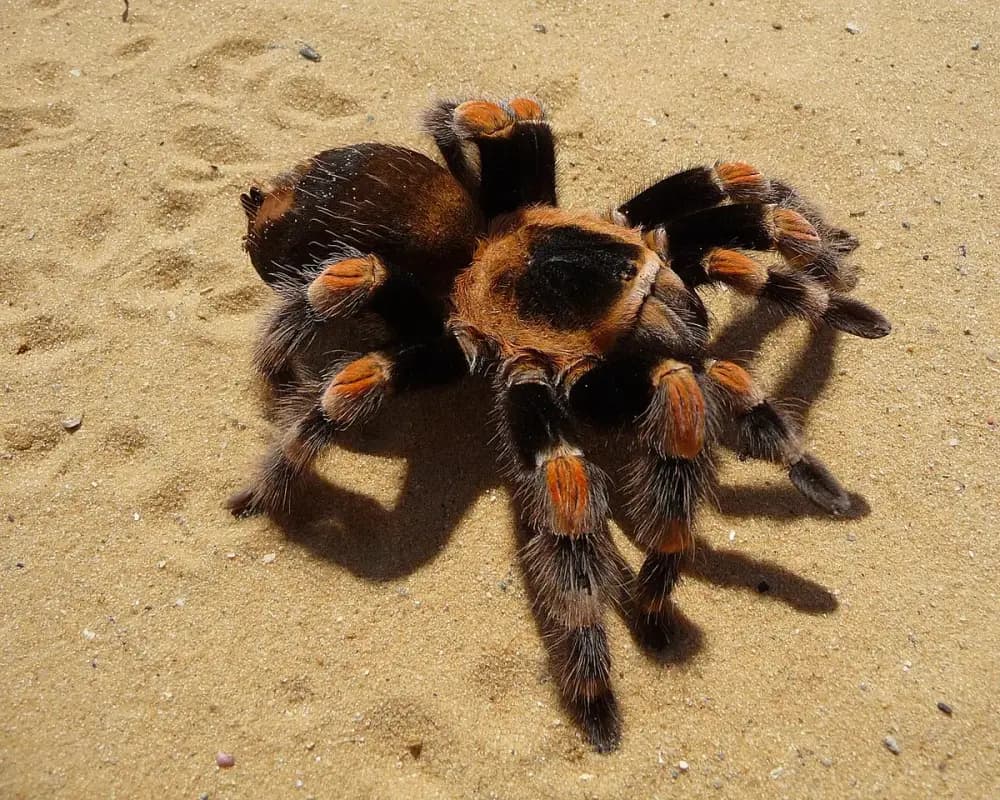
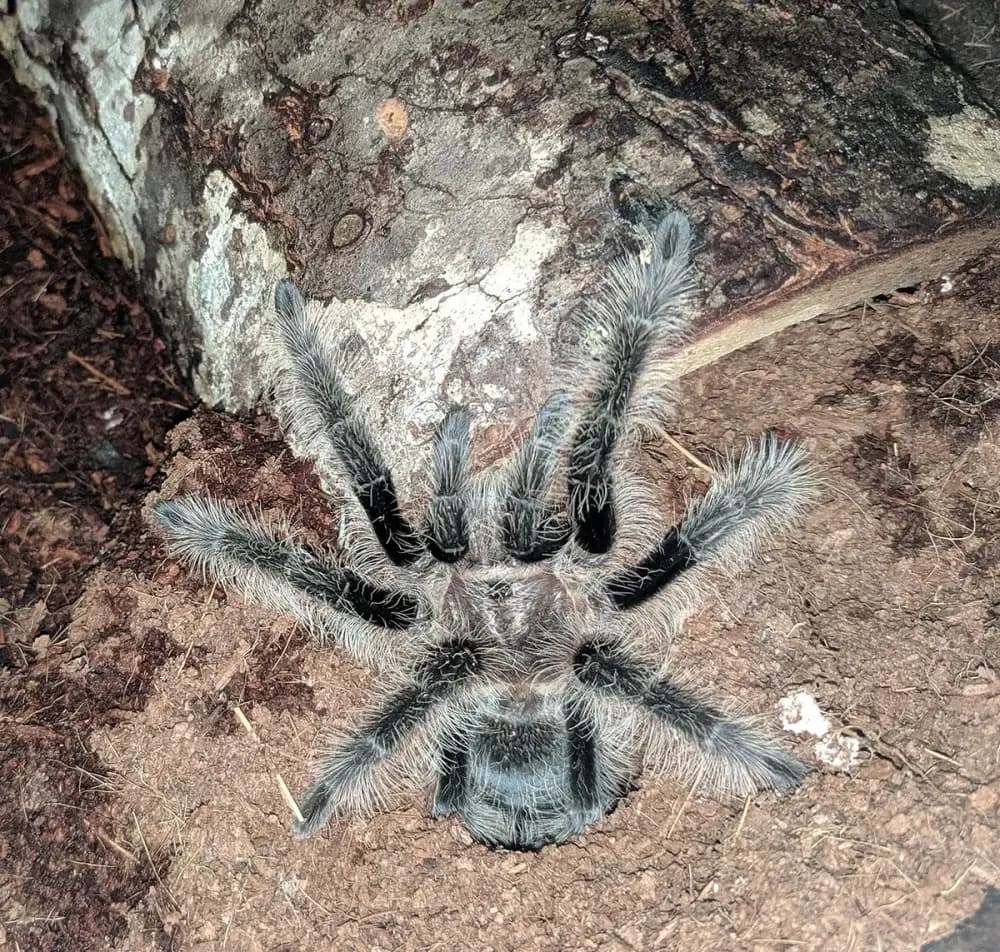
Tarantulas are large and often hairy spiders of the family Theraphosidae, with more than a thousand species in almost 200 genera. Body length ranges from about 5 to 11 cm (2 to 4.5 in), with leg spans of 8 to 30 cm (3 to 12 in). Their habitats include savanna, grassland, rainforest, desert, scrubland, mountains and cloud forest, and many are burrowers that live in the ground. Tarantulas mainly eat large insects and other arthropods, using ambush as their main method of prey capture, and the biggest sometimes take small vertebrates such as lizards, mice and bats. All can produce silk.
About the tarantula
Tarantulas are large, often hairy spiders of the family Theraphosidae, a group of about 1,200 species found across the Americas, Africa, Asia, Australia and southern Europe. They belong to the mygalomorphs, the same spider infraorder as trapdoor and funnel-web spiders. Most live in burrows, hunt by ambush, and are venomous but not deadly to people.
The name has a tangled history. It first belonged to Lycosa tarantula, a wolf spider of Mediterranean Europe named after the Italian town of Taranto. English speakers later applied it to almost any big, unfamiliar ground spider, and it settled on the Theraphosidae even though they are not closely related to wolf spiders at all. Some related spiders, such as purseweb and dwarf tarantulas, are still loosely called tarantulas.
Like other arachnids, a tarantula's body has two main parts: the prosoma, or cephalothorax, and the opisthosoma, or abdomen, joined by a narrow waist. Attached to the front section are eight legs, a pair of leg-like pedipalps used for feeling, gripping prey and, in males, mating, and the chelicerae that carry the fangs. Each leg ends in two or three retractable claws surrounded by a brush of bristles called the scopula, which lets tarantulas grip smooth surfaces, even glass.
Size varies a lot by species. Bodies measure about 5 to 11 cm (2 to 4.5 in) long, with leg spans of 8 to 30 cm (3 to 12 in). The heaviest, the goliath birdeater of Venezuela and Brazil, has been reported at 170 g (6 oz) with a 30 cm (12 in) leg span and fangs up to 4 cm (1.5 in) long. Most North American species are brown, but others elsewhere are cobalt blue, black with white stripes, or a mix of metallic blue legs, orange abdomen and green front body.
Senses and anatomy
A tarantula has eight small eyes, usually in two rows of four, but most can see little beyond light, darkness and movement. Touch is its keenest sense. Its bristles, or setae, pick up vibrations, chemical signals, wind direction and possibly sound, and tarantulas hunt mostly by feeling the movements of prey.
Inside, the design is unusual. Tarantulas breathe with two pairs of book lungs, each made of 15 or more thin folds of tissue stacked like the pages of a book. Their "blood" is hemolymph, which carries oxygen with a copper-based protein. The heart is a long tube along the top of the abdomen, and legs are extended not by muscles but by pumping hemolymph into them.
Behavior and diet
Diet
Large insects, centipedes, millipedes and other spiders; the biggest also take lizards, mice, birds and small snakes
Most tarantulas are ground dwellers that live in burrows, though some genera hunt mainly in trees. All of them make silk. Burrowing species line their tunnels with it to stabilize the walls and make climbing easier, while tree-dwelling species live in silken tube tents. Unlike many spiders, tarantulas do not use webs to catch food; silk serves as building material or as tripwires.
Tarantulas are ambush hunters. They mainly eat large insects and other arthropods, including centipedes, millipedes and other spiders, and the biggest species sometimes kill lizards, mice, bats, birds and small snakes. A tarantula's mouth can only suck, so it coats prey in digestive juices and crushes it to liquid before drinking it in with a muscular sucking stomach. Leftovers are rolled into a small ball and discarded.
Defense
Despite their reputation, tarantulas are prey for many animals. The most specialized enemies are tarantula hawks, large wasps that paralyze a tarantula with a sting, drag it into its burrow and lay an egg on it. Scorpions, giant centipedes, lizards, frogs, birds, snakes and mammals such as coatis, kinkajous, opossums, mongooses and honey badgers also eat them.
Most tarantulas from the Americas defend themselves with urticating hairs, barbed bristles on the abdomen that they flick at an attacker with their back legs. These hairs can be lethal to small animals like rodents and cause itching, rashes and, in rare cases, permanent eye damage in people. Old World tarantulas lack them; they tend to be faster, more nervous and more defensive, and often have stronger venom.
A threatened tarantula may first rear up in a threat posture, lifting its front legs and spreading its fangs, and some species hiss by rubbing bristles together. It may then slap at the intruder, flick hairs, retreat, and only as a last resort bite. Some give "dry bites" with no venom.
Molting and life cycle
Tarantulas grow by molting their exoskeleton. Young spiders molt several times a year, adults once a year or less. Most species take two to five years to mature, and some take up to 10.
Females can live 30 to 40 years and keep molting as adults. Males, once mature, usually have about 18 months left and spend it searching for a mate. A male spins a small sperm web, loads his pedipalps with sperm, and transfers it to a receptive female before leaving quickly; he is rarely eaten. Females lay 50 to 2,000 eggs, depending on the species, in a silk egg sac that they guard and turn for six to eight weeks.
Range and habitat
Habitat
Savanna, grassland, rainforest, desert, scrubland, mountains and cloud forest
Tarantulas live throughout the United States, Mexico, Central America and South America. Other species occur across Africa, much of Asia including Japan's Ryukyu Islands, and all of Australia. In Europe, a few species live in Spain, Portugal, southern Italy, Turkey and Cyprus.
Their habitats are just as varied: savanna, grassland such as the pampas, rainforest, desert, scrubland, mountains and cloud forest. Most are terrestrial burrowers.
Tarantula vs other spiders
Tarantulas are often confused with other large spiders, including trapdoor, funnel-web and wolf spiders. A few features help separate them from "true" spiders.
| Feature | Tarantulas | True spiders (Araneomorphae) |
|---|---|---|
| Fangs | Point downward | Face each other and pinch |
| Book lungs | Two sets | One |
| Spinnerets | Two or four | Usually six |
| Lifespan | Longer than most spiders | Usually shorter |
Conservation status
Tarantulas have no single conservation status. The family contains about 1,193 species, so each species has to be considered on its own on the IUCN Red List and elsewhere.
People mostly encounter tarantulas through the exotic pet trade, where some species have become popular; wild-caught tarantulas are often mature males, because they wander in the open and are easier to catch. In parts of their range, including Venezuela and Cambodia, tarantulas are also eaten as a delicacy. Several familiar species, such as the Chilean rose hair tarantula, the Mexican red-knee tarantula and the curly hair tarantula, have their own profiles.
Where to see tarantula in the U.S.
7 zoos across 6 states
Find the closest one
Rank the 6 zoos holding tarantula by how far they are from you. Your location is used in your browser to sort this list and is never sent to us.
1 more zoo holds tarantula but has no coordinates on file yet, so it isn't ranked here. It's in the full list below.
Arizona· 2
California· 1
Kentucky· 1
Maine· 1
Utah· 1
Washington· 1
AZAThe Association of Zoos and Aquariums. Accredited members have passed an independent inspection of animal care and welfare, safety, conservation and education, repeated every five years. Many smaller facilities never apply, so “not accredited” isn't a verdict on its own. What accreditation means · How we check this
Built from each zoo's own published animal list.
Tarantula: common questions
Are tarantulas dangerous to humans?
Not deadly. All tarantulas are venomous, and some bites are no worse than a wasp sting, while others cause severe pain or cramps lasting days. Allergic reactions can be serious, so medical help is advised after any bite.
How big do tarantulas get?
Most have bodies of 5 to 11 cm (2 to 4.5 in) and leg spans of 8 to 30 cm (3 to 12 in). The goliath birdeater can weigh about 170 g (6 oz).
What do tarantulas eat?
Mainly large insects, centipedes, millipedes and other spiders. The largest species sometimes eat lizards, mice, bats, birds and small snakes.
How long do tarantulas live?
Females can live 30 to 40 years. Males usually live only about 18 months after reaching maturity.
Why do tarantulas flick their hairs?
For defense. Most American species kick barbed urticating hairs from the abdomen toward attackers, which irritates skin, eyes and airways.
Where do tarantulas live?
Across the Americas, Africa, much of Asia, Australia and parts of southern Europe, in habitats from desert to rainforest.
Can you keep a tarantula as a pet?
Yes. Some species are popular pets and readily available, and females are usually preferred because they live much longer than males.