- Where to see one
- 8 U.S. zoos in our directory hold mallard, confirmed against each zoo's own animal list.
- Native range
- Temperate and subtropical North America, Europe, Asia and North Africa; introduced to Australia, New Zealand, South America and South Africa
- Size
- 50–65 cm (20–26 in) long; wingspan 81–98 cm (32–39 in); weight 0.7–1.6 kg (1.5–3.5 lb)
- Lifespan
- About 3 years on average; can reach 20, and the longevity record from bird banding is 316 months (about 26 years)
- Clutch size
- 8 to 13 eggs
- Group name
- A flock of mallards is called a "sord"
Conservation status
Least Concernassessed 2025
IUCN Red List category LC — step 1 of 7.
The mallard, or wild duck, is a dabbling duck that breeds throughout the temperate and subtropical Americas, Eurasia and North Africa. Males have green heads, while females are mainly brown-speckled, and both sexes have a patch of colored feathers called a speculum on each wing. It measures 50 to 65 cm long and lives in wetlands, eating water plants and small animals in social groups or flocks. The female lays 8 to 13 eggs, incubated for 27 to 28 days, and the ducklings can swim as soon as they hatch. It adapts well to urban areas and is the main ancestor of most domestic duck breeds.
About the mallard
The mallard is a wild dabbling duck in the waterfowl family Anatidae and the main ancestor of nearly all domestic duck breeds. It breeds across temperate and subtropical North America, Europe, Asia and North Africa, and has been introduced to places such as Australia, New Zealand and South Africa. Males have the familiar glossy green head.
Its scientific name, Anas platyrhynchos, combines the Latin for "duck" with Ancient Greek for "broad-billed." Carl Linnaeus described it in 1758. The English word mallard comes from Old French for "wild drake," and it once referred to any wild male duck. The species has also been called simply the wild duck. Its genome was sequenced in 2013.
The mallard is a medium-large duck and is often heavier than most other dabbling ducks. It measures 50–65 cm (20–26 in) long, about two-thirds of that body, with a wingspan of 81–98 cm (32–39 in) and a weight of 0.7–1.6 kg (1.5–3.5 lb). The bill is 4.4–6.1 cm (1.7–2.4 in) long.
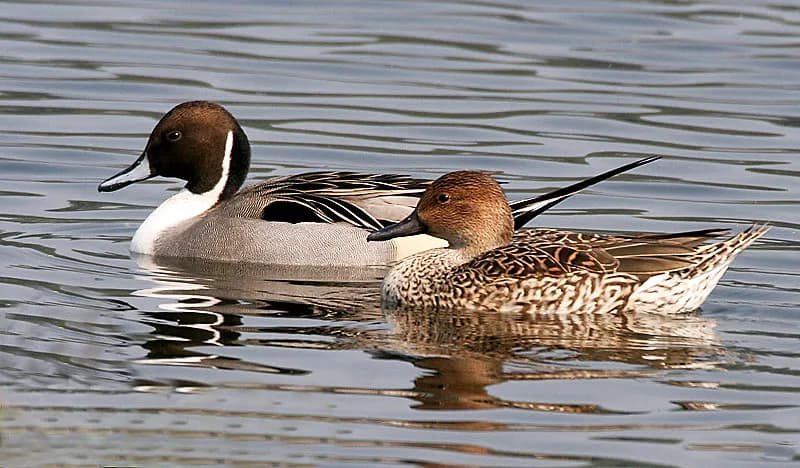
The breeding male, or drake, is hard to mistake. He has a glossy bottle-green head, a white collar, a purple-tinged brown breast, grey-brown wings, a pale grey belly, and a black rear with curled central tail feathers. His bill is yellowish-orange with a black tip. The female is mottled in buff and dark brown, a camouflage shared by most female dabbling ducks, with a darker crown and eye-stripe and a bill ranging from black to mottled orange and brown. Both sexes carry an iridescent purple-blue patch on the wing, called the speculum, edged in white.
Ducklings are yellow below and on the face and black on the back. Mallards in colder places tend to be larger with smaller bills; the Greenland mallard is bigger and shorter-billed than birds farther south, a rare example in birds of two well-known rules linking body shape to climate.
Behavior and diet
Diet
Omnivore; seeds and other plant matter, snails, insects, crustaceans and worms
Mallards are omnivores with a flexible diet that changes with the season and what is available. They eat snails, insects such as beetles, flies, dragonflies and caddisflies, crustaceans, worms, many kinds of seeds and plant matter, and roots and tubers. Plants make up most of the diet, especially during fall migration and winter. The big exception is the laying female: in one study, laying females ate about 72% animal matter, compared with about 37% for males and non-laying females. Mallards feed mainly by dabbling or grazing, and they have been reported eating frogs, fish and carcasses. In 2017, a flock in Romania was observed catching and eating young migrating songbirds that landed on the water.
They are very social outside the breeding season, gathering in large flocks known as sordes. The female gives the classic duck quack, often a run of two to ten quacks that fade in volume. The male's quack is deeper and quieter. Research on English mallards found that city birds in London call louder than rural birds in Cornwall, an adjustment to background noise. Mallards were also the first birds shown to sleep with one eye open, keeping half the brain alert for predators.
Pairs form in October and November in the Northern Hemisphere and stay together until the female starts laying in spring. The male then leaves to join other males before the summer molt. Nests are usually on the ground hidden in plants, but females have also nested in tree hollows, boathouses, roof gardens and balconies. The female lays 8 to 13 creamy white to greenish-buff eggs, one every other day. Incubation takes 27–28 days, and the precocial ducklings can swim as soon as they hatch. They stay close to the mother, imprinting on her, and can fly 50–60 days after hatching.
Mallards face a long list of predators, especially when young. Red foxes, which most often take brooding females, and fast or large birds of prey such as peregrine falcons and eagles are the main natural predators of adults. In North America alone, adult mallards face at least 15 species of birds of prey, from northern harriers and short-eared owls to bald eagles and golden eagles.
Range and habitat
Habitat
Freshwater and saltwater wetlands, including ponds, rivers, lakes, estuaries and city parks
The mallard is widely distributed across both hemispheres. In North America it ranges from southern and central Alaska to Mexico and the Hawaiian Islands. In the Old World it spreads from Iceland, southern Greenland and Morocco across Europe, including Britain and Scandinavia, to Siberia, Japan and South Korea. It is strongly migratory in the north of its range. North American birds winter south to the southern United States and northern Mexico, with strays reaching Central America and the Caribbean.
Mallards live from Arctic tundra to the subtropics, in both fresh and salt water. They use parks, small ponds, rivers, lakes, estuaries, shallow inlets and open sea within sight of the coast. They prefer water less than 0.9 m (3 ft) deep with plenty of aquatic plants, and they avoid water more than a few meters deep. They adapt well to cities, which is one reason they are such a common sight in urban parks.
Mallard vs domestic duck
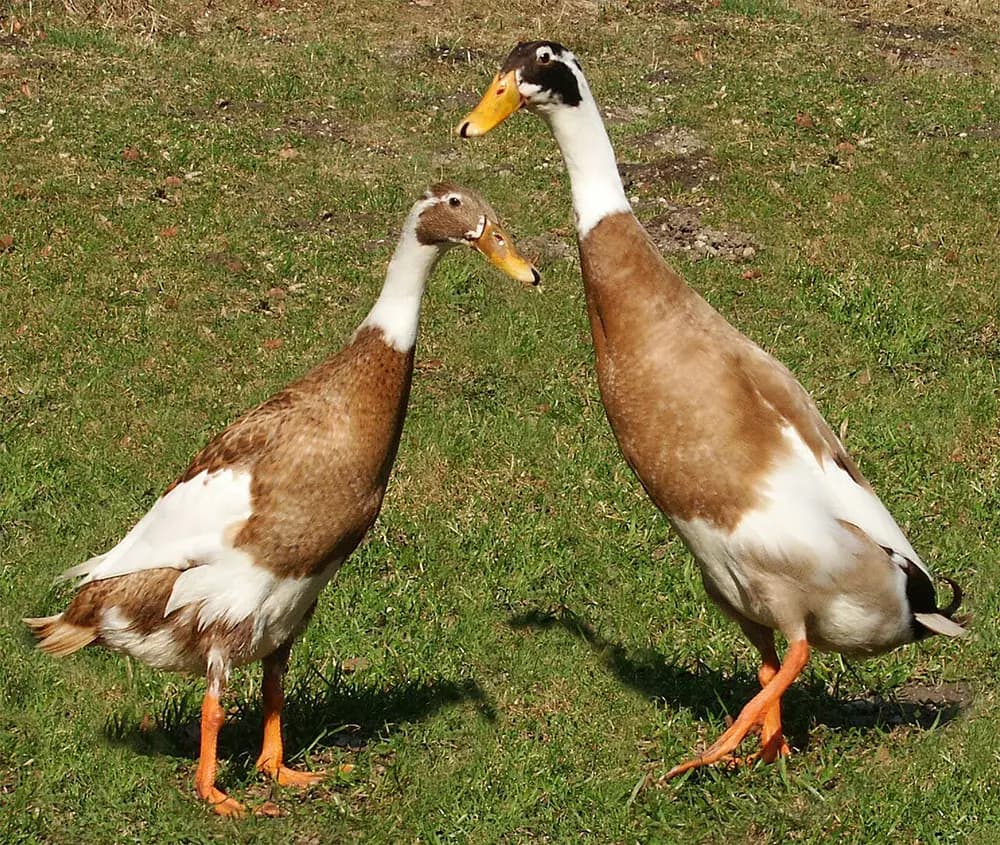
Almost every domestic duck breed, apart from a few Muscovy breeds, comes from the mallard, and the two are the same species. Ducks were domesticated in Southeast Asia at least 4,000 years ago. Because they interbreed freely, many wild North American mallards carry domestic duck DNA. The domestic duck differs in behavior as well as in color.
| Trait | Mallard | Domestic duck |
|---|---|---|
| Species | Anas platyrhynchos (wild form) | Same species, often written A. p. domesticus |
| Pairing | Generally monogamous | Mostly polygamous |
| Territorial behavior | Territorial and aggressive in the breeding season | Not territorial, less aggressive |
| Plumage | Wild-type colors | Wild-type, white and other colors |
| Flight and migration | Strongly migratory in the north of its range | Pure-bred mallards kept for eggs and meat may need wing clipping |
Conservation status
The mallard has been rated Least Concern on the IUCN Red List since 1998, most recently in a 2025 assessment by BirdLife International. Its range covers more than 65 million square kilometers (25 million square miles), and the population is estimated at more than 17 million mature birds as of 2025, though it is decreasing. Mallards are one of the most commonly hunted waterfowl, and summer botulism outbreaks can cause mass die-offs.
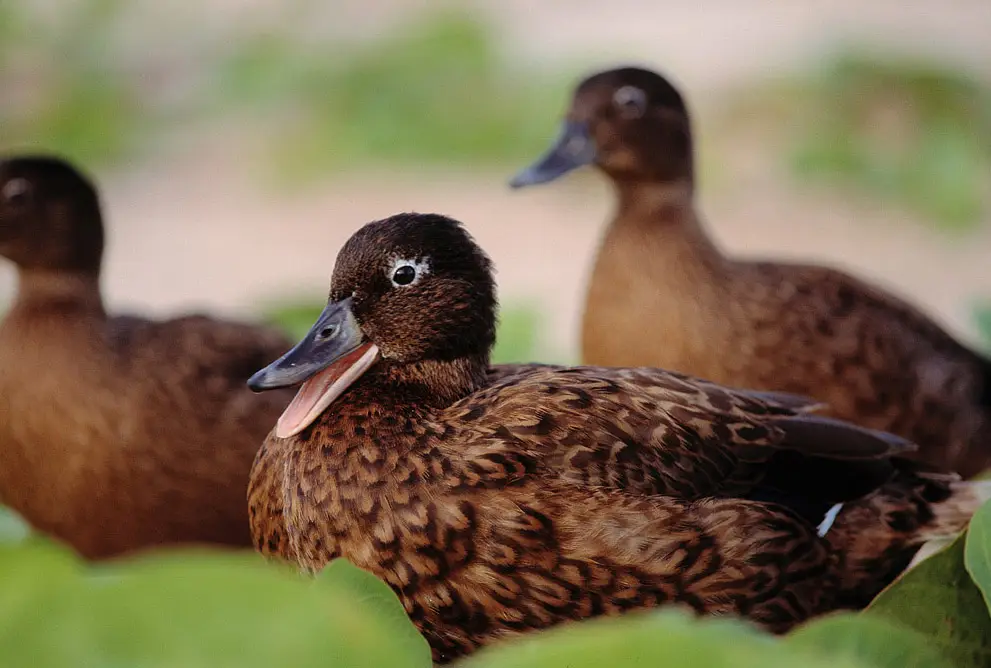
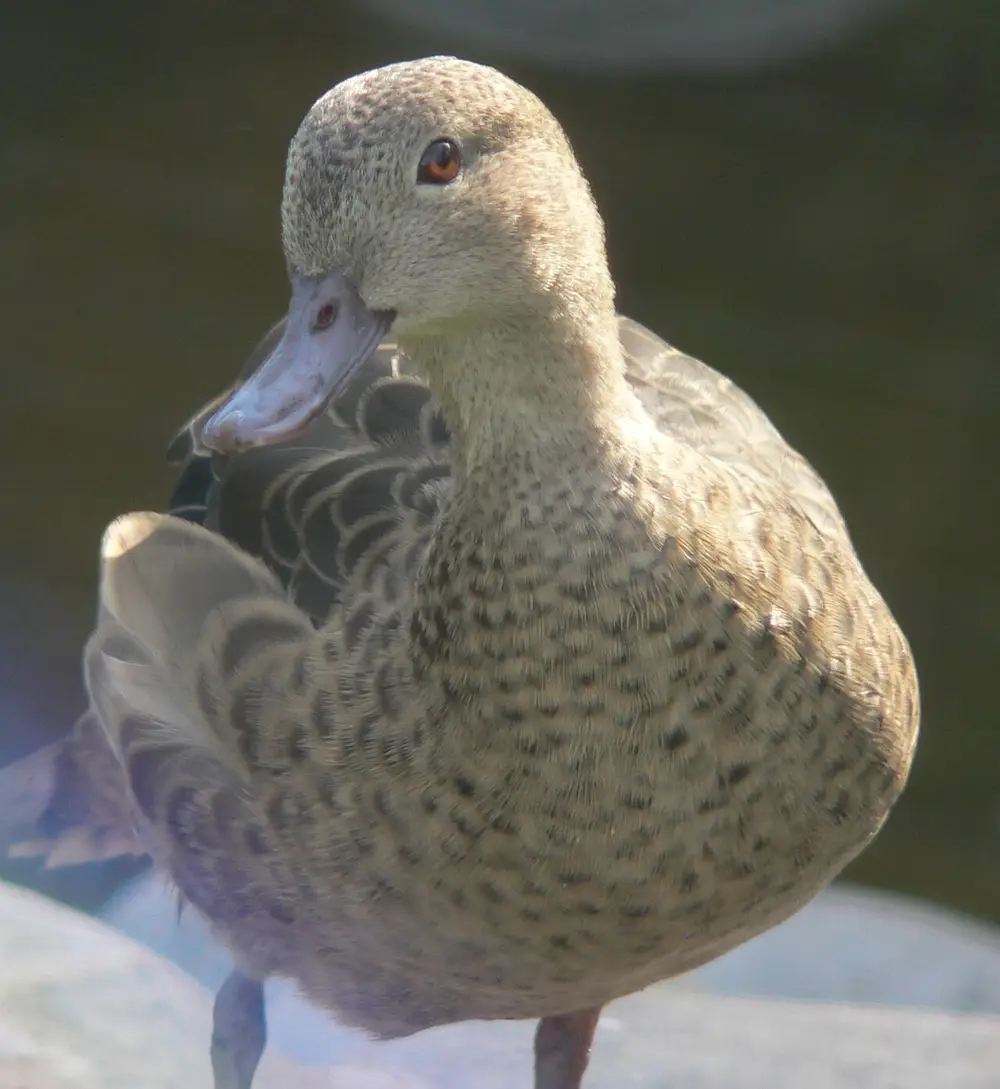
The mallard's success is itself a conservation problem. It has hybridized with more than 40 other species in the wild, sometimes producing fertile young, and released or feral mallards are swamping the gene pools of close relatives. Species affected include the Hawaiian duck, the American black duck, the mottled duck, the Mexican duck, the yellow-billed duck of Africa and the Pacific black duck. The mallard is considered invasive in Australia, New Zealand and South Africa. Florida bans private ownership of mallards to protect the native mottled duck.
Where to see mallard in the U.S.
8 zoos across 7 states
Find the closest one
Rank the 8 zoos holding mallard by how far they are from you. Your location is used in your browser to sort this list and is never sent to us.
California· 2
Connecticut· 1
Idaho· 1
Louisiana· 1
Mississippi· 1
New York· 1
Ohio· 1
AZAThe Association of Zoos and Aquariums. Accredited members have passed an independent inspection of animal care and welfare, safety, conservation and education, repeated every five years. Many smaller facilities never apply, so “not accredited” isn't a verdict on its own. What accreditation means · How we check this
Built from each zoo's own published animal list.
Mallard: common questions
How big is a mallard?
About 50–65 cm (20–26 in) long with an 81–98 cm (32–39 in) wingspan. Mallards weigh 0.7–1.6 kg (1.5–3.5 lb), heavier than most other dabbling ducks.
How can you tell a male mallard from a female?
By the head and bill. Breeding males have a glossy green head, white collar and yellow bill, while females are mottled brown with a darker, orange-and-black bill.
What do mallards eat?
Almost anything. They mostly eat seeds and plant matter, plus snails, insects, crustaceans and worms, and laying females switch to mostly animal food.
Are domestic ducks descended from mallards?
Yes. Nearly all domestic duck breeds, except some Muscovy breeds, descend from the mallard, and the two are the same species.
Do mallards migrate?
Some do. Birds in the north of the range are strongly migratory and winter farther south, while feral mallards released outside the native range are often non-migratory.
How long do mallards live?
About three years on average, though mallards can live to 20. The longevity record cited by Animal Diversity Web from bird banding data is 316 months, about 26 years.
Is the mallard endangered?
No. It is listed as Least Concern, with more than 17 million mature birds, although the population is decreasing.
Can you keep a mallard as a pet?
In most of the United States, yes. Mallards and their eggs can be legally sold and owned as poultry or pets everywhere in the U.S. except Florida, which bans ownership.