
Asian animals in U.S. zoos
Asian animals are the wildlife native to Asia and its surrounding seas and islands. Temperate Asia belongs to the Palearctic realm and its tropical south-east to the Indomalayan realm, and the continent's range of habitats supports tigers, Asian elephants, orangutans, gibbons, red pandas and treeshrews, several of them found nowhere else.
Most widely held
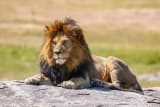 LionPanthera leoAt 92 zoos · Vulnerable
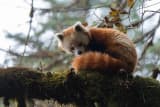 Red pandaAilurus fulgensAt 71 zoos · Endangered
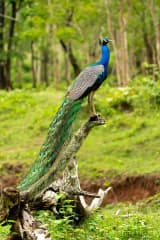 PeafowlPavo cristatusAt 57 zoos · Least Concern
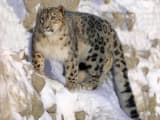 Snow LeopardPanthera unciaAt 45 zoos · Vulnerable
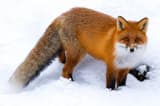 Red FoxVulpes vulpesAt 41 zoos · Least Concern
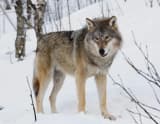 Gray WolfCanis lupusAt 39 zoos · Least Concern
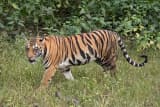 TigerPanthera tigrisAt 39 zoos · Endangered
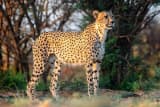 CheetahAcinonyx jubatusAt 38 zoos · Vulnerable
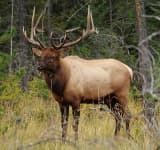 ElkCervus canadensisAt 36 zoos · Least Concern
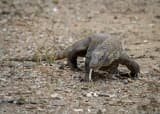 Komodo DragonVaranus komodoensisAt 35 zoos · Endangered
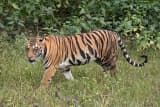 Amur tigerPanthera tigrisAt 32 zoos · Endangered
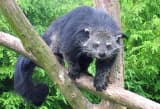 BinturongArctictis binturongAt 32 zoos · Vulnerable
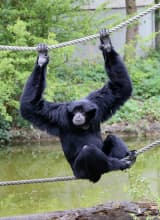 SiamangSymphalangus syndactylusAt 31 zoos · Endangered
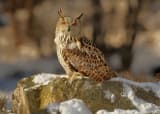 Eurasian Eagle-OwlBubo buboAt 30 zoos · Least Concern
- Asian Small-clawed OtterAonyx cinereusAt 28 zoos · Vulnerable
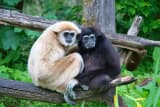 White-handed GibbonHylobates larAt 28 zoos · Endangered
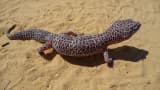 Leopard GeckoEublepharis maculariusAt 26 zoos · Least Concern
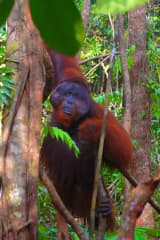 OrangutanPongo pygmaeusAt 26 zoos · Critically Endangered
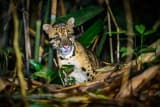 Clouded LeopardNeofelis nebulosaAt 25 zoos · Vulnerable
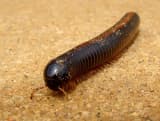 Giant African MillipedeArchispirostreptus gigasAt 25 zoos · Least Concern
 Sandhill CraneAntigone canadensisAt 25 zoos · Least Concern
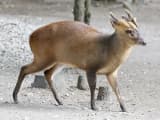 Reeve's MuntjacMuntiacus reevesiAt 24 zoos · Least Concern
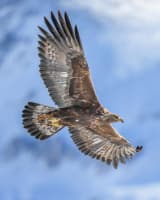 Golden EagleAquila chrysaetosAt 23 zoos · Least Concern
 Bali MynaLeucopsar rothschildiAt 22 zoos · Critically Endangered
 Reticulated PythonMalayopython reticulatusAt 22 zoos · Least Concern
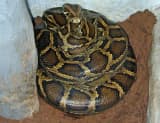 Burmese PythonPython bivittatusAt 21 zoos · Vulnerable
 FlamingoPhoenicopteridaeAt 21 zoos
 Nicobar PigeonCaloenas nicobaricaAt 21 zoos · Near Threatened
 White-cheeked GibbonNomascus leucogenysAt 19 zoos · Critically Endangered
 Fallow DeerDama damaAt 18 zoos · Least Concern
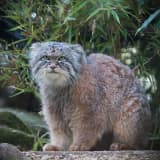 Pallas's CatOtocolobus manulAt 18 zoos · Least Concern
 Umbrella CockatooCacatua albaAt 18 zoos · Endangered
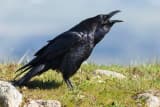 Common RavenCorvus coraxAt 17 zoos · Least Concern
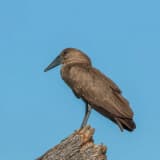 HamerkopScopus umbrettaAt 17 zoos · Least Concern
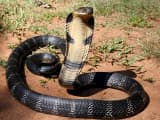 King CobraOphiophagus hannahAt 17 zoos · Vulnerable
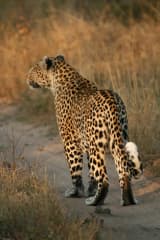 LeopardPanthera pardusAt 17 zoos · Vulnerable
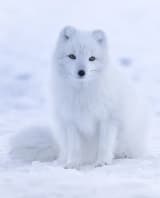 Arctic FoxVulpes lagopusAt 16 zoos · Least Concern
 Asian ElephantElephas maximusAt 16 zoos · Endangered
 Brown BearUrsus arctosAt 16 zoos · Least Concern
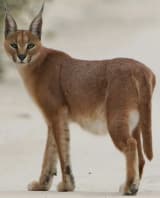 CaracalCaracal caracalAt 15 zoos · Least Concern
 Chinese AlligatorAlligator sinensisAt 15 zoos · Critically Endangered
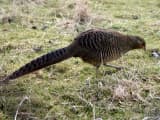 Golden PheasantChrysolophus pictusAt 15 zoos · Least Concern
 Greater One-horned RhinocerosRhinoceros unicornisAt 15 zoos · Vulnerable
 Harbor SealPhoca vitulinaAt 15 zoos · Least Concern
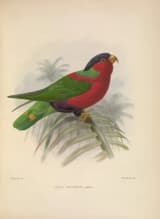 LorikeetTrichoglossus sp.At 15 zoos
 Northern PintailAnas acutaAt 15 zoos · Least Concern
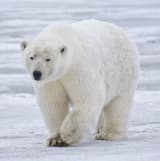 Polar BearUrsus maritimusAt 15 zoos · Vulnerable
 ReindeerRangifer tarandusAt 15 zoos · Vulnerable
More animals in this collection, A–Z
- Asiatic Black BearUrsus thibetanus
- Axis DeerAxis axis
- Azure-winged MagpieCyanopica cyanus
- BabirusaBabyrousa babyrussa
- Baer's PochardAythya baeri
- Banded ArcherfishToxotes jaculatrix
- Black-breasted Leaf TurtleGeoemyda spengleri
- Black-crowned Night HeronNycticorax nycticorax
- Cabot's TragopanTragopan caboti
- Cape Thick-kneeBurhinus capensis
- Cattle EgretBubulcus ibis
- Chinese Crocodile LizardShinisaurus crocodilurus
- CichlidCichlidae
- Cinereous VultureAegypius monachus
- CockatooCacatuidae
- Crested Wood PartridgeRollulus rouloul
- Demoiselle CraneAnthropoides virgo
- Eclectus ParrotEclectus roratus
- Egyptian TortoiseTestudo kleinmanni
- ElephantElephantidae
- Eurasian LynxLynx lynx
- European Glass LizardPseudopus apodus
- FalconFalconidae
- Fishing CatPrionailurus viverrinus
- FoxVulpes
- GibbonHylobatidae
- Hamadryas BaboonPapio hamadryas
- Himalayan MonalLophophorus impejanus
- Honey BeeApis mellifera
- HornbillBucerotidae
- Indian Star TortoiseGeochelone elegans
- Japanese MacaqueMacaca fuscata
- Lady Amherst's PheasantChrysolophus amherstiae
- Lappet-faced VultureTorgos tracheliotos
- Lesser FlamingoPhoeniconaias minor
- Luzon Bleeding-heart DoveGallicolumba luzonica
- Malayan TapirTapirus indicus
- MallardAnas platyrhynchos
- Mandarin DuckAix galericulata
- Marbled TealMarmaronetta angustirostris
- McCord's Snake-necked TurtleChelodina mccordi
- Moluccan CockatooCacatua moluccensis
- Mute SwanCygnus olor
- Northern Bald IbisGeronticus eremita
- Northern ShovelerSpatula clypeata
- OtterLutrinae
- Palawan Peacock-PheasantPolyplectron napoleonis
- Père David's DeerElaphurus davidianus
- Peregrine FalconFalco peregrinus
- Pied Imperial PigeonDucula bicolor
- PorcupineHystricidae
- Prevost's SquirrelCallosciurus prevostii
- Przewalski's HorseEquus przewalskii
- Pygmy Slow LorisXanthonycticebus pygmaeus
- Red-billed Blue MagpieUrocissa erythroryncha
- Red-breasted GooseBranta ruficollis
- Red-crowned CraneGrus japonensis
- RhinocerosRhinocerotidae
- Rhinoceros HornbillBuceros rhinoceros
- Rock HyraxProcavia capensis
- Russian TortoiseAgrionemys horsfieldii
- Sacred IbisThreskiornis aethiopicus
- Sand CatFelis margarita
- Sarus CraneAntigone antigone
- Sea LionOtariidae
- Sika DeerCervus nippon
- Silver PheasantLophura nycthemera
- Sloth BearMelursus ursinus
- Snowy OwlBubo scandiacus
- Spur-winged LapwingVanellus spinosus
- Steller's Sea EagleHaliaeetus pelagicus
- Straw-colored Fruit BatEidolon helvum
- Sun BearHelarctos malayanus
- TakinBudorcas taxicolor
- TarantulaTheraphosidae
- Tokay GeckoGekko gecko
- UromastyxUromastyx
- White StorkCiconia ciconia
- White-crested LaughingthrushGarrulax leucolophus
- White-naped CraneAntigone vipio
- WolverineGulo gulo
- Wrinkled HornbillRhabdotorrhinus corrugatus
Where two animal realms meet
Biogeographers split Asia between two realms. Temperate Asia is the eastern part of the Palearctic, shared with Europe, while the tropical south-east belongs to the Indomalayan realm. In southern Asia the boundary is largely a matter of altitude: the Himalayan foothills at about 2,000 to 2,500 m (6,600 to 8,200 ft) separate the two.
The continent blends animals of ancient northern and southern origin. India broke away from Gondwana about 90 million years ago and carried its animals north before colliding with Asia. Far to the south-east, the Wallace Line marks another sharp change: islands west of it share their animals with mainland Asia, while those to the east either lack land mammals or have fauna derived from Australia.
Mountains, forests and islands
Asia's mountains hold some of its most specialized animals. The snow leopard lives in alpine zones of 3,000 to 4,500 m (9,800 to 14,800 ft), with broad, furred paws for snow and loose rock. The red panda of the eastern Himalayas and south-western China is not related to the giant panda but shares its bamboo diet and a false thumb. The takin looks like a muskox, yet its closest relatives are sheep. The Himalayas alone contain about 8 percent of the world's bird species.
Tropical forests support one of the world's three principal primate communities, about 45 species, including lorises, tarsiers, langurs, gibbons and orangutans. The siamang, the largest gibbon, inflates a throat sac the size of its head to call. Treeshrews and colugos form two mammal orders found only in the Indomalayan realm. The northern tree shrew is one of the only mammals besides humans known to willingly eat spicy food. On a handful of Indonesian islands lives the Komodo dragon, the largest living lizard.
Under heavy pressure
Across Asia, poorly controlled industry and farming, dams, roads, poaching and timber theft are destroying wildlife habitats. Southeast Asia has the highest relative rate of deforestation of any major tropical region and could lose three-quarters of its original forests by 2100, along with up to 42 percent of its biodiversity.
The great apes show the cost. All three orangutan species are Critically Endangered, threatened by palm oil plantations, logging, poaching and the pet trade, and the siamang is losing rainforest to oil palm across Indonesia and Malaysia. Trapping matters as much as habitat: fewer than 50 Bali mynas were thought to survive in the wild by 2020, and the black market is estimated to move twice as many birds as are legally held in breeding programs.
A species that came back
Père David's deer shows what captive herds can do. Hunted out of the wild in China, it survived only through animals kept in Europe, and every living individual descends from a single breeding herd in England. Reintroduction to China began in 1985, and by 2020 a free-ranging population of about 2,825 deer roamed there. It is still listed as Extinct in the Wild until the reintroduced population proves it can last.
Common questions
What animals live in Asia?
Characteristic large animals of tropical Asia include tigers, Asiatic lions, Asian elephants, wild water buffalo, the Indian and Javan rhinoceroses and the Malayan tapir. The north is home to animals such as the gray wolf, moose and wolverine.
What animals are found only in Asia?
Two whole orders of mammals, the colugos and the treeshrews, are endemic to the Indomalayan realm, along with the gibbon and tarsier families. Orangutans now survive only on Borneo and Sumatra.
Is the red panda a panda or a bear?
Neither. The giant panda is a bear, but genetic evidence places the red panda closer to raccoons, weasels and skunks; the two pandas evolved a similar wrist-bone false thumb for gripping bamboo independently.
What is the largest lizard in the world?
The Komodo dragon, a monitor lizard found only on a few Indonesian islands. Males can reach about 3 m (10 ft) and 150 kg (330 lb).
How many species of orangutan are there?
Three: the Bornean, Sumatran and Tapanuli orangutans. All three are classified as Critically Endangered.
Where do snow leopards live?
Snow leopards live in Asia's high mountains, from the eastern Hindu Kush and the Himalayas across the Tibetan Plateau to southern Siberia, Mongolia and western China, mostly at 3,000 to 4,500 m (9,800 to 14,800 ft).
Why is Asian wildlife declining?
Mainly habitat loss and hunting. Industrial and agricultural development, dams and roads, poaching and timber theft are all cutting into wildlife populations, and Southeast Asia has the highest relative rate of deforestation of any major tropical region.
Sources
Last reviewed