- Where to see one
- 11 U.S. zoos in our directory hold eurasian lynx, confirmed against each zoo's own animal list.
- Native range
- Northern, central and eastern Europe across Russia and Siberia to Central Asia, the Tibetan Plateau and the Himalayas
- Size
- Body 73 to 106 cm (29 to 42 in) long; 55 to 75 cm (22 to 30 in) at the shoulder; usually 12 to 32 kg (26 to 71 lb) in Russia, 7 to 26 kg (15 to 57 lb) in Scandinavia
- Lifespan
- Up to 21 years in captivity
- Gestation
- 67 to 74 days
- Litter size
- Usually two kittens
Conservation status
Least Concernassessed 2015
IUCN Red List category LC — step 1 of 7.
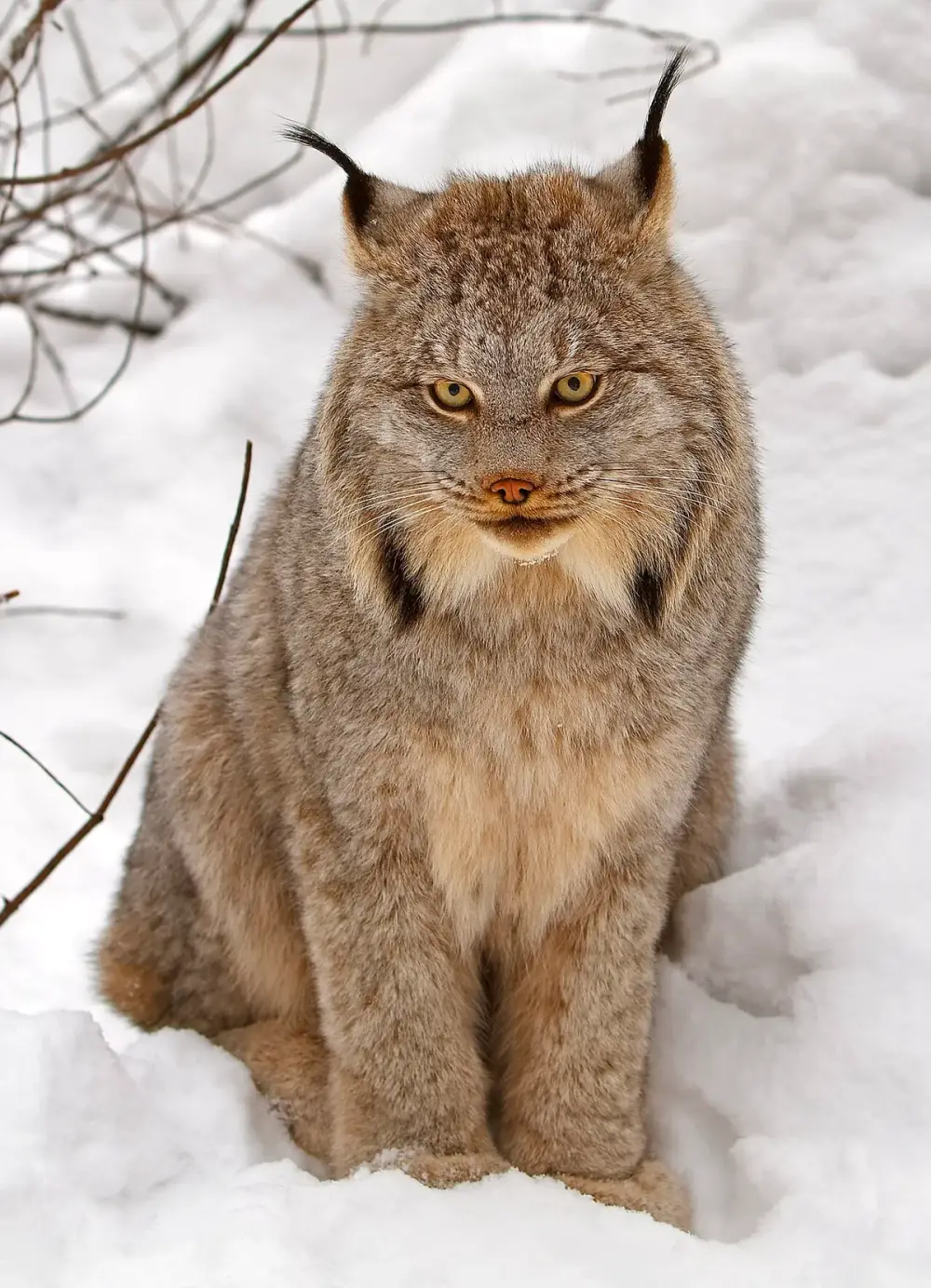
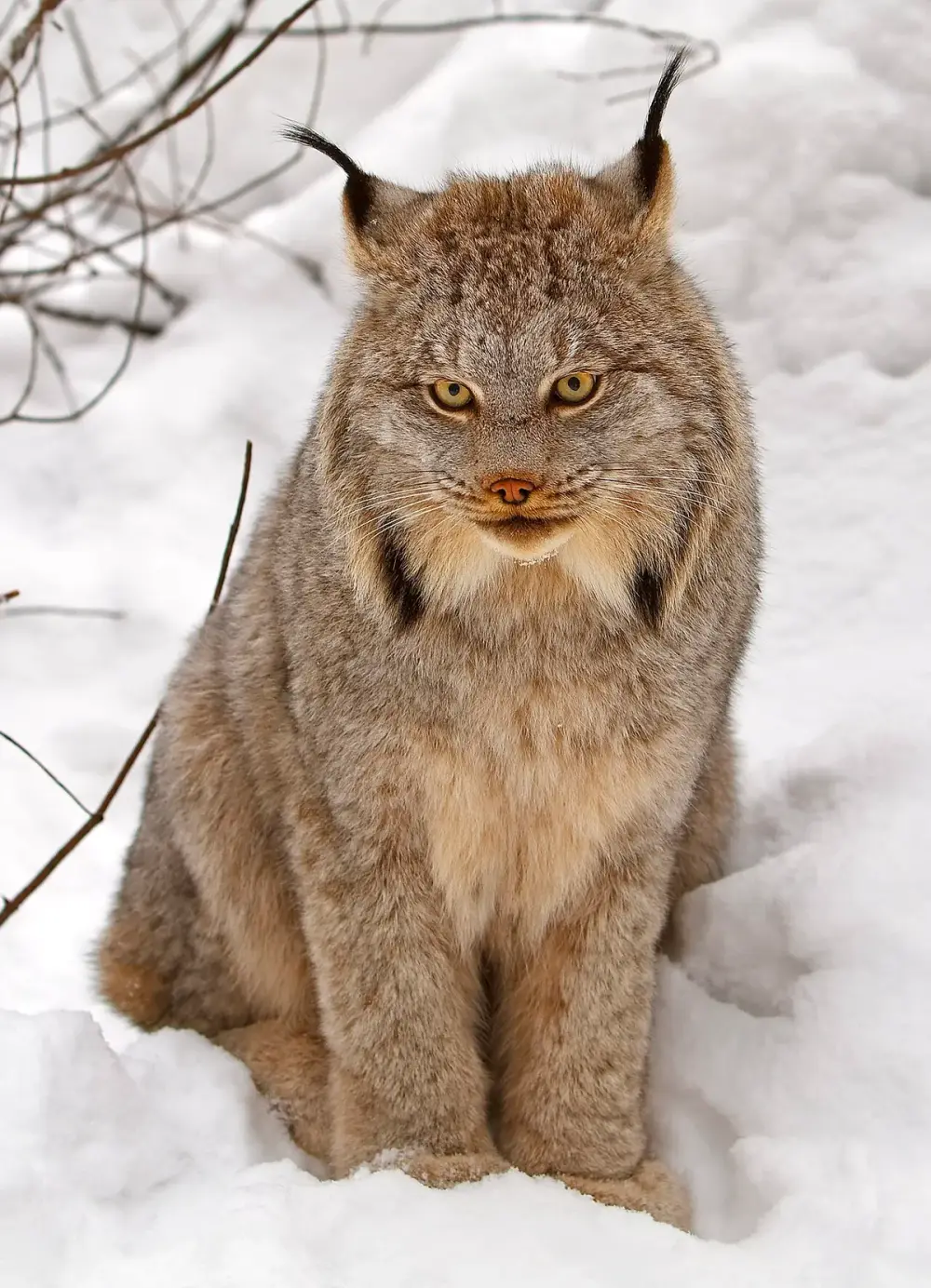
The Eurasian lynx is the largest of the four lynx species, a medium-sized wild cat found from northern, central and eastern Europe to Central Asia, Siberia, the Tibetan Plateau and the Himalayas. It inhabits temperate and boreal forests up to 5,500 m. The short coat is reddish or brown with black spots and turns thicker and silver-grey to greyish brown in winter. Large, webbed and furred paws act like snowshoes, and the short tail has an all-black tip, with black ear tufts and a grey-and-white ruff. Adults live alone and are mainly nocturnal or crepuscular, ambushing or stalking prey. Roe deer are the preferred prey where they are common.
About the Eurasian lynx
The Eurasian lynx is a medium-sized wild cat and one of the four living species in the lynx genus, which also includes the Canada lynx and the Iberian lynx. It is the largest of the four. It ranges through the forests and mountains of Europe and Asia, from Scandinavia and the Carpathians to Siberia, Central Asia and the Himalayas.
Carl Linnaeus gave the cat its first scientific name, Felis lynx, in 1758. Today it is classified as Lynx lynx. Several regional subspecies have been proposed over the past two centuries, including the Balkan and Carpathian lynx, though others, such as a proposed Sardinian lynx, are not considered valid.
The coat is fairly short and reddish or brown, marked with black spots that vary widely in number and pattern from one animal to the next. The chin, neck and belly are whitish. Lynx in the southern part of the range tend to be more brightly colored and more heavily spotted. Some animals have dark brown stripes on the forehead and back.
In winter the coat grows much thicker and turns silver-grey to greyish brown. The face carries the classic lynx features: black tufts on the ears and a long grey-and-white ruff around the cheeks. The tail is short and bobbed, 11 to 24.5 cm (4.3 to 9.6 in) long, with an all-black tip.
The legs are powerful and fairly long. The large paws are webbed and furred, working like snowshoes on snow. Coats fall into three broad patterns, spotted, striped and plain, and patterns vary widely within and between regions. The Eurasian lynx is also one of the largest predators in Europe, third only to the brown bear and the gray wolf.
Size varies a great deal across the range. Males measure 76 to 106 cm (30 to 42 in) in body length and females 73 to 99 cm (29 to 39 in), and the biggest males reach about 130 cm (51 in) including the tail. In Russia, weights run from 12 to 32 kg (26 to 71 lb), with animals over 30 kg (66 lb) very rare. Lynx from Scandinavia and farther west are much smaller, at 7 to 26 kg (15 to 57 lb), while those of the Carpathians may rival the large lynx of the Altai.
Behavior and diet
Diet
Carnivore; roe deer and other hoofed mammals, hares, rodents and birds
The Eurasian lynx is mainly nocturnal or crepuscular, though it may hunt by day when food is scarce. It spends daylight hours asleep in thick cover. Adults live alone.
A lynx's hunting area can cover anywhere from 20 to 450 square kilometers (7.7 to 174 sq mi), depending on how much prey is around. Males range over much larger areas than females. A lynx can travel up to 20 km (12 mi) in a night, though about half that is more typical, and it marks its range with urine, feces and scrapes.
These cats are secretive and mostly silent outside the breeding season. They can mew, hiss, growl and purr, and like house cats they "chatter" at prey that is just out of reach. Because they are so quiet, a lynx can live in an area for years without anyone noticing. Tracks in the snow or the remains of a kill are usually found long before the animal itself is seen.
The Eurasian lynx is an ambush predator that also stalks, sneaks up on and pounces on prey, using both sight and hearing. It often climbs onto high rocks or fallen trees to scan its surroundings. It is strong enough to have killed adult deer weighing at least 150 kg (330 lb).
It is the only lynx species that prefers hoofed animals. Where roe deer are common, they are its favorite prey, and in Estonia an adult lynx kills about 60 roe deer a year. Other recorded prey includes red deer, chamois, reindeer, young moose and wild boar, as well as hares, rabbits, marmots, squirrels, foxes and grouse. An adult needs 1.1 to 2 kg (2.4 to 4.4 lb) of meat a day and may feed on a large kill for several days.
Not every population follows this pattern. In parts of Anatolia, in Turkey, lynx live mostly on hares even where wild hoofed animals are present. In some Anatolian study areas, European hares made up 79% to 99% of the meat eaten.
Mating takes place from January to April. After a gestation of 67 to 74 days, the female gives birth in a hidden den, often sheltered by overhanging branches or tree roots and lined with feathers, deer hair and dry grass.
Most litters have two kittens, and litters of more than three are rare. Newborns weigh 240 to 430 g (8.5 to 15.2 oz) and open their eyes at 10 to 12 days. Their plain greyish-brown fur takes on adult coloring at about 11 weeks.
Kittens start eating solid food at six to seven weeks but are not fully weaned until five or six months. They stay with their mother until about ten months old and mature at two or three years. Eurasian lynx have lived for 21 years in captivity.
Range and habitat
Habitat
Temperate and boreal forest, forest-steppe, rocky steppe and mountain forest, up to 5,500 m (18,000 ft)
The Eurasian lynx lives across a vast area, from northern, central and eastern Europe through Russia and Siberia to Central Asia, the Tibetan Plateau and the Himalayas. It favors rugged country with plenty of cover for hiding and stalking: rocky steppe, forest-steppe, boreal forest and mountain forest. It depends on well-connected forest cover and is scarcer near busy roads, railways and settlements, where collisions and other injuries are more common.
In mountainous areas, lynx move down to lower ground in winter, following their prey and avoiding deep snow. Despite its snowshoe paws, a lynx struggles in loose, deep snow and cannot survive where snow is regularly more than 100 cm (39 in) deep.
In Europe the cat was hunted out of the western and southern lowlands by the early 1800s and survived only in mountains and Scandinavian forests. It has since returned to many areas through natural spread and reintroduction, including Switzerland from 1971, Slovenia from 1973 and Germany in the 1990s. The Carpathian Mountains hold about 2,800 lynx, the largest connected population west of Russia, and Russia itself had an estimated 22,510 in 2013.
Eurasian lynx vs Canada lynx
The Eurasian lynx and the Canada lynx look alike, with tufted ears, short tails and big furry paws, but they live on different continents and hunt different prey.
| Feature | Eurasian lynx | Canada lynx |
|---|---|---|
| Scientific name | Lynx lynx | Lynx canadensis |
| Range | Europe and Asia | North America, including Alaska and Canada |
| Shoulder height | 55 to 75 cm (22 to 30 in) | 48 to 56 cm (19 to 22 in) |
| Weight | About 7 to 32 kg (15 to 71 lb), varying by region | 5 to 17 kg (11 to 37 lb) |
| Main prey | Roe deer and other hoofed mammals in much of Europe; hares in parts of Anatolia | Snowshoe hare, a specialist diet |
Conservation status
The Eurasian lynx is listed as Least Concern on the IUCN Red List, in an assessment published in 2015. Even so, it faces habitat loss and fragmentation, poaching and loss of prey across parts of its range.
Some regional populations are in serious trouble. The Balkan lynx, found in remote mountains of North Macedonia, Albania and neighboring countries, has been close to extinction for nearly a century and numbers around 100 animals, with poaching driving the decline. Small populations in the Dinaric Alps are listed as endangered in Slovenia, Croatia and Bosnia and Herzegovina.
The species is listed on CITES Appendix II and protected under the Berne Convention. Hunting is illegal in many countries, though it is allowed in some, including Estonia, Latvia and Russia, and hunting is limited or government-controlled in Finland, Sweden and Romania. Gray wolves and wolverines are its main natural predators, and lynx tend to be scarcer where gray wolves are abundant.
Where to see eurasian lynx in the U.S.
11 zoos across 10 states
Find the closest one
Rank the 6 zoos holding eurasian lynx by how far they are from you. Your location is used in your browser to sort this list and is never sent to us.
5 more zoos hold eurasian lynx but have no coordinates on file yet, so they aren't ranked here. They're in the full list below.
Alabama· 1
California· 2
Delaware· 1
Maine· 1
Maryland· 1
Massachusetts· 1
North Carolina· 1
Pennsylvania· 1
Tennessee· 1
Virginia· 1
AZAThe Association of Zoos and Aquariums. Accredited members have passed an independent inspection of animal care and welfare, safety, conservation and education, repeated every five years. Many smaller facilities never apply, so “not accredited” isn't a verdict on its own. What accreditation means · How we check this
Built from each zoo's own published animal list.
Eurasian Lynx: common questions
Is the Eurasian lynx dangerous?
It is a powerful predator that has killed adult deer of at least 150 kg (330 lb). It is also secretive and quiet, and it is rarely seen even where it is present.
How big is a Eurasian lynx?
It is the largest lynx species. Body length is 73 to 106 cm (29 to 42 in), shoulder height 55 to 75 cm (22 to 30 in), and weight usually 12 to 32 kg (26 to 71 lb) in Russia, less in Scandinavia.
What does a Eurasian lynx eat?
Mostly roe deer and other hoofed animals in Europe, plus hares, rodents, foxes and birds. In parts of Anatolia, in Turkey, it lives mainly on hares.
How long do Eurasian lynx live?
They have lived for 21 years in captivity.
Where do Eurasian lynx live?
In forests and mountains from Scandinavia and central Europe across Russia and Siberia to Central Asia, the Tibetan Plateau and the Himalayas, at elevations up to 5,500 m (18,000 ft).
Are Eurasian lynx endangered?
Not as a species. The IUCN lists it as Least Concern, but some regional populations, such as the Balkan lynx, are close to extinction.
What eats a Eurasian lynx?
Gray wolves and, in the north, wolverines are its main predators. Tigers have also occasionally killed lynx.