- Where to see one
- 7 U.S. zoos in our directory hold mute swan, confirmed against each zoo's own animal list.
- Native range
- Much of Europe and temperate Asia east to the Russian Far East; rare winter visitor to far northern Africa
- Size
- Usually 140–160 cm (55–63 in) long; wingspan 200–240 cm (79–94 in); males average about 10.6–11.9 kg (23.4–26.2 lb), females about 8.5–9.7 kg (18.7–21.3 lb)
- Lifespan
- Up to 19 years recorded in a wild banded bird; 30–40 years in captivity
- Top speed
- Up to 88.5 km/h (55 mph) in flight
- Names
- Male is a cob, female a pen, young are cygnets
Conservation status
Least Concernassessed 2025
IUCN Red List category LC — step 1 of 7.
The mute swan is a large, all-white waterfowl with an orange bill edged in black and a pronounced knob on top of the beak, larger in males. It is native to much of Europe and parts of Asia, and has been introduced to North America, Australasia and Southern Africa. Birds feed on submerged aquatic plants, reaching them with their long necks, and also graze on land. Pairs are usually strongly territorial, while young unmated birds gather in flocks that can reach several hundred. The name refers to its being less vocal than other swans, though the throbbing of its wings in flight is distinctive and can be heard from 1 to 2 km away.
About the mute swan
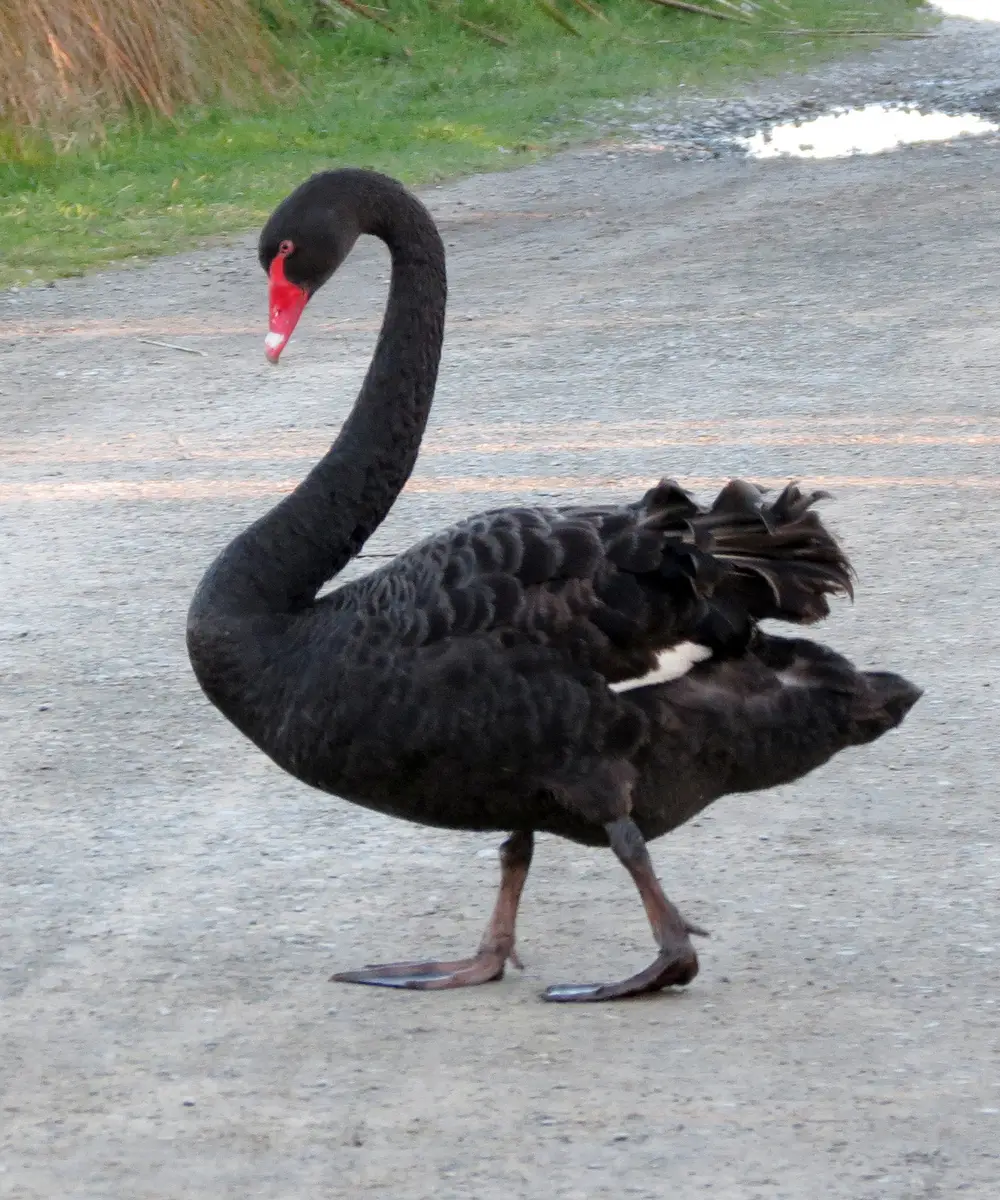
The mute swan is a large, all-white swan in the waterfowl family Anatidae, native to Europe and temperate Asia. Despite its Eurasian home, its closest relatives are the black swan of Australia and the black-necked swan of South America. It has been introduced to North America, where it now lives in large numbers.
Its scientific name, Cygnus olor, doubles up: both words mean "swan" in Latin. The common name comes from its being quieter than other swans, not truly silent.
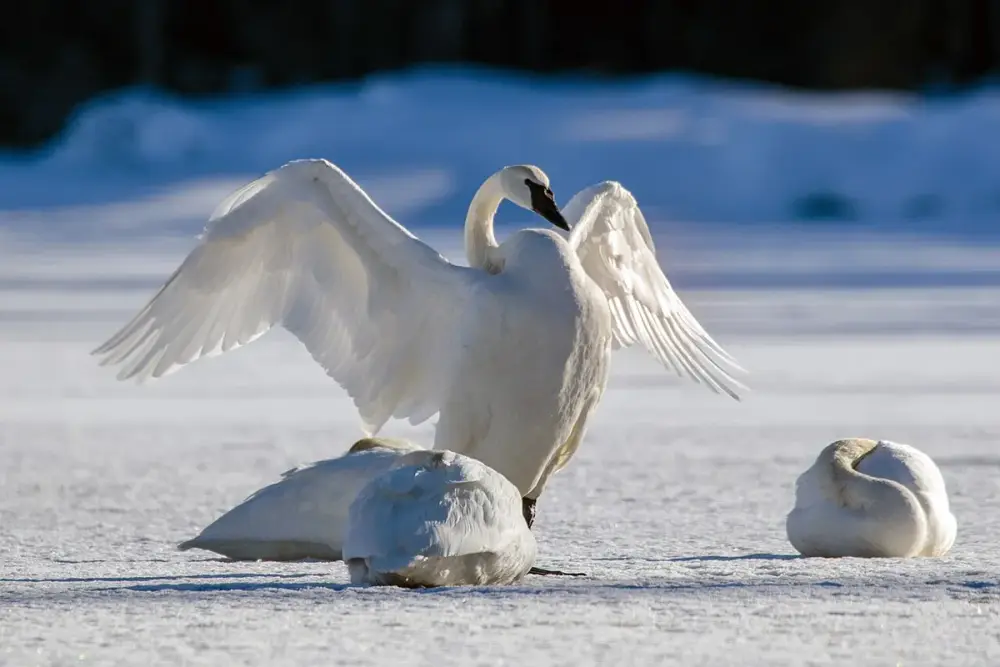
This is a very big bird. Adults typically measure 140–160 cm (55–63 in) long, with a wingspan of 200–240 cm (79–94 in). On average it is the second largest waterfowl after the trumpeter swan, though big males can match or outweigh a male trumpeter. British studies found cobs averaging about 10.6–11.9 kg (23.4–26.2 lb) and pens about 8.5–9.7 kg (18.7–21.3 lb). One Polish cob weighed almost 23 kg (51 lb), the heaviest weight ever verified for a flying bird, though it's not clear it could still fly.
Adult plumage is entirely white, though the head and neck are often stained orange-brown by iron and tannins in the water. The legs are dark grey. The bill is bright orange with black around the nostrils and a black tip, topped by a black knob at the base that is larger in males.
Cygnets look very different. Their down ranges from white to grey or buff, with grey-buff the most common, and their bill is dull greyish-black for the first year. They grow fast, reaching close to adult size in about three months, but keep grey feathers until at least a year old. A color form called the "Polish swan" has pinkish legs and white cygnets and occurs only in populations with a history of domestication.
Behavior and diet
Diet
Submerged water plants and grazed land plants, including crops; small amounts of insects, fish and frogs
Mute swans feed on a wide range of plants. They reach submerged water weeds with their long necks and also graze on land, including crops such as oilseed rape and wheat. Winter flocks can damage fields as much by trampling as by eating. Small amounts of aquatic insects, fish and frogs round out the diet.
Unlike black swans, mute swans are usually strongly territorial, with just one pair on a small lake. Where feeding grounds are rich they can nest in colonies; the biggest hold over 100 pairs, with nests as close as 2 m (7 ft). Young unpaired birds up to 3–4 years old gather in flocks that can number several hundred.
They are quiet by swan standards but not silent, making grunts, hoarse whistles and snorts and hissing at intruders. Courting pairs perform a rhythmic song that keeps their head and neck movements in sync. The most familiar sound is the throbbing of the wings in flight, unique to this species and audible 1–2 km (0.6–1.2 mi) away.
The classic threat display is called busking: the neck curves back, the wings are half raised, and the bird paddles both feet together so it surges forward in jerks. Swans sometimes hold the same pose to sail several hundred meters on the wind.
Pairs are monogamous and often reuse the same nest, a large mound of waterside plants built in shallow water. The female lays 5–8 eggs, each weighing 294–396 g (10.4–14 oz), and incubates for about 36 days. Tired cygnets ride on a parent's back, and young swans can fly at 60–65 days.
Mute swans defend their nests fiercely. A hiss comes first, then an attack with blows from bony spurs on the wings and bites from the bill. They drive off Canada geese, can drown other waterbirds, and may even go after canoes near their young. Their wings, contrary to the popular myth, can't break an adult's leg, but they can kill a red fox.
Range and habitat
Habitat
Lakes, lagoons and slow rivers, mostly medium to large bodies of fresh water
The mute swan's native range covers temperate Europe and stretches across the Palearctic to the Russian Far East. It lives on lagoons, lakes and slow-flowing rivers, preferring medium to large bodies of water, and uses nearby land outside the breeding season.
Movements vary by region. Birds in Ireland, Britain and northwestern and central Europe mostly stay put, while swans breeding in Mongolia, eastern Russia and China fly thousands of kilometers to winter along the lower Yellow River and the Yellow Sea coast. Many birds from West and Central Asia move south to the Caspian Sea, and swans nesting in Hungary, Ukraine and Russia often head to the Black Sea.
Introduced populations exist in North America, Japan, New Zealand, Australia and South Africa. Only the North American population is large. In the lower Great Lakes between 1971 and 2000, numbers grew at least 10 percent a year, doubling every seven to eight years, and in North America the birds are largely sedentary.
Conservation status
The mute swan is listed as Least Concern on the IUCN Red List. The native population is about 500,000 birds after the breeding season, including up to 350,000 in Russia; the largest single breeding concentration is about 11,000 pairs in Russia's Volga Delta.
Its history has had ups and downs. Hunting wiped out most wild birds in Western Europe between the 13th and 19th centuries, except for semi-domesticated swans kept as poultry. In Britain, centuries of marking and royal ownership helped save the species from being hunted out. Better protection let swans return to their former range. Lead poisoning from swallowed shot and fishing weights caused a big decline in England from about 1960 to the early 1980s, and numbers rebounded once lead was largely replaced.
Today, many mute swans still die because of people: collisions with power lines and lead poisoning are fatal, and in Britain attacks by out-of-control dogs have increased. In North America the picture is reversed: the mute swan is considered invasive because it reduces submerged vegetation and harms other waterfowl. In 2005 the U.S. Department of the Interior declared it a non-native, unprotected species.
Where to see mute swan in the U.S.
7 zoos across 7 states
Find the closest one
Rank the 4 zoos holding mute swan by how far they are from you. Your location is used in your browser to sort this list and is never sent to us.
3 more zoos hold mute swan but have no coordinates on file yet, so they aren't ranked here. They're in the full list below.
Alabama· 1
Illinois· 1
Kansas· 1
Mississippi· 1
North Carolina· 1
Ohio· 1
Tennessee· 1
AZAThe Association of Zoos and Aquariums. Accredited members have passed an independent inspection of animal care and welfare, safety, conservation and education, repeated every five years. Many smaller facilities never apply, so “not accredited” isn't a verdict on its own. What accreditation means · How we check this
Built from each zoo's own published animal list.
Mute Swan: common questions
Are mute swans really mute?
No. They are quieter than other swans but still grunt, hiss, snort and whistle, and their wingbeats make a loud throbbing sound in flight.
How big do mute swans get?
They are usually 140–160 cm (55–63 in) long with a 200–240 cm (79–94 in) wingspan. Males typically weigh around 11 kg (24 lb), making them among the heaviest flying birds.
Are mute swans aggressive?
Yes, when nesting. They hiss and then attack intruders with their wings and bill, and will attack geese, dogs and even canoes that come near their young.
Can a swan break your leg?
No. A mute swan's wings are very powerful, but not strong enough to break an adult man's leg, despite the popular claim. They can still fend off and even kill predators such as red foxes.
What do mute swans eat?
Mostly water plants, which they reach with their long necks, plus grass and crops grazed on land. They also eat small numbers of insects, fish and frogs.
Are mute swans native to North America?
No. They were introduced in the late 19th century and are now considered invasive in North America, where numbers have grown rapidly.
How long do mute swans live?
A wild banded swan has been recorded at 19 years old. In captivity, mute swans have lived 30–40 years.
Do swans mate for life?
Not always. Mute swans form monogamous pairs, but some have had as many as four mates or left one partner for another. Established pairs breed more successfully, and if one partner dies while cygnets are small, the other takes over its duties.