- Where to see one
- 71 U.S. zoos in our directory hold bobcat, confirmed against each zoo's own animal list.
- Native range
- Southern Canada through most of the contiguous United States to Oaxaca, Mexico
- Size
- Head-and-body length 47.5–125 cm (18.7–49.2 in), averaging 82.7 cm (32.6 in), plus a 9–20 cm (3.5–7.9 in) tail; stands about 30-60 cm (12-24 in) at the shoulder
About the bobcat
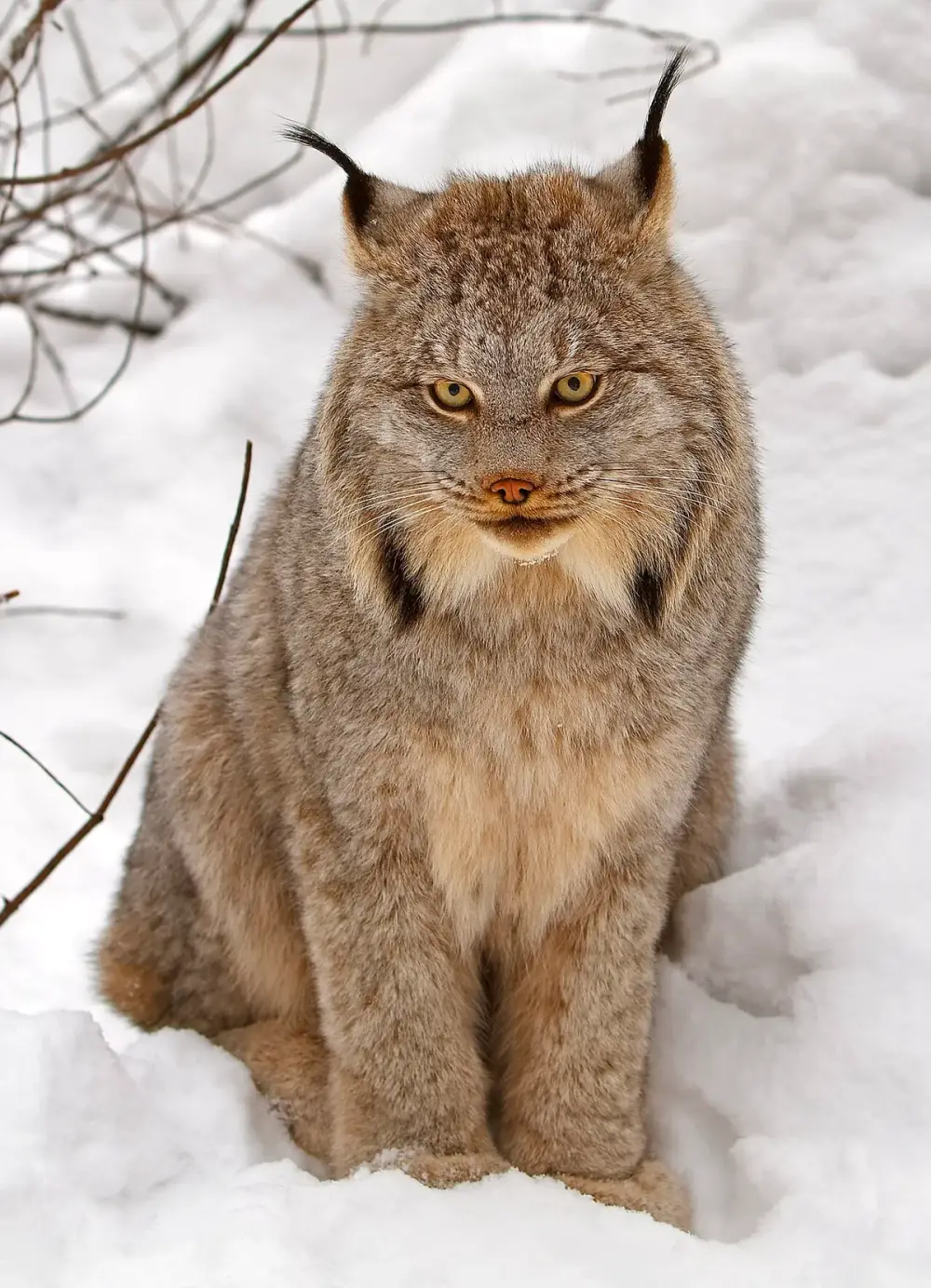
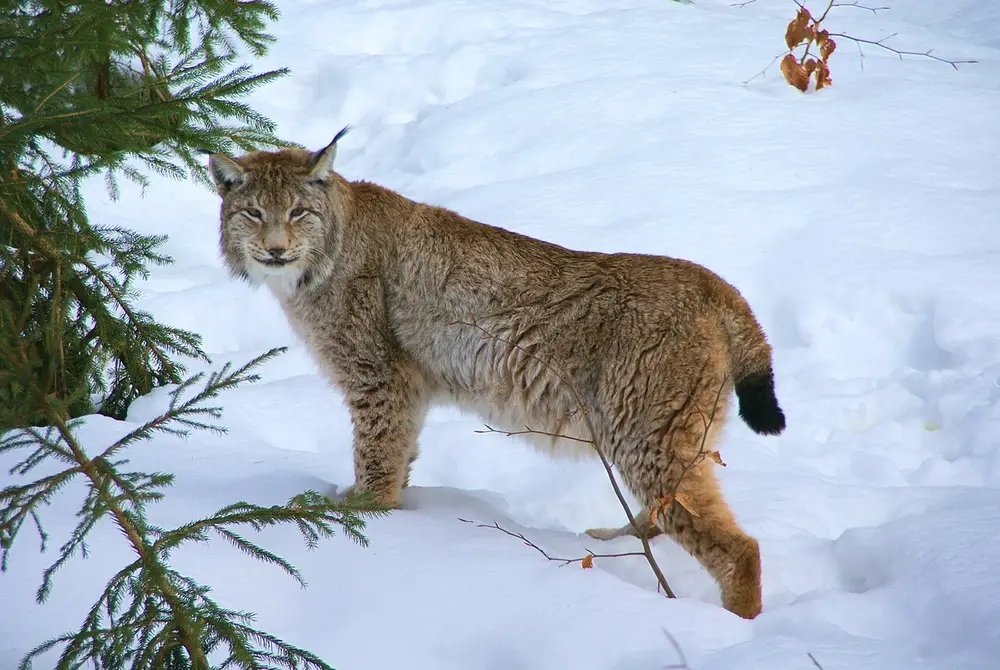
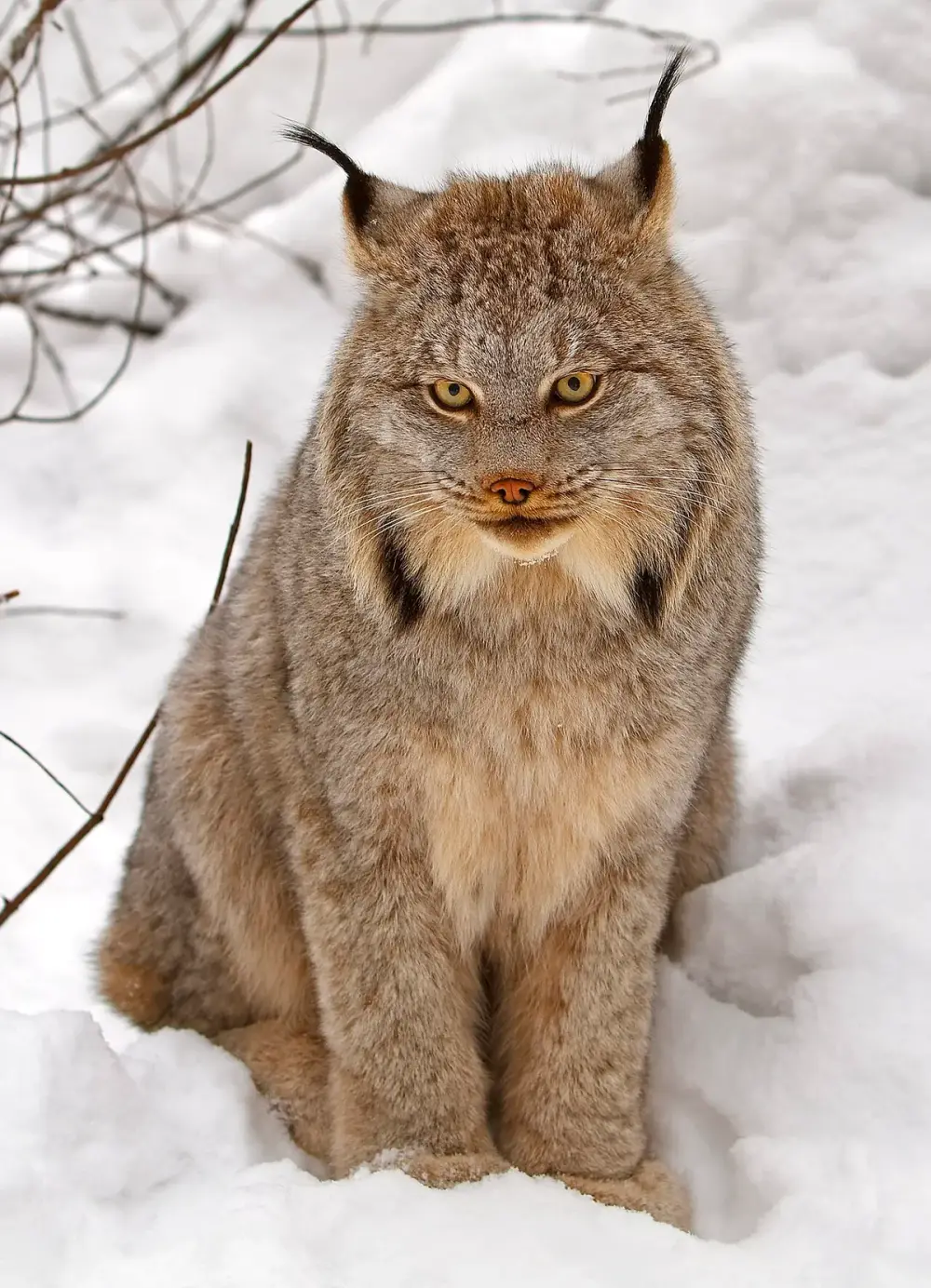
The bobcat, also known as the wildcat, bay lynx, or red lynx, is one of four living species in the medium-sized wild cat genus Lynx. It is native to North America, with a range stretching from southern Canada through most of the contiguous United States to the Mexican state of Oaxaca. The bobcat is the smallest member of its genus on average, though it still resembles its Lynx relatives in build. Its coat runs tan to grayish-brown, marked with black streaks on the body and dark bars on the forelegs and tail, patterning that works as camouflage. The ears are black-tipped and pointed with short black tufts, and the chin, lips, and underparts are typically off-white. Coat color tends to track climate: bobcats from desert regions of the Southwest are the lightest colored, while those from northern, forested regions run darkest. A small number of melanistic, all-black bobcats have been documented in Florida and New Brunswick, though even these can retain a faint spot pattern.
Its face looks especially wide because of ruffs of long hair beneath the ears, and its eyes are yellow with black slit pupils that widen at night to maximize light capture. The animal gets its common name from its short, "bobbed" tail, which is dark-tipped and measures just 9 to 20 centimeters (3.5 to 7.9 inches). From head to the base of that tail, the bobcat runs from 47.5 to 125 centimeters (18.7 to 49.2 inches), averaging around 82.7 centimeters (32.6 inches), with the animal standing about 30 to 60 centimeters (12 to 24 inches) at the shoulder. Adult males typically weigh 6.4 to 18.3 kilograms (14 to 40 pounds), averaging 9.6 kilograms (21 pounds), while females run smaller at 4 to 15.3 kilograms (8.8 to 33.7 pounds), averaging 6.8 kilograms (15 pounds). At birth, a kitten weighs just 270 to 340 grams (9.5 to 12 ounces) and measures about 25 centimeters (10 inches) long, already furred and spotted.
Two subspecies are recognized, one east of the Great Plains and one to the west, and the bobcat is thought to have descended from the Eurasian lynx, which crossed into North America via the Bering Land Bridge as early as 2.6 million years ago.
Behavior and diet
Diet
Mainly rabbits and hares, also insects, chickens, geese and other birds, small rodents, and deer
Bobcats are crepuscular, most active in the hours around dawn and dusk — typically moving from three hours before sunset until midnight, then again from before dawn until three hours after sunrise, covering 3 to 11 kilometers (2 to 7 miles) along a habitual route each night. That pattern can shift seasonally: bobcats become more active during daylight in fall and winter, tracking the daytime activity of their prey in colder weather.
The species is largely solitary and territorial, marking its home range with claw marks and deposits of urine or feces, and keeping a main den plus several auxiliary shelters — hollow logs, brush piles, rock ledges — around the edges of its territory. Home range size varies enormously, from about 0.6 to 326 square kilometers (0.23 to 126 square miles), depending on sex, prey distribution, and location; one Kansas study found resident males held ranges of about 21 square kilometers (8 square miles), with females covering less than half that. Ranges often overlap, and males tolerate that overlap more readily than females, who rarely wander into another female's territory.
Bobcats prefer rabbits and hares above all else — eastern and New England cottontails in the eastern U.S., snowshoe hares farther north, and cotton rats in the far south — but they also take insects, chickens, geese and other birds (even ones as large as a trumpeter swan, along with their eggs and fledglings), small rodents, and deer. They hunt by stalking prey and then closing the distance with a short chase or a pounce, and they can go for long stretches without eating when prey is scarce, then eat heavily once it becomes available; during lean periods they'll sometimes kill larger animals and return to feed on the carcass over time. Breeding occurs from winter into spring, with a gestation period of about two months.
Range and habitat
Habitat
Woodlands (deciduous, coniferous, or mixed), semidesert, urban edge, forest edge, and swampland
The bobcat's historical range extended from southern Canada through the contiguous United States and south to Oaxaca, Mexico, and it still occupies much of that range today. It is a highly adaptable species, favoring woodlands — deciduous, coniferous, or mixed — but living just as well in semidesert, forest edge, swampland, and urban-edge habitat, including backyards where development meets natural cover. Its range is limited less by human population than by the availability of suitable habitat; only large, intensively cultivated tracts tend to exclude it.
During the 20th century, the bobcat was thought to have disappeared from parts of the Midwest and Northeast, including southern Minnesota, eastern South Dakota, and much of Missouri, largely due to changes in agricultural land use. Since then, confirmed sightings have turned up again across New York's Southern Tier and northern Indiana, and even a bobcat captured aboard a tourist boat in downtown Pittsburgh in 2018. By 2010, the species had recolonized enough of its former range to be present in every state in the contiguous U.S. except Delaware. In Canada, deep snow limits the bobcat's range, since it lacks the large, padded feet that let the Canada lynx move efficiently over snow; even so, the more aggressive bobcat has been observed displacing the Canada lynx in Nova Scotia.
Conservation status
The bobcat has been listed as Least Concern on the IUCN Red List since 2002, owing to its wide distribution and large population. It has a long history of being hunted, both for sport and for its fur, but populations have generally proven stable over time, even as they've declined in some specific areas. The species remains vulnerable to local extirpation from pressures such as coyotes and domestic animals.
Where to see bobcat in the U.S.
71 zoos across 30 states
Find the closest one
Rank the 50 zoos holding bobcat by how far they are from you. Your location is used in your browser to sort this list and is never sent to us.
21 more zoos hold bobcat but have no coordinates on file yet, so they aren't ranked here. They're in the full list below.
Alabama· 2
Arizona· 3
California· 9
District of Columbia· 1
Florida· 7
Idaho· 1
Illinois· 1
Indiana· 1
Kansas· 1
Kentucky· 1
Louisiana· 4
Maryland· 1
Massachusetts· 3
Michigan· 2
Minnesota· 2
New Hampshire· 1
New Jersey· 2
New Mexico· 3
New York· 1
North Carolina· 4
North Dakota· 1
Oklahoma· 1
Oregon· 1
Pennsylvania· 4
Texas· 5
Utah· 1
Virginia· 2
Washington· 2
West Virginia· 2
Wisconsin· 2
AZAThe Association of Zoos and Aquariums. Accredited members have passed an independent inspection of animal care and welfare, safety, conservation and education, repeated every five years. Many smaller facilities never apply, so “not accredited” isn't a verdict on its own. What accreditation means · How we check this
Built from each zoo's own published animal list.
Bobcat: common questions
Is the bobcat endangered?
No. It has been listed as Least Concern by the IUCN since 2002, thanks to its wide range and large population.
How big does a bobcat get?
From head to the base of its tail, a bobcat measures 47.5 to 125 cm (18.7-49.2 in), averaging about 82.7 cm (32.6 in), plus a 9-20 cm (3.5-7.9 in) tail. Males typically weigh 6.4-18.3 kg (14-40 lb) and females 4-15.3 kg (8.8-33.7 lb).
What does a bobcat eat?
Mainly rabbits and hares, plus insects, chickens, geese and other birds, small rodents, and deer, with the exact mix depending on location and season.
Where do bobcats live in the wild?
From southern Canada through nearly all of the contiguous United States to Oaxaca, Mexico — every state except Delaware, in habitats from woodland to desert to urban edges.
Which U.S. zoos have bobcats?
Twenty-two zoos in our directory list the bobcat, including the Birmingham Zoo, the North Carolina Zoo, and the Tulsa Zoo and Living Museum.