
Wild Felid Advocacy Center of Washington
Shelton, WA
- Admission
- from $25
- Accreditation
- None listed
set by date and demand
not accredited by the Association of Zoos and Aquariums
Everything below is directory information drawn from public sources and the zoo's own site.
Animals at Wild Felid Advocacy Center of Washington
4 confirmed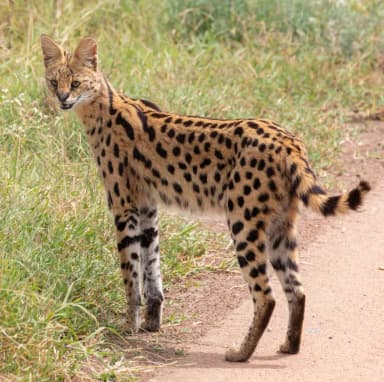
Feathers & Fangs from visitors
What people who've been to Wild Felid Advocacy Center of Washington say
A Feather is something this zoo does well; a Fang is something it gets wrong. Left by people who've been, and read by us before they appear.
Loading…
About Wild Felid Advocacy Center of Washington
The Wild Felid Advocacy Center of Washington is a 501(c)(3) nonprofit wild cat sanctuary at 3111 East Harstine Island Road North in Shelton, Washington, on the north end of Harstine Island. It is directed by a volunteer Board of Directors. The center states three objectives: to provide a safe haven for any species of wild cat in need, to provide education related to wild cats, and to monitor and assist in wild cat conservation efforts worldwide.
According to the center, it receives no state or federal support and relies on public and business donations. It states that it is licensed and inspected by the United States Department of Agriculture under the Animal Welfare Act. It is not accredited by the Association of Zoos and Aquariums. The website notes that the center is a certified member of the Washington Department of Fish and Wildlife’s Backyard Wildlife Sanctuary Program.
The center is open to visitors only through scheduled guided tours, which are booked online.
History
The website states that the center was founded in 2004 by Shelleen and Mark Mathews and received nonprofit status in 2008. It adds that Shelleen’s involvement with wild cats began in 1971. The homepage features a quotation attributed to Chief Dan George about knowing and fearing animals.
The center says some of its cats come from negligent or exploitative situations or as an alternative to euthanasia, others from homes where they were cared for but could not stay because of legislation or the death or illness of the caretaker, and others from rehabilitation facilities, where they could not return to the wild, and from zoological facilities.
Exhibits and habitats
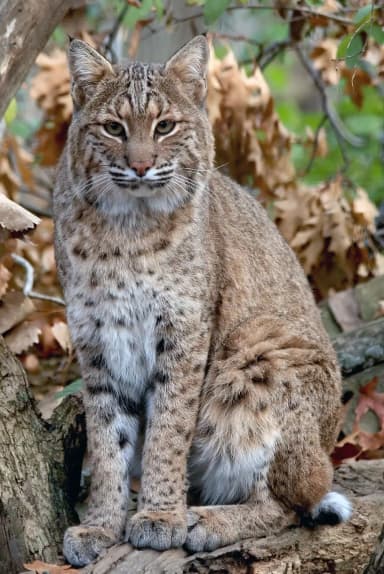
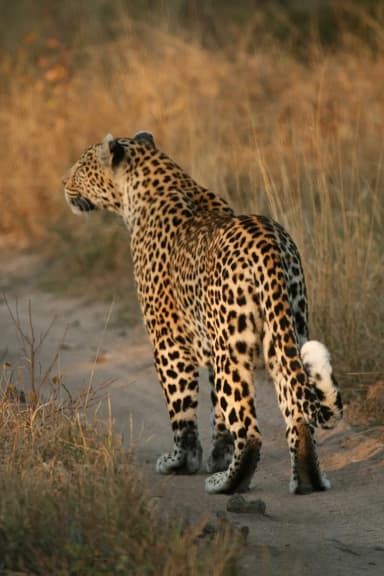
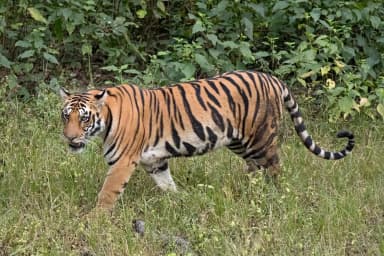
The center says it houses approximately 20 wild cats, ranging in age from about 4 to 24 years old, and its support page says many residents are geriatric, aged 15 or older, with several needing special diets, medicines, or veterinary visits to manage chronic conditions. Its mission page lists these species: bobcat, Eurasian lynx, serval, tiger, chausie, savannah, African leopard, and leopard cat.
The Meet the Cats page profiles individual animals:
- Suri, a Bengal tiger, who came to the center at five months old and, according to the page, enjoys interacting with visitors. The support page says her preferred enrichment is a swimming pool.
- Dakari, an African serval, who arrived with a bobcat named Enso and is described as usually the first wild cat to greet visitors. Enso’s favorite enrichment, according to the support page, is cumin in a paper bag.
- Turbo, an African leopard, described as a good communicator who lets people know right away if he does not like something.
- Walker, a leopard cat, who spends most of his time in elevated areas, including a custom hammock.
- Sid, a bobcat, who came to the center by way of a wildlife rehabilitation center where his injuries kept him from returning to the wild.
The support page describes each cat as living in a natural space with several hiding places, a choice of where to sleep, a place to observe without being seen, trees, grass, hammocks, and toys. It says each cat’s preferences are recorded in a database to help maintain the enrichment program.
Conservation and programs
According to the center, a guide takes each visiting group around to see and learn about the species firsthand. The center says it builds natural and spacious habitats, provides proper diets and medical care, runs an extensive enrichment program, and limits how long and to how many guests the cats are exposed.
On environmental stewardship, the center says it diverts more than 30,000 pounds of meat from landfills annually. The website lists the conservation organizations it supports as Lumens for Lions, the Scottish Wildcat Foundation, Fishing Cat Conservation, the International Society for Endangered Cats (ISEC Canada), Panthera, the Snow Leopard Trust, and the World Wildlife Fund.
The center runs a volunteer program with more than 20 volunteers, according to its support page. Volunteers help with gardening, food preparation, construction, and husbandry, among other tasks. The page lists a minimum age of 18, an average of at least eight hours per month, medical insurance, and Covid vaccination as requirements. The support page also lists four restricted funds: an Animal Care Fund, a Veterinary Fund, an Enrichment Fund, and Special Projects.
Planning your visit
As listed on the center’s website, all visitors are scheduled entirely online through a reservation partner. There are no same-day bookings or walk-ups. Guided tours are offered on Tuesdays, Thursdays, and Saturdays, and tour times are determined by animal welfare needs and shown on the booking platform. Groups are capped at six people per guided tour. The website states that the cost to visit is a donation and is non-refundable, and that visits go ahead rain or shine.
The center asks visitors not to take photographs or video, because many of the cats react fearfully to phones, cameras, or any object pointed at them. Touching animals is not permitted, and the website states that guests who touch animals will be removed. Pets are not allowed inside the facility or to be left unattended outside. The pathways are unpaved and covered in bark, and the center recommends comfortable walking shoes.
The center is on the north end of Harstine Island. The website warns that GPS is unreliable in the area and recommends using the printed or digital directions it provides. A guide meets visitors at the front gate at the scheduled time.
The phone line is answered by a voicemail system, and the center states that calls are generally returned within two days. The address is 3111 East Harstine Island Road North, Shelton, Washington 98584, and the email address is mail@wildfelids.org.
What we haven't confirmed
Everything above came from public sources. These specifics we haven't stood behind yet:
- Parking
- Whether children of all ages may join tours
- Current tour times
Wild Felid Advocacy Center of Washington compared with nearby zoos
How Wild Felid Advocacy Center of Washington lines up against other zoos in the same state. We don't have coordinates for it yet, so these aren't ranked by distance.
| Zoo | Admission | Hours | Size | AZA |
|---|---|---|---|---|
| Wild Felid Advocacy Center of WashingtonThis zooShelton, WA | from $25 | Guided visits by advance online reservation only, Tuesdays, Thursdays and Saturdays (no same-day booking or walk-ups). Times vary based on the cats' needs. | — | No |
| Cat Tales Zoological ParkSpokane, WA | $18 | 10:00 AM – 5:00 PM | — | No |
| Cougar Mountain ZooIssaquah, WA | $18 | 9:30AM – 5:00PM | 11 acres | No |
| Debbie Dolittle's Indoor Petting ZooTacoma, WA | $15 | Friday – Monday 11:00 AM – 6:00 PM (walk-ins taken 11 AM – 5 PM); closed Tuesday – Thursday. | — | No |
Distances are straight-line. A dash means we haven't confirmed that detail yet, not that the zoo lacks it.
AZAThe Association of Zoos and Aquariums. Accredited members have passed an independent inspection of animal care and welfare, safety, conservation and education, repeated every five years. Many smaller facilities never apply, so “not accredited” isn't a verdict on its own. What accreditation means · How we check this
Wild Felid Advocacy Center of Washington: common questions
Can visitors drop in without a reservation?
No. The website states that all visits are scheduled online and that there are no same-day bookings or walk-ups.
What days are tours offered?
Tuesdays, Thursdays, and Saturdays, according to the website. Times are shown on the booking platform.
Are photos allowed?
No. The website states that photography and video are prohibited because many of the cats react fearfully to cameras and phones.
What cats live at the center?
The website lists bobcat, Eurasian lynx, serval, tiger, chausie, savannah, African leopard, and leopard cat, among approximately 20 cats.
Is the center AZA accredited?
No. It is not accredited by the Association of Zoos and Aquariums. It states that it is licensed and inspected by the USDA.
Something wrong here? Tell us — we correct in place, with a dated note.