
- Admission
- Free
- Size
- 100 acres
- Accreditation
- None listed
not accredited by the Association of Zoos and Aquariums
Everything below is directory information drawn from public sources and the zoo's own site.
Animals at Maymont
17 confirmedMammals14
 Jack Dykinga · Public domain
American Bison
 Smaack · CC BY-SA 4.0
Cow
 Yathin S Krishnappa · CC BY-SA 3.0
Coyote
 Kuebi = Armin Kübelbeck · CC BY-SA 3.0
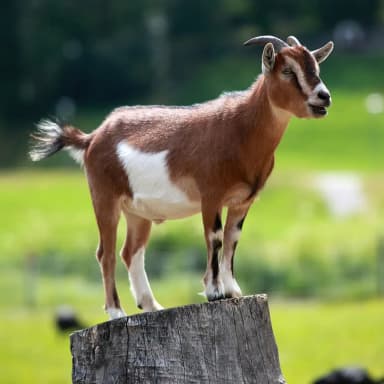
Goat
 Membeth · CC0
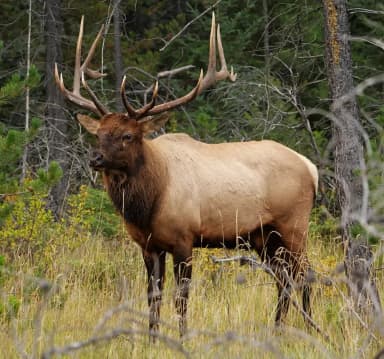
Elk
 Lilly M · CC BY-SA 3.0
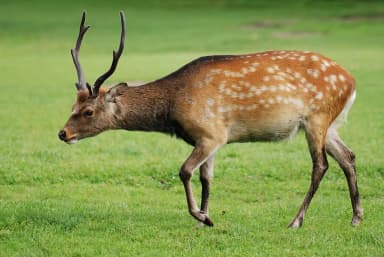
Sika Deer
 Mätes II. · CC BY-SA 3.0
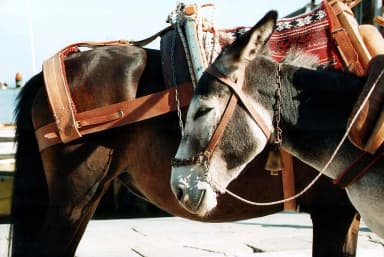
Donkey
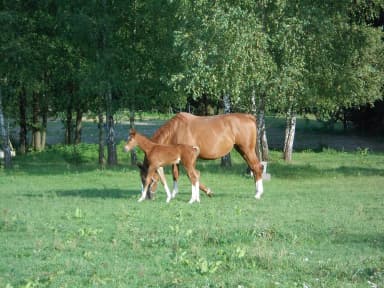 Peter.shaman · CC BY-SA 4.0
Horse
 Wikimedia Commons · Public domain
North American Porcupine
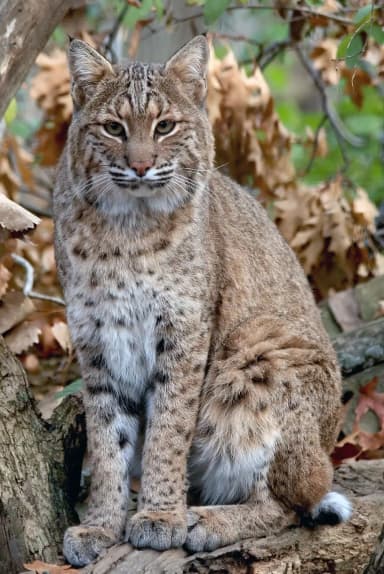 Becker1999 (Paul and Cathy) · CC BY 2.0
Bobcat
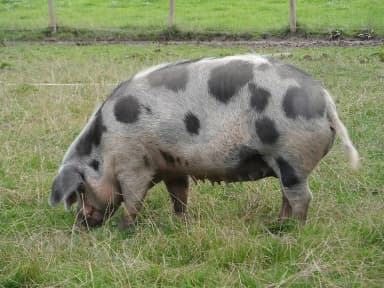 Sheila1988 · CC BY-SA 4.0
Pig
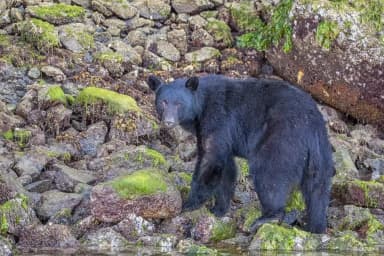 Charles J. Sharp · CC BY-SA 4.0
American Black Bear
 ClaudiaTen · CC BY-SA 4.0
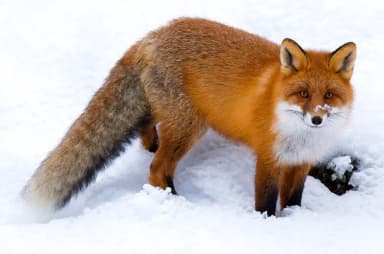
Red Fox
Feathers & Fangs from visitors
What people who've been to Maymont say
A Feather is something this zoo does well; a Fang is something it gets wrong. Left by people who've been, and read by us before they appear.
Loading…
About Maymont
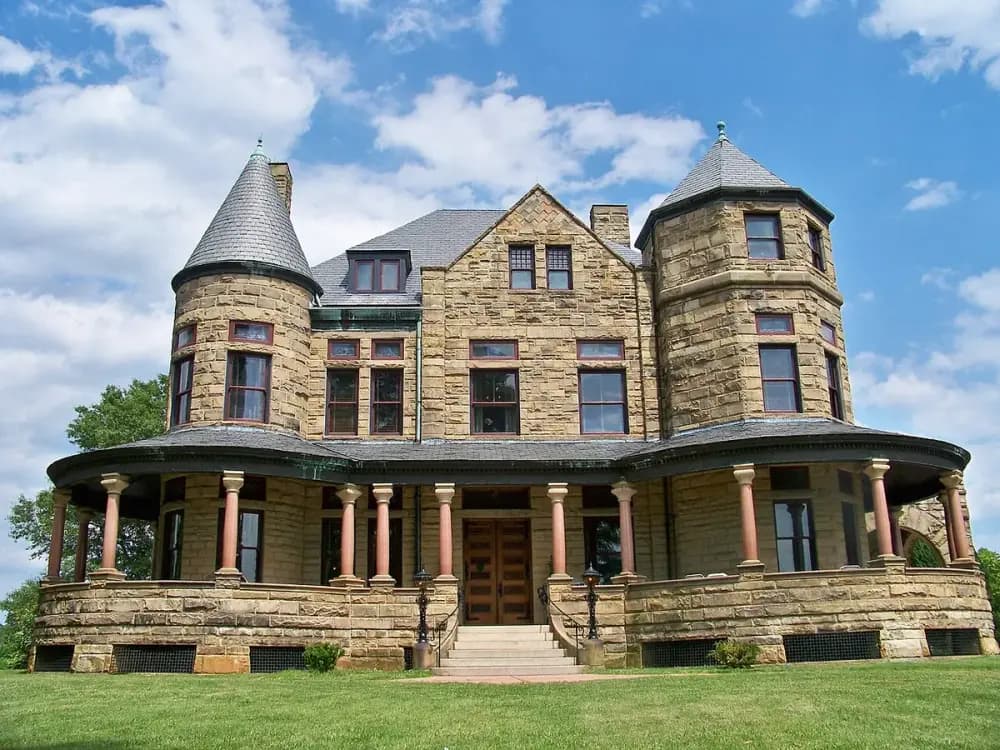
Maymont is a 100-acre estate and public park in Richmond, Virginia, above the James River. It combines a Gilded Age mansion and gardens with animal areas: a Virginia Wildlife Trail, Maymont Farm, and The Robins Nature Center. The Maymont Foundation, a nonprofit, describes itself as the organization entrusted with caring for the space, and the City of Richmond owns the property.
The foundation's website says the grounds are free to visit and that tickets are not required to enter Maymont's 100 acres. The Nature Center and the Mansion are ticketed, and a membership offers free admission to both.
Maymont's 100th anniversary page says that over a million people visit annually, a figure given by Maymont itself. The estate has three entrances, with parking at Maymont Farm, The Robins Nature Center, and the Hampton Street entrance at 1700 Hampton Street, which is the closest entrance to the Stone Barn Welcome Center, where history exhibits, a gift shop, and staff help visitors navigate the grounds.
History
Maymont's history page says that James and Sallie Dooley lived there from 1893 until 1925. The Dooleys bought the land in 1886, and the page says the couple commissioned a local architect with European training, Edgerton Stewart Rogers, to design a 13,000-square-foot home on the highest ridge of the property overlooking the James River. The mansion, completed in 1893, blends Romanesque Revival and Queen Anne styles. A stone barn, a carriage house, and a water tower were added between 1904 and 1908 by the firm Noland and Baskervill.
James Dooley's will, published in 1922, left the grounds, the mansion, and its contents to the City of Richmond upon Sallie Dooley's death in 1925. The 100th anniversary page says the City of Richmond opened the estate's gates to the public as a city park in January 1926, and opened the mansion with its intact historic collection on March 16, 1926, welcoming more than 55,000 visitors in the first year.
From 1925 until 1975 the property was owned and operated by the city. The Maymont Foundation's about page says that in 1975 the foundation became manager, promoter, and developer of Maymont under an agreement with the City of Richmond, and, according to the page, raised funds, developed a long-term master plan, and renovated buildings in its first year. The animal areas came later. The anniversary page says that by mid-century a growing environmental awareness led local visionaries and civic groups to add educational facilities and animal habitats, and the about page says natural-setting wildlife habitats, Maymont Farm, and The Robins Nature Center have been added and maintained over the years.
Maymont Farm's history is given on the farm page. Its original barn and pastures were completed in 1960, and the site was relocated in 1983 to accommodate larger facilities for the animals in a more accessible location for guests. The page adds that Maymont was not a farm during the Dooleys' time.
Exhibits and habitats
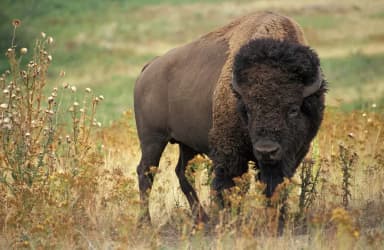
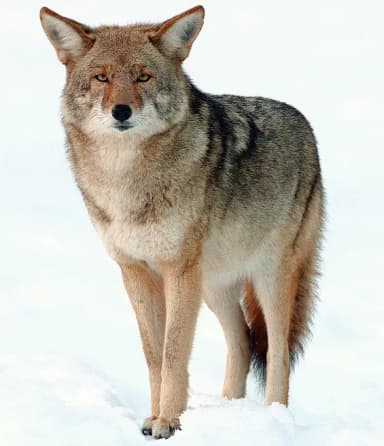
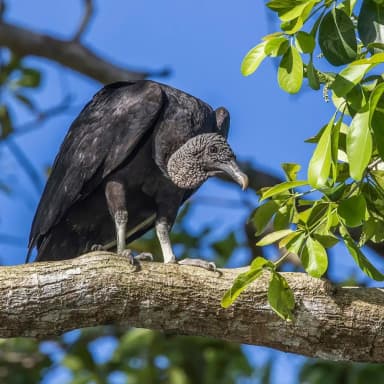
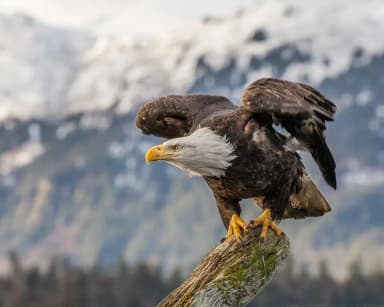
The Virginia Wildlife Trail is a mile-long trail in a 40-acre valley between the historic estate, Maymont Farm, and The Robins Nature Center. Maymont says the trail is home to over a dozen species of Virginia native animals, historic and present, most of them wildlife rescues, and its visit page describes them as all rescued or non-releasable. The animals named on the trail page are bison, bobcat, North American porcupine, red fox, bald eagle, sika deer, black vulture, hawks, elk, black bear, and coyotes. The coyotes and porcupines are the newest additions, according to Maymont, and the trail reopened after a two-year enhancement project. Interpretive signs explain each species' role in the ecosystem.
Maymont advises visiting in the morning or before 4 p.m. to improve the chances of seeing the animals, because many go into dens at 4 p.m. The raptors, bison, and elk are typically always viewable. The trail is paved or made of wooden bridges and boardwalks, but much of it is not flat, and the site notes that hills can be challenging for wheelchair users. Wheelchair-accessible restrooms are located near Raptor Valley, within the trail.
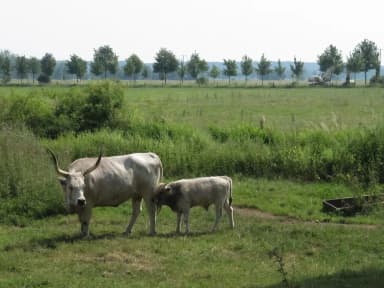
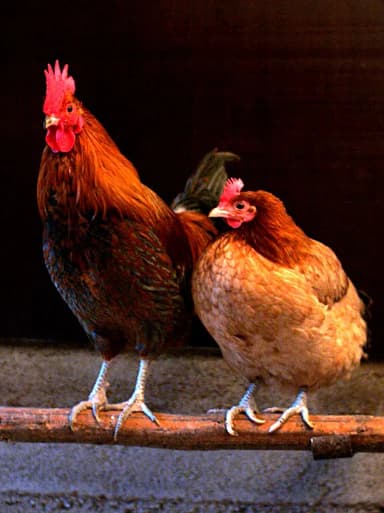
Maymont Farm holds goats, sheep, chickens, a donkey, cows, pigs, and horses, per the farm page, and visitors can buy feed from machines on site. The visit page says the barn can be entered between noon and 4 p.m. and that grass pellets for feeding the goats are sold, with visitors advised to bring cash.
The Robins Nature Center presents the ecology of the James River and Chesapeake Bay watershed. The page describes it as the largest facility of its kind in central Virginia, with close to 30,000 gallons of aquaria holding fish, turtles, reptiles, and amphibians, plus two river otters. The visit page gives the building as 29,000 square feet. It includes a play area with a beaver lodge and a kayak, a 34-foot climbing sculpture called River Reach with netted platforms, and learning displays.
Wikipedia describes a horticultural side as well, with an arboretum of more than 200 species of trees and woody plants, ten specialty gardens, and Marie's Butterfly Garden, finished in 2009.
Conservation and programs
Maymont offers guided walking tours of the Virginia Wildlife Trail, which the trail page says last one hour and are offered most weekends through fall. It also lists small-group behind-the-scenes encounters lasting 30 minutes, each with an enrichment viewing, a question-and-answer session, and a photo opportunity. The encounters named are with coyotes Bernie or Punkie, a Breakfast with Big Bear experience with a black bear, and a porcupine encounter with Barb or Sandy. Ticketed experiences are optional, and the trail page invites donations and animal adoptions to support animal care.
The gardens are a large part of the estate. The gardens page describes an Italian Garden designed by Noland and Baskervill and completed in 1910, with Petersburg granite stonework, several levels, a pergola, and a gazebo imported from Italy. The Japanese Garden, described as one of the oldest public Japanese gardens on the East Coast, grew from a section of the Kanawha Canal that the Dooleys bought in 1911. The Dooleys hired Muto, a Japanese garden master, and the original, smaller garden was completed in 1912. It was renovated in 1978 by Earth Design, Inc. as a stroll garden.
Signature events listed on Maymont's website include Garden Glow, Merry Market, Easter, Herbs Galore, a Summer Kickoff Concert, and Bier-Garden, along with camps, Toddler Time, and venues for weddings and private events.
Planning your visit
As listed on Maymont's website, daily hours run from 10 a.m. to 7 p.m. through October 11, then 10 a.m. to 4 p.m. from October 12 through November 8, with the parking lots closing at 3 p.m., so that the estate can reopen for the evening event Garden Glow. The site lists 10 a.m. to 5 p.m. from November 9 until spring. The Robins Nature Center is listed as open Thursday through Sunday, 10 a.m. to 5 p.m., and the Mansion Thursday through Sunday, 11 a.m. to 5 p.m.; the Mansion reopened in March 2026 after a two-year preservation project. The grounds are occasionally closed for short periods during weddings and private events.
Current ticket details for the Nature Center and Mansion are on Maymont's website. Free, limited parking is available at Maymont Farm, The Robins Nature Center, and the Hampton Street entrance. Pets and emotional support animals are not permitted on the grounds, with an exception for trained service dogs as defined by the ADA. Visitors are advised to wear comfortable shoes because of the hills. Paths are paved in many areas but include several steep hills, and wheelchair accessibility is limited in some historic areas, including the Mansion, the Italian Garden, and the Japanese Garden. Drones, balloons, glitter, and confetti are prohibited.
What we haven't confirmed
Everything above came from public sources. These specifics we haven't stood behind yet:
- Current ticket prices for the Nature Center and Mansion
- Hours after the fall schedule listed on the website
- Phone number
- Whether the coyote and porcupine habitats and other animals are currently on view
- Accessibility details for each part of the estate
Maymont compared with nearby zoos
How Maymont lines up against the closest zoos we have details for — useful if you're deciding between them for the same day out.
| Zoo | Distance | Admission | Hours | Size | AZA |
|---|---|---|---|---|---|
| MaymontThis zooRichmond, VA | — | Free | Grounds, Maymont Farm and Virginia Wildlife Trail open daily; current hours 10:00 AM – 7:00 PM. Oct 12 – Nov 8: 10 AM – 4 PM. From Nov 9: 10 AM – 5 PM until spring. Robins Nature Center Thu–Sun 10 AM–5 PM; Mansion Thu–Sun 11 AM–5 PM. | 100 acres | No |
| Metro Richmond ZooRichmond, VA | 19 mi | $27.95 | 9:30 AM – 5:00 PM | 70 acres | No |
| Busch Gardens WilliamsburgWilliamsburg, VA | 50 mi | $61.99–$121.99 | — | 422 acres | No |
| Virginia Living MuseumNewport News, VA | 64 mi | $18–$21.95 | 9am – 5pm | — | Yes |
Distances are straight-line. A dash means we haven't confirmed that detail yet, not that the zoo lacks it.
AZAThe Association of Zoos and Aquariums. Accredited members have passed an independent inspection of animal care and welfare, safety, conservation and education, repeated every five years. Many smaller facilities never apply, so “not accredited” isn't a verdict on its own. What accreditation means · How we check this
Maymont: common questions
Is Maymont free?
The grounds are free to enter, according to Maymont's website. The Nature Center and Mansion are ticketed.
What animals can visitors see?
The Virginia Wildlife Trail lists bison, elk, black bears, bobcats, red foxes, sika deer, bald eagles, hawks, and vultures, and the farm has goats, sheep, cows, pigs, horses, and chickens.
How long is the Virginia Wildlife Trail?
Maymont describes it as a mile-long trail through a 40-acre valley.
Can visitors bring dogs?
No, only trained service dogs are permitted.
Who built Maymont?
James and Sallie Dooley built the estate, which was completed in 1893 and left to the City of Richmond.
Something wrong here? Tell us — we correct in place, with a dated note.