
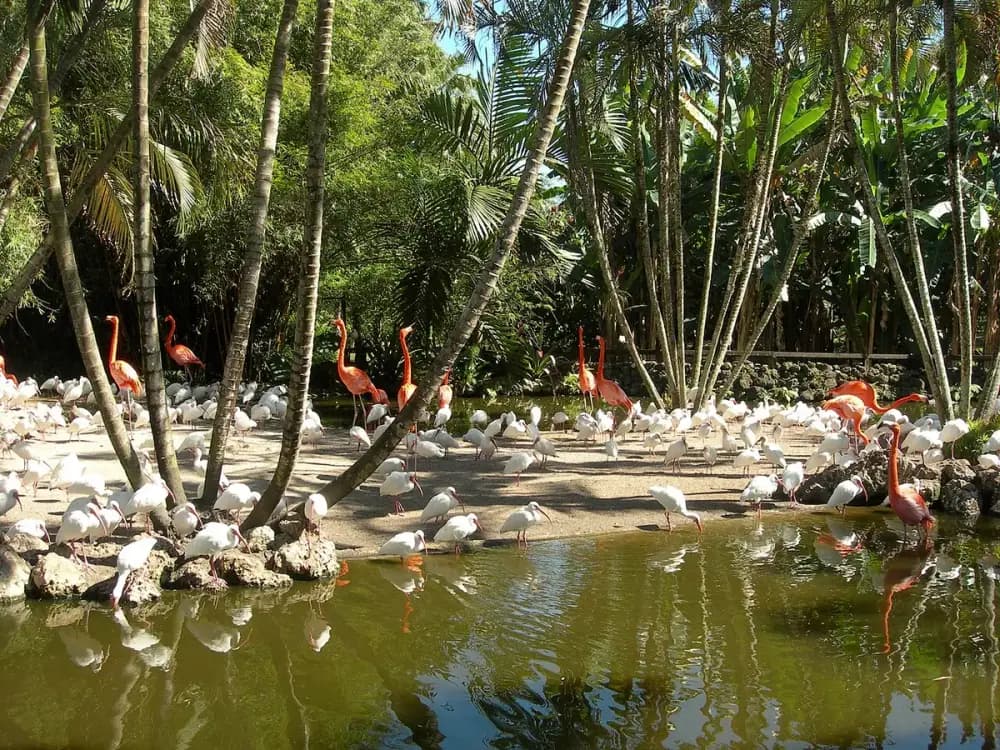
- Admission
- $24
- Size
- 60 acres
- Accreditation
- None listed
unverified
not accredited by the Association of Zoos and Aquariums
Everything below is directory information drawn from public sources and the zoo's own site.
Animals at Flamingo Gardens
12 confirmedMammals2
Birds7
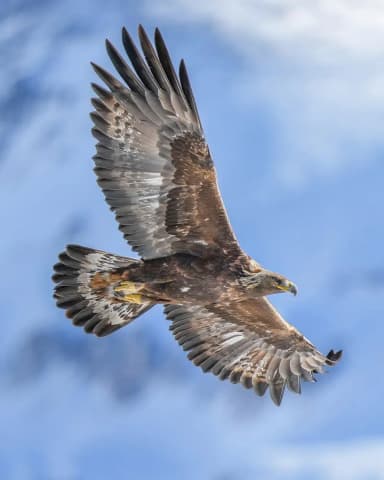 Giles Laurent · CC BY-SA 4.0
Golden Eagle
 LancerEvolution ; from New Jersey, United States (USA) · CC BY 2.0
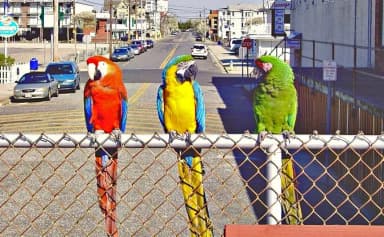
Macaw
 Wayne Deeker · CC BY 3.0
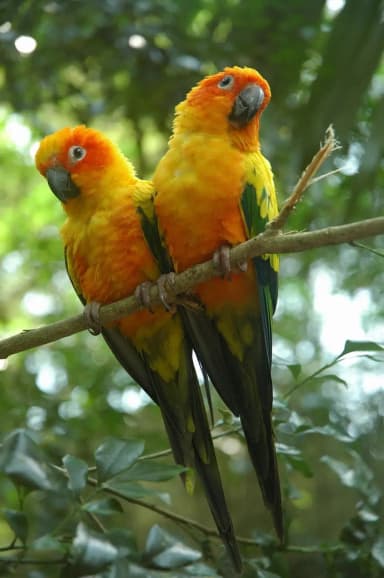
Sun Conure
 JJ Harrison · CC BY-SA 3.0
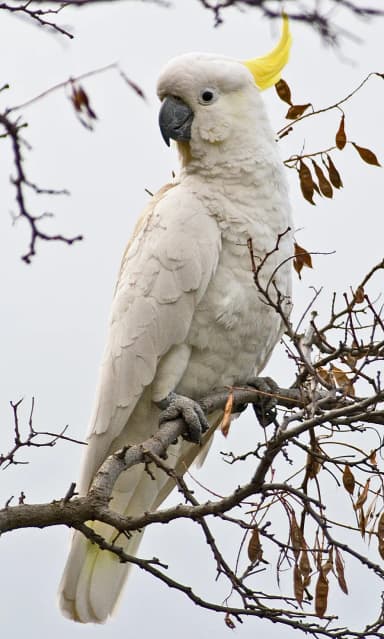
Cockatoo
 Andy Morffew from Itchen Abbas, Hampshire, UK · CC BY 2.0
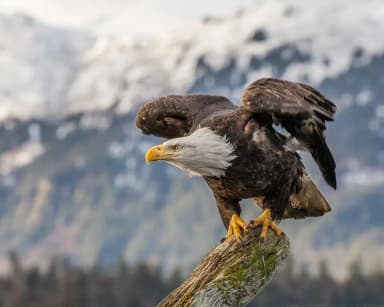
Bald Eagle
 JeffreyGammon · CC BY 4.0
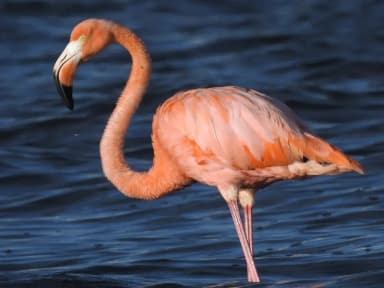
Caribbean Flamingo
 Basa Roland · CC BY-SA 3.0
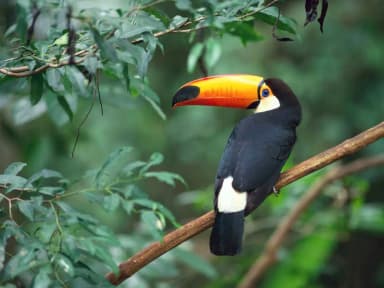
Toucan
Feathers & Fangs from visitors
What people who've been to Flamingo Gardens say
A Feather is something this zoo does well; a Fang is something it gets wrong. Left by people who've been, and read by us before they appear.
Loading…
About Flamingo Gardens
Flamingo Gardens sits on 60 acres in South Florida, built around Long Key, a natural oak hammock that was once surrounded by the Everglades. It began in 1927 as Flamingo Groves, a citrus orchard planted by Floyd L. and Jane Wray, and it has grown into a combined botanical garden and wildlife sanctuary run today by the nonprofit Floyd L. Wray Memorial Foundation. The property contains over 3,000 species of rare, exotic, tropical, subtropical, and native plants and trees, along with some of the largest naturalized collections of orchids, cycads, and heliconias and gingers in the contiguous United States. It also holds the largest single collection of Florida "Champion" trees, the biggest tree of each species as measured by the Florida Forestry Service.
The grounds are organized around two overlapping missions: preserving a stretch of hardwood forest that predates development in Broward County, and giving permanent homes to native Florida wildlife that can no longer survive on their own. The Everglades Wildlife Sanctuary occupies part of the property and houses animals that arrived injured or otherwise unable to be released back into the wild. Flamingo Gardens is not accredited by the Association of Zoos and Aquariums; it operates as a botanical and wildlife attraction under Broward County's cultural and tourism programs, with support from the state of Florida and the National Endowment for the Arts.
The Wray Home, built in 1933 as the family's weekend residence atop the Live Oak hammock, still stands on the grounds and is now a museum. It is recognized as the oldest residence in Broward County west of University Drive and carries both Broward Cultural Heritage Landmark and state Historical Landmark status.
History
Floyd and Jane Wray came to Florida in 1925 and purchased 320 acres around Long Key in the Everglades. On January 2, 1927, Floyd Wray incorporated Flamingo Groves with business partner Frank Stirling, planting the first citrus tree on February 22 of that year. The grove eventually grew to 2,000 acres and more than 60 varieties of citrus, including a 20-acre citrus laboratory, and in the 1930s the property received foreign plants and seeds from the federal government for test planting.
The Wrays opened the grove to the public from the start, hosting annual barbecues on the lawn and giving daily tours of the citrus groves, botanical gardens, and fruit-shipping area. Nesting flamingos were reportedly already on the property when it was purchased, and Jane Wray introduced peacocks in the 1940s. An alligator exhibit with daily demonstrations was added in the 1960s.
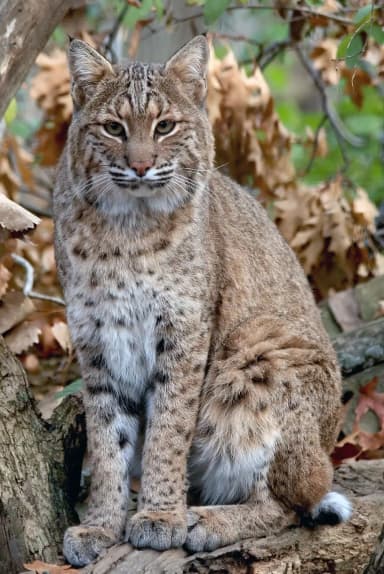
After Floyd Wray's death, Jane Wray established the Floyd L. Wray Memorial Foundation in 1969 to preserve the property and emphasize the history of the Everglades; the name changed to Flamingo Gardens around this time. The Everglades Wildlife Sanctuary opened in 1990 with a Bird of Prey Center, followed by a half-acre Free-flight Aviary representing the five ecological zones of South Florida — one of the first exhibits of its kind in the country built to house permanently injured or non-releasable native wildlife. Additional wildlife displays were added in the years that followed, including exhibits for alligators, river otters, bald and golden eagles, bobcats, tortoises, and Florida panthers.
Exhibits and habitats
The Everglades Wildlife Sanctuary is the centerpiece of the animal side of the property, built around the Bird of Prey Center and the Free-flight Aviary, which recreates South Florida's five ecological zones under a half-acre canopy. The sanctuary is described by the gardens as home to the largest collection of Florida native wildlife in the state.
The botanical side of the property includes the arboretum, home to some of the largest trees in Florida, and specialized gardens for orchids, cycads, heliconias, and gingers. The hammock itself — one of the last natural hardwood forests remaining in South Florida — is part of the experience rather than a built exhibit, described as largely untouched since it was inhabited by the Tequesta people.
The Wray Home Museum, set in a stand of 200-year-old oaks, exhibits furnishings and possessions connected to the Wray family and to the history of Flamingo Groves, giving visitors a sense of South Florida domestic life in the 1930s. The gardens also run rotating gallery and garden-wide exhibits; current and recent installations include a display of historic Florida citrus packing-crate labels on loan from the Museum of Florida History, a collection of botanical watercolor paintings called Flora Sanctum, and a garden-wide interpretive trail called "100 Years, 10 Stops" marking the property's centennial.
Animal highlights
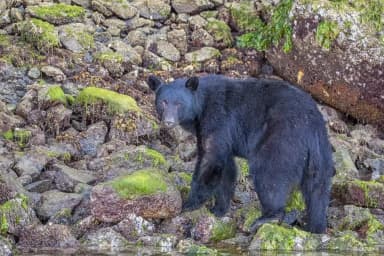
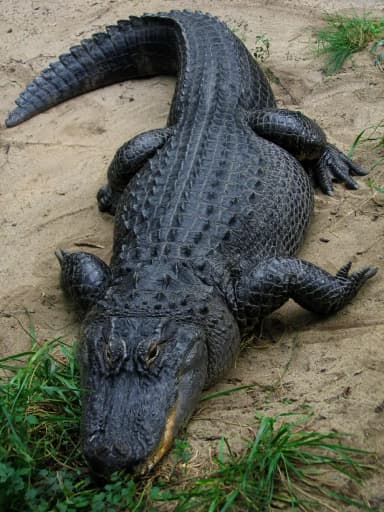
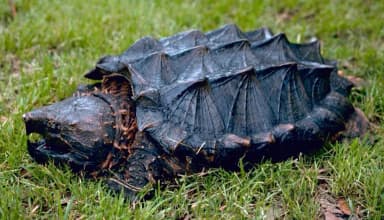
The Everglades Wildlife Sanctuary is built for permanently injured or non-releasable Florida native wildlife, and the gardens describe it as home to over 90 native species. Named residents include American alligators, bobcats, river otters, bald and golden eagles, Florida panthers, a black bear, and peacocks, along with threatened or endangered species such as the American alligator, American snapping turtle, Florida burrowing owl, wood stork, and Florida panther, which serve as ambassadors for public education about the Everglades. Flamingos — for which the gardens are named — are also part of the collection, along with hawks and tortoises housed elsewhere on the property.
Because Flamingo Gardens combines a wildlife sanctuary with an active botanical collection, plants share equal billing with animals here: the grounds hold more than 3,000 species of rare and exotic tropical, subtropical, and native plants and trees alongside the animal exhibits.
Conservation and programs
Flamingo Gardens' conservation activity centers on its living plant collections as much as its animal sanctuary. UF Master Gardener Volunteers have run a hands-on bromeliad care project across the gardens, learning to identify sun- and shade-loving bromeliads, mulch properly around plants, and manage mosquito concerns tied to the water bromeliads naturally collect, under the mentorship of the gardens' Botanical Curator. A separate volunteer group works alongside the gardens' Butterfly Team to propagate host plants and nectar sources for pollinators. Every certified UF Master Gardener Volunteer completes at least 75 hours of service before graduating, then continues through ongoing volunteer work and education. The gardens also credit an "EcoTeers" volunteer group and "Orchidteers" among the groups supporting its horticultural and educational mission, including outreach at community events such as a Garden Club Seminar in Pompano Beach.
Planning your visit
As listed on the gardens' website, Flamingo Gardens is open 9:30 a.m. to 5 p.m., with last entry at 4 p.m., the last tram at 4 p.m., and the Free-flight Aviary closing at 4:30 p.m. The gardens are closed on Thanksgiving and Christmas Day. Listed admission is $24 for adults age 12 and up and $17 for children ages 3 to 11; children two and under, along with Flamingo Gardens members, are admitted free.
Food service is available on-site: a snack bar operates daily from 9:30 a.m. to 4:30 p.m., and a grill runs from 11 a.m. to 3 p.m. Thursday through Sunday. Mobility equipment can be rented at the gate — a single Scooterbug stroller runs $7 and a double $9, subject to tax, a deposit, and an ID surrender — and wheelchairs are provided and maintained through Scooterbug Guest and Mobility Solutions. Guests arriving without a car can use the South Florida Elite Shuttle service. Group rates, VIP tours, and wildlife encounters are available for larger parties by contacting the gardens directly.
Because prices, hours, and available exhibits change with the season, visitors should confirm current details on Flamingo Gardens' official website before planning a trip.
What we haven't confirmed
Everything above came from public sources. These specifics we haven't stood behind yet:
- Parking details (cost and location)
- Total animal count
- Published species count
- Estimated time needed for a visit
- Phone number
- Wheelchair accessibility specifics beyond rental availability
Flamingo Gardens compared with nearby zoos
How Flamingo Gardens lines up against the closest zoos we have details for — useful if you're deciding between them for the same day out.
| Zoo | Distance | Admission | Hours | Size | AZA |
|---|---|---|---|---|---|
| Flamingo GardensThis zooFort Lauderdale, FL | — | $24 | 9:30AM – 5:00PM | 60 acres | No |
| Jungle IslandMiami, FL | 22 mi | $29.95 | — | — | No |
| Zoo MiamiMiami, FL | 32 mi | $25.95 | Daily 10:00 AM – 5:00 PM; last ticket sold 4:00 PM. Open every day. Thanksgiving 10 AM–3 PM; Christmas Day 12–5 PM. Closes 4 PM (last ticket 3 PM) on Oct 3 and Oct 17, 2026 and on select holiday night-event dates. | 750 acres | Yes |
| Zoological Wildlife FoundationMiami, FL | 33 mi | — | Guided tours by reservation only, Monday–Sunday 10:00 AM – 6:00 PM; must pre-book at least 24 hours ahead (same-day by phone 305-969-3696). Office 9 AM – 6 PM. December 25 (Dec 24 open 9 AM – 2 PM). | — | No |
Distances are straight-line. A dash means we haven't confirmed that detail yet, not that the zoo lacks it.
AZAThe Association of Zoos and Aquariums. Accredited members have passed an independent inspection of animal care and welfare, safety, conservation and education, repeated every five years. Many smaller facilities never apply, so “not accredited” isn't a verdict on its own. What accreditation means · How we check this
Flamingo Gardens: common questions
Is Flamingo Gardens AZA accredited?
No. Flamingo Gardens operates as an independent nonprofit botanical garden and wildlife sanctuary rather than an AZA-accredited zoo.
How big is Flamingo Gardens?
The property covers 60 acres, including botanical gardens, an arboretum, and the Everglades Wildlife Sanctuary.
When did Flamingo Gardens open?
It traces back to 1927, when Floyd L. and Jane Wray incorporated Flamingo Groves as a citrus orchard. The Everglades Wildlife Sanctuary itself opened in 1990.
What animals can you see at Flamingo Gardens?
Permanently injured and non-releasable Florida native wildlife, including alligators, bobcats, river otters, eagles, a black bear, Florida panthers, and flamingos, along with peacocks and other species around the grounds.
Is there food available inside Flamingo Gardens?
Yes. A snack bar and a grill both operate on-site, on the schedule listed on the gardens' website.
Are strollers and wheelchairs available?
Yes. Single and double strollers can be rented at the gate, and wheelchairs are provided through the gardens' mobility partner.
Something wrong here? Tell us — we correct in place, with a dated note.