
Endangered animals in U.S. zoos
Endangered (EN) is the IUCN Red List category for species facing a very high risk of extinction in the wild. It is the middle of the three threatened categories, between Vulnerable and Critically Endangered, and applies when, for example, fewer than 2,500 mature individuals remain and numbers are still falling.
Most widely held
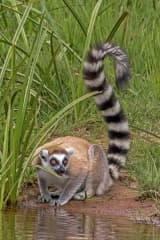 Ring-tailed LemurLemur cattaAt 118 zoos
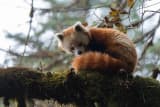 Red pandaAilurus fulgensAt 71 zoos
 African Spurred TortoiseCentrochelys sulcataAt 69 zoos
 Black-handed Spider MonkeyAteles geoffroyiAt 41 zoos
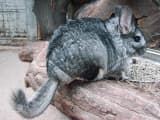 ChinchillaChinchilla lanigeraAt 39 zoos
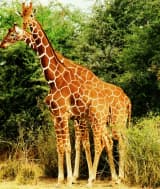 Reticulated giraffeGiraffa reticulataAt 39 zoos
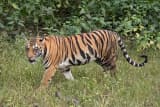 TigerPanthera tigrisAt 39 zoos
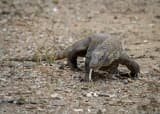 Komodo DragonVaranus komodoensisAt 35 zoos
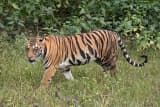 Amur tigerPanthera tigrisAt 32 zoos
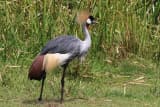 Grey Crowned CraneBalearica regulorumAt 32 zoos
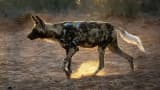 African Wild DogLycaon pictusAt 31 zoos
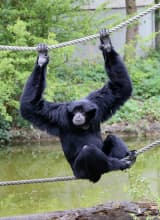 SiamangSymphalangus syndactylusAt 31 zoos
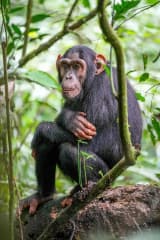 ChimpanzeePan troglodytesAt 29 zoos
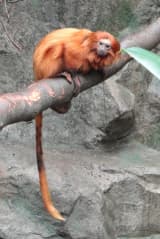 Golden Lion TamarinLeontopithecus rosaliaAt 29 zoos
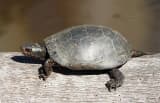 Spotted TurtleClemmys guttataAt 29 zoos
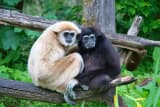 White-handed GibbonHylobates larAt 28 zoos
 Alligator Snapping TurtleMacrochelys temminckiiAt 27 zoos
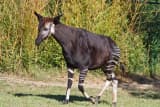 OkapiOkapia johnstoniAt 20 zoos
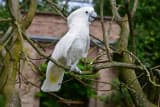 Umbrella CockatooCacatua albaAt 18 zoos
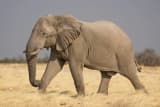 African ElephantLoxodonta africanaAt 17 zoos
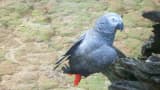 African Grey ParrotPsittacus erithacusAt 17 zoos
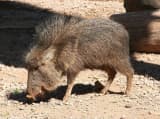 Chacoan PeccaryCatagonus wagneriAt 17 zoos
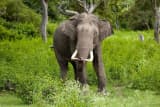 Asian ElephantElephas maximusAt 16 zoos
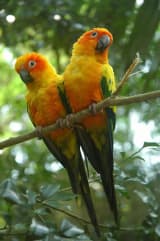 Sun ConureAratinga solstitialisAt 14 zoos
 Moluccan CockatooCacatua moluccensisAt 13 zoos
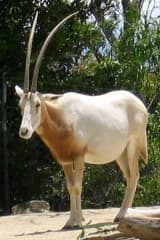 Scimitar-horned OryxOryx dammahAt 13 zoos
 Rhinoceros IguanaCyclura cornutaAt 12 zoos
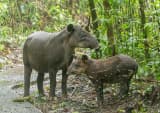 Baird's TapirTapirus bairdiiAt 11 zoos
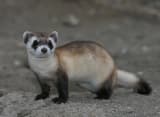 Black-footed FerretMustela nigripesAt 11 zoos
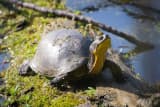 Blanding's TurtleEmydoidea blandingiiAt 11 zoos
 Puerto Rican Crested ToadPeltophryne lemurAt 11 zoos
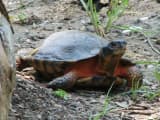 Wood TurtleGlyptemys insculptaAt 11 zoos
 Grand Cayman Blue IguanaCyclura lewisiAt 10 zoos
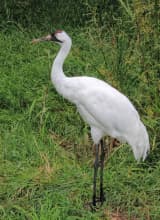 Whooping CraneAntigone americanaAt 10 zoos
 Black-breasted Leaf TurtleGeoemyda spengleriAt 9 zoos
 Chinese Crocodile LizardShinisaurus crocodilurusAt 9 zoos
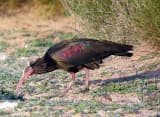 Northern Bald IbisGeronticus eremitaAt 9 zoos
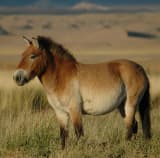 Przewalski's HorseEquus przewalskiiAt 9 zoos
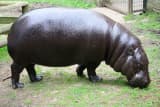 Pygmy HippopotamusChoeropsis liberiensisAt 9 zoos
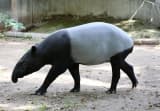 Malayan TapirTapirus indicusAt 8 zoos
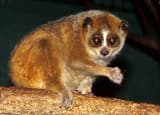 Pygmy Slow LorisXanthonycticebus pygmaeusAt 8 zoos
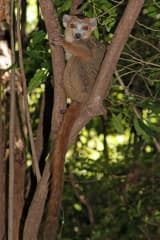 Crowned LemurEulemur coronatusAt 7 zoos
 Golden-headed Lion TamarinLeontopithecus chrysomelasAt 7 zoos
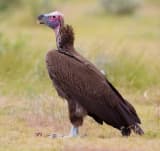 Lappet-faced VultureTorgos tracheliotosAt 7 zoos
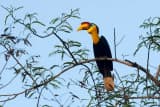 Wrinkled HornbillRhabdotorrhinus corrugatusAt 7 zoos
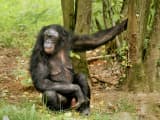 BonoboPan paniscusAt 6 zoos
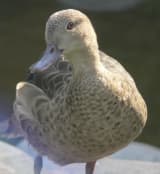 Madagascar TealAnas bernieriAt 6 zoos
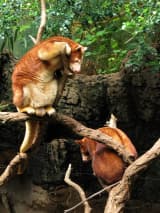 Matschie's Tree KangarooDendrolagus matschieiAt 6 zoos
More animals in this collection, A–Z
What Endangered means
Endangered is the middle of the three threatened categories on the IUCN Red List. It means the evidence points to a very high risk of extinction in the wild, short of the extremely high risk that defines Critically Endangered.
A species qualifies by meeting any one of five criteria. Simplified, those are a population decline of 50% or more over 10 years or three generations; a small, fragmented or shrinking range, such as an extent of occurrence under 5,000 km² (about 1,930 sq mi); fewer than 2,500 mature individuals and still declining; fewer than 250 mature individuals; or modeling that gives at least a 20% chance of extinction within 20 years or five generations.
The word causes some confusion in the U.S. The Endangered Species Act also lists species as "endangered," but that is a legal listing made by federal agencies, separate from the global Red List.
The main threats
Species become endangered mainly through habitat loss and the loss of genetic variation that follows when populations shrink. Hunting and poaching have pushed many other species toward extinction.
The tiger has lost an estimated 53% to 68% of its range since the late 1990s to deforestation and poaching for fur and body parts. The African elephant faces habitat fragmentation and poaching for ivory. The okapi loses forest to logging, settlement and illegal mining, and armed groups near protected areas have blocked conservation work. In southern Madagascar, the ring-tailed lemur is hunted for bushmeat and captured for the pet trade, and its wild population may have dropped to as few as 2,000. The red panda is threatened by poaching and by deforestation that destroys and fragments its forest habitat.
Moving up and down the list
A Red List category is not permanent. The Grand Cayman blue iguana was down to an estimated 5 to 15 wild animals in 2003. Captive breeding and releases into preserves raised that to about 750 by late 2012, and the species was downlisted from Critically Endangered to Endangered. The northern bald ibis followed the same path in 2018 after protection let its Moroccan population grow.
Some Endangered species have already come back from Extinct in the Wild. The black-footed ferret was reintroduced to eight western U.S. states, Canada and Mexico from captive-bred stock between 1991 and 2009. The scimitar-horned oryx, declared extinct in the wild in 2000, was downlisted in 2023 after releases in Chad.
Breeding programs and the wild
Captive breeding in zoos, reserves and conservation centers aims to keep species from disappearing while the threats in the wild are tackled. In 1981 the Association of Zoos and Aquariums created the Species Survival Plan program to manage endangered and threatened species this way.
Some programs feed directly into reintroduction. Zoo-born golden lion tamarins were returned to Brazil's Atlantic forest, part of a recovery from a few hundred animals to roughly 4,800. A breeding and release program for the Puerto Rican crested toad released 71,000 tadpoles in 2013 alone. Releases like these depend on safe habitat to return to, so breeding programs work alongside habitat protection rather than replacing it.
Common questions
What does endangered mean on the IUCN Red List?
It means a species faces a very high risk of extinction in the wild. Endangered sits above Vulnerable and below Critically Endangered, the middle of the three threatened categories.
What is the difference between endangered and threatened?
On the IUCN Red List, threatened is the umbrella term for three categories: Vulnerable, Endangered and Critically Endangered. Under the U.S. Endangered Species Act, endangered and threatened are two separate legal listings.
Why do species become endangered?
Mainly through habitat loss and the loss of genetic variation that comes with shrinking populations. Overhunting, poaching, invasive species and climate change are other major causes.
Can an endangered species recover?
Yes. Species move up and down the Red List as their numbers change. The Grand Cayman blue iguana and the northern bald ibis were both downlisted from Critically Endangered to Endangered after their wild populations grew.
How many species are threatened with extinction?
In 2026, the IUCN Red List identified about 49,500 species worldwide as threatened, meaning Vulnerable, Endangered or Critically Endangered.
Is endangered on the Red List the same as under the Endangered Species Act?
No. The Red List is a global scientific assessment, while the Endangered Species Act is a U.S. law with its own listings made by federal agencies. A species can be listed under one and not the other.
Sources
Last reviewed