
Critically endangered animals in U.S. zoos
Critically Endangered (CR) is the IUCN Red List category for species facing an extremely high risk of extinction in the wild, the last step before Extinct in the Wild. A species qualifies by meeting any one criterion, such as a population decline of 80% or more, or fewer than 50 mature individuals.
Most widely held
 Black-and-white Ruffed LemurVarecia variegataAt 45 zoos
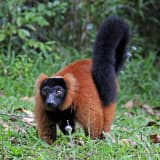 Red Ruffed LemurVarecia rubraAt 37 zoos
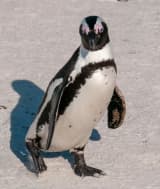 African penguinSpheniscus demersusAt 35 zoos
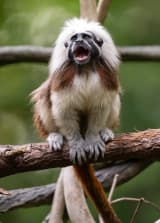 Cotton-top TamarinSaguinus oedipusAt 34 zoos
 Panamanian Golden FrogAtelopus zetekiAt 27 zoos
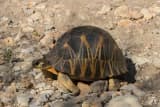 Radiated TortoiseAstrochelys radiataAt 27 zoos
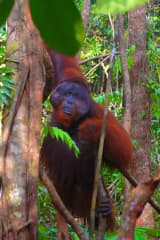 OrangutanPongo pygmaeusAt 26 zoos
 AxolotlAmbystoma mexicanumAt 25 zoos
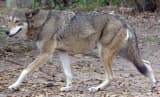 Red WolfCanis rufusAt 25 zoos
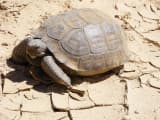 Desert TortoiseGopherus agassiziiAt 23 zoos
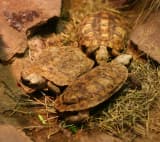 Pancake TortoiseMalacochersus tornieriAt 23 zoos
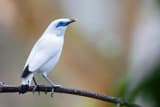 Bali MynaLeucopsar rothschildiAt 22 zoos
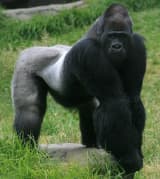 GorillaGorilla gorillaAt 19 zoos
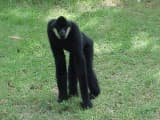 White-cheeked GibbonNomascus leucogenysAt 19 zoos
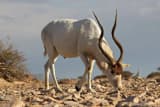 AddaxAddax nasomaculatusAt 15 zoos
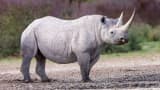 Black RhinocerosDiceros bicornisAt 15 zoos
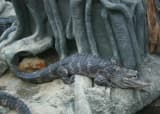 Chinese AlligatorAlligator sinensisAt 15 zoos
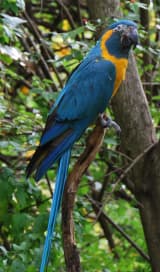 Blue-throated MacawAra glaucogularisAt 11 zoos
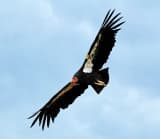 California CondorGymnogyps californianusAt 9 zoos
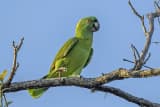 Yellow-naped AmazonAmazona auropalliataAt 9 zoos
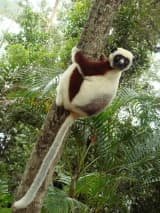 Coquerel's SifakaPropithecus coquereliAt 7 zoos
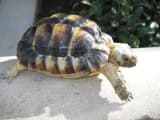 Egyptian TortoiseTestudo kleinmanniAt 7 zoos
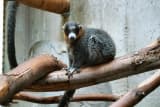 Mongoose LemurEulemur mongozAt 7 zoos
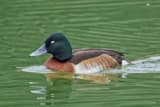 Baer's PochardAythya baeriAt 6 zoos
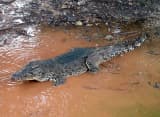 Cuban CrocodileCrocodylus rhombiferAt 6 zoos
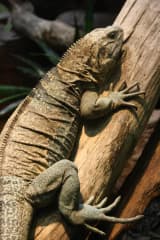 Jamaican IguanaCyclura colleiAt 6 zoos
 Laysan DuckAnas laysanensisAt 6 zoos
 Red-fronted MacawAra rubrogenysAt 6 zoos
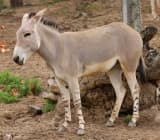 Somali Wild AssEquus africanus somaliensisAt 6 zoos
 McCord's Snake-necked TurtleChelodina mccordiAt 5 zoos
 Ruppell's Griffon VultureGyps rueppelliAt 4 zoos
What the Critically Endangered category means
Critically Endangered is the highest-risk category on the IUCN Red List for species that still live in the wild. Above it sit only Extinct in the Wild and Extinct. As of March 2026, 10,774 species were listed as Critically Endangered, and more than half of them were plants.
A species qualifies if it meets any one of five criteria. In plain terms: a population drop of 80% or more over 10 years or three generations; a tiny range under 100 km² (about 39 sq mi) that is also fragmented, shrinking or fluctuating; fewer than 250 mature individuals and still declining; fewer than 50 mature individuals; or modeling that shows at least a 50% chance of extinction in the wild within 10 years or three generations. The Critically Endangered entry explains each one.
Numbers alone don't decide it. The black rhinoceros still has about 3,142 mature individuals in the wild, while the red wolf is down to around 30 wild animals. Both are Critically Endangered.
What pushes species to the edge
Habitat loss caused by people is the single biggest reason species become critically endangered. Invasive species, disease, pollution and overharvesting add to it, and many animals face several threats at once.
The orangutan is losing forest to palm oil plantations and logging, and Coquerel's sifaka loses forest to farmland, pasture burning and charcoal cutting. Invasive tilapia and carp have helped drive the axolotl toward extinction in the lakes of the Valley of Mexico. A fungal disease, chytridiomycosis, collapsed the Panamanian golden frog, which may have been extinct in the wild since 2007.
Trade is another pressure. The radiated tortoise is poached for food and the pet trade, and illegal wildlife trade remains a drain on the wild Bali myna population. The African penguin faces overfishing of the sardines and anchovies it eats, along with climate change and oil spills.
Where zoos and breeding programs fit in
For species this rare, animals in human care can be a lifeline. Accredited zoos manage many threatened species through Species Survival Plans, cooperative breeding programs that treat the animals of one species across many institutions as a single, genetically diverse population.
Some of those populations make reintroduction possible. Every wild California condor was taken into captivity by 1987, when only 27 remained. Releases began in 1991, and the world population had reached 607 birds by December 2025. The red wolf's remaining wild animals all descend from a reintroduced population in eastern North Carolina.
Others depend on removing the original threat and moving animals to new sites. The Laysan duck fell to seven adults and five juveniles by 1912 after introduced rabbits stripped Laysan Island's vegetation. The rabbits were eradicated in 1923 and numbers climbed to about 500 by the 1950s. Since 2004, translocated birds have also lived on Midway Atoll, and a later group was moved to Kure Atoll.
Common questions
What does critically endangered mean?
It means the IUCN Red List judges a species to face an extremely high risk of extinction in the wild. It is the most severe of the three threatened categories, one step below Extinct in the Wild.
How many species are critically endangered?
As of March 2026, 10,774 of the 172,620 species on the IUCN Red List were listed as Critically Endangered, about 6.2%. More than half of them are plants; about 4,277 are animals.
What is the difference between endangered and critically endangered?
Critically Endangered has stricter thresholds. For example, it requires fewer than 250 mature individuals that are still declining, where Endangered requires fewer than 2,500, or a decline of at least 80% instead of at least 50%.
Can a critically endangered animal have thousands of individuals?
Yes. A species only has to meet one criterion, so a fast decline can qualify it even if numbers are still large. The black rhinoceros is Critically Endangered with about 3,142 mature individuals left in the wild.
What does 'possibly extinct' mean on the Red List?
It is a tag on some Critically Endangered species that may already be gone but have not been confirmed extinct by thorough, targeted surveys. It is not a separate Red List category.
What are the main causes of species becoming critically endangered?
Habitat loss driven by human activity is the biggest cause. Invasive species, disease, pollution and overhunting also push species toward extinction.
Sources
Last reviewed