- Where to see one
- 46 U.S. zoos in our directory hold red-footed tortoise, confirmed against each zoo's own animal list.
- Native range
- Northern South America, from southeastern Panama through the Amazon Basin to Argentina, plus several Caribbean islands
- Size
- Averages 30 cm (12 in) as adults, occasionally over 40 cm (16 in); the largest known specimen was 60 cm (24 in) and weighed over 28 kg (62 lb)
- Lifespan
- Often 30 years or more in captivity; wild longevity is poorly known
Conservation status
Not Evaluated
This species has not been assessed for the IUCN Red List, so it sits outside the threat scale entirely.
No IUCN Red List category is cited; listed on CITES Appendix II and described as vulnerable to over-collection
About the red-footed tortoise
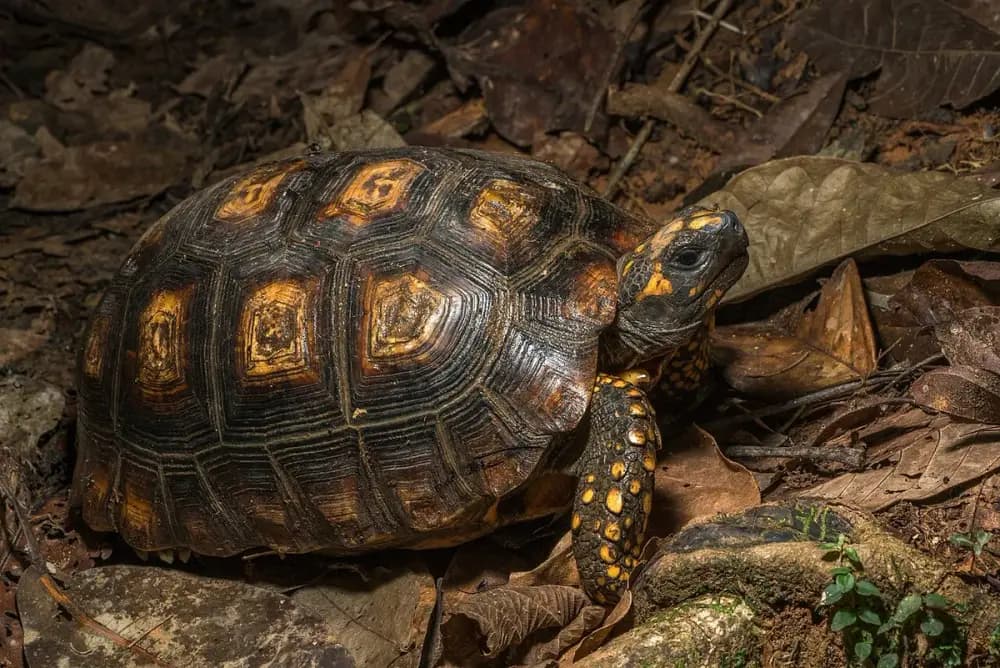
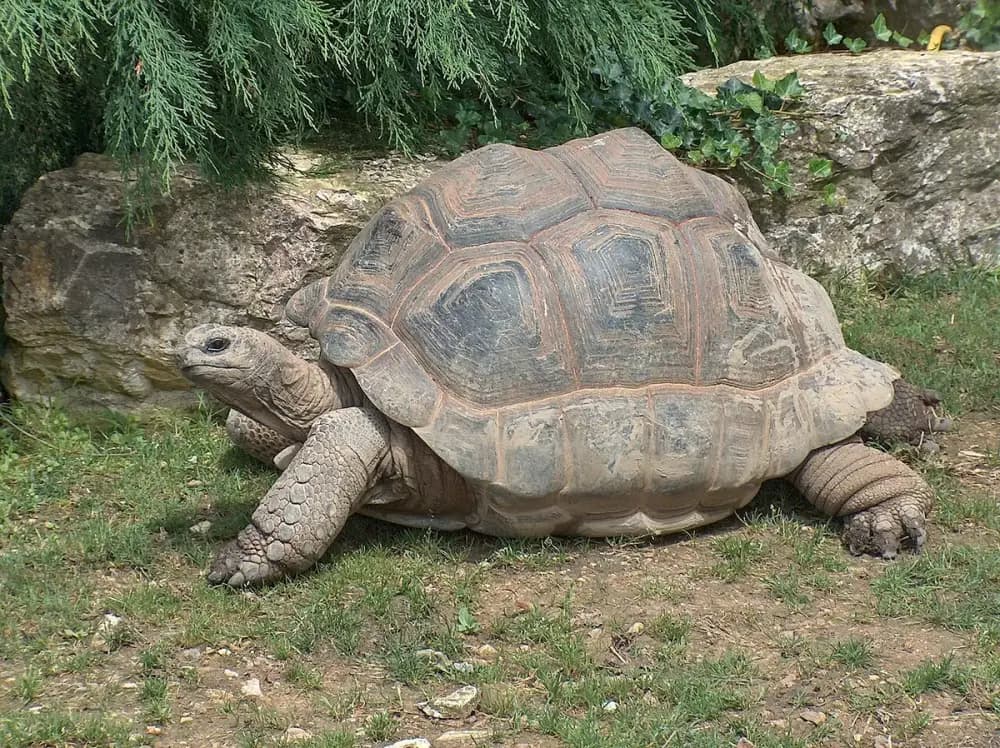
The red-footed tortoise is a species of tortoise native to northern South America. Adults generally average 30 cm (12 in), though they can reach over 40 cm (16 in), with dark, nearly black, "loaf"-shaped carapaces marked by a lighter patch at the center of each shell segment, and a somewhat lighter plastron underneath. Their dark limbs are dotted with brightly colored scales ranging from pale yellow to vivid or dark red — the origin of the common name — and these colors, along with shell shape and size, vary noticeably between tortoises from different parts of the range.
The carapace is generally an elongated oval, fairly high-domed with a flatter back, and often shows a high point over the hips with a sloped section over the neck; growth rings are visible in most individuals but wear smooth with age. The head is relatively small and squared off, with a large, dark eye and an upper jaw that's slightly hooked and notched. Males tend to be slightly larger and more colorful than females, with a deeply indented plastron and a long, muscular tail carried to one side, while females have a flatter plastron and a shorter, more conical tail. The largest known specimen, found in Paraguay, measured 60 cm (24 in) and weighed over 28 kg (62 lb).
The red-footed tortoise is closely related to the more easterly-distributed yellow-footed tortoise of the Amazon Basin. Its natural habitat ranges from savanna to forest edges around the Amazon, and unlike many temperate tortoises, it does not brumate given its equatorial range, though it may aestivate during the hottest, driest months.
Behavior and diet
Diet
Omnivorous — plants, grasses, flowers, fruit, fungi, invertebrates, and occasionally carrion
Red-footed tortoises are omnivorous, eating a wide assortment of plants, grasses, flowers, fruit, and — notably — fungi, along with occasional earthworms or other invertebrates; when the opportunity arises, they will also scavenge carrion. They're popular in the pet trade, and captive breeding is relatively easy, which has helped supply demand without always requiring wild-caught animals, although wild populations still face significant collection pressure.
Population density for the species ranges from locally common to very scarce, driven partly by habitat destruction and over-collection for both food and the pet trade. Little detailed information exists on population density or sex ratios across most of the range, and many records come from areas near research stations and cities simply because animals are easier to find there — genuinely remote parts of the range, such as much of Peru, Ecuador, Argentina, and central Brazil, are poorly documented by comparison. Locating tortoises in the wild is difficult, since they're often well hidden or dug into burrows; trained dogs have been used to find individuals that would otherwise go unnoticed.
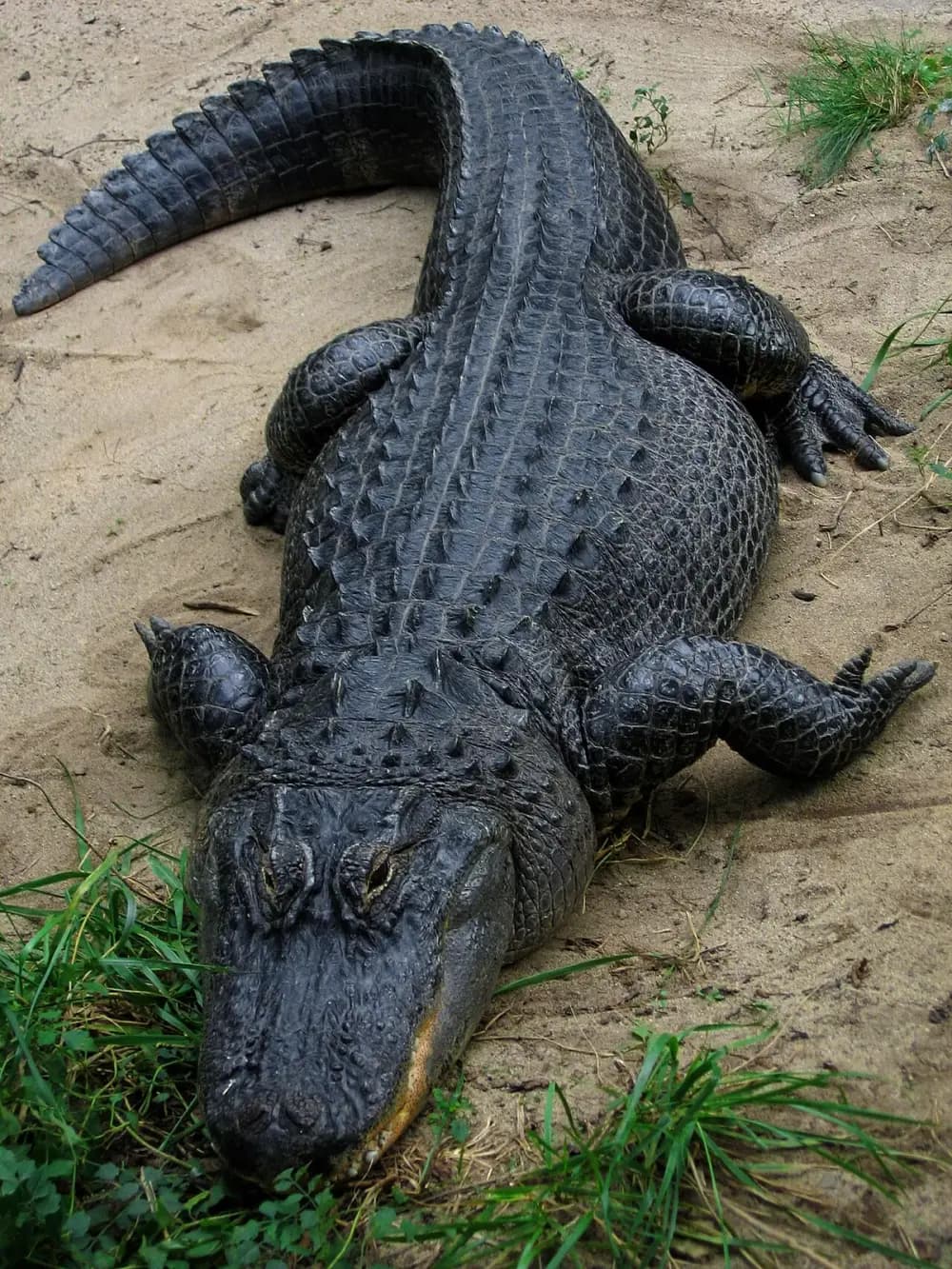
Eggs, hatchlings, and even adult tortoises face pressure from a long list of predators across their range, including caimans, crocodiles, and giant otters near water, along with birds of prey, bush dogs, jaguars, jaguarundis, margays, certain monkeys, ocelots, pumas, and tayras.
Range and habitat
Habitat
Savanna to forest edges around the Amazon Basin
Red-footed tortoises range from southeastern Panama through Venezuela, Guyana, Suriname, and French Guiana in the north, south along the Andes through Colombia, Ecuador, Peru, and Bolivia, east into Brazil, and along a southern range through Bolivia, Paraguay, and possibly northern Argentina. They're also found on numerous Caribbean islands, including the former Netherlands Antilles, Trinidad, Tobago, Grenada, Barbados, St. Vincent, the Grenadines, Saint Lucia, Martinique, Dominica, Guadeloupe, the Leeward Islands, the Virgin Islands, Barbuda, and Puerto Rico, though it isn't always clear whether these populations are native or were introduced by people, with many colonies apparently established as far back as the 17th century for food or as pets.
Preferred habitat varies by region but generally features fairly consistent seasonal temperatures near 30 °C (86 °F), rarely dropping below 20 °C (68 °F) or exceeding 35 °C (95 °F), along with high humidity and substantial rainfall, though some parts of the range can be quite dry. Red-footed tortoises are often found in transitional zones between forest and savanna — forest clearings, wood edges, or areas along waterways — rather than deep inside heavily forested regions, where they're documented less often.
Conservation status
No IUCN Red List category is cited for the red-footed tortoise, but it is considered vulnerable to extinction and is listed on CITES Appendix II, which restricts international trade. The main pressure is over-collection of eggs and the capture of mature animals from the wild, despite the relative ease of captive breeding and the wide availability of captive-bred animals as an alternative.
Many remote tribal communities in South America still rely on the tortoise as a basic source of meat and may be unaware of the pressure this places on wild populations, and travelers and activists have reported seeing live red-footed tortoises for sale in markets alongside bushmeat and other live animals.
Habitat destruction compounds the effect of this hunting and collection pressure, and together these factors have left population density highly uneven across the species' large range, from locally common in some areas to very scarce in others.
Where to see red-footed tortoise in the U.S.
46 zoos across 26 states
Find the closest one
Rank the 39 zoos holding red-footed tortoise by how far they are from you. Your location is used in your browser to sort this list and is never sent to us.
7 more zoos hold red-footed tortoise but have no coordinates on file yet, so they aren't ranked here. They're in the full list below.
Alaska· 1
California· 1
Colorado· 2
Delaware· 3
District of Columbia· 1
Florida· 7
Georgia· 1
Illinois· 4
Indiana· 1
Kansas· 3
Louisiana· 1
Maryland· 3
Massachusetts· 1
Michigan· 1
Minnesota· 1
New Jersey· 2
New York· 3
North Carolina· 1
Ohio· 1
Oregon· 1
Pennsylvania· 2
Rhode Island· 1
Tennessee· 1
Texas· 1
Virginia· 1
Wisconsin· 1
AZAThe Association of Zoos and Aquariums. Accredited members have passed an independent inspection of animal care and welfare, safety, conservation and education, repeated every five years. Many smaller facilities never apply, so “not accredited” isn't a verdict on its own. What accreditation means · How we check this
Built from each zoo's own published animal list.
Red-footed Tortoise: common questions
Is the red-footed tortoise endangered?
No IUCN Red List category is cited for it, but it is considered vulnerable to extinction, mainly because of over-collection of eggs and mature animals from the wild for food and the pet trade. International trade is restricted under CITES Appendix II.
How big does a red-footed tortoise get?
Adults generally average 30 to 35 cm (12–14 in); individuals up to 45 cm (18 in) are fairly common, and the largest known specimen reached 60 cm (24 in) and weighed over 28 kg (62 lb).
What does a red-footed tortoise eat?
It's omnivorous, eating plants, grasses, flowers, fruit, fungi, and occasional invertebrates, and it will scavenge carrion when the chance arises.
How long do red-footed tortoises live?
Many live for 30 years or more in captivity. Wild tortoises are hard to age, so little is known about their longevity in the wild.
Where do red-footed tortoises live in the wild?
They range across northern South America, from southeastern Panama through the Amazon Basin to Bolivia, Paraguay, and possibly northern Argentina, plus several Caribbean islands.
Which U.S. zoos have red-footed tortoises?
Seventeen U.S. zoos list them, including the Maryland Zoo in Baltimore, the Cincinnati Zoo and Botanical Garden, and Lion Country Safari.