
Turtles and tortoises in U.S. zoos
Turtles (order Testudines) are reptiles with a bony shell grown mainly from their ribs. About 360 living and recently extinct species include land-dwelling tortoises, freshwater terrapins and sea turtles. Tortoises are the land specialists of the family Testudinidae, and some individuals have lived longer than 150 years.
Most widely held
 African Spurred TortoiseCentrochelys sulcataAt 69 zoos · Endangered
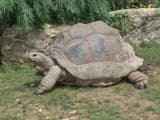 Aldabra TortoiseAldabrachelys giganteaAt 51 zoos · Vulnerable
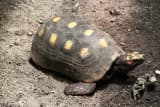 Red-footed TortoiseChelonoidis carbonariusAt 46 zoos
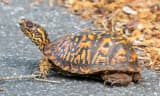 Eastern Box TurtleTerrapene carolina carolinaAt 34 zoos
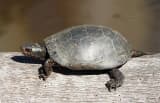 Spotted TurtleClemmys guttataAt 29 zoos · Endangered
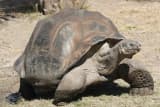 Galapagos TortoiseChelonoidis nigerAt 28 zoos
 Alligator Snapping TurtleMacrochelys temminckiiAt 27 zoos · Endangered
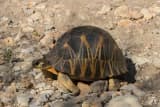 Radiated TortoiseAstrochelys radiataAt 27 zoos · Critically Endangered
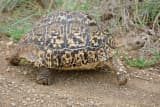 Leopard TortoiseStigmochelys pardalisAt 24 zoos · Least Concern
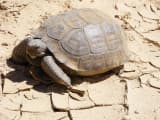 Desert TortoiseGopherus agassiziiAt 23 zoos · Critically Endangered
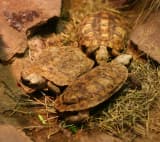 Pancake TortoiseMalacochersus tornieriAt 23 zoos · Critically Endangered
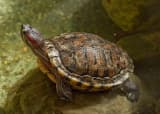 Red-eared SliderTrachemys scripta elegansAt 20 zoos · Least Concern
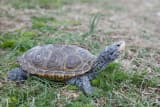 Diamondback TerrapinMalaclemys terrapinAt 17 zoos · Vulnerable
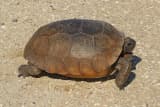 Gopher TortoiseGopherus polyphemusAt 17 zoos · Vulnerable
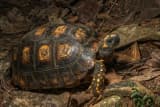 Yellow-footed TortoiseChelonoidis denticulatusAt 14 zoos · Vulnerable
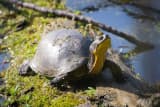 Blanding's TurtleEmydoidea blandingiiAt 11 zoos · Endangered
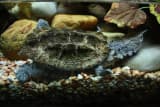 MatamataChelus fimbriatusAt 11 zoos
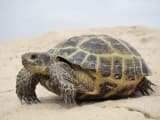 Russian TortoiseAgrionemys horsfieldiiAt 11 zoos · Vulnerable
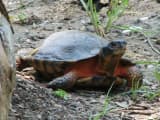 Wood TurtleGlyptemys insculptaAt 11 zoos · Endangered
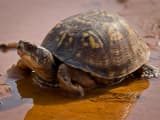 Box TurtleTerrapeneAt 10 zoos
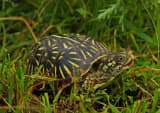 Ornate Box TurtleTerrapene ornataAt 10 zoos · Near Threatened
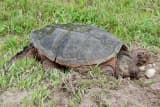 Snapping TurtleChelydra serpentinaAt 10 zoos · Least Concern
 Black-breasted Leaf TurtleGeoemyda spengleriAt 9 zoos · Endangered
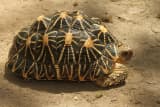 Indian Star TortoiseGeochelone elegansAt 8 zoos · Vulnerable
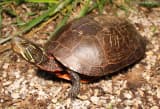 Painted TurtleChrysemys pictaAt 8 zoos · Least Concern
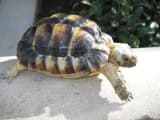 Egyptian TortoiseTestudo kleinmanniAt 7 zoos · Critically Endangered
 Yellow-spotted Amazon River TurtlePodocnemis unifilisAt 6 zoos · Vulnerable
 McCord's Snake-necked TurtleChelodina mccordiAt 5 zoos · Critically Endangered
Shells, necks and terminology
A turtle's shell is part of its skeleton: the domed carapace on top is fused to the spine and ribs, and the flatter plastron below is joined to it at the sides. Modern turtles split into two groups by how they tuck in the head. Hidden-necked turtles (Cryptodira), including all tortoises, pull the head straight back, while side-necked turtles (Pleurodira) retract it in a different way.
Shell shape tracks lifestyle. Land-dwelling turtles have higher domes that appear to resist crushing, and aquatic turtles have flatter shells for swimming. The eastern box turtle has a hinged plastron that closes the shell completely, while the pancake tortoise has a thin, flat, flexible shell unlike any other tortoise. The McCord's snake-necked turtle belongs to the Austro-South American side-necked turtles.
"Turtle", "tortoise" and "terrapin" are common names used differently in American, British and Australian English, so they are not precise categories.
Giant tortoises and odd hunters
Several tortoise lineages have independently evolved huge bodies over 100 kg (220 lb). The Galapagos tortoise is the largest living tortoise, the Aldabra tortoise rivals it, and the African spurred tortoise is the largest on mainland Africa. Tortoises lay small clutches, often only 1 or 2 eggs, after long incubations of 100 to 160 days.
Most turtles are opportunistic omnivores, but some are ambush specialists. The alligator snapping turtle, the largest freshwater turtle in North America, lies on the bottom with its jaws open and draws prey in with a pink, worm-shaped lure on its tongue. The matamata of the Amazon has a flattened, triangular head fringed with skin flaps for the same waiting game.
Some turtles shape whole ecosystems. The burrows of the gopher tortoise shelter at least 360 other species by one estimate, which is why it is called a keystone species.
Conservation picture
Turtles are among the most threatened vertebrates. Of about 360 modern species, 51 to 56 percent are considered threatened, driven by habitat destruction, harvesting for food and medicine, the pet trade, light pollution and climate change. Asian species face especially high risk, a situation conservationists call the Asian turtle crisis.
Collecting has hit some species hard. The radiated tortoise of Madagascar is Critically Endangered because of habitat loss, poaching and the pet trade, and McCord's snake-necked turtle was over-collected so heavily that legal trade was banned in 2001. The desert tortoise, Critically Endangered on the IUCN Red List, has lost as much as 90 percent of some populations since the 1980s.
Released pets can be a threat too. The red-eared slider is listed among the world's worst invasive species and appears to compete with native turtles in North America, Europe and Japan.
Common questions
What is the difference between a turtle and a tortoise?
Every tortoise is a turtle, but not every turtle is a tortoise. Tortoises are the land-dwelling family Testudinidae, with domed shells and column-like legs with elephant-like feet, while aquatic turtles have flatter, smoother shells for swimming.
What is a terrapin?
Terrapin is a loose common name for freshwater or semiaquatic turtles, and its meaning differs between American and British English. The terms turtle, tortoise and terrapin do not reflect precise biological distinctions.
What is the largest tortoise?
The Galapagos tortoise is the largest living tortoise, weighing up to 417 kg (919 lb). The Aldabra tortoise of the Seychelles rivals it in size, and the African spurred tortoise is the largest on mainland Africa.
How long do tortoises live?
Tortoises have some of the longest lifespans of any animal, and some individuals have lived longer than 150 years. Jonathan, a Seychelles giant tortoise on St Helena, may be as old as 194 years.
Can a turtle come out of its shell?
No. The shell is made of 50 to 60 bones, and the upper carapace is fused with the turtle's spine and ribs, so it is part of the skeleton.
Are turtles endangered?
Many are. Turtles are second only to primates among vertebrate orders in their share of threatened species, with 51 to 56 percent of modern species considered threatened, and Asian species face especially high risk.
Sources
Last reviewed