Yellow-footed Tortoise
Chelonoidis denticulatus
Also known as Yellow Foot Tortoise
- Where to see one
- 14 U.S. zoos in our directory hold yellow-footed tortoise, confirmed against each zoo's own animal list.
- Native range
- Amazon Basin, South America
- Size
- Average length about 40 cm (15.75 in); the largest known specimen, a female, measured 94 cm (37 in)
- Lifespan
- About 50 to 60 years
About the yellow-footed tortoise
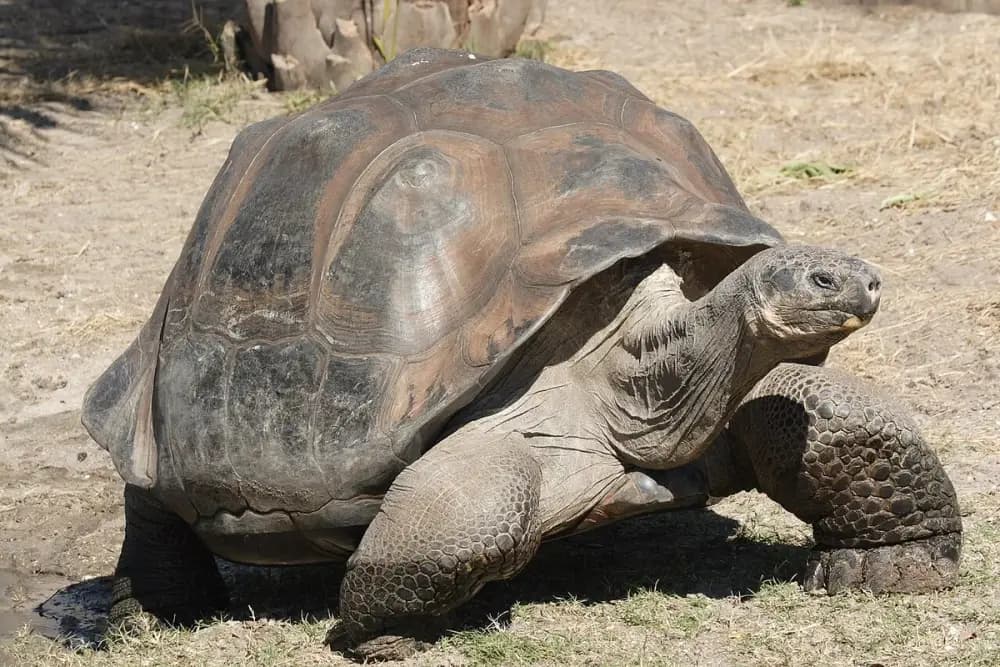
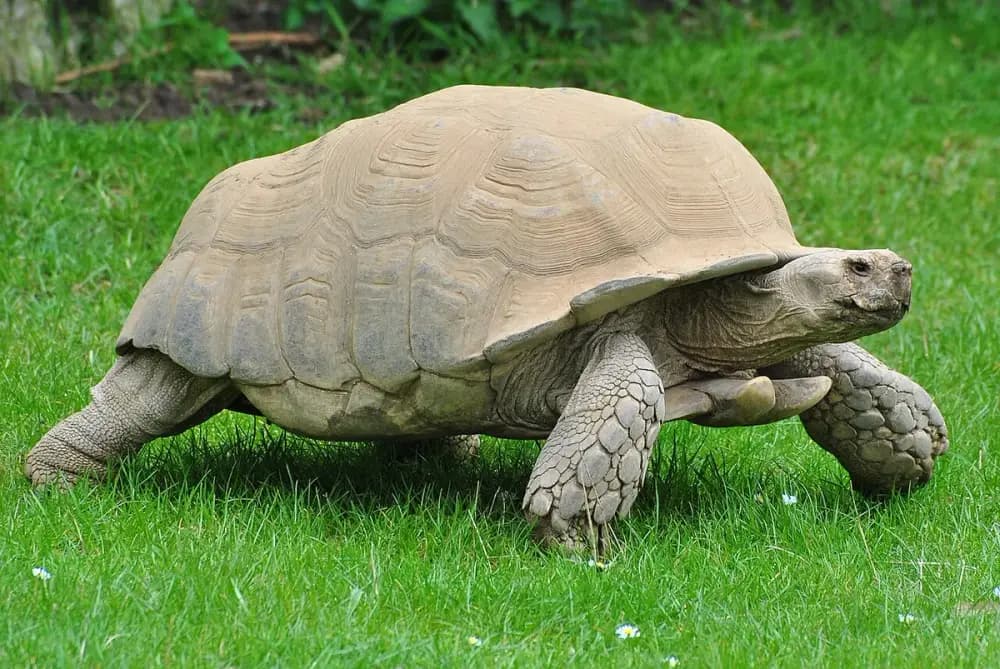
The yellow-footed tortoise, also called the Brazilian giant tortoise, is a species of tortoise in the family Testudinidae, closely related to the red-footed tortoise. It ranks as the sixth-largest tortoise species on Earth, behind the Galapagos tortoise, the Aldabra tortoise, the African spurred tortoise, the leopard tortoise, and the Asian forest tortoise. Typical adults average around 40 cm (15.75 in) in length, but the species can grow much larger — the biggest specimen on record, a female, reached 94 cm (37 in).
Carl Linnaeus first described the species in 1766 as Testudo denticulata, and it has since moved through several genus names — Geochelone, then Chelonoidis — as researchers refined how tortoises are classified, largely based on skull structure. Along the way it also picked up a string of local and common names, including the yellow-foot, yellow-legged tortoise, South American forest tortoise, and, in Portuguese and other regional languages, jabuti-tinga, morrocoy, and woyamou.
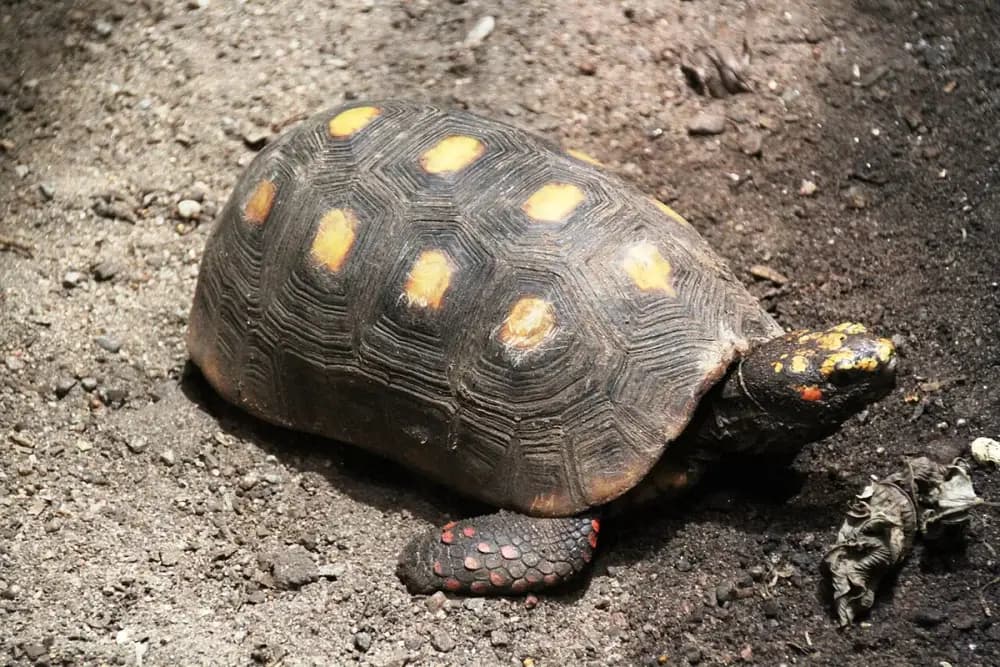
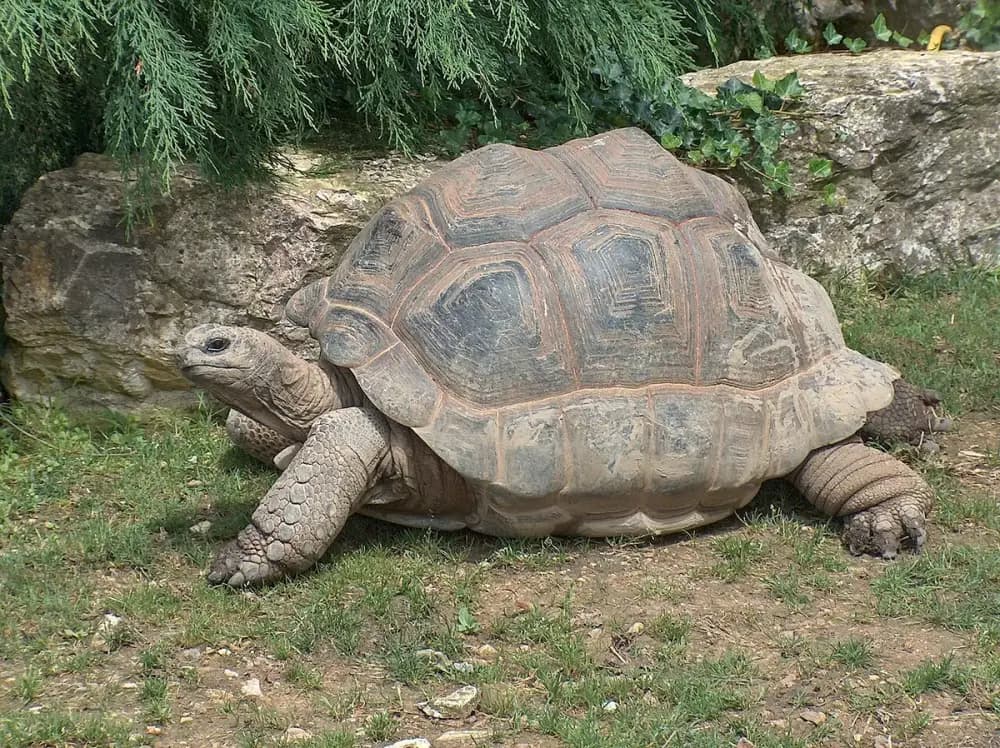
The carapace is a long oval with roughly parallel sides and a high-domed back, generally flat along the top with a slight peak toward the rear; it carries five vertebral scutes, four pairs of costal scutes, and eleven pairs of marginal scutes, with no nuchal scute over the neck. Coloring runs yellowish brown to dark brown or black at the scute edges, with paler yellow, orange, or light brown centers to each scute. The plastron is thick-edged and yellow-brown, darkening to nearly black near the seams. The head is relatively small and longer than wide, with a three-pointed upper jaw and large black eyes; the skin of the head and limbs is black, set off by yellow-to-orange scales on top and around the eyes and ears. Males average slightly larger than females, though the largest individuals tend to be female; males also develop a distinctive in-curved "waist," a deeply concave plastron, and a longer, more muscular tail carried tucked to one side, while females have a short, conical tail. The forelimbs are long, slightly flattened, and carry five claws each, covered in fine dark scales; the hind limbs are more elephant-like, with four claws apiece and small scales colored like those on the head. The tail carries a row of colored scales along each side, and its length varies by sex.
Behavior and diet
Diet
Omnivorous — grasses, flowers, fallen fruit, plants, mushrooms, carrion, and slow-moving invertebrates such as snails and worms
Yellow-footed tortoises make a sound like a raspy-voiced baby cooing, and they use body language as well as sound to identify one another — males make head movements toward other males, a signal females don't return, which is itself one way the animals tell the sexes apart. During courtship, males swing their heads back and forth in a steady rhythm and make clucking sounds similar to a chicken's. Mating occurs year-round, but breeding activity is synchronized with the onset of the rainy season, generally July to September, when overall activity increases. A male identifies a potential mate through a jerking head display; if the other tortoise doesn't return the gesture, that is the first sign it's a female. He then sniffs the cloacal region before copulation, which is sometimes preceded by biting at the legs. Rival males battle by trying to overturn one another, though neither sex defends a fixed territory — the species is essentially nomadic.
There is no parental care after eggs are laid; hatchlings fend for themselves from birth, starting out on calcium-rich plant matter. Females reach reproductive maturity around 8 to 10 years of age, and fecundity scales with body size — bigger females produce more eggs. A female typically lays six to sixteen eggs per year, though not every female breeds annually, and egg size increases along with the size of the tortoise carrying it.
In the wild, the yellow-footed tortoise eats a wide range of plant matter — grasses, flowers, fallen fruit, mushrooms, and general plant material — along with carrion, bones, and slow-moving invertebrates such as snails and worms that it's able to catch. In captivity, its diet typically includes oranges, apples, melons, endive, collard greens, dandelions, shredded carrots, insects, worms, and calcium supplements such as cuttlebone.
Range and habitat
Habitat
Drier forest areas, grasslands, savanna, and rainforest belts adjoining more open habitat
The yellow-footed tortoise is found in the Amazon Basin of South America. There's some disagreement among researchers about which habitat it truly prefers: some argue for grasslands and dry forest, treating rainforest as marginal habitat at best, while others make the case for humid forest. In practice, the species turns up in drier forest areas, grasslands, savanna, and rainforest belts that border more open habitat. Where its range overlaps with the closely related red-footed tortoise, as in Suriname, the two species have sorted into different habitats — red-footed tortoises have shifted into grasslands created by slash-and-burn agriculture, while yellow-footed tortoises have stayed in the forest.
Conservation status
The yellow-footed tortoise is rated Vulnerable, and it is also described as an endangered species in broader terms, reflecting real pressure on wild populations. Its major South American populations are protected under Appendix II of the Convention on International Trade in Endangered Species (CITES). Even so, the species regularly ends up as food in local markets. In Peru, its eggs are considered a delicacy, and although trading them is illegal, that trade continues in the Peruvian Amazon. The species is also popular in the pet trade, adding further pressure from collection.
Where to see yellow-footed tortoise in the U.S.
14 zoos across 12 states
Find the closest one
Rank the 13 zoos holding yellow-footed tortoise by how far they are from you. Your location is used in your browser to sort this list and is never sent to us.
1 more zoo holds yellow-footed tortoise but has no coordinates on file yet, so it isn't ranked here. It's in the full list below.
Alabama· 1
Florida· 2
Kansas· 2
Louisiana· 1
Massachusetts· 1
Mississippi· 1
New Jersey· 1
New York· 1
Oklahoma· 1
Pennsylvania· 1
Virginia· 1
Wisconsin· 1
AZAThe Association of Zoos and Aquariums. Accredited members have passed an independent inspection of animal care and welfare, safety, conservation and education, repeated every five years. Many smaller facilities never apply, so “not accredited” isn't a verdict on its own. What accreditation means · How we check this
Built from each zoo's own published animal list.
Yellow-footed Tortoise: common questions
Is the yellow-footed tortoise endangered?
It is rated Vulnerable and is also described more broadly as endangered. Its main South American populations are protected under CITES Appendix II, though it still faces pressure from food markets and the pet trade.
How big does a yellow-footed tortoise get?
Adults average around 40 cm (15.75 in) long, though the largest recorded specimen, a female, reached 94 cm (37 in).
What does a yellow-footed tortoise eat?
In the wild it eats grasses, flowers, fallen fruit, mushrooms, carrion, bones, and slow-moving invertebrates such as snails and worms; captive diets typically add fruits, vegetables, and calcium supplements.
How long do yellow-footed tortoises live?
Around 50 to 60 years.
Where do yellow-footed tortoises live in the wild?
In the Amazon Basin of South America, across drier forest, grassland, savanna, and rainforest-edge habitats.
Which U.S. zoos have yellow-footed tortoises?
Seven zoos in our directory, including the Brevard Zoo, the Tulsa Zoo and Living Museum, and the Virginia Zoological Park.