- Where to see one
- 28 U.S. zoos in our directory hold galapagos tortoise, confirmed against each zoo's own animal list.
- Native range
- Seven of the Galapagos Islands, Ecuador
- Size
- Up to 417 kg (919 lb) — the largest living tortoise species
- Lifespan
- Over 100 years in the wild; captive individuals have lived up to 177 years
Conservation status
Not Evaluated
This species has not been assessed for the IUCN Red List, so it sits outside the threat scale entirely.
No single IUCN code; surviving subspecies range from Vulnerable to Extinct in the Wild
About the Galapagos tortoise
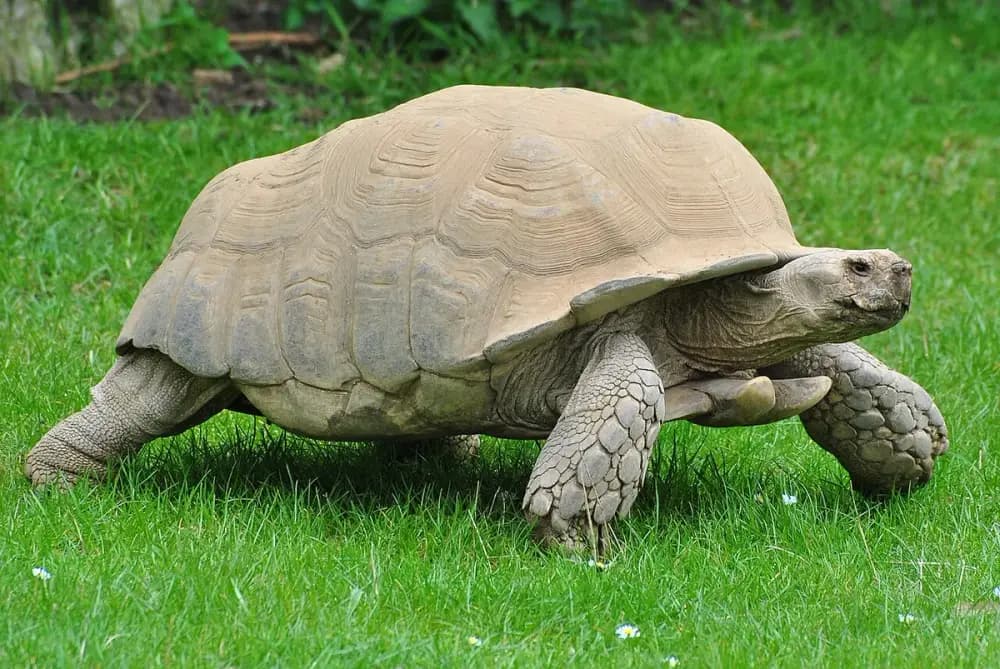
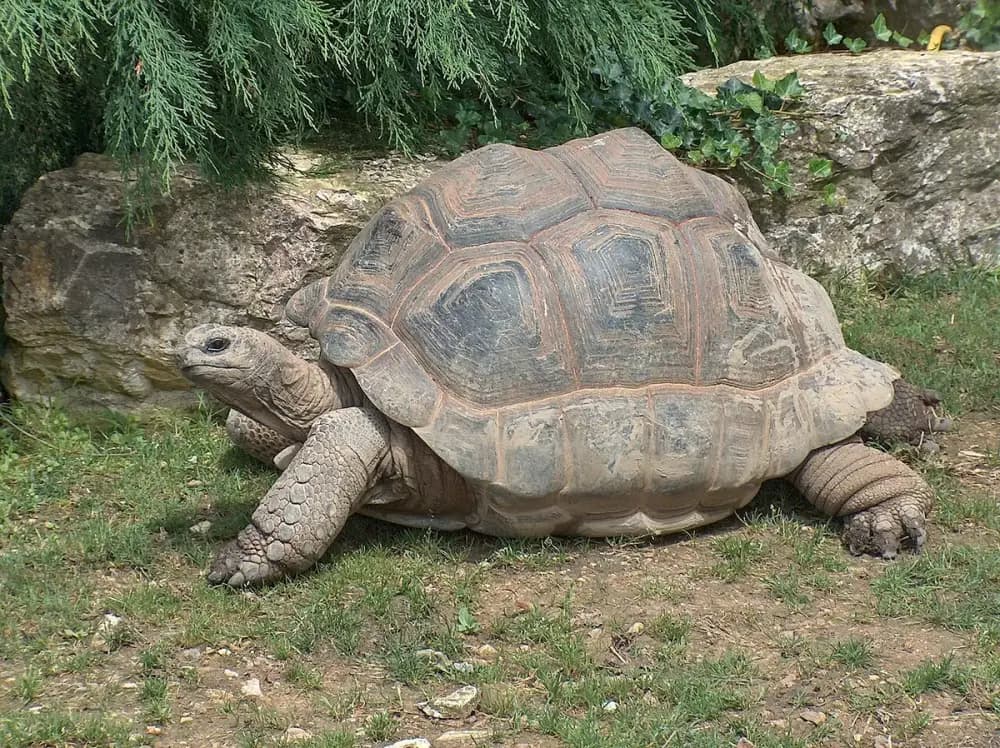
The Galapagos tortoise is the largest living species of tortoise, a member of the genus Chelonoidis, which also includes three smaller species from mainland South America. The species is made up of 15 subspecies, 12 of them still living and three now extinct. A large Galapagos tortoise can weigh up to 417 kg (919 lb), which also makes it the largest extant land-dwelling cold-blooded animal alive today. Spanish explorers who came across the islands in the 16th century named them after the Spanish word galápago, meaning "tortoise."
Shell shape and size differ from island to island and even from population to population, and the differences are tied directly to habitat. On islands with humid highlands and plenty of low-growing vegetation, the tortoises tend to be larger, with domed shells and short necks suited to grazing close to the ground. On islands with dry lowlands and less ground-level plant growth, the tortoises are smaller, with "saddleback" shells and long necks that let them stretch up toward higher vegetation. Charles Darwin noticed these differences during his 1835 visit on the voyage of the Beagle, and the observation became part of the foundation for his theory of evolution.
Galapagos tortoises are native to seven of the Galapagos Islands, off Ecuador. Taxonomists have long debated how many distinct populations exist; a 1905–06 expedition proposed 15 subspecies, and that framework still guides classification today even though the exact number of historically distinct populations is now thought closer to ten. For most of the 20th century the tortoises were placed in the genus Geochelone, before Chelonoidis was elevated to its own genus in the 1980s based on genetic evidence separating South American tortoises into their own branch of the tree of life.
Behavior and diet
The shell and neck differences between populations line up with how each group finds food. Domed, short-necked tortoises on humid, vegetation-rich islands can graze low plants without needing extra reach. Saddleback, long-necked tortoises on drier islands, where ground-level plants are scarcer, use their longer neck to stretch toward taller vegetation. Adult tortoises have no natural predators, which is part of why hunting by humans was able to drive such steep population declines.
In captivity, tortoises from different island populations were historically kept together in mixed herds, and pairings between animals from different races did produce fertile offspring. However, crosses between tortoises of different races have lower fertility and higher mortality than pairings within the same race, and tortoises housed in mixed herds generally direct courtship only toward others of their own race. Conservation programs starting in the 20th century have released thousands of captive-bred juveniles onto their ancestral home islands, rebuilding wild populations from breeding centers rather than from natural reproduction alone.
Range and habitat
Habitat
Humid highlands with abundant low vegetation on some islands; dry lowlands with sparser ground-level vegetation on others
Galapagos tortoises live on seven of the Galapagos Islands. Five distinct populations occupy separate volcanoes on Isabela Island, the largest island in the archipelago. Four of them descend from a colonization out of Santa Cruz Island, spreading to each new volcano as it formed; the fifth, on the northernmost volcano, Volcan Wolf, descends from a separate colonization from Santiago Island. Habitat ranges from humid highlands with dense low vegetation to dry lowlands with sparse ground cover, and shell shape tracks which of these two habitat types a population occupies.
Several populations have disappeared from their islands entirely because of human activity. The Pinta Island subspecies was reduced to a single known individual, Lonesome George, who died in captivity in 2012. The Floreana Island subspecies is believed to have been hunted to extinction by around 1850, just 15 years after Darwin's visit, and an undescribed subspecies from Santa Fe Island is also known to have gone extinct.
Conservation status
The Galápagos tortoise has no single category on the IUCN Red List. Its subspecies are classified separately, and the remaining ones range from Vulnerable to Extinct in the Wild. Populations on at least three islands have died out in historical times because of human activity, including the Floreana tortoise in the 19th century and the Pinta Island tortoise in 2012 with the death of Lonesome George.
Numbers fell from more than 250,000 in the 16th century to roughly 15,000 by the 1970s. The decline came from overexploitation for meat and oil, clearance of habitat for agriculture, and introduced animals such as rats, goats and pigs.
Conservation work since the 20th century has released thousands of captive-bred juveniles onto their home islands, and total numbers were estimated to have passed 19,000 by the start of the 21st century. Genetic research has even raised the chance of reviving the extinct Floreana lineage: hybrid descendants carrying its genetic signature have been found in a captive breeding center on Santa Cruz and among wild tortoises on Isabela Island.
Where to see galapagos tortoise in the U.S.
28 zoos across 16 states
Find the closest one
Rank the 27 zoos holding galapagos tortoise by how far they are from you. Your location is used in your browser to sort this list and is never sent to us.
1 more zoo holds galapagos tortoise but has no coordinates on file yet, so it isn't ranked here. It's in the full list below.
California· 4
Florida· 4
Illinois· 1
Indiana· 2
Kansas· 1
Louisiana· 2
Minnesota· 1
Mississippi· 1
New York· 1
North Carolina· 1
Ohio· 3
Pennsylvania· 1
South Carolina· 1
Tennessee· 2
Texas· 2
Virginia· 1
AZAThe Association of Zoos and Aquariums. Accredited members have passed an independent inspection of animal care and welfare, safety, conservation and education, repeated every five years. Many smaller facilities never apply, so “not accredited” isn't a verdict on its own. What accreditation means · How we check this
Built from each zoo's own published animal list.
Galapagos Tortoise: common questions
Is the Galapagos tortoise endangered?
There is no single IUCN code; the remaining subspecies range in IUCN classification from Vulnerable to Extinct in the Wild. Numbers fell from more than 250,000 to about 15,000 by the 1970s before captive breeding and releases helped them recover to more than 19,000.
How big does a Galapagos tortoise get?
It's the largest living tortoise species, with individuals reaching up to 417 kg (919 lb).
How long do Galapagos tortoises live?
Wild individuals commonly live more than 100 years, and captive tortoises have lived as long as 177 years.
Where do Galapagos tortoises live in the wild?
They're native to seven of the Galapagos Islands off Ecuador, with habitat ranging from humid highlands to dry lowlands.
Which U.S. zoos have Galapagos tortoises?
Fourteen U.S. zoos list them, including the San Diego Zoo, the Cincinnati Zoo and Botanical Garden, and the Houston Zoo.