- Where to see one
- 39 U.S. zoos in our directory hold gray wolf, confirmed against each zoo's own animal list.
- Native range
- Eurasia and North America
- Size
- 105–160 cm (41–63 in) in length, 80–85 cm (31–33 in) at shoulder height; mean body mass 40 kg (88 lb), ranging from 12 kg (26 lb) to 79.4 kg (175 lb)
Conservation status
Least Concernassessed 2026
IUCN Red List category LC — step 1 of 7.
The wolf, also called the grey wolf, is a canine native to Eurasia and North America and the largest wild member of the family Canidae. It lives in forests, inland wetlands, shrublands, grasslands including Arctic tundra, deserts and rocky mountain peaks, from sea level up to 3,000 m. Persecution has reduced its range to about one-third of its historic range. A pack is usually a mated pair with their offspring, averaging eight wolves in North America and 5.5 in Europe, and young typically leave after 10 to 54 months. Wolves feed mainly on large hoofed mammals such as moose, elk and red deer, and a pack of 15 can bring down an adult moose.
About the gray wolf
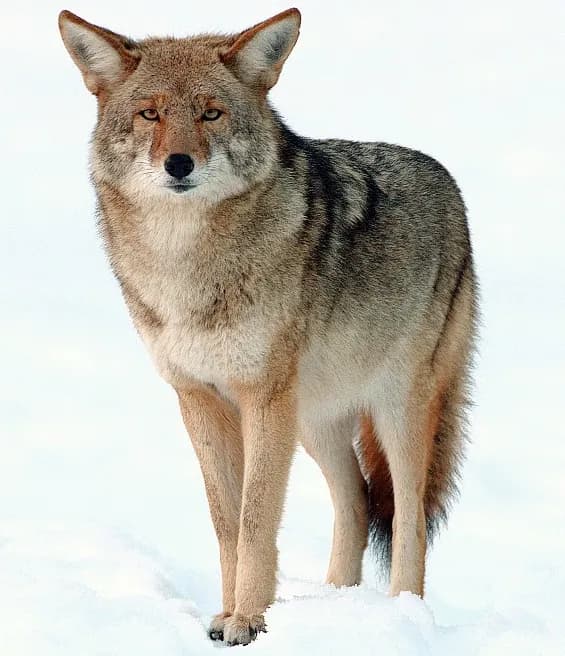
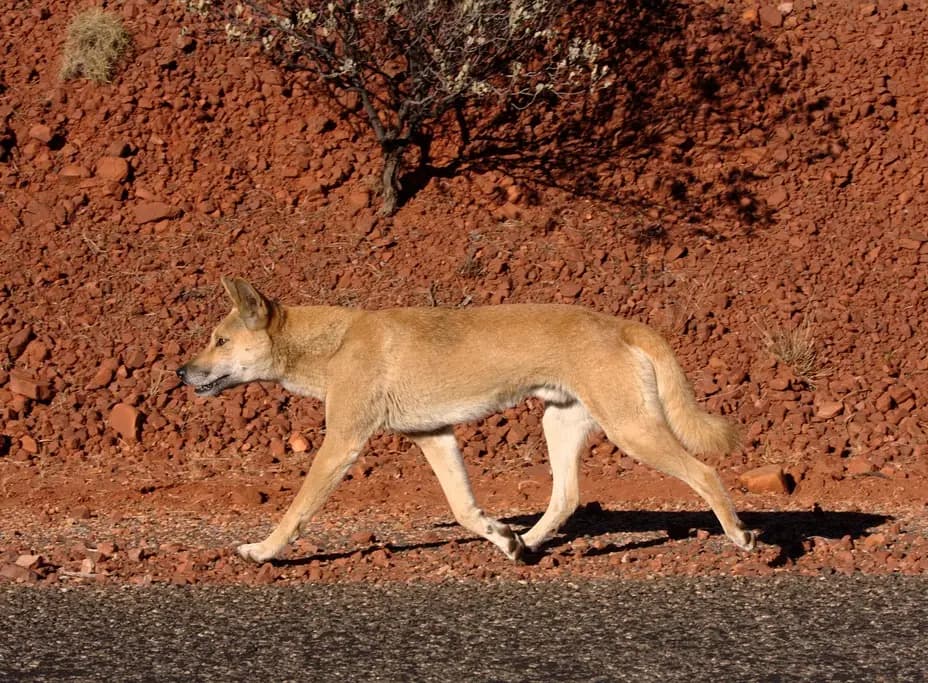
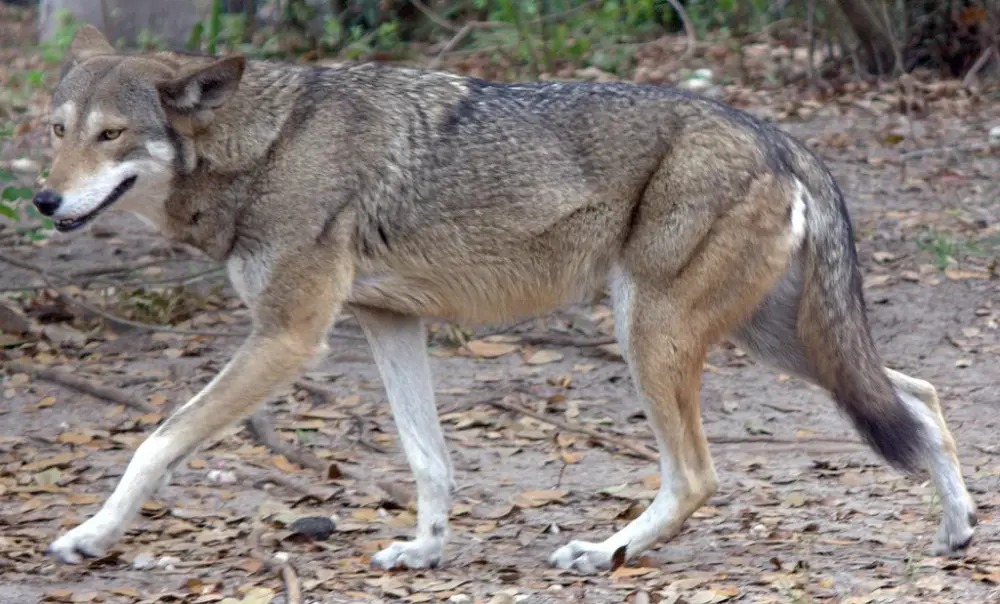
The gray wolf, also called the grey wolf or simply the wolf, is a canine native to both Eurasia and North America. More than thirty subspecies have been recognized within Canis lupus, a group that — under the broadest scientific definition — technically includes the domestic dog and the dingo, though "gray wolf" as commonly understood refers only to naturally occurring wild populations. It is the largest wild extant member of the family Canidae, distinguished from other Canis species by less pointed ears and muzzle, along with a shorter torso and a longer tail. Despite those differences, wolves are close enough to smaller relatives such as the coyote and the golden jackal to produce fertile hybrids with them. Fur color is typically a mottled mix of white, brown, grey, and black, though populations in the Arctic can be nearly all white.
Adult wolves measure 105 to 160 cm (41 to 63 in) in length and stand 80 to 85 cm (31 to 33 in) at the shoulder, with a tail 29 to 50 cm (11 to 20 in) long. Mean body mass is 40 kg (88 lb), with recorded weights ranging from as little as 12 kg (26 lb) up to 79.4 kg (175 lb); on average, European wolves weigh about 38.5 kg (85 lb), North American wolves about 36 kg (79 lb), and Indian and Arabian wolves about 25 kg (55 lb), with females typically weighing 2.3 to 4.5 kg (5–10 lb) less than males in any given population. Size and weight tend to increase with latitude, and exceptionally large males in central Russia can reach 69 to 79 kg (152–174 lb).
The wolf's skull runs 230 to 280 mm (9.1–11.0 in) long and 130 to 150 mm (5.1–5.9 in) wide, with heavy teeth better suited to crushing bone than those of other canids, though not as specialized for the task as a hyena's. The species carries a dense winter coat made of a short undercoat and long, coarse guard hairs, most of which sheds each spring and regrows in autumn; this fur provides better insulation than dog fur and lets wolves in northern climates rest comfortably in the open at −40°C (−40°F) by tucking their muzzles between their rear legs and covering their faces with their tails.
Behavior and diet
Diet
Large wild hooved mammals, smaller animals, livestock, carrion, and garbage
Wolves are the most specialized member of the genus Canis for cooperative hunting of large game, reflected in their physical build, their strongly social nature, and an advanced repertoire of expressive behavior that includes individual and group howling. They travel as nuclear families — a mated pair and their offspring — with young wolves sometimes leaving to start their own packs once they reach sexual maturity or as competition for food within the pack increases. Wolves are territorial, and conflicts over territory rank among the leading causes of wolf mortality.
As carnivores, wolves function as apex predators, feeding on large wild hooved mammals as well as smaller animals, livestock, carrion, and garbage. Notably, single wolves or mated pairs often hunt more successfully than large packs do. Disease is a real threat to wolves themselves — the rabies virus in particular can infect them, and the majority of recorded wolf attacks on people have been traced to rabid animals rather than healthy ones. Genuine attacks on humans are otherwise rare: wolves are relatively few in number, tend to live away from people, and have generally developed a fear of humans through encounters with hunters, farmers, ranchers, and shepherds.
Range and habitat
Habitat
Varied — the species occupies a vast range across two continents
The gray wolf is native to both Eurasia and North America. Humans have interacted with wolves throughout that range for a long history — often with hostility in pastoral communities, where wolves were hunted for attacking livestock, but with more respect in some agrarian and hunter-gatherer societies. Across that range it lives in forests, inland wetlands, shrublands, grasslands including Arctic tundra, deserts and rocky mountain peaks, from sea level up to about 3,000 m (9,800 ft). Persecution has reduced it to roughly a third of its historic range.
Conservation status
The gray wolf is listed as Least Concern on the IUCN Red List, most recently assessed in 2026. The listing reflects its very wide range across Eurasia and North America and a population that is stable overall. The global wild population is estimated at between 200,000 and 250,000 wolves.
Wolf declines have been halted since the 1970s. Legal protection, changes in land use and the movement of rural people to cities have let wolves recolonize parts of their former range, sometimes with help from reintroduction programs. Competition with people over livestock and game, fear of attacks and habitat fragmentation remain the main threats.
International trade is regulated under CITES Appendix II, and the wolf populations of Bhutan, India, Nepal and Pakistan are on Appendix I, which bars commercial trade in wild-caught animals. Most documented attacks on people involve wolves with rabies rather than healthy animals.
Where to see gray wolf in the U.S.
39 zoos across 22 states
Find the closest one
Rank the 31 zoos holding gray wolf by how far they are from you. Your location is used in your browser to sort this list and is never sent to us.
8 more zoos hold gray wolf but have no coordinates on file yet, so they aren't ranked here. They're in the full list below.
Alabama· 1
Alaska· 1
California· 3
Florida· 2
Illinois· 3
Indiana· 1
Kentucky· 1
Michigan· 2
Minnesota· 4
Montana· 2
New Jersey· 1
New York· 3
North Carolina· 2
North Dakota· 1
Ohio· 1
Oregon· 1
Pennsylvania· 1
South Dakota· 1
Texas· 1
Virginia· 2
Washington· 1
Wisconsin· 4
AZAThe Association of Zoos and Aquariums. Accredited members have passed an independent inspection of animal care and welfare, safety, conservation and education, repeated every five years. Many smaller facilities never apply, so “not accredited” isn't a verdict on its own. What accreditation means · How we check this
Built from each zoo's own published animal list.
Gray Wolf: common questions
Is the gray wolf endangered?
No. The IUCN lists the gray wolf as Least Concern (assessed 2026), with a stable overall population of roughly 200,000 to 250,000 wild wolves.
How big does a gray wolf get?
Adults measure 105 to 160 cm (41 to 63 in) in length and stand 80 to 85 cm (31 to 33 in) at the shoulder. Mean body mass is 40 kg (88 lb), though individuals have been recorded from 12 kg (26 lb) to as much as 79.4 kg (175 lb).
What does a gray wolf eat?
Large wild hooved mammals, smaller animals, livestock, carrion, and garbage — wolves are carnivores and apex predators.
Where do gray wolves live in the wild?
Across Eurasia and North America, giving the species one of the widest natural ranges of any large land mammal.
Which U.S. zoos have gray wolves?
Eleven U.S. zoos list them, including the Detroit Zoo, the Minnesota Zoo, and the Metro Richmond Zoo.