
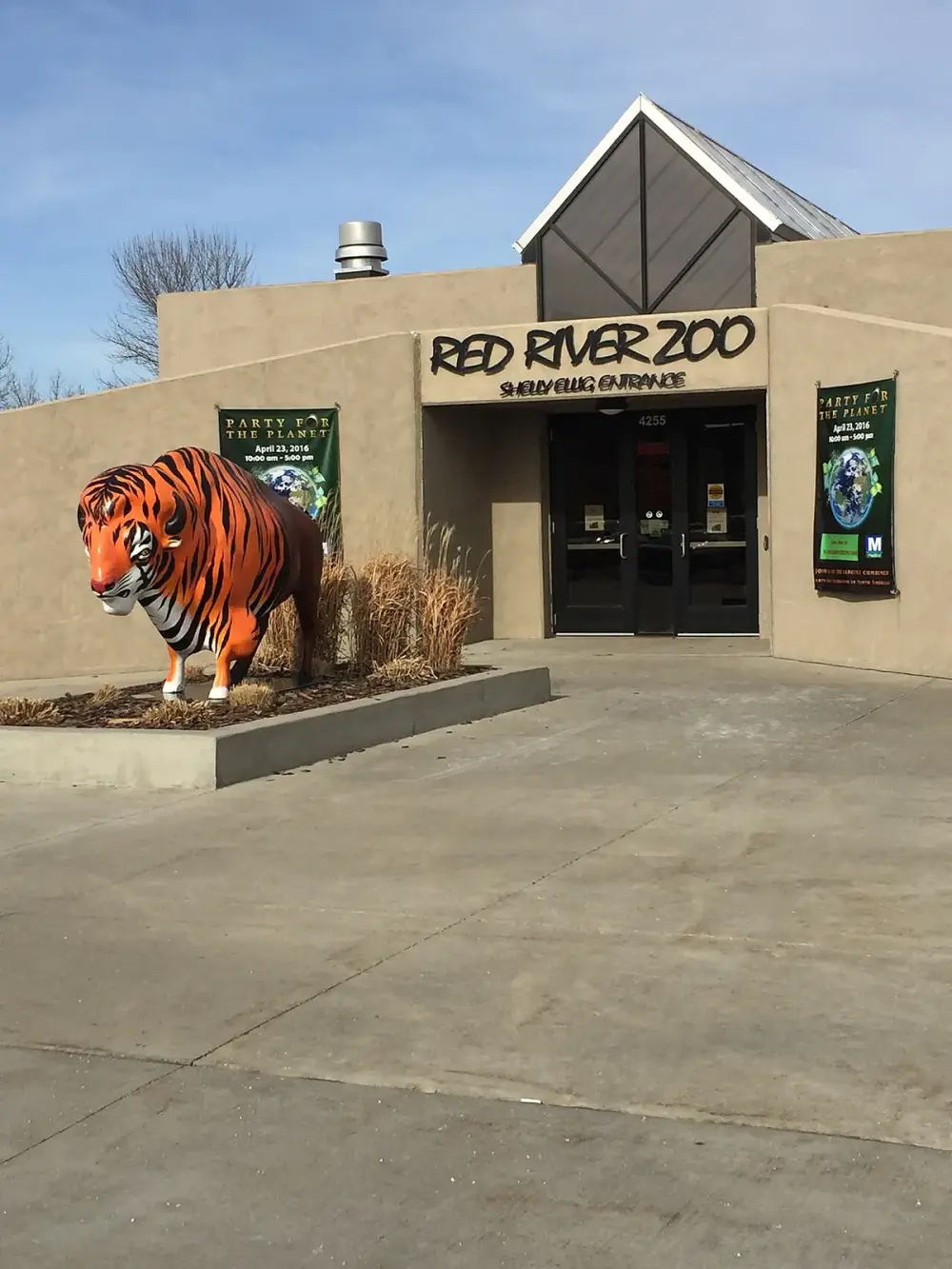
- Admission
- $14.95
- Size
- 8 acres
- Opened
- 1999
- Accreditation
- AZA
Association of Zoos and Aquariums
Everything below is directory information drawn from public sources and the zoo's own site.
Animals at Red River Zoo
7 confirmed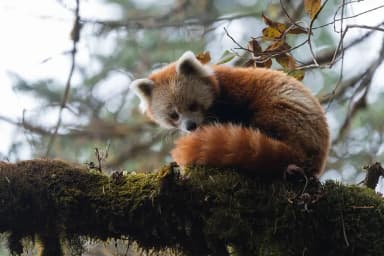
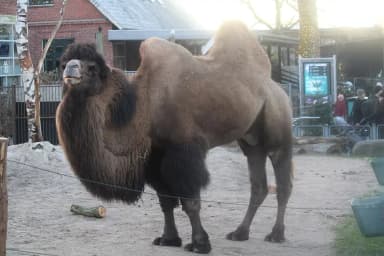
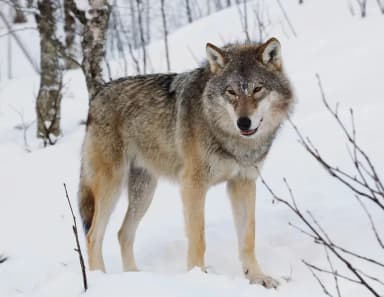
Feathers & Fangs from visitors
What people who've been to Red River Zoo say
A Feather is something this zoo does well; a Fang is something it gets wrong. Left by people who've been, and read by us before they appear.
Loading…
About Red River Zoo
Red River Zoo sits at 4220 21st Avenue SW in Fargo, North Dakota, on land that was once a farm belonging to the George Anderson family, known as Red River Ranch. The Red River Zoological Society, formed in 1993, built the Zoo on a long-term, 99-year lease of the property from the Fargo Park District, and the Zoo opened to the public in May 1999 on its first 8 acres. It has since grown to 33 acres and now houses more than 600 animals representing roughly 89 species. The Zoo gained accreditation from the Association of Zoos and Aquariums in 2006 and describes itself as a premier attraction for Fargo and the surrounding area.
Unlike a general-collection zoo, Red River Zoo organizes its collection around climate rather than geography alone: its animals come primarily from regions with climates similar to North Dakota's, chiefly North America, northern Asia, and northern Europe. The Zoo receives no public funding, relying instead on memberships, admissions, donations, and grants to the Zoological Society and through its members.
History
The land beneath the Zoo began as flat farmland with only seven trees and a handful of aging farm buildings, some of which were unsafe and later removed while others were renovated for zoo use. Since 1999, staff and volunteers have planted hundreds of additional trees and shrubs and dug a series of five ponds connected by streams, transforming the featureless site into landscaped exhibits with rolling terrain.
Construction of the Zoo was originally funded entirely through philanthropic gifts of cash, in-kind services, and materials from local individuals, families, corporations, and foundations. As the collection grew, the Zoo built a reputation for breeding and exhibiting some of the world's rarest cold-climate species, with documented success breeding red pandas — 11 births as of 2012, including two sets of triplets — along with Sichuan takin, Pallas's cats, and Russian red tree squirrels. In 2013, the Zoo received an Outstanding Achievement award in the AZA's Edward H. Bean Award program for its conservation work with red pandas.
Expansion has continued steadily. A gray wolf exhibit features a family of six wolves, viewable from outside or from inside a "trapper's cabin" with two large viewing windows. In 2012, the White-Naped Crane and Pallas's Cat exhibits were renovated. The North American River Otter exhibit opened in 2013, with indoor and underwater viewing areas, and a new Veterinary Center opened with a public viewing component in 2015. A Children's Zoo Farm and Nature's Playland followed in 2016, focused on heritage-breed domestic animals and teaching children where food comes from. The Zoo's grounds also include a fully restored 1928 carousel, donated by the Diederich family after a 1995 restoration.
Exhibits and habitats
The gray wolf exhibit is one of the Zoo's central attractions, letting visitors watch a family of six wolves either from an open viewing area or through the windows of a trapper's-cabin-style structure. Nearby, the North American River Otter exhibit combines indoor and underwater viewing so guests can watch the otters swim.
The Zoo's Children's Zoo Farm and its adjoining Nature's Playland focus on heritage-breed animals and hands-on learning about agriculture and biodiversity. The Discovery Barn Education Center and a dedicated Black-Footed Ferret exhibit round out the named on-site exhibits. A Veterinary Center, opened in 2015, includes a public viewing component that lets visitors see veterinary work with the animal collection.
For dining and recreation, the restored 1928 carousel operates from the Diederich Carousel Pavilion, which also serves food. The Dancing Crane Café, open daily through the summer, offers hot food including hot dogs, tacos in a bag, and sloppy joes alongside Dippin' Dots, Icee drinks, and popcorn; Coca-Cola is the Zoo's exclusive beverage partner.
Animal highlights
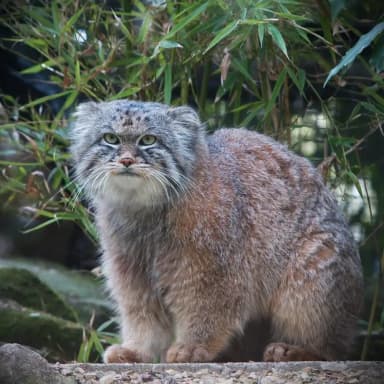
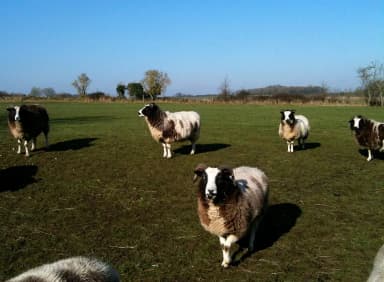
Red River Zoo is home to more than 600 animals, with the Zoo stating its collection includes roughly 89 species, deliberately built around cold-climate species from North America, northern Asia, and northern Europe. Species confirmed at the Zoo include the Bactrian camel, grey wolf, Jacob sheep, Pallas's cat, red panda, Sichuan takin, and swift fox, alongside reptiles, amphibians, and invertebrates from around the world. An indoor exhibit also houses two white-faced saki monkeys.
The Zoo has had particular success breeding red pandas, recording 11 births as of 2012, including two sets of triplets, and has also bred Sichuan takin, Pallas's cats, and Russian red tree squirrels. Because the collection focuses on species suited to a cold climate, it differs from many general zoos in the animals it prioritizes and the exhibits it builds around them.
Conservation and programs
The Zoo has a formal policy for welcoming outside researchers to conduct scientific studies aimed at advancing captive reproduction, improving animal-care standards, and supporting conservation of wildlife and ecosystems. Acceptable research includes field studies of a species' behavior, habits, range, or health status in the wild; behavior-focused studies of exhibit use, diet, and enrichment preferences; reproductive research to support captive breeding of endangered and threatened species, including artificial insemination; and projects addressing diet, husbandry, or disease issues. All research proposals must be reviewed and approved by the Executive Director and General Curator, with the Attending Veterinarian's approval required in some cases, and ongoing projects are subject to periodic review.
On the animal-care side, the Zoo's breeding record with red pandas, Sichuan takin, Pallas's cats, and Russian red tree squirrels reflects its stated specialization in propagating rare cold-climate species, work recognized by the AZA's 2013 Edward H. Bean Award for its red panda program.
Planning your visit
As listed on the Zoo's website, hours run from 10 a.m. to 5 p.m., with early admission at 9 a.m. daily. General admission for children ages 2 to 14 is listed at $12.95; group rates are available for parties of 10 or more with advance booking. A household membership is listed at $50. Guests with a valid SNAP card and photo ID can receive discounted tickets or a membership through the Zoo's Access for All program, purchased in person only; the Zoo does not accept P-EBT, Medicaid, or WIC cards for this program.
Parking is free for Zoo guests; other visitors are asked to pay a $2 donation at the parking lot entrance. No pets are allowed on Zoo grounds, aside from working animals permitted under AZA regulations, and the Zoo does not allow outside food or drink to be brought in, except when the Carousel Pavilion has been reserved for a lunch break. Guests can exit and re-enter on the same-day ticket if they choose to eat off-site. For food inside the gates, the Dancing Crane Café and the Carousel Pavilion offer hot food, snacks, and drinks, and the Wild Things Gift Shop is also on site. All visitors under 14 must be accompanied by an adult, and smoking, including e-cigarettes, is not permitted anywhere on the grounds.
Confirm current hours, ticket prices, and any seasonal changes on the Zoo's official website before you go.
What we haven't confirmed
Everything above came from public sources. These specifics we haven't stood behind yet:
- Full current ticket price list beyond the child rate
- Total annual attendance figures
- Wheelchair and stroller rental availability
- Zoo phone number for general inquiries
- Average time needed for a full visit
Red River Zoo compared with nearby zoos
How Red River Zoo lines up against the closest zoos we have details for — useful if you're deciding between them for the same day out.
| Zoo | Distance | Admission | Hours | Size | AZA |
|---|---|---|---|---|---|
| Red River ZooThis zooFargo, ND | — | $14.95 | 10am – 5pm | 8 acres | Yes |
| Chahinkapa ZooWahpeton, ND | 41 mi | $15 | 10:00 am – 4:00 pm | 29 acres | No |
| Hemker Park & ZooFreeport, MN | 132 mi | $21.52 | 10 AM – 6 PM | — | No |
| Bramble Park ZooWatertown, SD | 135 mi | $13.50 | Daily 10:00 AM – 4:00 PM. Closed Veterans Day, Thanksgiving, Black Friday, Dec 24–25, New Year's Day, MLK Jr. Day, Presidents' Day; closed during regular hours on Zoo Boo day. | 15 acres | No |
Distances are straight-line. A dash means we haven't confirmed that detail yet, not that the zoo lacks it.
AZAThe Association of Zoos and Aquariums. Accredited members have passed an independent inspection of animal care and welfare, safety, conservation and education, repeated every five years. Many smaller facilities never apply, so “not accredited” isn't a verdict on its own. What accreditation means · How we check this
Red River Zoo: common questions
Is Red River Zoo AZA accredited?
Yes, it has been accredited by the Association of Zoos and Aquariums since 2006.
When did Red River Zoo open?
It opened to the public in May 1999 on its first 8 acres; the Zoological Society that built it formed in 1993.
How big is Red River Zoo?
The Zoo now covers 33 acres, up from its original 8.
How many animals and species live at the Zoo?
More than 600 animals, with the Zoo stating its collection includes roughly 89 species, with a focus on cold-climate wildlife.
What animals can visitors see?
Highlights include red pandas, gray wolves, Sichuan takin, Pallas's cats, Bactrian camels, and North American river otters, along with reptiles, amphibians, and invertebrates.
Is parking available?
Yes, and it's free for Zoo guests; non-guests are asked for a $2 donation.
Can I bring my own food?
No, outside food and drink aren't allowed inside the Zoo except when the Carousel Pavilion is reserved for a group lunch.
Something wrong here? Tell us — we correct in place, with a dated note.