
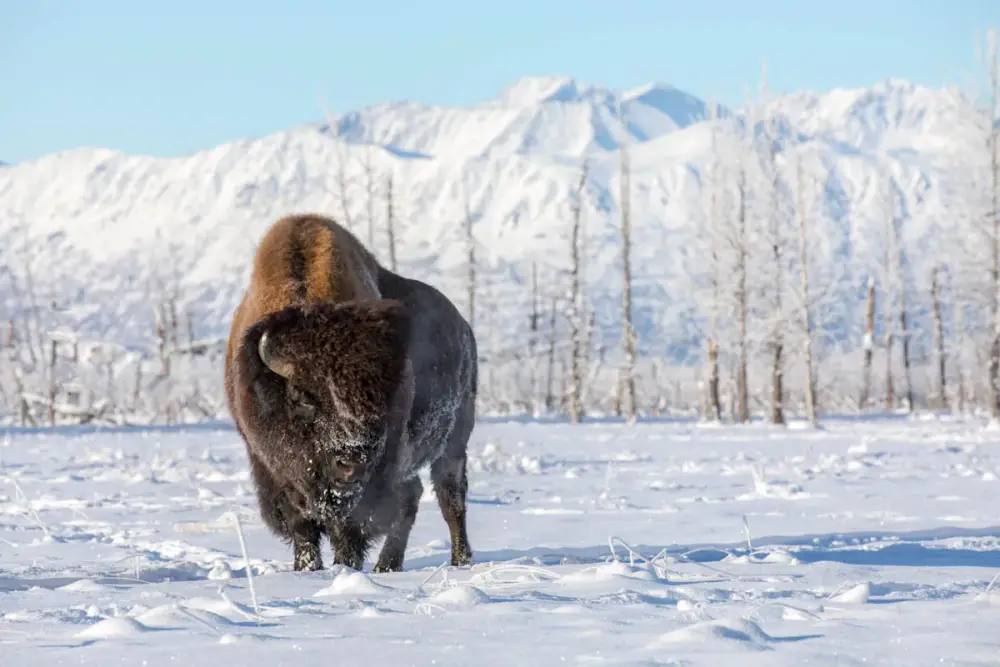
Alaska Wildlife Conservation Center
Portage, AK
Alaska Region U.S. Fish & Wildlife Service from Anchorage, United States · CC0
- Admission
- $30
- Size
- 200 acres
- Opened
- 1993
- Accreditation
- None listed
not accredited by the Association of Zoos and Aquariums
Everything below is directory information drawn from public sources and the zoo's own site.
Animals at Alaska Wildlife Conservation Center
19 confirmedMammals16
 Yathin S Krishnappa · CC BY-SA 3.0
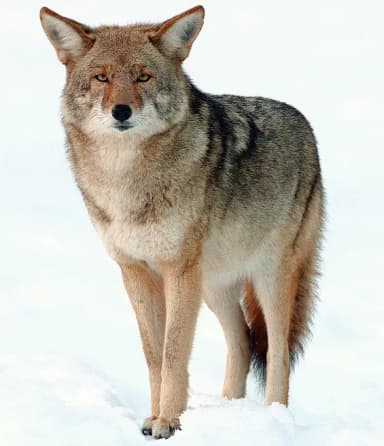
Coyote
 User:Mas3cf · CC BY-SA 4.0
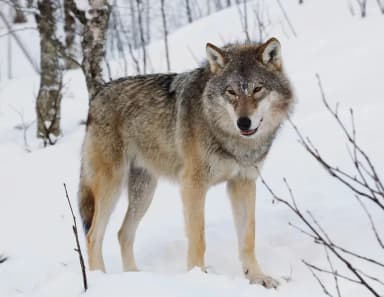
Gray Wolf
 Membeth · CC0
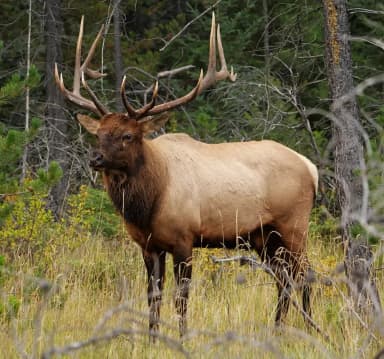
Elk
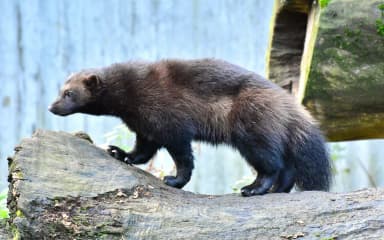 Esquilo · CC BY-SA 3.0
Wolverine
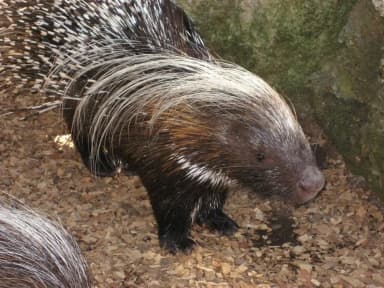 Liné1 · CC BY-SA 3.0
Porcupine
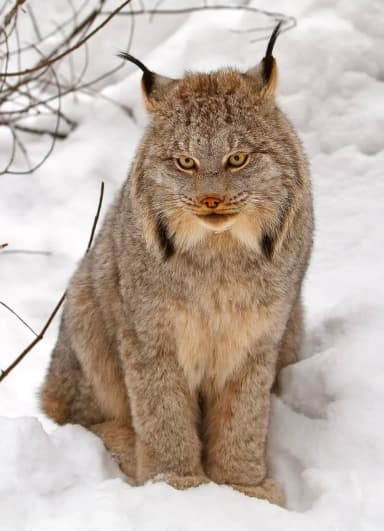 Michael Zahra · CC BY-SA 3.0
Lynx
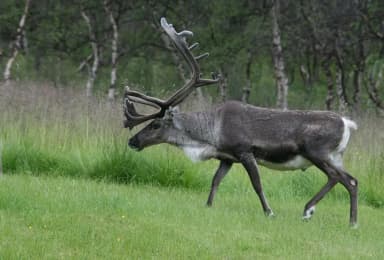 Are G Nilsen · CC BY-SA 3.0
Reindeer
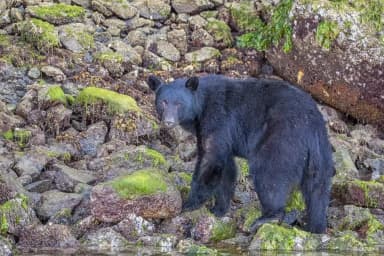 Charles J. Sharp · CC BY-SA 4.0
American Black Bear
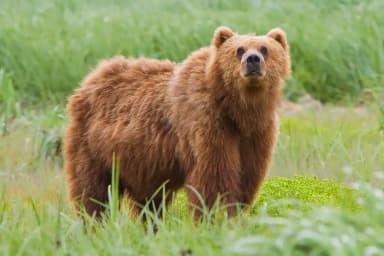 Yathin S Krishnappa · CC BY-SA 3.0
Brown Bear
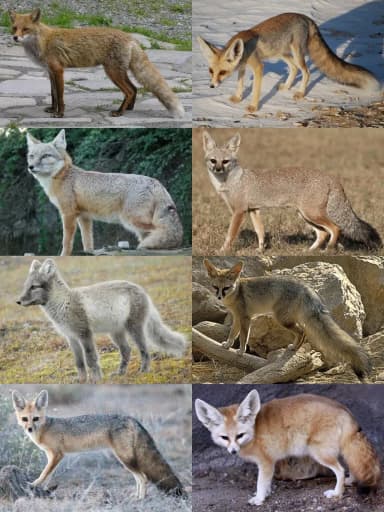 菅野温泉(かんのおんせん)玄関のキタキツネP6270365.jpg : Snake Head 1995 Rüppell's_fox.jpg : HelmutBoehm Vulpes corsac 2010.JPG : 4028mdk09 A · CC BY 2.0
Fox
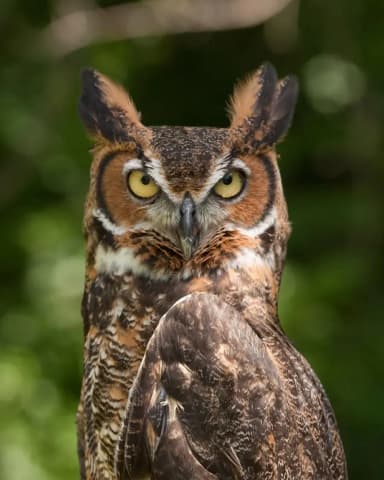
Feathers & Fangs from visitors
What people who've been to Alaska Wildlife Conservation Center say
A Feather is something this zoo does well; a Fang is something it gets wrong. Left by people who've been, and read by us before they appear.
Loading…
About Alaska Wildlife Conservation Center
The Alaska Wildlife Conservation Center is a nonprofit wildlife sanctuary in Portage Valley, about an hour south of Anchorage at Mile 79 of the Seward Highway. It occupies more than 200 acres of habitat, with an additional 110 acres leased from the U.S. Forest Service specifically for wood bison, and it is not currently accredited by the Association of Zoos and Aquariums. The center describes its mission as preserving Alaska's wildlife through conservation, education, research, and animal care.
Unlike a traditional zoo that acquires animals for display, AWCC exists to take in orphaned and injured animals year-round. Most of them become permanent residents because they lack the skills to survive in the wild or have grown reliant on people for care. The organization holds 501(c)(3) nonprofit status, which it obtained in 2000, and it operates entirely on visitor admissions, tours, donations, memberships, and gift shop sales.
Guests explore the sanctuary along a scenic 1.5-mile loop that can be covered on foot, by bike, or by car, with interpretive signs at each animal habitat along the way. The setting places the center's enclosures against the Chugach Mountains and the Turnagain Arm inlet, and the operation is built around large, natural-style enclosures meant to let resident animals display natural behaviors as what the organization calls education ambassadors for their species.
History
AWCC traces its founding to 1993, when Mike Miller started Big Game Alaska with a modest herd of plains bison and Rocky Mountain elk. The organization gained 501(c)(3) nonprofit status in 2000, and in 2007 it changed its name from Big Game Alaska to the Alaska Wildlife Conservation Center.
Since 2003, AWCC has taken part in a wood bison reintroduction program, working jointly with the Alaska Department of Fish & Game to return the species to Alaska after a roughly 100-year absence. The wood bison is described by the center as the largest land mammal in North America and a keystone grazing herbivore native to the region. In 2015, 130 wood bison raised in part through this program were released back into western Alaska, and the center's partnership with the U.S. Forest Service for 110 acres of dedicated wood bison habitat continues to support the effort.
Alongside its conservation work, AWCC has built out education programming over the years, including STEM curriculum development for schools, field trips, guided tours, and animal presentations delivered by staff. The center also opened the Matson Ocean Education Center, a newer facility on site, with a grand opening celebrated by staff and supporters after what the organization describes as years of planning and construction.
Exhibits and habitats
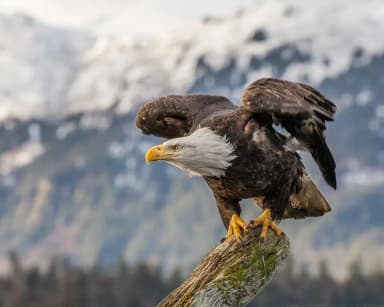
AWCC's animals live in large, fenced habitats spaced along the 1.5-mile loop that forms the spine of a visit. The center is home to lynx, brown bears, black bears, porcupines, wood bison, foxes, coyotes, wolves, moose, elk, Sitka black-tailed deer, muskox, caribou, reindeer, a bald eagle, a great horned owl, a red squirrel, and ferrets, according to the center's own description of its collection. Visitors are told it is common to see brown bears swimming, moose strutting, wood bison roaming, muskox playing, wolves posing, and porcupines climbing during a visit, since the animals are kept in large outdoor enclosures rather than indoor exhibit buildings.
The wood bison habitat is a particular focus of the grounds, reflecting the center's role in the species' reintroduction to Alaska, and it connects to the additional 110 acres leased from the Forest Service. The Matson Ocean Education Center is the newest built structure on the property, opened as a dedicated space for ocean-focused education.
Because AWCC is fundamentally a rehabilitation and rescue facility rather than a collection built through acquisition, its habitats are organized around the animals that have arrived needing homes rather than around a curated theme. All animals are kept outdoors, and the loop path is designed to let visitors move at their own pace past each enclosure while reading the interpretive signage.
Animal highlights
AWCC lists at least 19 species on its website, spanning large mammals, birds, and smaller wildlife native to the state. Species named across the center's own materials include American marten, bald eagle, beluga whale, black bear, brown bear, coyote, deer, elk, fox, great horned owl, lynx, moose, muskox, porcupine, reindeer, rufous hummingbird, wolf, wolverine, and wood bison.
Brown bears, wolves, wood bison, and muskox are among the animals most highlighted in the center's own descriptions of a typical visit, and wood bison in particular carry historical weight given the center's role in the species' Alaska reintroduction. The rufous hummingbird and the beluga whale point to AWCC's research partnerships rather than resident exhibits: rufous hummingbirds are studied through banding efforts tracking their migration between Mexico and Alaska, while the endangered Cook Inlet beluga whale is the subject of monitoring work the center supports. For visitors curious about terminology, the center notes that a group of foxes is a skulk, a group of lynx is a chain, a group of porcupines is a prickle, a group of muskoxen is a yoke, and a group of owls is a parliament.
Conservation and programs
Research is described by AWCC as central to its mission, and the center supports projects through partnerships with the U.S. Fish and Wildlife Service, the Alaska Beluga Monitoring Program, NOAA Fisheries, and the Alaska Department of Fish and Game. Its best-documented conservation effort is the wood bison reintroduction program running since 2003, which returned the species to western Alaska after a century-long absence, including a 2015 release of 130 animals.
The center also supports rufous hummingbird banding studies tracking migration between Mexico and Alaska, and it contributes data on brown bears in Alaska through biologists it has hosted. On the citizen-science side, AWCC participates in eBird, the annual Christmas Bird Count held between December 14 and January 5, and iNaturalist, inviting both staff and guests to log wildlife sightings made on the property.
Planning your visit
AWCC's hours are listed as 10am to 4pm, though the center notes hours are subject to change without notice; as listed on the zoo's website, it is open Friday through Monday and closed on Thanksgiving Day, the day after Thanksgiving, Christmas Eve, Christmas Day, and New Year's Day. Admission, as listed on the zoo's website, runs $30 for ages 13 and up, $26 for ages 4 to 12, $28 for active-duty military with ID, and discounted Alaska-resident rates of $28 for adults and $24 for children with valid Alaska ID.
The sanctuary sits at Mile 79 of the Seward Highway, about 47 miles (roughly an hour) south of Anchorage, 12 minutes from Girdwood, and 20 minutes from Whittier. There is no shuttle service from AWCC itself, though several tour operators include it on their routes, and rideshare drivers are asked to wait on-site since return pickups from Portage are not reliably available. AWCC does not provide a wheelchair or walker, but the 1.5-mile loop can be driven, letting mobility-limited visitors see the habitats from a vehicle.
For food, the Forget-Me-Not Foods truck operates on site daily from May through September with hot and cold drinks and meal items, while October through April the center offers hot beverages and grab-and-go snacks only. Pets are discouraged and, if brought, must stay in the vehicle at all times. Guests wanting a closer look can book the Walk on the Wild Side Tour, a 90-minute guided walk with a naturalist that includes feeding an animal, though it is limited to 10 people and should be booked in advance. Because hours, pricing, and tour availability change, always check the official AWCC website before visiting.
What we haven't confirmed
Everything above came from public sources. These specifics we haven't stood behind yet:
- Total number of resident animals
- Published total species count
- General admission time needed for a self-guided visit
- Parking details and lot size
- Whether strollers are available for rent
Alaska Wildlife Conservation Center compared with nearby zoos
How Alaska Wildlife Conservation Center lines up against the closest zoos we have details for — useful if you're deciding between them for the same day out.
| Zoo | Distance | Admission | Hours | Size | AZA |
|---|---|---|---|---|---|
| Alaska Wildlife Conservation CenterThis zooPortage, AK | — | $30 | 10am – 4pm | 200 acres | No |
| Alaska ZooAnchorage, AK | 34 mi | $25 | 9am – 7pm | 25 acres | No |
| Alaska SeaLife CenterSeward, AK | 52 mi | $29.95–$34.70 | 9:00am – 5:00pm | — | Yes |
Distances are straight-line. A dash means we haven't confirmed that detail yet, not that the zoo lacks it.
AZAThe Association of Zoos and Aquariums. Accredited members have passed an independent inspection of animal care and welfare, safety, conservation and education, repeated every five years. Many smaller facilities never apply, so “not accredited” isn't a verdict on its own. What accreditation means · How we check this
Alaska Wildlife Conservation Center: common questions
Is the Alaska Wildlife Conservation Center AZA accredited?
No. AWCC is not accredited by the Association of Zoos and Aquariums.
When did AWCC open?
It began in 1993 as Big Game Alaska, gained nonprofit status in 2000, and was renamed the Alaska Wildlife Conservation Center in 2007.
How big is the property?
The sanctuary covers more than 200 acres, plus an additional 110 acres leased from the U.S. Forest Service for wood bison habitat.
What animals can you see?
Resident species include brown bears, black bears, wolves, lynx, moose, elk, muskox, wood bison, porcupines, foxes, coyotes, a bald eagle, and a great horned owl, among others.
Is there food available on site?
Yes. A food truck operates daily from May through September, and hot beverages and snacks are available the rest of the year.
Are wheelchairs available?
AWCC does not provide wheelchairs or walkers, but the 1.5-mile loop can be driven by vehicle.
Can visitors feed or touch the animals?
General visitors may not touch or feed the animals, but guided Animal Encounter tours, booked separately, allow feeding a bear, moose, porcupine, or reindeer.
Something wrong here? Tell us — we correct in place, with a dated note.