
- Admission
- $17.50
- Opened
- 1993
- Accreditation
- AZA
Association of Zoos and Aquariums
Everything below is directory information drawn from public sources and the zoo's own site.
Animals at Grizzly & Wolf Discovery Center
5 confirmedMammals4
Birds1
Feathers & Fangs from visitors
What people who've been to Grizzly & Wolf Discovery Center say
A Feather is something this zoo does well; a Fang is something it gets wrong. Left by people who've been, and read by us before they appear.
Loading…
About Grizzly & Wolf Discovery Center
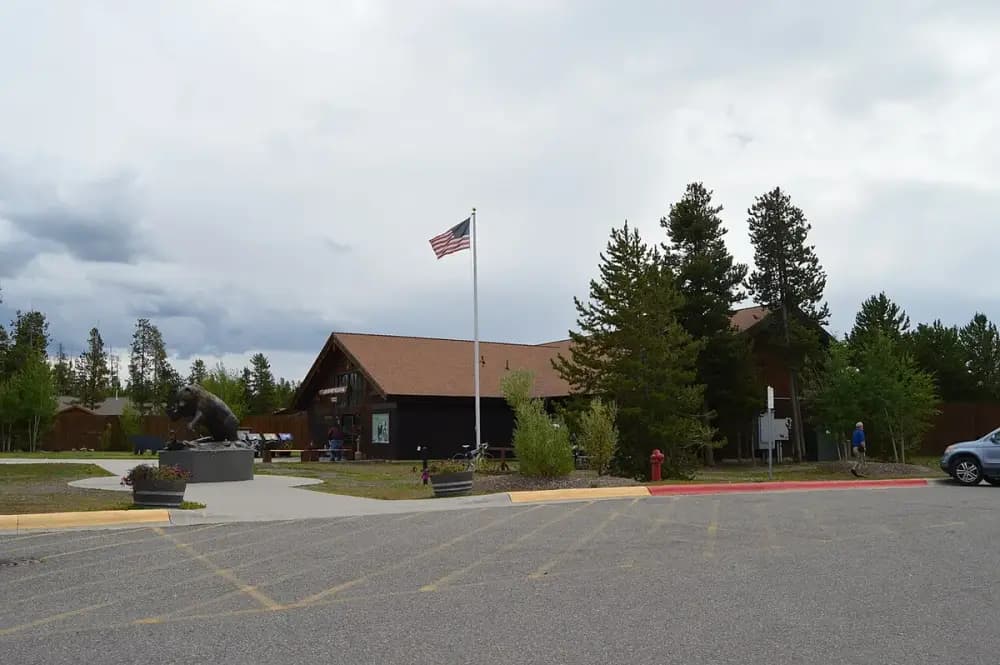
The Grizzly & Wolf Discovery Center is an AZA-accredited, not-for-profit wildlife park and educational facility in West Yellowstone, Montana, immediately next to Yellowstone National Park's west entrance. It opened in 1993 and operates as a 501(c)(3) organization funded primarily through visitor admission, memberships, and donations. The center's mission centers on giving visitors an opportunity to observe, understand, and appreciate grizzly bears, gray wolves, and related Yellowstone-area wildlife; many of the animals housed there are unable to survive in the wild and serve as ambassadors for their wild counterparts.
The center has held AZA accreditation for 25 consecutive years, a status confirmed through inspections covering animal welfare, veterinary care, keeper training, safety, education, conservation, financial stability, and guest services. It has also been recognized with a Tripadvisor Travelers' Choice distinction, placing it among the top 10 percent of attractions worldwide based on visitor reviews. The center is open every day of the year, including holidays, and its bears do not hibernate, so they remain visible to visitors year-round.
History
No dedicated history page describes the center's founding in detail, but available records establish it as an AZA-accredited, not-for-profit facility that opened in 1993 next to Yellowstone National Park's west entrance, built to give visitors a way to observe grizzly bears, gray wolves, and related wildlife that are otherwise unable to survive in the wild. The center has maintained continuous AZA accreditation for 25 years and, more recently, retired its "BEARS: Imagination & Reality" exhibit in favor of new interactive educational displays exploring how bears and wolves fit into the Yellowstone ecosystem.
Exhibits and habitats
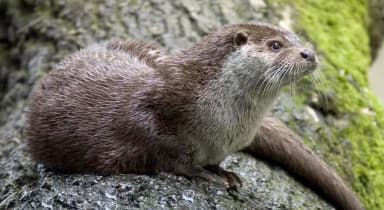
The Banks of the Yellowstone River Otter Exhibit recreates a Yellowstone riparian environment of ponds, streams, and waterfalls, positioned next to one of the wolf habitats so visitors can see multiple species at once. Its main residents are North American river otters, alongside Yellowstone cutthroat trout, a Columbia spotted frog, salamanders, and snakes, with a hands-on streamside display for children to search for signs of wildlife.
The Yellowstone Ecosystem exhibit uses interactive, life-sized dioramas and overhead raven silhouettes to explore the relationships between bears, wolves, and the broader Yellowstone landscape, with videos, games, and hands-on displays; it replaced the retired "BEARS: Imagination & Reality" exhibit. The Naturalist Cabin sits between two wolf habitats and gives visitors floor-to-ceiling window views of wolf pack dynamics, along with a fireplace, interpretive displays, a life-sized wolf model, and the center's "Wolf Pack Chat" program. The Raptor Exhibits let visitors observe birds of prey up close and learn about their adaptations and the challenges they face from human activity; the birds are on view from May through November. The center also offers an OnCell audio-guide app and behind-the-scenes tours.
Animal highlights
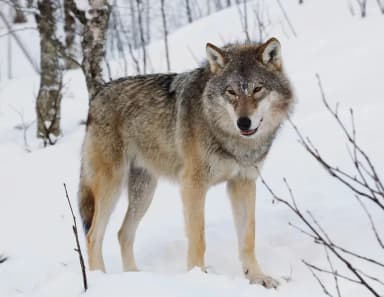
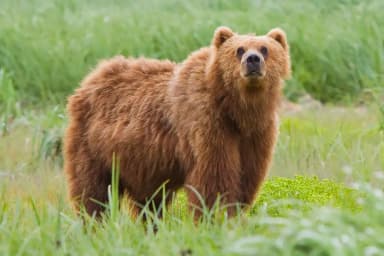
The center lists at least six kinds of animals on its website: grizzly bears, gray wolves, river otters, ground squirrels, birds of prey, and wolves shown separately in its wolf-pack habitats. Because the center exists specifically to house grizzly bears and gray wolves that cannot survive in the wild, its bear and wolf populations are the core of the collection, supplemented by the otters in the Banks of the Yellowstone exhibit and seasonal raptors on view from May through November. Yellowstone cutthroat trout, a Columbia spotted frog, and salamanders also share the river otter habitat, illustrating the ecosystem connections the center highlights between smaller species and the wolves and grizzly bears they share the landscape with. Unlike bears in the wild, the center's grizzly bears do not hibernate and remain visible to visitors throughout the year.
Conservation and programs
The Grizzly & Wolf Discovery Center describes conservation as central to its work, both through the care of its resident animals and through partnerships with outside agencies. It is the only facility approved for testing bear-resistant food and garbage storage containers for the Interagency Grizzly Bear Committee, a program that certifies products for use by consumers, parks, and municipalities. Through the Wildlife Restoration Foundation, the center partners with Yellowstone National Park, the Custer Gallatin National Forest, and nearby towns on the "I Am Bear Safe" project, which trains tourists and recreationists to avoid habituating wildlife to humans.
The center has worked with the Wind River Bear Institute since 2003, when it adopted its first Karelian Bear Dog, Jewel, to help teach visitors how these dogs reduce human-bear conflicts through a conditioning approach known as "bear shepherding." One of the center's golden eagles serves as a research "lure" bird, regularly transported to study sites to help capture wild eagles for lead-poisoning and habitat research published in peer-reviewed journals. The center has been a member since 2021 of Advancing Conservation through Empathy, an AZA regional group focused on wildlife education best practices, and its staff take part in several Taxonomic Advisory Groups that oversee AZA Species Survival Plan breeding programs.
Center animals have also supported outside research: bear and wolf scat and urine have been used by university biologists and Yellowstone National Park's wolf project, USGS researchers have used the center's bears to test scent lures for DNA-based population studies, and other studies have examined how quickly grizzlies can consume meat and whether bears use low-frequency calls to communicate. The center participates in local conservation events including International Migratory Bird Day, Earth Day, Raptor Fest, and the Audubon Society's Christmas Bird Count, and has adopted sustainability measures such as LED lighting, energy monitoring, and electric-vehicle charging stations.
Planning your visit
As listed on the center's website, the Grizzly & Wolf Discovery Center is open every day of the year, including holidays, from 8:30 a.m. to 6:00 p.m., with last admission at 5:30 p.m.; hours change seasonally, so confirm before visiting. A single ticket is valid for two consecutive days.
As listed on the website, admission runs $17.50 for adults (13 and older), $16.50 for seniors (62+), and $12.50 for children ages 5–12, and is free for children 4 and under; group rates apply for parties of 15 or more from May through November, or 10 or more from December through April. School groups pay $11.50 for grades K–8 and $13.50 for grades 9 through college; a chaperone is required for every ten students, and chaperones pay the student rate. The center accepts cash, school checks, and major credit cards, though out-of-state personal checks are not accepted.
Wheelchairs are available on site and the grounds are accessible, including an ADA-accessible playground. Picnic tables line the outside perimeter of the center. The center sits one block from Yellowstone National Park's west entrance in West Yellowstone, Montana. Members receive free admission. Because prices and hours are point-in-time, verify current rates and hours on the official website before you go.
What we haven't confirmed
Everything above came from public sources. These specifics we haven't stood behind yet:
- Total acreage
- Total animal count
- Species count beyond the six listed
- Parking details
- Time needed for a visit
Grizzly & Wolf Discovery Center compared with nearby zoos
How Grizzly & Wolf Discovery Center lines up against the closest zoos we have details for — useful if you're deciding between them for the same day out.
| Zoo | Distance | Admission | Hours | Size | AZA |
|---|---|---|---|---|---|
| Grizzly & Wolf Discovery CenterThis zooWest Yellowstone, MT | — | $17.50 | Open every day 8:30 AM – 6:00 PM; last entry 5:30 PM. Open 365 days including holidays. | — | Yes |
| Montana Grizzly EncounterBozeman, MT | 71 mi | $13.50 | Fall hours (from Sept 1): Thursday – Monday 10:00 AM – 5:00 PM; closed Tuesday & Wednesday. Weather permitting. Christmas Day 10 AM–1 PM. | — | No |
| Yellowstone Bear WorldRexburg, ID | 74 mi | $27.95 | Open 7 days a week; gates open 9:00 AM, gates close 5:00 PM. Last day of the 2026 season is October 18. Drive-thru wildlife park. Closed for the season after October 18, 2026. | — | No |
| Idaho Falls Zoo at Tautphaus ParkIdaho Falls, ID | 94 mi | $12.50 | Regular season ended Sept 27. Open Oct 2–4 and Oct 9–11 (Fri–Sun) 9:30 AM – 5:00 PM, last admission 4:30 PM, weather permitting. | — | Yes |
Distances are straight-line. A dash means we haven't confirmed that detail yet, not that the zoo lacks it.
AZAThe Association of Zoos and Aquariums. Accredited members have passed an independent inspection of animal care and welfare, safety, conservation and education, repeated every five years. Many smaller facilities never apply, so “not accredited” isn't a verdict on its own. What accreditation means · How we check this
Grizzly & Wolf Discovery Center: common questions
Is the Grizzly & Wolf Discovery Center AZA accredited?
Yes, for 25 consecutive years, following inspections covering animal welfare, veterinary care, and guest services, among other standards.
When did it open?
It opened in 1993 next to Yellowstone National Park's west entrance.
Do the bears hibernate?
No. The center's grizzly bears do not hibernate, so they remain visible to visitors year-round.
How long does a ticket last?
Admission is valid for two consecutive days.
Is it open year-round?
Yes, the center is open every day of the year, including holidays.
Is it wheelchair accessible?
Yes. Wheelchairs are available on site, and the grounds include an ADA-accessible playground.
What animals can you see?
Grizzly bears, gray wolves, river otters, ground squirrels, and seasonal birds of prey, shown from May through November.
Something wrong here? Tell us — we correct in place, with a dated note.