
Wolves, foxes and wild dogs in U.S. zoos
Wolves, foxes and wild dogs are canids, members of the dog family Canidae, a diverse group of about 37 species that also includes coyotes, jackals and the domestic dog. Canids walk on their toes, most have long legs and lithe bodies built for chasing prey, and larger species such as gray wolves live in packs.
Most widely held
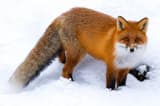 Red FoxVulpes vulpesAt 41 zoos · Least Concern
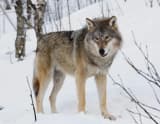 Gray WolfCanis lupusAt 39 zoos · Least Concern
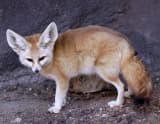 Fennec FoxVulpes zerdaAt 38 zoos · Least Concern
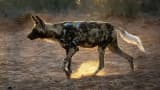 African Wild DogLycaon pictusAt 31 zoos · Endangered
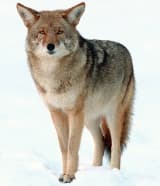 CoyoteCanis latransAt 28 zoos · Least Concern
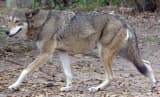 Red WolfCanis rufusAt 25 zoos · Critically Endangered
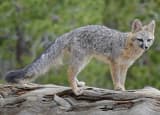 Gray FoxUrocyon cinereoargenteusAt 21 zoos · Least Concern
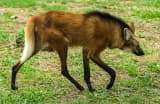 Maned WolfChrysocyon brachyurusAt 19 zoos · Near Threatened
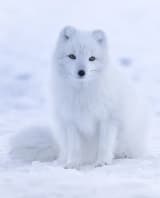 Arctic FoxVulpes lagopusAt 16 zoos · Least Concern
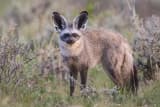 Bat-eared FoxOtocyon megalotisAt 12 zoos · Least Concern
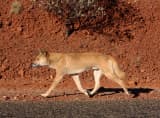 DingoCanis lupus dingoAt 10 zoos
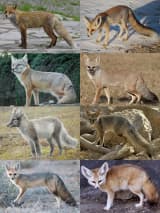 FoxVulpesAt 9 zoos
What makes a canid
All canids share a similar basic form, best shown by the gray wolf, though the length of the muzzle, legs, ears and tail varies widely between species. They are digitigrade, walking on their toes, and their claws are blunt and non-retractile in some species and sharper and partly retractile in others. Strong molar teeth let most species crack bone to reach the marrow.
Social life ranges from solitary to highly cooperative. Gray wolves and other larger canids live in packs, which let them tackle larger prey, and in most packs only the breeding male and female reproduce. Canids are typically monogamous and fathers help raise the young.
Wolves, coyotes and wild dogs
The genus Canis includes the gray wolf of Eurasia and North America, the coyote and the red wolf. The African wild dog is the only living member of its genus, Lycaon. It lives in permanent packs and runs prey down with stamina and teamwork rather than a single sprint, and adults regurgitate food not only for pups but for other adults too. Its patchy coat of black, brown, yellow and white differs from animal to animal.
South America has its own canids. The maned wolf is the largest canine native to the continent, standing up to 110 cm (43 in) at the withers, yet it hunts alone, tapping the ground with a front foot to flush prey from tall grass.
Telling the foxes apart
Foxes typically have a triangular face, pointed ears, a long snout and a bushy tail. Desert foxes have large ears and short fur that help them stay cool. The fennec fox has the greatest ear-to-body ratio of any canid, and its ears both shed heat and pick up prey moving underground. The bat-eared fox of eastern and southern Africa uses its 11 to 13 cm (4.3 to 5.1 in) ears to find harvester termites, which can make up 80 to 90 percent of its diet.
The red fox is the most common and widespread fox, usually auburn with a white-tipped tail. The gray fox, found from southern Canada to Colombia and Venezuela, is one of the few tree-climbing canids.
Conservation picture
Many canids are widespread, but some are in real trouble. The red wolf is Critically Endangered: its last wild animals were brought into captivity in the 1970s, bred, and reintroduced to eastern North Carolina in 1987, and that population of around 30 is the only one in the wild. The African wild dog has been listed as Endangered on the IUCN Red List since 1990, and the maned wolf is Near Threatened.
Common questions
How many species are in the dog family?
The Canidae family has some 37 species, ranging from the long-limbed maned wolf to the short-legged bush dog. It includes wolves, coyotes, jackals, foxes, raccoon dogs and the domestic dog.
Is a fox a dog?
Foxes belong to the dog family, Canidae, but they are not dogs in the everyday sense. Twelve species make up the true foxes of the genus Vulpes, such as the red, Arctic and fennec foxes.
What is the smallest fox?
The fennec fox of North Africa's deserts is the smallest fox and the smallest member of the dog family. It also has the greatest ear-to-body ratio of any canid.
Is the maned wolf a wolf?
No. Despite its name and fox-like coloring, the maned wolf is neither a wolf nor a fox but the only species in its own genus, Chrysocyon. It is the largest canine native to South America, standing up to 110 cm (43 in) at the withers.
Can foxes climb trees?
The gray fox can. It is one of only a few canids that habitually climb, using hooked claws to scramble up vertical trunks as tall as 18 m (59 ft).
Is the red wolf endangered?
Yes. The red wolf of the southeastern United States is Critically Endangered, with only around 30 estimated to remain in the wild, all descended from a population reintroduced to eastern North Carolina.
Sources
Last reviewed