
Snakes in U.S. zoos
Snakes are limbless reptiles of the suborder Serpentes, descended from lizards. About 3,900 species live on every continent except Antarctica. Most are non-venomous and kill prey by constriction or simply swallow it; venomous species inject modified saliva through fangs. Flexible, hinged jaws let them swallow large prey whole.
Most widely held
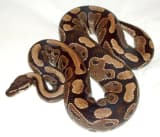 Ball PythonPython regiusAt 50 zoos · Near Threatened
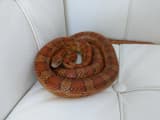 Corn SnakePantherophis guttatusAt 37 zoos · Least Concern
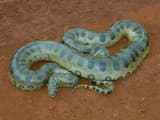 Green AnacondaEunectes murinusAt 22 zoos · Least Concern
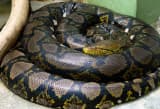 Reticulated PythonMalayopython reticulatusAt 22 zoos · Least Concern
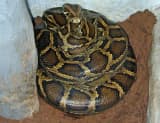 Burmese PythonPython bivittatusAt 21 zoos · Vulnerable
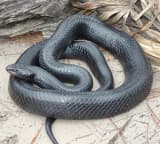 Eastern Indigo SnakeDrymarchon couperiAt 20 zoos · Least Concern
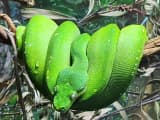 Green Tree PythonMorelia viridisAt 18 zoos · Least Concern
 Eastern Diamondback RattlesnakeCrotalus adamanteusAt 17 zoos · Least Concern
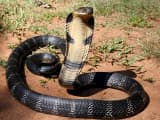 King CobraOphiophagus hannahAt 17 zoos · Vulnerable
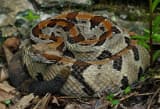 Timber RattlesnakeCrotalus horridusAt 17 zoos · Least Concern
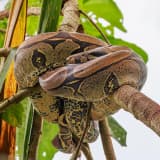 Boa ConstrictorBoa constrictorAt 16 zoos · Least Concern
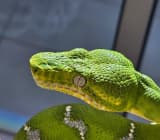 Emerald Tree BoaCorallus caninusAt 16 zoos · Least Concern
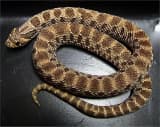 Western Hognose SnakeHeterodon nasicusAt 15 zoos · Least Concern
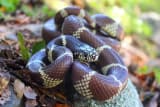 California KingsnakeLampropeltis californiaeAt 14 zoos · Least Concern
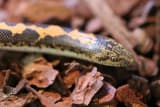 Kenyan Sand BoaEryx colubrinusAt 14 zoos · Least Concern
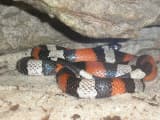 Pueblan Milk SnakeLampropeltis triangulum campbelliAt 14 zoos · Least Concern
 CopperheadAgkistrodon contortrixAt 12 zoos · Least Concern
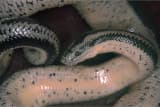 Rosy BoaLichanura trivirgataAt 12 zoos · Least Concern
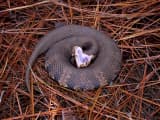 CottonmouthAgkistrodon piscivorusAt 11 zoos · Least Concern
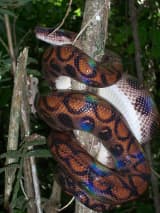 Rainbow BoaEpicrates cenchriaAt 11 zoos · Least Concern
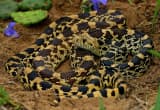 BullsnakePituophis catenifer sayiAt 9 zoos · Least Concern
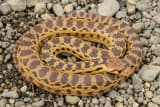 Gopher SnakePituophis cateniferAt 9 zoos · Least Concern
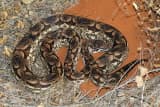 Dumeril's BoaAcrantophis dumeriliAt 8 zoos · Least Concern
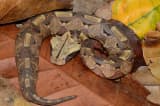 Gaboon ViperBitis gabonicaAt 8 zoos · Vulnerable
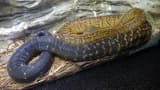 Jamaican BoaChilabothrus subflavusAt 8 zoos · Vulnerable
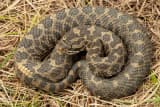 Eastern MassasaugaSistrurus catenatus catenatusAt 7 zoos · Least Concern
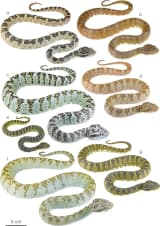 Eyelash ViperBothriechis schlegeliiAt 7 zoos · Least Concern
 Madagascar Giant Hognose SnakeLeioheterodon madagascariensisAt 6 zoos · Least Concern
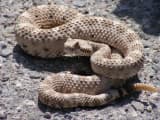 SidewinderCrotalus cerastesAt 6 zoos · Least Concern
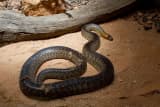 Woma PythonAspidites ramsayiAt 6 zoos · Least Concern
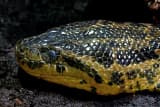 Yellow AnacondaEunectes notaeusAt 6 zoos
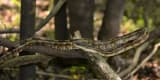 Black Rat SnakePantherophis obsoletusAt 5 zoos · Least Concern
What makes a snake
Snakes are elongated, limbless reptiles that evolved from lizards; genomic analysis, anatomy and the fossil record all support that origin. Their skeleton is mostly skull, ribs and a spine of 200 to 400 vertebrae. A hinged jaw joint and a stretchy ligament at the chin let them swallow food much larger in proportion to their size, then go a long time between meals.
The Burmese python shows how extreme that can be: after a large meal its whole digestive system rebuilds itself, and its heart's main pumping chamber grows by roughly 40 percent. Pythons and boas still carry traces of hind limbs, visible as small claw-like spurs beside the vent.
Constrictors and their lookalikes
Pythons and boas are the giants of the group. The reticulated python is the longest living snake, and the green anaconda the heaviest. Most pythons lay eggs and coil around the clutch, while the boa constrictor and green anaconda give birth to live young, which is unusual among reptiles.
Two tree-dwellers are the classic lookalike pair. The green tree python of New Guinea and northern Australia and the emerald tree boa of South America are both bright green and rest with coils looped over a branch and the head tucked in the middle. They are unrelated, and people confuse them when they are seen outside their native ranges.
Smaller colubrids round out the group. The western hognose snake flattens its neck, hisses and bluff-strikes when threatened, then often rolls over and plays dead. The eastern indigo snake eats other snakes and is immune to the venom of North American rattlesnakes.
Venom versus constriction
Most snakes are non-venomous. Venomous species, about a quarter of all snakes, use modified saliva delivered through hollow or grooved fangs, and their venom serves mainly to kill prey rather than for defense. Venom evolved more than once, so venomous snakes are not a single family. The king cobra, the longest venomous snake, hunts mainly other snakes.
Snakes find prey largely by smell, flicking a forked tongue to carry scent to the vomeronasal organ. Pit vipers add heat-sensing pits between the nostril and eye.
Conservation picture
Many snakes are widespread, but some are in trouble. The Burmese python is Vulnerable on the IUCN Red List after losses to habitat clearance and over-harvesting, even as it spreads as an invasive species in Florida. The ball python is Near Threatened, largely because of collection for the pet trade. The Jamaican boa, found only on Jamaica, has declined since the late 19th century because of introduced mongooses, persecution and habitat loss.
Common questions
What is the longest snake in the world?
The reticulated python is the longest living snake, at about 6.95 m (22.8 ft). The green anaconda is shorter, at about 5.21 m (17.1 ft), but is considered the heaviest snake on Earth at 97.5 kg (215 lb).
Are most snakes venomous?
No. Most snake species are non-venomous; around a quarter of all species are identified as venomous. Non-venomous snakes typically subdue prey by constriction or swallow it alive.
What is the difference between a python and a boa?
Both are constrictors that keep tiny vestigial hind limbs. Most pythons lay eggs and coil around them until they hatch, while boas such as the boa constrictor, green anaconda and emerald tree boa give birth to live young.
How do snakes smell?
Snakes collect scent particles with their forked tongue and pass them to the vomeronasal, or Jacobson's, organ in the mouth. The fork gives them directional information about where a smell is coming from.
Why do snakes shed their skin?
Shedding, called ecdysis, replaces old, worn skin and can be timed to mating cycles. A snake sheds the whole outer layer in one piece, and may do so four or five times a year; its eyes turn silvery just before.
Do snakes have eyelids?
No. A snake's eyes are covered by transparent, permanently closed scales called spectacles, or brille.
Where are there no snakes?
Snakes are absent from Antarctica and from islands such as Ireland, Iceland, Greenland and New Zealand, apart from rare sea snake visits to New Zealand's northern waters.
Sources
Last reviewed