- Where to see one
- 15 U.S. zoos in our directory hold western hognose snake, confirmed against each zoo's own animal list.
- Native range
- Southern Canada through the United States to northern Mexico
- Size
- Adults rarely exceed 40–50 cm (15–20 inches) total length; hatchlings are 13–23 cm (5–9 in)
Conservation status
Least Concernassessed 2007
IUCN Red List category LC — step 1 of 7.
About the western hognose snake
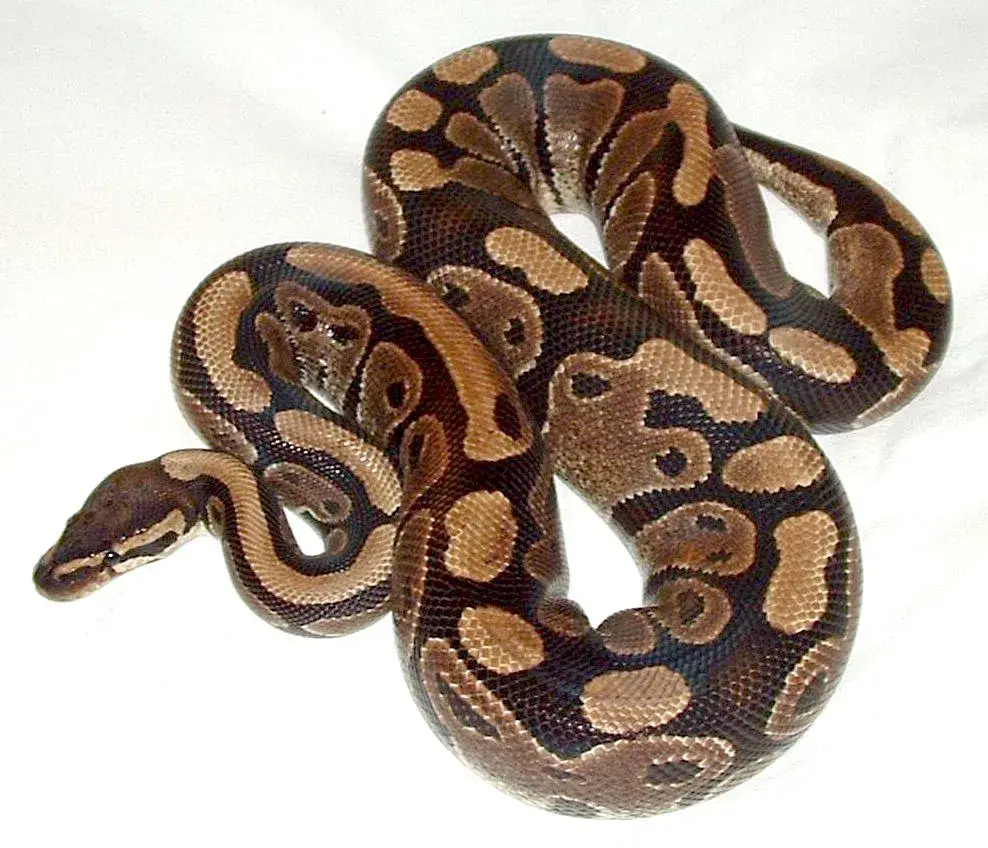
The western hognose snake is a small, stout-bodied member of the family Colubridae, native to North America. It ranges from southern Canada through the United States and into northern Mexico, and it's known by a long list of regional names — blow snake, bluffer, plains hognose snake, prairie hognose snake, spoonbill snake, spreadhead snake, and Texas rooter among them. The "hognose" name comes from its upturned, pig-like snout, formed by a modified rostral scale, which doubles as a tool for burrowing into loose ground.
Its scientific name reflects that same feature: the species name nasicus comes from the Latin nasus, meaning "nose." Two other names tied to the species honor the naturalists who studied it. The dusky hognose, a subspecies once recognized as Heterodon nasicus gloydi, was named for American herpetologist Howard K. Gloyd. The Mexican hognose, listed as either the subspecies kennerlyi or a full species depending on the classification scheme, honors American naturalist Caleb Burwell Rowan Kennerly.
Its color and pattern vary widely between the three recognized subspecies, and most individuals resemble rattlesnakes closely enough that the resemblance is thought to be a form of Batesian mimicry — a harmless species imitating a dangerous one to deter predators. Males are noticeably smaller than females, and adults rarely exceed a total length of 40–50 cm (15–20 inches). The species is endemic to North America, and taxonomists disagree over how to split it: some treat the Mexican hognose (formerly a subspecies, kennerlyi) as its own full species, while folding another subspecies, gloydi, into H. nasicus, leaving just two species and no subspecies under that scheme.
The snake is not dangerous to people. It's a rear-fanged species, meaning its fangs sit toward the back of its mouth, and it delivers modified saliva from Duvernoy's glands to help subdue prey rather than true venom. No deaths or lasting effects from a bite have been recorded, and bites to humans are extremely rare in the first place. In captivity, breeders have developed the western hognose into more than 50 distinct color morphs.
Behavior and diet
Diet
Amphibians (tree frogs, toads), small lizards, and occasionally rodents
The western hognose snake is primarily diurnal and, despite its dramatic defensive act, is generally a docile animal. When it feels threatened, it puts on a show: flattening its neck cobra-style, hissing loudly, and making "mock" or "bluff" strikes with its mouth closed. If that doesn't work, it rarely follows through with an actual bite — instead, it typically rolls over and plays dead. Some individuals, more often adolescent males, will puff up and fill their throats with air rather than flatten their heads.
In the wild, its diet leans heavily on amphibians — large and medium-sized tree frogs along with small and medium-sized toads — plus small lizards and, occasionally, rodents. It isn't a true constrictor; instead it bites and chews, working its rear fangs into prey to introduce saliva that helps break down toxins found in toads. Captive hognose snakes commonly go off food entirely for two to three-and-a-half months between January and mid-March, mirroring their instinct to brumate underground through the winter.
Breeding activity has been observed as early as February and March. The species is oviparous: females lay 4–23 elongated, thin-shelled eggs between June and August, and the eggs take about 60 days to hatch. Hatchlings measure 13–23 cm (5–9 in) and reach sexual maturity after roughly two years, a milestone tied more to size than to age.
Range and habitat
Habitat
Prairies, river floodplains, scrub and grasslands, semi-deserts, and some semiagricultural areas with sandy or gravelly soils, up to 2,500 m (8,200 ft) elevation
The western hognose snake's range stretches from southern Canada through the United States and down into northern Mexico. It favors areas with sandy or gravelly soils — prairies, river floodplains, scrub and grasslands, semi-deserts, and some semiagricultural land — and has been recorded at elevations up to 2,500 m (8,200 feet).
Conservation status
The western hognose snake is rated Least Concern on the IUCN Red List, in a 2007 assessment. It is widespread, has a large overall population estimated at more than 100,000 individuals, and benefits from a variety of conservation programs across its range. Some local declines have been reported, but nothing that has changed its overall status. Its close relative, the eastern hognose snake, fares worse in parts of its range, where it is classified as threatened and protected under individual state laws.
Where to see western hognose snake in the U.S.
15 zoos across 13 states
Find the closest one
Rank the 14 zoos holding western hognose snake by how far they are from you. Your location is used in your browser to sort this list and is never sent to us.
1 more zoo holds western hognose snake but has no coordinates on file yet, so it isn't ranked here. It's in the full list below.
Colorado· 1
Illinois· 2
Indiana· 1
Kansas· 1
Kentucky· 1
Louisiana· 2
Minnesota· 1
New York· 1
North Carolina· 1
North Dakota· 1
Pennsylvania· 1
South Dakota· 1
Wisconsin· 1
AZAThe Association of Zoos and Aquariums. Accredited members have passed an independent inspection of animal care and welfare, safety, conservation and education, repeated every five years. Many smaller facilities never apply, so “not accredited” isn't a verdict on its own. What accreditation means · How we check this
Built from each zoo's own published animal list.
Western Hognose Snake: common questions
Is the western hognose snake endangered?
No. It's classified as Least Concern by the IUCN, with a large, widespread population of more than 100,000 individuals.
How big does a western hognose snake get?
Adults rarely exceed a total length of 40–50 cm (15–20 inches), with females larger than males. Hatchlings measure 13–23 cm (5–9 in).
What does a western hognose snake eat?
Mostly amphibians in the wild — tree frogs and toads — along with small lizards and occasionally rodents.
Is a western hognose snake dangerous to people?
No. It's rear-fanged and not considered venomous, and no bite has ever caused a death or lasting effect. It would rather bluff or play dead than bite.
Where do western hognose snakes live in the wild?
From southern Canada through the United States to northern Mexico, in sandy or gravelly prairies, floodplains, scrub, grasslands, and semi-deserts.
Which U.S. zoos have western hognose snakes?
Six U.S. zoos, including Cheyenne Mountain Zoo, Baton Rouge Zoo, and Staten Island Zoo.