- Where to see one
- 6 U.S. zoos in our directory hold woma python, confirmed against each zoo's own animal list.
- Native range
- Western and central Australia, from Western Australia to southern Queensland and northwestern New South Wales
- Size
- Usually about 1.5 m (4.9 ft) long; up to 2.3 m (7.5 ft)
- Clutch size
- 5 to 20 eggs, incubated 2 to 3 months
- Other names
- Ramsay's python, sand python, woma
- Special feature
- No heat-sensing lip pits
Conservation status
Least Concernassessed 2017
IUCN Red List category LC — step 1 of 7.
Least Concern (LC); critically endangered in parts of southwestern Australia
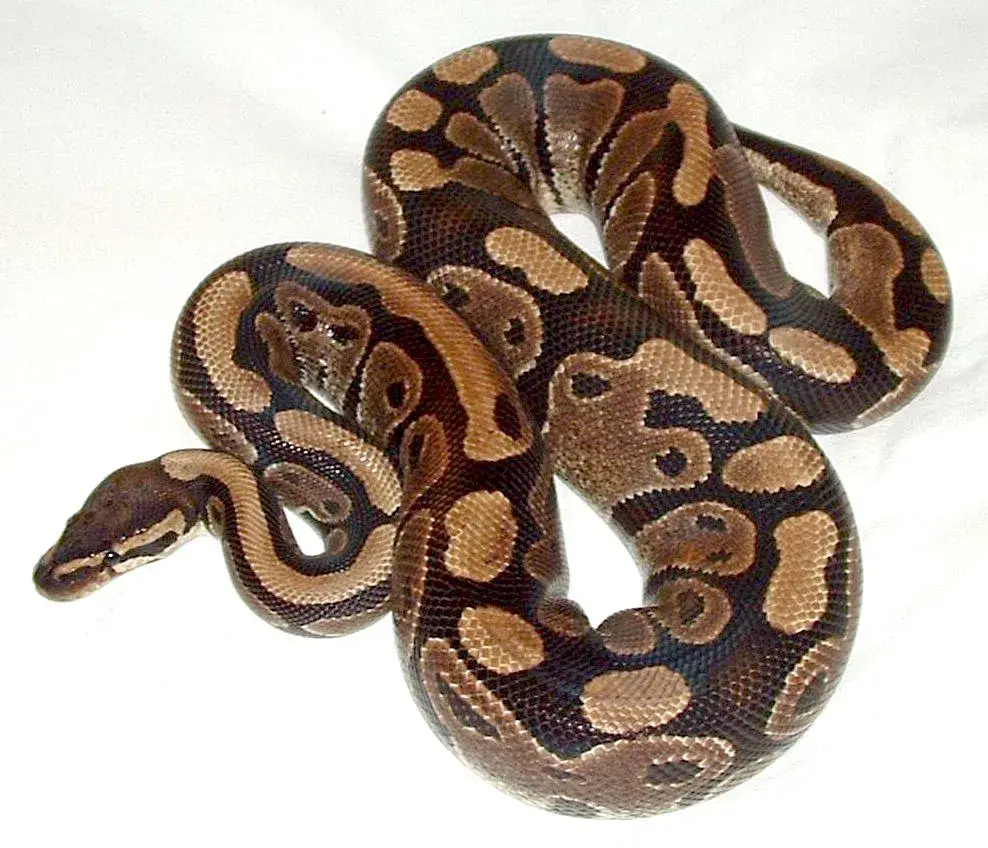
The woma python, also known as Ramsay's python or the sand python, is a snake endemic to Australia. It lives in the west and centre of the country, from Western Australia through the southern Northern Territory and northern South Australia to southern Queensland and northwestern New South Wales. Largely nocturnal, it shelters by day in hollow logs or under leaf debris. It preys on small mammals, ground birds and lizards, mostly reptiles, and often catches them in burrows by pinning the prey against the burrow wall with a loop of its body. Adults are typically around 1.5 m long and, unlike other pythons, lack heat-sensing pits.
About the woma python
The woma python (Aspidites ramsayi) is a snake in the python family, Pythonidae, found only in western and central Australia. It is one of just two species in the genus Aspidites, known as the pitless pythons. It is also called Ramsay's python, the sand python or simply the woma.
The species was first described in 1882 by William John Macleay, who called it Aspidiotes ramsayi. The species name honors the Australian zoologist Edward Pierson Ramsay. The genus name Aspidites means "shield bearer," a reference to the neat, symmetrical scales on the head.
Adults are usually around 1.5 m (4.9 ft) long, though the largest reach 2.3 m (7.5 ft) in total length, with a snout-to-vent length of 2.0 m (6.6 ft). The head is narrow with small eyes, and unlike its close relative Aspidites melanocephalus it has no obvious neck. The body is broad and somewhat flattened, and the tail tapers to a thin point.
Coloring varies widely. The ground color ranges from medium brown and olive to lighter orange, pink and red, overlaid with darker stripes or brindled bands, and the back as a whole can run from pale brown to nearly black. The belly is cream or pale yellow with brown and pink blotches, and the scales around the eyes are usually darker than the rest of the head. The smooth back scales are small, in 50 to 65 rows at midbody, with 280 to 315 belly scales.
Behavior and diet
Diet
Mainly reptiles; also small mammals and ground birds
The woma is largely nocturnal. During the day it shelters inside hollow logs or under leaf debris. When it crosses hot sand or other hot ground, it lifts most of its body clear, reaches far forward and pushes off again, so only a few inches of its body touch the surface at any moment.
It eats a range of ground-dwelling vertebrates, including small mammals, ground birds and lizards, but its diet is mostly reptiles. That reptile-heavy diet may explain one of its key traits. Most pythons have heat-sensing pits along their lips for finding warm-blooded prey, but snakes of the genus Aspidites lack them. The woma does have a similar sensory structure in the rostral scale at the tip of its snout.
Much of its hunting happens inside burrows, where there is not enough room to wrap coils around prey the way other constrictors do. Instead, the woma pushes a loop of its body against the animal and pins it against the burrow wall. This method kills more slowly than normal constriction, and many adult womas are scarred from bites by prey that fought back.
Womas lay eggs. A clutch holds 5 to 20 eggs, and the female stays coiled around them until they hatch after 2 to 3 months of incubation. A female about 4 to 5 years old and 1.5 m (5 ft) long usually lays about 11 eggs.
The woma is described as more active than many pythons and is known for being docile and easy to handle. It is one of the hardiest pythons in captivity, readily accepting food and other items, and it breeds well there. That combination makes it highly sought after in the reptile and exotic pet trade.
Range and habitat
Habitat
Sandplains, and formerly the wheatbelt and goldfields regions of the southwest; shelters in hollow logs and leaf litter
The woma lives in western and central Australia. Its range runs from Western Australia through the southern Northern Territory and northern South Australia to southern Queensland and northwestern New South Wales, and it may be broken into separate pockets. The original specimen came from near Fort Bourke in New South Wales.
In southwestern Australia, the range stretches from Shark Bay along the coast and inland. The snake was once common on sandplains there, and there were once widespread populations in the wheatbelt and goldfields regions to the south and east.
The woma's color and its value to collectors can lead to confusion with the gwardar (Pseudonaja nuchalis), a venomous Australian snake.
Woma python vs other pythons
The woma's closest relative is the only other member of its genus, Aspidites melanocephalus. The two look alike, but the woma lacks an obvious neck. Both differ from more familiar pythons such as the ball python and Burmese python in one key way.
| Feature | Woma python | Typical pythons |
|---|---|---|
| Heat-sensing lip pits | Absent; a similar sensory structure sits in the snout-tip scale | Present |
| Killing method in burrows | Pins prey against the wall with a loop of body | Wraps prey in coils |
| Genus | Aspidites, the pitless pythons, with two species | Other python genera |
Conservation status
The woma python is listed as Least Concern on the IUCN Red List. That broad listing hides serious local losses. Many populations in the southwest of the country have become critically endangered since the 1960s because of changes in land use. The decline was sharpest in the Wheatbelt, where there has been no confirmed record since 1989.
A captive breeding program in South Australia has raised young womas for release into the Arid Recovery Reserve in the north of the state. Those reintroduction attempts have not succeeded so far, because the released snakes were eaten by mulga snakes (Pseudechis australis).
The woma also matters culturally. At Uluru, Mutitjulu Waterhole marks the site of a battle between two Central Australian ancestral beings: Kuniya, the woma python woman, and Liru, the king brown snake man. Kuniya avenged her nephew's death by striking Liru with her digging stick.
Where to see woma python in the U.S.
6 zoos across 6 states
Find the closest one
Rank the 6 zoos holding woma python by how far they are from you. Your location is used in your browser to sort this list and is never sent to us.
Alabama· 1
California· 1
Colorado· 1
Florida· 1
Indiana· 1
Kentucky· 1
AZAThe Association of Zoos and Aquariums. Accredited members have passed an independent inspection of animal care and welfare, safety, conservation and education, repeated every five years. Many smaller facilities never apply, so “not accredited” isn't a verdict on its own. What accreditation means · How we check this
Built from each zoo's own published animal list.
Woma Python: common questions
How does a woma python kill its prey?
By pinning it. Inside burrows the woma presses a loop of its body against the prey and holds it against the wall, a slower method than normal constriction.
How big do woma pythons get?
Most adults are about 1.5 m (4.9 ft) long. The largest reach 2.3 m (7.5 ft).
What do woma pythons eat?
Mainly reptiles, such as lizards. They also take small mammals and ground birds.
Do woma pythons have heat pits?
No. Unlike most pythons, snakes in the genus Aspidites have no heat-sensing pits, though they have a similar sensory structure in the scale at the tip of the snout.
Where do woma pythons live?
In western and central Australia, from Western Australia to southern Queensland and northwestern New South Wales. They shelter in hollow logs and under leaf debris by day.
Can you keep a woma python as a pet?
Yes, where local laws allow. Womas are docile, easy to handle, hardy in captivity and highly sought after in the reptile trade.
Is the woma python endangered?
Not overall. It is listed as Least Concern, but many southwestern populations have become critically endangered since the 1960s.