Rainbow Boa
Epicrates cenchria
Also known as Brazilian Rainbow Boa, Brown Rainbow Boa
- Where to see one
- 11 U.S. zoos in our directory hold rainbow boa, confirmed against each zoo's own animal list.
- Native range
- South America east of the Andes, south to northern Argentina
- Size
- About 1.2–2.1 m (4–7 ft) long; average weight about 1.3 kg (2.9 lb)
- Lifespan
- 7–12 years in the wild; usually 20–25 years in captivity, with a record of 42 years
- Reproduction
- Gives birth to live young, 1–30 per litter, about 10 on average
- Activity
- Nocturnal, most active in the middle of the night
Conservation status
Least Concernassessed 2021
IUCN Red List category LC — step 1 of 7.
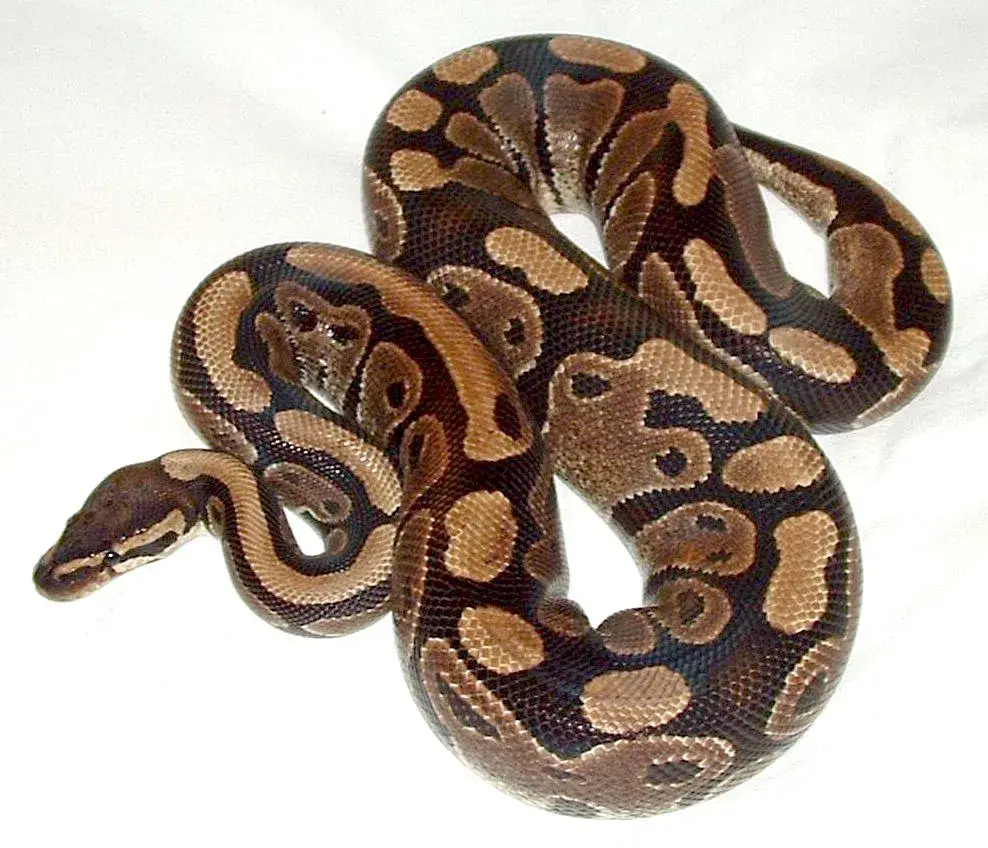
The rainbow boa is a boa endemic to South America, ranging east of the Andes to northern Argentina. It lives mainly in humid woodlands and rainforests but can also be found in open savannas. Nocturnal and most active in the middle of the night, it is semi-arboreal, spending time on the ground and in trees, and is a capable swimmer. It is typically orange, brown or reddish brown, 4 to 6 feet long, with black markings that include three parallel stripes on the head and rings down the back. It is known for an attractive iridescent sheen caused by structural coloration, and five subspecies are currently recognised.
About the rainbow boa
The rainbow boa is a medium-sized constricting snake in the boa family, Boidae, native to the forests of South America east of the Andes. It is famous for the iridescent, holographic sheen of its scales, created by structural coloration rather than pigment. It is semi-arboreal, hunting on the ground and in low trees.
Its scientific name is Epicrates cenchria. Linnaeus first described it in 1758 as Boa cenchria. Five subspecies are currently recognized, and the one most often seen in the pet trade is the Brazilian rainbow boa, E. c. cenchria. Two of the subspecies honor American herpetologists Thomas Barbour and Helen Gaige. Its family, Boidae, holds the strongest and largest snakes of the Neotropical region, and another well-known member is the boa constrictor.
The rainbow effect is the snake's calling card. Its scales refract light, producing a shimmer of color across the body, and the sheen is strongest just after the snake sheds its skin. The base color is orange, brown or reddish brown, with a paler, greyish belly and sides. Three dark parallel stripes run along the top of the head, a chain of dark rings runs down the back, and dark blotches line the sides, each with a crescent over it. Pattern varies a lot from snake to snake, and captive breeding has exaggerated that variation.
Adults are usually 1.2–1.8 m (4–6 ft) long, some reach about 2.1 m (6.9 ft), and they average about 1.3 kg (2.9 lb). Females are slightly longer than males and have wider bellies, room for developing young and fat reserves. Males are more muscular for their length and tend to be stronger.
Behavior and diet
Diet
Carnivore: small mammals such as bats and squirrels, birds and their eggs, reptiles and amphibians
Rainbow boas are nocturnal, active in the evening and at night and busiest around the middle of the night. They are semi-arboreal, resting and hunting on low branches, in bushes and on the ground. They also spend time in water and swim well.
They are solitary and rarely seen. They do not live in groups, and they recognize other rainbow boas by chemical cues. If threatened, a rainbow boa may move away, bury its head under its coils, release a foul smell from glands near the base of the tail or strike and bite. Females are thought to be more aggressive than males. Specific predators of the species have not been documented.
Like other boas, the rainbow boa kills by constriction. It eats small mammals, birds, birds' eggs, reptiles and amphibians. Recorded prey includes Tomes's sword-nosed bat and southern Amazon red squirrels. It finds prey by sight and with heat-sensing pits on its face, which detect the body warmth of nearby animals.
Males compete in ritual combat, starting in late autumn, for access to females. Mating follows, and females usually become pregnant about 23 days after the males' contests. Rainbow boas breed every other year. Rather than laying eggs, the female carries them inside her body and gives birth to live young, after a pregnancy lasting three to eight months. She does not eat while pregnant and loses muscle mass as the young develop. Males often fast during the mating season too.
A litter holds 1 to 30 young, about 10 on average, each weighing 12.4–30.2 g (0.4–1.1 oz). The mother sometimes helps break the membranes around her newborns, but they are well developed at birth and fend for themselves. There is also some evidence that females can reproduce without mating, a process called parthenogenesis. Rainbow boas mature at about 1.2–1.5 m (4–5 ft) long and 2.5 to 4 years old: males at about 1.2 m (3.9 ft) and three years, females at about 1.4 m (4.6 ft) and four years. A female that breeds before she is big enough can run into complications during and after giving birth, and a single male may mate with several females.
Range and habitat
Habitat
Humid woodland and rainforest, including Amazonian and Atlantic coastal forest; sometimes open savanna
The rainbow boa is found only in South America, east of the Andes. Its range covers the Amazon Basin to the foothills of the Andes and the coast east of the Brazilian Highlands, and it reaches south into northern Argentina, in provinces including Chaco, Córdoba, Corrientes, Formosa, Salta and Tucumán.
Its main habitats are humid woodland and rainforest, especially Amazonian rainforest and the coastal Atlantic rainforest. It also turns up in nearby open savanna. These are tropical habitats, and within them the snake is usually found close to the ground or in low vegetation.
Conservation status
The rainbow boa is listed as Least Concern by the IUCN, in a 2021 assessment. Its populations are considered stable and are not of particular concern to conservationists.
The species is common in the pet trade, prized for its color. In the 1980s and early 1990s large numbers of Brazilian rainbow boas were exported from Suriname. Far fewer are exported today, and most rainbow boas sold now are captive bred.
With good care, captive rainbow boas usually live 20 to 25 years, and some reach 30. The longest recorded captive lifespan is 42 years. In the wild they typically live 7 to 12 years.
Where to see rainbow boa in the U.S.
11 zoos across 9 states
Find the closest one
Rank the 11 zoos holding rainbow boa by how far they are from you. Your location is used in your browser to sort this list and is never sent to us.
Alabama· 1
California· 1
Colorado· 1
District of Columbia· 1
Florida· 1
Kansas· 1
Kentucky· 1
Missouri· 1
New York· 3
AZAThe Association of Zoos and Aquariums. Accredited members have passed an independent inspection of animal care and welfare, safety, conservation and education, repeated every five years. Many smaller facilities never apply, so “not accredited” isn't a verdict on its own. What accreditation means · How we check this
Built from each zoo's own published animal list.
Rainbow Boa: common questions
Why is it called a rainbow boa?
Because of its iridescent sheen. The scales refract light into a rainbow shimmer, which is brightest just after the snake sheds.
How big do rainbow boas get?
Usually about 1.2–1.8 m (4–6 ft), and up to about 2.1 m (6.9 ft). They average around 1.3 kg (2.9 lb), and females are a little longer than males.
Do rainbow boas bite?
Yes, if they feel threatened. They kill prey by constriction rather than with a bite, and when disturbed they may also hide their heads or release a foul smell.
What do rainbow boas eat?
Small mammals such as bats and squirrels, plus birds, birds' eggs, reptiles and amphibians.
How long do rainbow boas live?
About 7–12 years in the wild and 20–25 years in captivity. The captive record is 42 years.
Do rainbow boas lay eggs?
No. Females give birth to live young, usually about 10 in a litter but anywhere from 1 to 30.
Can you keep a rainbow boa as a pet?
Yes, they are common in the pet trade, and most sold today are captive bred. The Brazilian rainbow boa is the most popular form.
Where do rainbow boas live?
In South America east of the Andes, mainly in Amazonian and Atlantic coastal rainforest, south to northern Argentina.