
Lizards in U.S. zoos
Lizards are all the squamate reptiles that are not snakes, a group of over 7,000 species found on every continent except Antarctica. They range from a 13.5 mm (0.53 in) chameleon to the Komodo dragon at nearly 3 m (10 ft). Most have four legs and a long tail, but some lineages have lost their limbs.
Most widely held
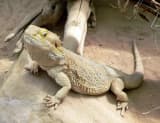 Bearded DragonPogona vitticepsAt 39 zoos · Least Concern
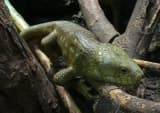 Prehensile-tailed SkinkCorucia zebrataAt 37 zoos · Near Threatened
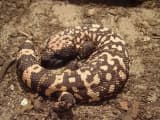 Gila MonsterHeloderma suspectumAt 36 zoos · Near Threatened
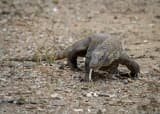 Komodo DragonVaranus komodoensisAt 35 zoos · Endangered
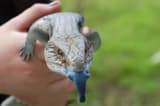 Blue-tongued SkinkTiliqua scincoidesAt 29 zoos · Least Concern
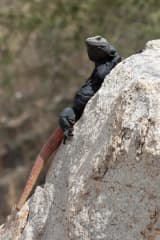 ChuckwallaSauromalus aterAt 29 zoos · Least Concern
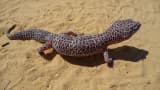 Leopard GeckoEublepharis maculariusAt 26 zoos · Least Concern
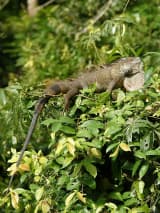 Green IguanaIguana iguanaAt 16 zoos · Least Concern
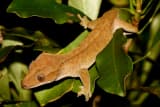 Crested GeckoCorrelophus ciliatusAt 14 zoos · Vulnerable
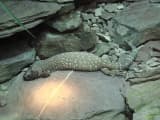 Mexican Beaded LizardHeloderma horridumAt 14 zoos · Least Concern
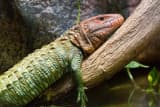 Caiman LizardDracaena guianensisAt 13 zoos · Least Concern
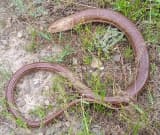 European Glass LizardPseudopus apodusAt 12 zoos · Least Concern
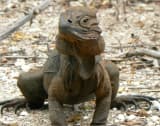 Rhinoceros IguanaCyclura cornutaAt 12 zoos · Endangered
 Grand Cayman Blue IguanaCyclura lewisiAt 10 zoos · Endangered
 Argentine Black and White TeguSalvator merianaeAt 9 zoos · Least Concern
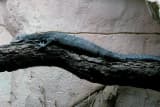 Black Tree MonitorVaranus beccariiAt 9 zoos · Data Deficient
 Chinese Crocodile LizardShinisaurus crocodilurusAt 9 zoos · Endangered
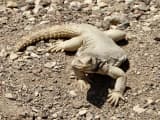 UromastyxUromastyxAt 9 zoos
 Henkel's Leaf-tailed GeckoUroplatus henkeliAt 8 zoos · Vulnerable
 Madagascar Giant Day GeckoPhelsuma grandisAt 7 zoos · Least Concern
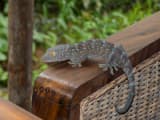 Tokay GeckoGekko geckoAt 7 zoos · Least Concern
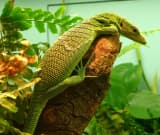 Green Tree MonitorVaranus prasinusAt 6 zoos · Least Concern
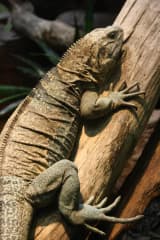 Jamaican IguanaCyclura colleiAt 6 zoos · Critically Endangered
What makes a lizard
"Lizard" covers every squamate reptile that is not a snake, so it is a broad grouping rather than a single family. Most lizards walk on four legs with a side-to-side gait, have long tails, and shed their skin in several pieces rather than in one piece as snakes do. Monitor lizards, beaded lizards and whiptails flick forked tongues to carry scent molecules to a vomeronasal organ.
Lizards live in a wide range of habitats, from wetlands to deserts and from alpine meadows to tropical islands. The bearded dragon of Australia takes its name from an inflatable throat pouch, the tokay gecko is named for the male's loud call, and the prehensile-tailed skink of the Solomon Islands is the largest living skink, gripping branches with its tail.
Venom, armor and lookalikes
The Gila monster and Mexican beaded lizard are close relatives that both have a venom delivery system; the beaded lizard is the larger and duller of the two. The Komodo dragon, the largest lizard, also produces venom and has skin reinforced with bony plates called osteoderms.
Some lizards look like other animals entirely. The European glass lizard is legless and easily mistaken for a snake, though it keeps tiny hind-leg stubs. The Chinese crocodile lizard has rows of bony scales on its back and tail that echo a crocodile's ridged tail.
Behavior worth watching for
Lizards are ectotherms and bask in sunlight to warm up before becoming fully active. Males signal with push-ups, head-bobs, bright colors and, in iguanas and anoles, expanding throat flaps called dewlaps. Geckos, anoles and chameleons climb with toe pads covered in millions of tiny hair-like setae.
Many lizards, including geckos and skinks, can shed the tail when grabbed. The dropped tail keeps writhing to distract a predator while the lizard escapes, and it partly regrows over several weeks.
Conservation picture
Several island and narrow-range lizards are in serious trouble. The Jamaican iguana was thought extinct between 1948 and 1990 and is now Critically Endangered, threatened above all by the introduced mongoose. The Grand Cayman blue iguana fell to as few as 5 to 15 wild animals in 2003, then recovered through captive breeding and release enough to be downlisted to Endangered.
The Chinese crocodile lizard has lost most of its wild population to habitat loss and poaching and was moved to CITES Appendix I in 2017. The Komodo dragon is also Endangered on the IUCN Red List, with its island range shrinking because of human encroachment.
Common questions
What is the largest lizard in the world?
The Komodo dragon is the largest living lizard, reaching nearly 3 m (10 ft). Wild males can weigh up to 150 kg (330 lb), and the species lives only on a handful of Indonesian islands.
How many species of lizards are there?
There are over 7,000 lizard species. They live on every continent except Antarctica and on most oceanic island chains.
Are any lizards venomous?
Yes. The Gila monster and Mexican beaded lizard have long been known as venomous, and since 2006 several monitor lizards, including the Komodo dragon, have also been shown to produce venom.
What is the difference between a legless lizard and a snake?
Legless lizards are true lizards that lost their limbs independently; limb loss has evolved more than two dozen times in lizards. The European glass lizard, for example, keeps tiny hind-leg stubs and sheds its skin in a ring-shaped roll.
Why do lizards drop their tails?
Many lizards, including geckos and skinks, can shed their tails to escape predators. The detached tail keeps writhing as a distraction, and the lizard partly regrows it over a few weeks.
Are iguanas endangered?
Some are. The green iguana is Least Concern, but island species are in trouble: the Jamaican iguana is Critically Endangered, and the Grand Cayman blue iguana and rhinoceros iguana are Endangered.
Sources
Last reviewed