
Farm animals at U.S. zoos
Farm animals are domesticated species and breeds raised by people for food, fiber or labor, such as goats, sheep, cattle, pigs, donkeys, llamas and chickens. Each descends from a wild ancestor, and domestication made them calmer and easier to handle. Goats, sheep, pigs and cattle were domesticated in the Fertile Crescent 10,000 to 11,000 years ago.
Most widely held
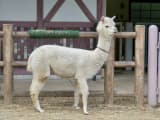 AlpacaVicugna pacosAt 71 zoos
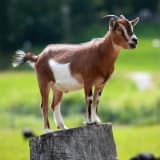 GoatCapra hircusAt 69 zoos
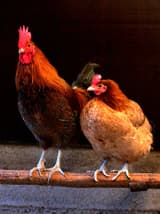 ChickenGallus gallus domesticusAt 43 zoos
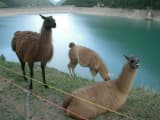 LlamaLama glamaAt 40 zoos
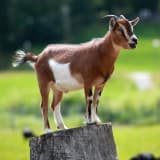 Nigerian Dwarf GoatCapra hircusAt 37 zoos
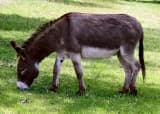 Miniature DonkeyEquus asinusAt 35 zoos
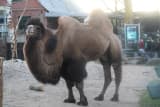 Bactrian CamelCamelus bactrianusAt 34 zoos
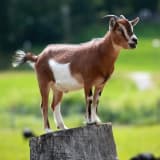 Pygmy GoatCapra hircusAt 31 zoos
 Domestic RabbitOryctolagus cuniculusAt 29 zoos
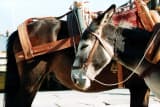 DonkeyEquus asinusAt 27 zoos
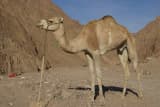 Dromedary CamelCamelus dromedariusAt 27 zoos
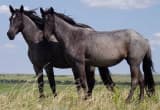 Miniature HorseEquus caballusAt 23 zoos
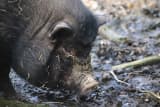 Pot-bellied PigSus scrofa domesticusAt 23 zoos
- SheepOvis ariesAt 21 zoos
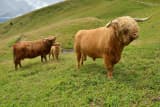 Highland CattleBos taurusAt 20 zoos
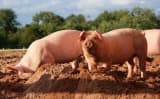 Kunekune PigSus scrofa domesticusAt 19 zoos
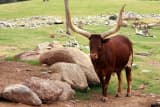 Watusi CattleBos taurusAt 17 zoos
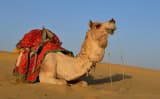 CamelCamelusAt 16 zoos
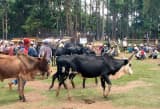 ZebuBos indicusAt 15 zoos
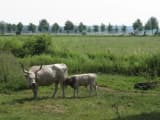 CowBos taurusAt 14 zoos
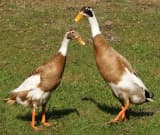 DuckAnas platyrhynchos domesticusAt 14 zoos
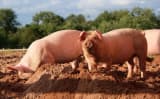 Guinea HogSus scrofa domesticusAt 12 zoos
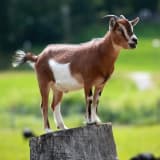 Nubian GoatCapra hircusAt 12 zoos
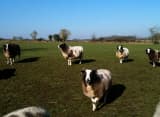 Jacob SheepOvis ariesAt 10 zoos
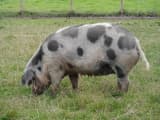 PigSus scrofa domesticusAt 10 zoos
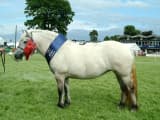 PonyEquus caballusAt 9 zoos
 HorseEquus caballusAt 8 zoos
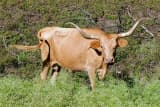 Texas LonghornBos taurusAt 7 zoos
 Flemish Giant RabbitOryctolagus cuniculusAt 6 zoos
What makes an animal domestic
Domestication is a long, multi-generational relationship in which people take over the care and breeding of another species to get a steady supply of meat, milk, fiber or labor. It changes animals genetically. Domesticated mammals tend to be more docile and tamer than their wild ancestors and often differ in coat color, ear shape and tail form.
Every farm animal traces back to a wild ancestor. The goat comes from the wild goat of Southwest Asia, the donkey from the African wild ass, and the chicken from the red junglefowl of Southeast Asia. In South America, Andean peoples domesticated the llama from the guanaco and the alpaca from the vicuña; neither has wild populations today.
Breeds versus species
Many farm animals are best known by breed. A breed is a group within one domestic species whose offspring reliably share its traits. Highland cattle, the Texas Longhorn and Watusi cattle all look very different, but they are all domestic cattle.
Breeds often carry the history of where they were shaped. Highland cattle were hardened by the wind and rain of the Scottish Highlands and grow the longest outer coat of any cattle breed. Texas Longhorns descend from Spanish cattle brought to the Americas from 1493 that ran semi-feral on Texas rangelands. Watusi horns, which have the largest circumference of any cattle breed, come from the Ankole cattle of east and central Africa.
The cattle family tree also has two main branches. Domestic cattle descend from the extinct aurochs, which split into humpless taurine cattle and the humped zebu. Zebu cattle were domesticated about 2,000 years after taurine cattle, in what is now Pakistan, and are adapted to heat.
Heritage breeds and conservation
Domestic breeds are not assessed on the IUCN Red List, but a breed can still be endangered even when its species is not. A rare breed has a very small breeding population, usually a few hundred to a few thousand animals. Reported causes include the increased use of exotic breeds, neglect of less profitable ones, intensive farming, disease and loss of pasture.
Conservation groups track these breeds in their own categories. The Livestock Conservancy rates a breed "critical" when it has fewer than 200 annual U.S. registrations and an estimated global population under 2,000; it gave that rating to the Texas Longhorn in 2021. The Guinea Hog, a small black pig of the American Southeast, was estimated at no more than 400 animals in 2009. The kunekune pig of New Zealand neared extinction in the 1980s and recovered through dedicated breeding.
Rare breeds are conserved on farms and ranches, and also ex situ at sites such as zoos and conservation farms, or as frozen semen and embryos. Conservation groups value them for their unique traits, which add to biodiversity and cultural heritage and can matter for livestock production in harsh environments.
Common questions
What was the first farm animal to be domesticated?
Goats, pigs, sheep and taurine cattle were the first livestock, domesticated in the Fertile Crescent 10,000 to 11,000 years ago. Only the dog was domesticated earlier, at least 15,000 years ago.
What is the difference between a breed and a species?
A species is a wild or domestic kind of animal, such as Bos taurus for cattle. A breed is a group within a domestic species that shares consistent, inherited traits, so Highland cattle and Texas Longhorns are different breeds of the same species.
What is a heritage or rare breed?
A rare breed is a livestock or poultry breed with a very small breeding population, usually from a few hundred to a few thousand animals. The Livestock Conservancy rates a breed critical when it has fewer than 200 annual U.S. registrations and fewer than 2,000 animals worldwide.
Why do breeds become rare?
Major reported causes are the increased use of exotic breeds, the neglect of less profitable breeds and more intensive production. Disease and the loss of pastures also play a part.
Do alpacas and llamas exist in the wild?
No. Both are domesticated camelids. The llama descends from the wild guanaco, and the alpaca from the wild vicuña.
Are farm animals on the IUCN Red List?
No. Domestic animals and breeds are not assessed by the IUCN. Rare breed status comes from groups such as The Livestock Conservancy and the Rare Breeds Survival Trust.
Sources
Last reviewed