- Where to see one
- 7 U.S. zoos in our directory hold texas longhorn, confirmed against each zoo's own animal list.
- Origin
- Spanish cattle brought to the Americas from 1493, later running semi-feral in Texas
- Where raised
- United States; traditionally reared for beef and part of the cultural heritage of Texas
- Horn span
- Can exceed 2.4 m (8 ft) tip to tip; record 323.7 cm (127.4 in) on a living steer
- Coat
- Any color or mix; about 40% are some shade of red
- Lifespan
- Domestic cattle have a natural life of about 25–30 years
- Gestation
- About nine months
Conservation status
Not Evaluated
This species has not been assessed for the IUCN Red List, so it sits outside the threat scale entirely.
Not Evaluated (NE) on the IUCN Red List; breed rated "critical" by The Livestock Conservancy (2021)
The Texas Longhorn is an American breed of beef cattle, known for its long horns, which can span more than 8 ft (2.4 m) from tip to tip. It descends from cattle brought from the Iberian Peninsula to the Americas by Spanish conquistadors from the time of Columbus's second voyage until about 1512. For hundreds of years these cattle lived a semi-feral existence on the rangelands, giving them a higher tolerance of heat and drought than most European breeds. The coat can be any colour or mix of colours, with some shade of red in about 40% of the cattle. It is the official large mammal of Texas.
About the Texas Longhorn
The Texas Longhorn is an American breed of beef cattle known for its enormous, spreading horns, which can span more than 2.4 m (8 ft). It descends from Spanish cattle brought to the Americas from 1493 that lived semi-feral on Texas rangelands for centuries. It is the same species as other domestic cattle, Bos taurus.
As a breed it belongs to the taurine, or European, branch of domestic cattle. Genetically it is close to Iberian breeds such as the De Lidia and Retinta of Spain and the Alentejana and Mertolenga of Portugal. Like other Criollo cattle of the Americas and many southern European breeds, it also carries a small share of indicine (zebu) ancestry, possibly from African cattle that crossed the Strait of Gibraltar long before the Spanish conquest.
The horns are the breed's signature. In general, bulls have horns of moderate length, while steers, castrated males, may grow much longer ones. In 2022, Guinness World Records listed the longest horn spreads on living cattle as 323.7 cm (127.4 in) on a steer, 265.1 cm (104.4 in) on a cow and 262.5 cm (103.3 in) on a bull. All three were Texas Longhorns.
Coat color is extremely variable. About 40% of Longhorns are some shade of red, often light red; the only red never seen is the deep red of a Hereford. Others are black, blue, brown, cream, dun, grey, yellow or white, sometimes with brindling (called gateada, from the Spanish for "cat"), speckles or spots. A pattern called finching is common, and on a black base it is known as zorillo, Spanish for "skunk." Speckled and solid-colored animals are about equally common.
Behavior and diet
Diet
Grass, clover and other forage; thrives on marginal pasture
Like other domestic cattle, Texas Longhorns live in a dominance hierarchy, kept in place through mock fights that test strength without real aggression, and through licking, mostly done by lower-ranking animals to higher-ranking ones. Horned cattle tend to keep more distance from each other and have fewer physical clashes than hornless ones, which makes for more stable social relationships. Horns also play a role in mate choice.
Sight is the dominant sense in cattle, supplying almost half their information. With eyes on the sides of the head they see about 330 degrees around them, though their binocular vision covers only about 30 to 50 degrees. They sleep about four hours a day and lie down to sleep deeply.
Cattle are ruminants. Their stomach hosts bacteria, fungi and protozoa that break down cellulose in grass, a tough plant material many animals cannot digest. They regurgitate food to chew it again as cud, then swallow it for further digestion. Given a choice, cattle prefer a mix of roughly 70% clover and 30% grass.
The Longhorn's hardiness is what made the breed famous. Centuries of semi-feral life left it with high tolerance of heat and drought, better than most European breeds, along with resistance to disease, long life and an ability to thrive on marginal pastures. Cows carry calves for about nine months.
Range and habitat
The breed's story begins in 1493, when Spanish colonists landed the first cattle on Hispaniola for food. Over the next two centuries the Spanish moved cattle into Mexico and gradually north with their settlements, reaching what became Texas near the end of the 17th century. Some cattle escaped or were turned loose on the open range, where they lived mostly feral for about two centuries and developed the toughness the breed is known for.
Texas Longhorn numbers slowly dwindled, and by the early 20th century the breed was close to extinction. In 1927 enthusiasts from the U.S. Forest Service gathered a small herd to breed on the Wichita Mountains Wildlife Refuge near Lawton, Oklahoma. A few years later, J. Frank Dobie and others collected small herds for Texas state parks, with funding help from oilman Sid W. Richardson. Valued at first as curiosities, Longhorns made a comeback as beef cattle and as a link to Texas history.
Today the breed is raised on ranches as beef cattle, kept for conservation, bred for ever longer horns and occasionally used for steer riding. Registries include the Texas Longhorn Breeders Association of America, founded in 1964, the International Texas Longhorn Association and the Cattlemen's Texas Longhorn Registry. In 1995 the Texas Legislature named the Longhorn the state large mammal, and in 1917 a Longhorn named Bevo was adopted as the mascot of the University of Texas at Austin.
Texas Longhorn vs other cattle
The Texas Longhorn is the same species as other domestic cattle, but centuries on the open range made it distinctive. Here is how it compares with domestic cattle in general.
| Feature | Texas Longhorn | Typical domestic cattle |
|---|---|---|
| Species | Bos taurus | Bos taurus (taurine) or zebu types |
| Ancestry | Spanish Criollo cattle, mainly taurine with a little indicine | Varies by breed; all descend from the extinct aurochs |
| Horns | Very long; can span more than 2.4 m (8 ft) | Vary by breed; dehorning is a routine practice |
| Hardiness | High heat and drought tolerance; thrives on marginal pasture | Most European breeds are less heat- and drought-tolerant |
| Coat | Any color or mix; about 40% red | Varies by breed |
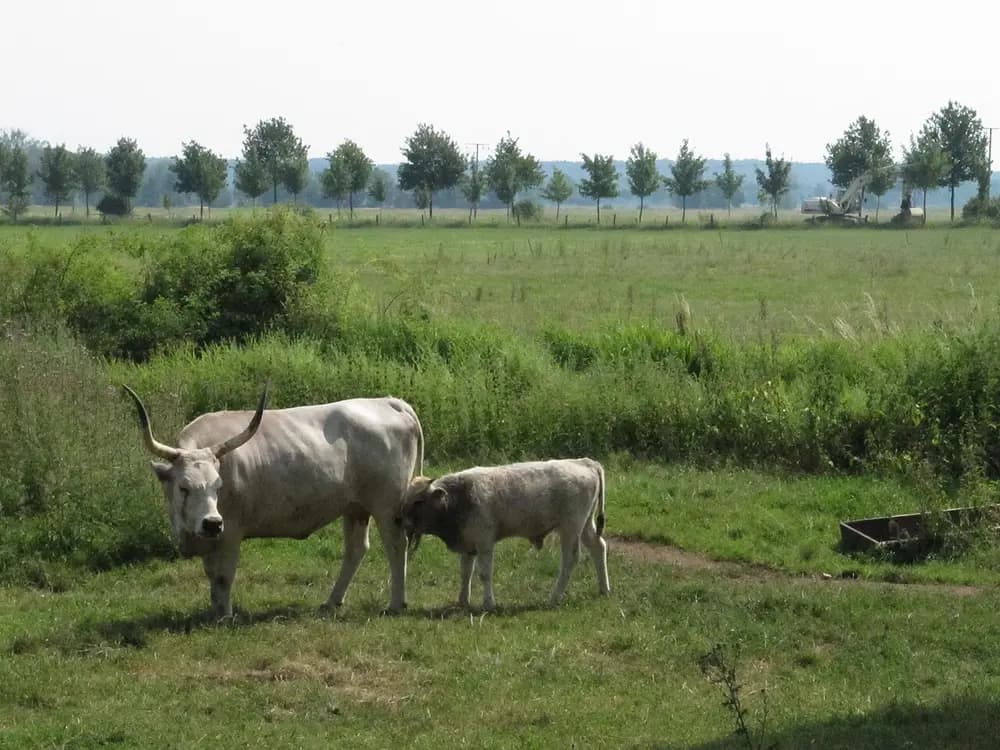
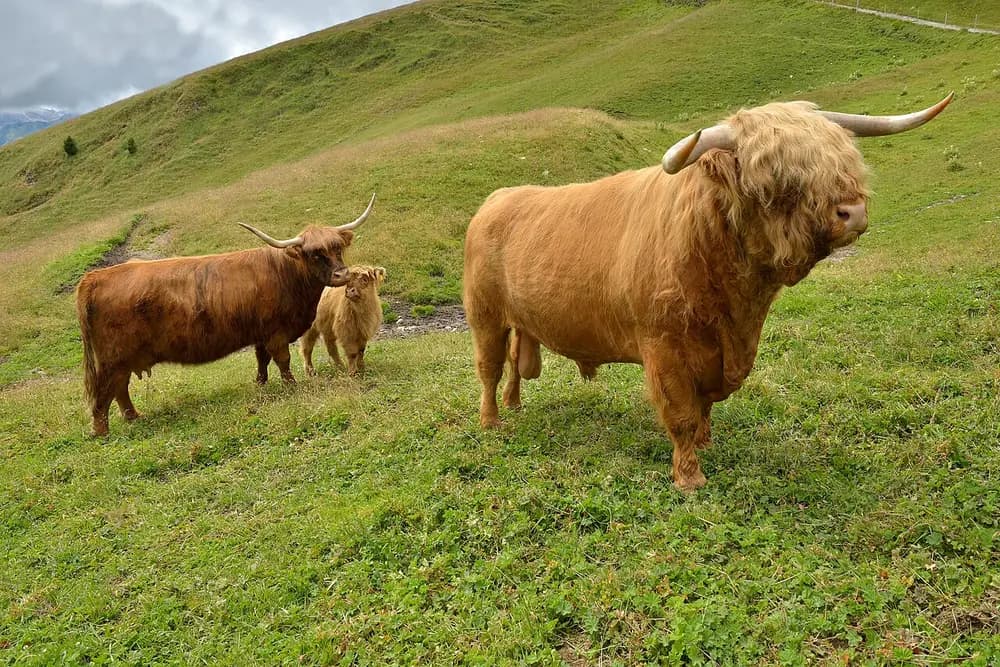
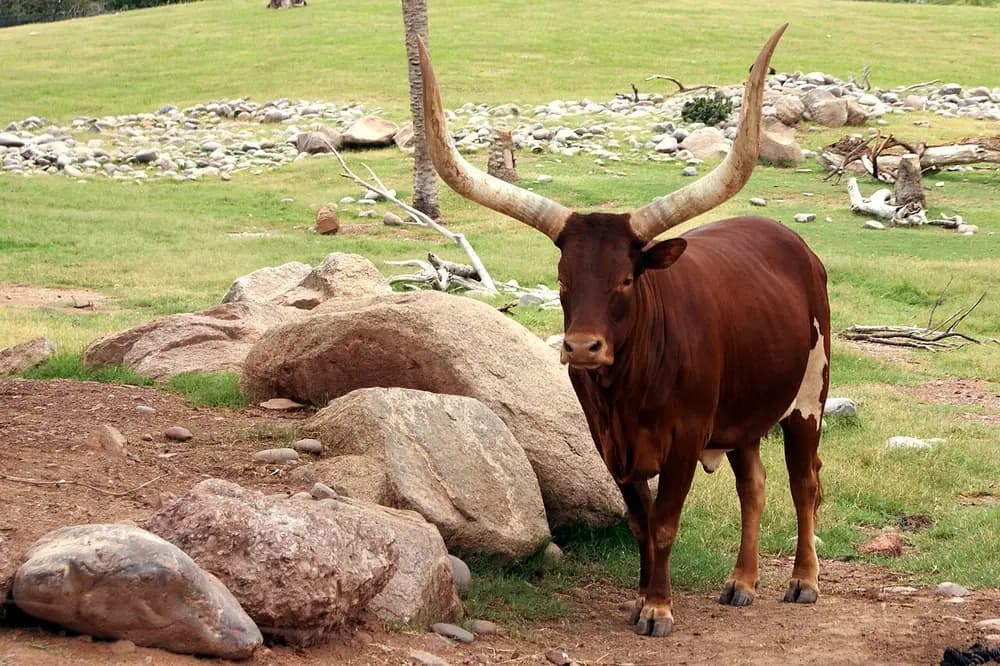
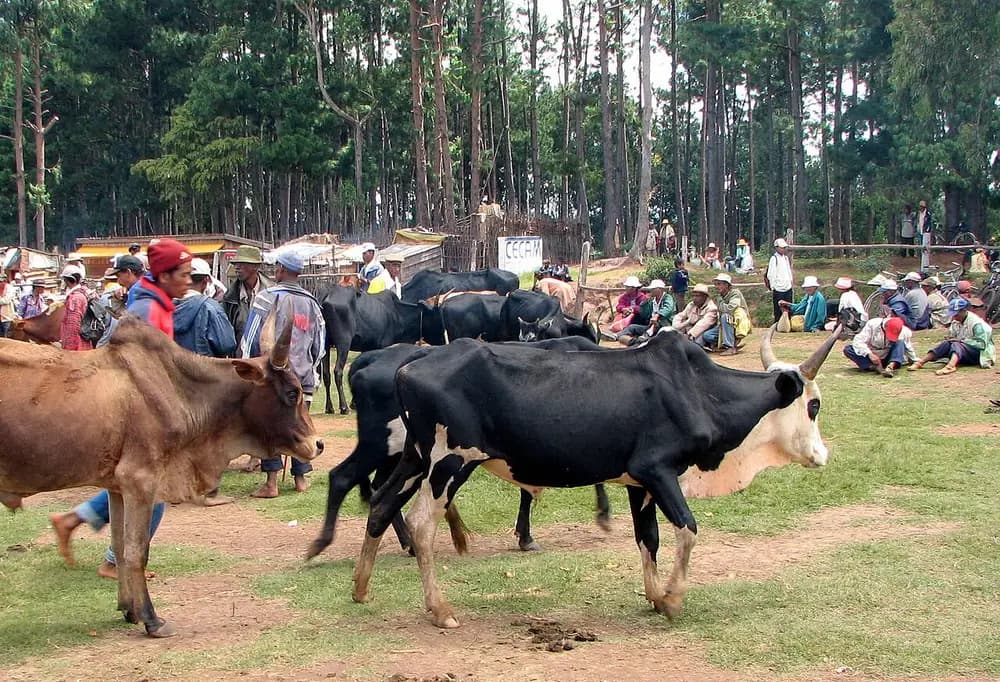
For other cattle breeds, see the Watusi, Highland cattle, the humped zebu and the general cow page.
Conservation status
Like all domestic animals, the Texas Longhorn is not assessed on the IUCN Red List. Domestic cattle descend from the aurochs, a wild species that is now extinct.
Breed conservation groups do rate it. The Livestock Conservancy listed the Texas Longhorn as "critical" in 2021, and the DAD-IS database listed it as "at risk" in 2022, while an earlier FAO assessment in 2007 considered it not at risk. Some herds are kept specifically for conservation reasons. The breed's survival owes much to the 1927 refuge herd and to the Texas park herds that followed.
Where to see texas longhorn in the U.S.
7 zoos across 7 states
Find the closest one
Rank the 5 zoos holding texas longhorn by how far they are from you. Your location is used in your browser to sort this list and is never sent to us.
2 more zoos hold texas longhorn but have no coordinates on file yet, so they aren't ranked here. They're in the full list below.
Louisiana· 1
Maryland· 1
New Mexico· 1
New York· 1
North Carolina· 1
Ohio· 1
Texas· 1
AZAThe Association of Zoos and Aquariums. Accredited members have passed an independent inspection of animal care and welfare, safety, conservation and education, repeated every five years. Many smaller facilities never apply, so “not accredited” isn't a verdict on its own. What accreditation means · How we check this
Built from each zoo's own published animal list.
Texas Longhorn: common questions
How long are Texas Longhorn horns?
They can span more than 2.4 m (8 ft) from tip to tip. The 2022 record for a living animal was 323.7 cm (127.4 in), on a Texas Longhorn steer.
Do female Texas Longhorns have horns?
Yes. Cows grow long horns too; the 2022 record for a cow was 265.1 cm (104.4 in). Steers usually grow the longest horns, and bulls' are often moderate.
Where did Texas Longhorns come from?
From Spanish cattle brought to the Caribbean in 1493 and later moved through Mexico into Texas, where they lived semi-feral for about two centuries.
What color are Texas Longhorns?
Any color or combination. About 40% are some shade of red, and others are black, white, brown, cream, dun, grey or yellow, often speckled, spotted or brindled.
Are Texas Longhorns endangered?
Not as a species, since they are domestic cattle. As a breed, The Livestock Conservancy rated them "critical" in 2021, though other assessments differ.
How long do Texas Longhorns live?
Domestic cattle have a natural life of about 25–30 years, and the Longhorn is noted for its longevity.
What do Texas Longhorns eat?
Grass and other forage. They are known for thriving on marginal pasture that other breeds handle poorly.