Pot-bellied Pig
Sus scrofa domesticus
Also known as Vietnamese Pot-bellied Pig, Vietnamese Pot-Bellied Pig Not Evaluated, Vietnamese Potbelly Pig
- Where to see one
- 23 U.S. zoos in our directory hold pot-bellied pig, confirmed against each zoo's own animal list.
- Origin
- The Red River Delta of northern Vietnam, probably Nam Định province
- Size
- Purebred I pigs average about 50 kg (110 lb) and about 36 cm (14 in) tall
- Lifespan
- Up to about 27 years (domestic pigs in general)
- Gestation
- About 112 to 120 days (domestic pigs)
- Other names
- Vietnamese pot-bellied pig, I pig, Lợn Ỉ
Conservation status
Not Evaluated
This species has not been assessed for the IUCN Red List, so it sits outside the threat scale entirely.
Not Evaluated (NE); domestic animals are not assessed on the IUCN Red List
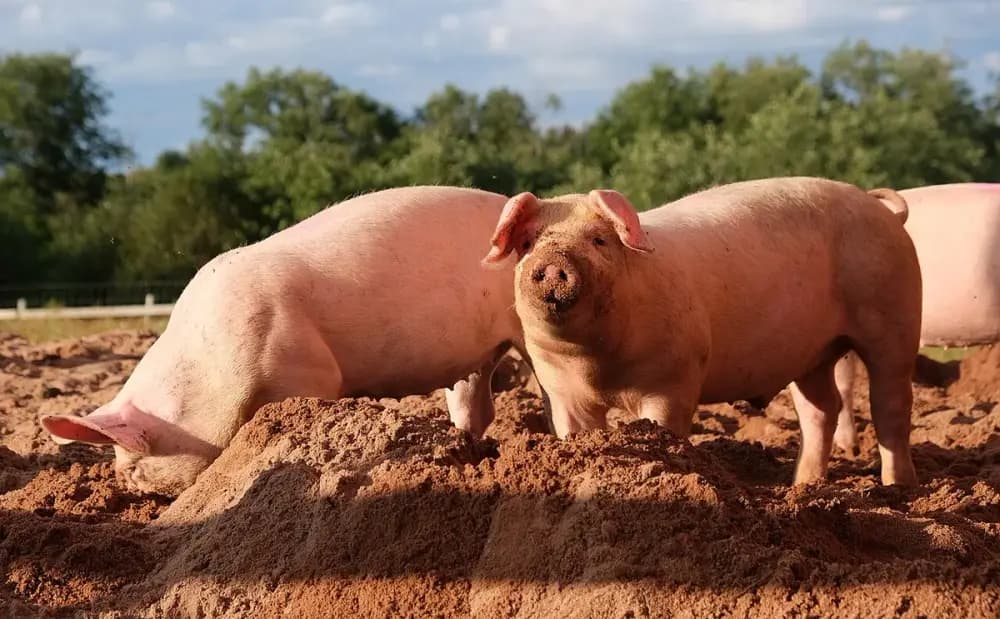
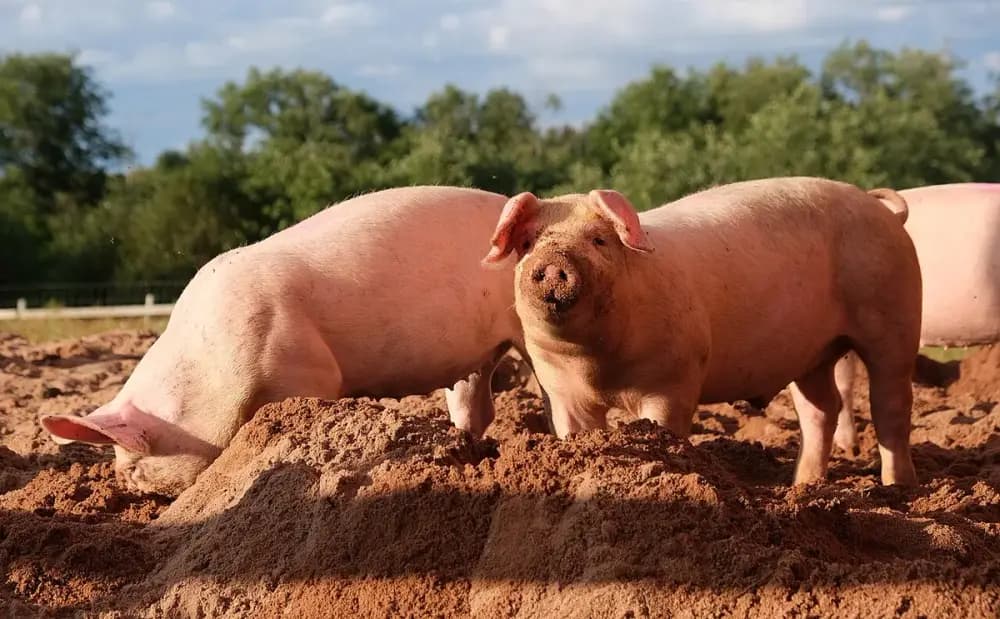
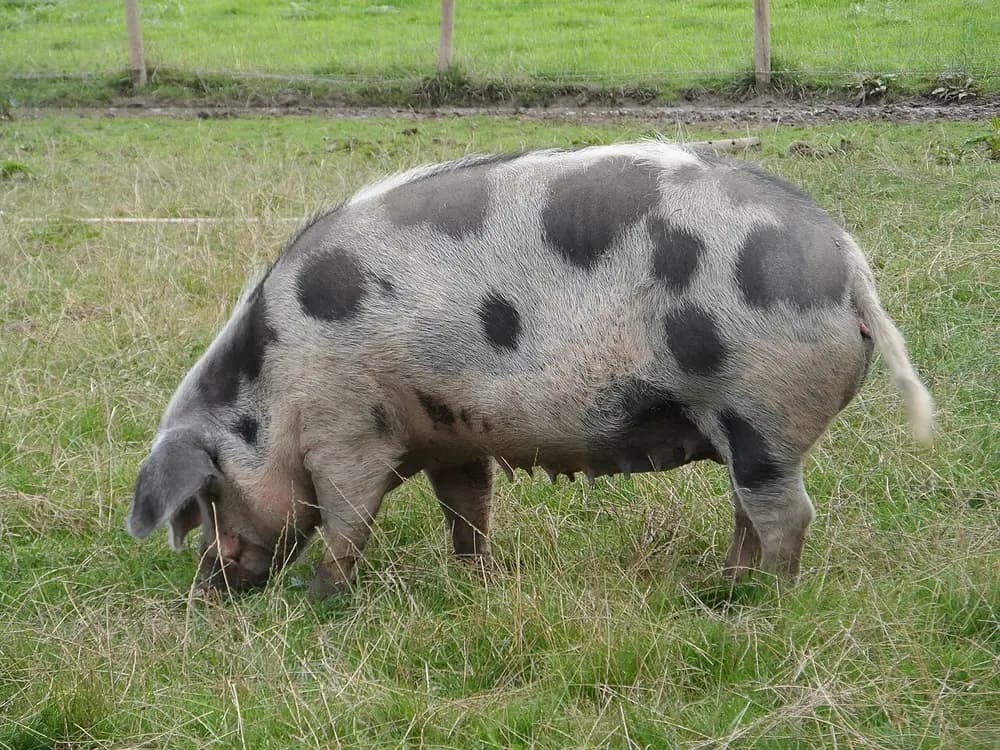
The Vietnamese pot-bellied pig, known in Vietnam as the Lon I or I pig, is a traditional small breed of domestic pig that takes its name from its low-hanging belly. It is uniformly black with heavily wrinkled skin, short legs, a pronounced sway back, a small head with an up-turned snout and heavy sagging jowls. It averages about 50 kg and stands about 36 cm tall. The breed is thought to have originated in the Red River Delta, where it forages well on rice straw and water plants and is well adapted to marshy, muddy ground. Raised for slow-growing but flavourful pork, it was depicted in traditional Dong Ho paintings as a symbol of happiness, satiety and wealth.
About the pot-bellied pig
The pot-bellied pig is a small breed of domestic pig from northern Vietnam, where it is called the I or Lợn Ỉ. Like all domestic pigs, it descends from the wild boar. It is named for its low, sagging belly, and it entered the United States from Canada in the mid-1980s, where it was soon marketed as a pet.
Domestic pigs are usually classed as a subspecies of the wild boar, Sus scrofa domesticus, though some authorities treat them as a separate species, Sus domesticus. Pigs were domesticated twice, independently, in the Near East and in China.
The purebred I is a small pig. It averages roughly 50 kg (110 lb) in weight and about 36 cm (14 in) in height. For comparison, adult farm pigs generally weigh 140 to 300 kg (310 to 660 lb).
The breed is uniformly black with heavily wrinkled skin. It has short legs, a strongly swayed back and a large, sagging belly that, in pregnant sows, may drag on the ground. The head is small, with an upturned snout, small ears and eyes, and heavy, drooping jowls.
Two main types are recognized in Vietnam. The I-mo, or "fatty I," is the classic small, short-legged pig with a short snout and small, upright ears. The I-pha, or "large I," is taller, with longer legs, a longer snout and bigger ears held out to the sides.
The I is well suited to wet ground. It has plantigrade feet, putting weight on all four toes of each foot, which helps on the marshy, muddy land where it is usually raised. It is robust and resists disease and parasites well.
Not every pig sold as a "pot-bellied pig" in North America was purebred. Some of the imported pets were crosses, and some grew to a considerable size.
Behavior and diet
Diet
Omnivore; forages on rice straw and water plants in its homeland
Pot-bellied pigs share the behavior of domestic pigs in general. Pigs seek out each other's company and often huddle together, but they do not naturally form large herds. They tend to live in groups of about eight to ten sows with some young animals, while adult males are often alone.
Pigs are omnivores. In their homeland, I pigs are usually raised extensively and forage well on rice straw and water plants. Domestic pigs in general mainly eat leaves, stems, roots, fruit and flowers. Given the chance, they feed for many hours at a stretch and then sleep for many hours.
The snout is a key tool. It is strengthened by a special bone and a disk of cartilage at the tip, and pigs use it to dig and root for food. Rooting is also a comfort behavior and a way of communicating. Free-roaming pigs walk roughly 4 km (2.5 mi) a day within a home range of about 1 hectare (2.5 acres).
Pigs have few working sweat glands, so they cool off by wallowing in mud or water. Adults start wallowing at around 17 to 21 °C (63 to 70 °F). The mud may also act as sunscreen and help keep parasites away.
Pigs are intelligent, roughly on par with dogs. They recognize each other as individuals, play, and have good long-term memory. In experiments, pigs have solved mazes, learned a simple symbol language, recognized themselves in a mirror and used a joystick with their snouts. Their sense of smell is keen, with 1,113 smell-receptor genes, and they see a panoramic field of about 310 degrees.
Pigs kept in a dull, crowded or uncomfortable space may start biting each other's tails. Farmers reduce the risk with toys and other enrichment objects.
Female domestic pigs mature at 3 to 12 months and, if not bred, come into heat every 18 to 24 days. Gestation averages 112 to 120 days. Before giving birth, a sow builds a nest by rooting a hollow and piling twigs and leaves into a mound, then gives birth lying down.
Piglets are born with sharp teeth and quickly compete for the front teats, which give more milk. Once settled, each piglet tends to stick to the same teat.
Range and habitat
Habitat
Raised on smallholdings in marshy, muddy lowlands in Vietnam; kept as pets, on farms and in animal parks elsewhere
The I is a traditional Vietnamese breed that probably originated in Nam Định province in the Red River Delta. It was the main local pig in most of the delta, common in Nam Định and the neighboring provinces of Hà Nam, Ninh Bình and Thái Bình, and in Thanh Hóa province just to the south.
At home it is raised mainly on smallholdings with marshy, muddy ground, where it forages on rice straw and water plants.
Small numbers were exported in the 1960s to Canada and Sweden, to be kept on display and used in laboratory research. Within a decade the breed had spread to animal parks elsewhere in Europe, and a few were raised on small farms. Pot-bellied pigs entered the United States from Canada in the mid-1980s, and by the end of that decade they were being marketed as pets. The pet craze did not last long. In 2013, Spain declared the breed an invasive species.
Pot-bellied pig vs farm pig
All domestic pigs belong to the same species, but the pot-bellied pig is very different in size and shape from commercial farm breeds.
| Feature | Pot-bellied pig (I) | Typical farm pig |
|---|---|---|
| Adult weight | About 50 kg (110 lb) on average | Generally 140 to 300 kg (310 to 660 lb) |
| Color | Uniformly black | Varies widely across about 600 breeds |
| Build | Short legs, swayed back, sagging belly | Varies by breed |
Other small or heritage pigs with pages here include the kunekune pig and the guinea hog.
Conservation status
As a domestic animal, the pot-bellied pig is not assessed on the IUCN Red List. Its status as a breed in Vietnam, however, is a cause for concern.
Until the 1970s the I was probably the most numerous pig breed in northern Vietnam, numbering in the millions. It was then gradually replaced by the more productive Móng Cái breed. Vietnam's National Institute of Animal Husbandry started a conservation program that paid subsidies to farmers raising purebred stock, but it had little effect: numbers rose slightly while inbreeding increased.
The breed's population was estimated at 675,000 in 1991 and just 120 by 2010. The institute listed its status as "critical" in 2003, and the Food and Agriculture Organization of the United Nations listed it as "endangered" in 2007. By 2025 its status was recorded as unknown.
Where to see pot-bellied pig in the U.S.
23 zoos across 17 states
Find the closest one
Rank the 17 zoos holding pot-bellied pig by how far they are from you. Your location is used in your browser to sort this list and is never sent to us.
6 more zoos hold pot-bellied pig but have no coordinates on file yet, so they aren't ranked here. They're in the full list below.
Idaho· 1
Illinois· 1
Indiana· 2
Kansas· 1
Maryland· 1
New Jersey· 2
New Mexico· 1
New York· 1
North Carolina· 1
Ohio· 1
Pennsylvania· 3
South Dakota· 1
Tennessee· 1
Texas· 3
Virginia· 1
West Virginia· 1
Wisconsin· 1
AZAThe Association of Zoos and Aquariums. Accredited members have passed an independent inspection of animal care and welfare, safety, conservation and education, repeated every five years. Many smaller facilities never apply, so “not accredited” isn't a verdict on its own. What accreditation means · How we check this
Built from each zoo's own published animal list.
Pot-bellied Pig: common questions
How big do pot-bellied pigs get?
Purebred Vietnamese I pigs average about 50 kg (110 lb) and about 36 cm (14 in) tall. Pets sold as pot-bellied pigs were not always purebred, and some grew much larger.
How long do pot-bellied pigs live?
Domestic pigs, the species the pot-bellied pig belongs to, have a maximum lifespan of about 27 years.
What do pot-bellied pigs eat?
They are omnivores. In Vietnam they forage on rice straw and water plants, and domestic pigs in general eat mainly leaves, stems, roots, fruit and flowers.
Where do pot-bellied pigs come from?
From the Red River Delta of northern Vietnam, probably Nam Định province. They reached Canada and Sweden in the 1960s and the United States in the mid-1980s.
Can you keep a pot-bellied pig as a pet?
Yes, and they were marketed as pets in the U.S. from the late 1980s. Pigs are independent and assertive rather than dog-like, and pigs that are not neutered or spayed can become aggressive.
Are pot-bellied pigs smart?
Yes. Pigs are considered roughly as intelligent as dogs, with good long-term memory, the ability to solve mazes and mirror self-recognition.
Are pot-bellied pigs endangered?
The purebred I breed was listed as endangered by the FAO in 2007, after its population fell from an estimated 675,000 in 1991 to 120 by 2010. By 2025 its status was recorded as unknown.