- Where to see one
- 31 U.S. zoos in our directory hold pygmy goat, confirmed against each zoo's own animal list.
- Native range
- descended from the wild bezoar ibex of Southwest Asia and Eastern Europe
- Size
- miniature breeds such as the African Pygmy stand 16 to 23 in (41–58 cm) at the shoulder
- Lifespan
- 15 to 18 years, with one reported case reaching 24
Conservation status
Not Evaluated
This species has not been assessed for the IUCN Red List, so it sits outside the threat scale entirely.
Not Evaluated (NE); domestic animals aren't assessed on the IUCN Red List
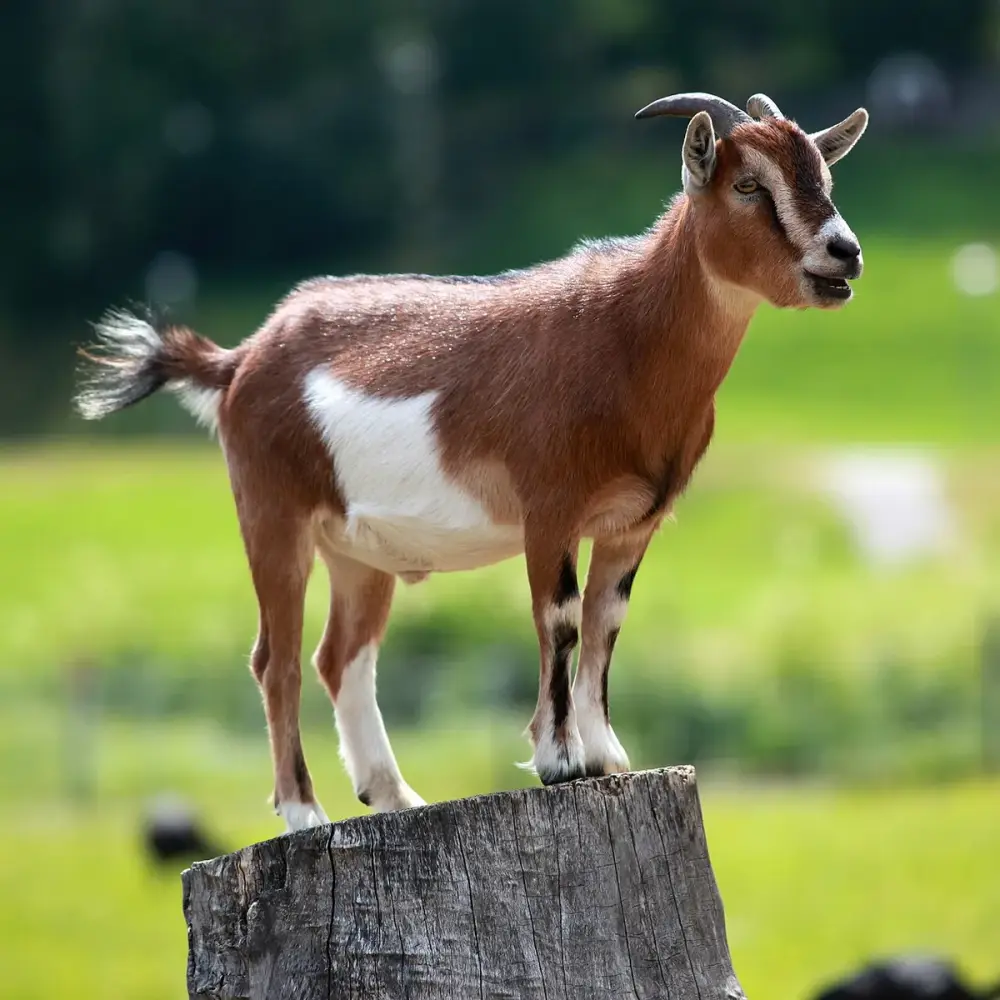
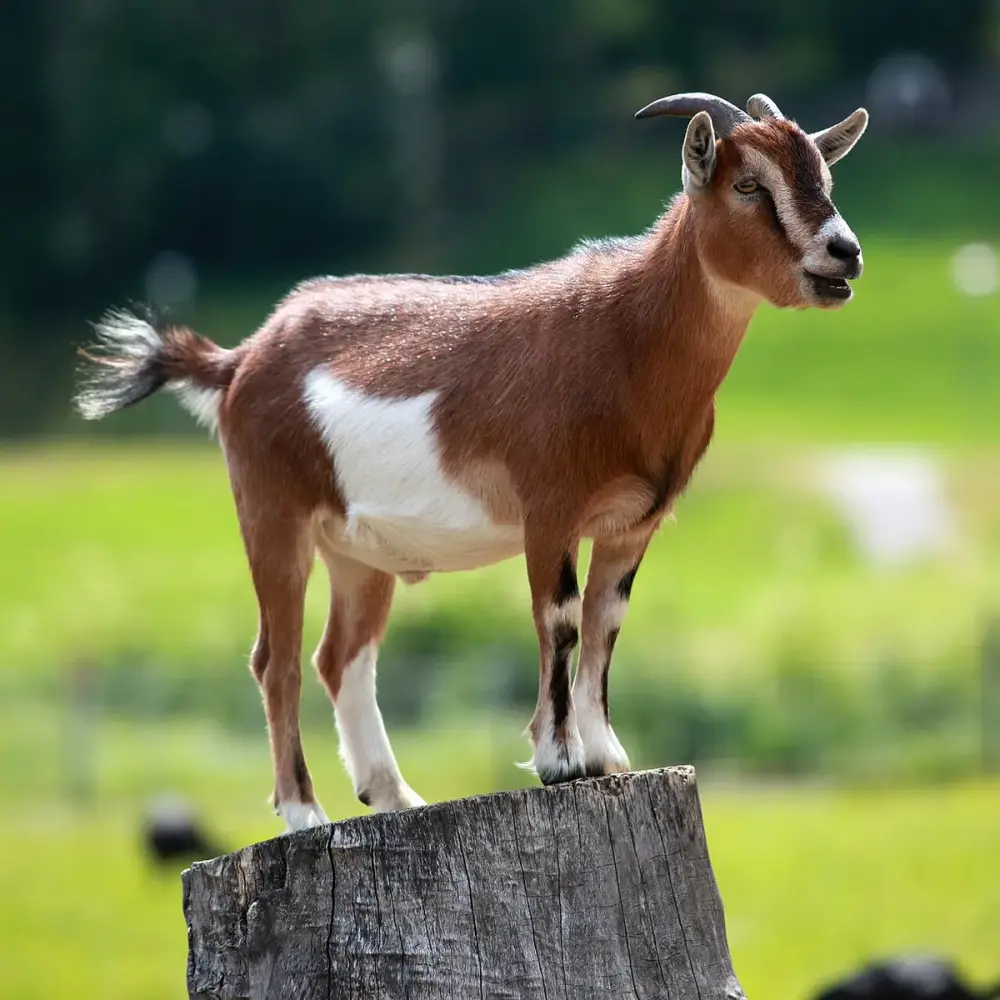
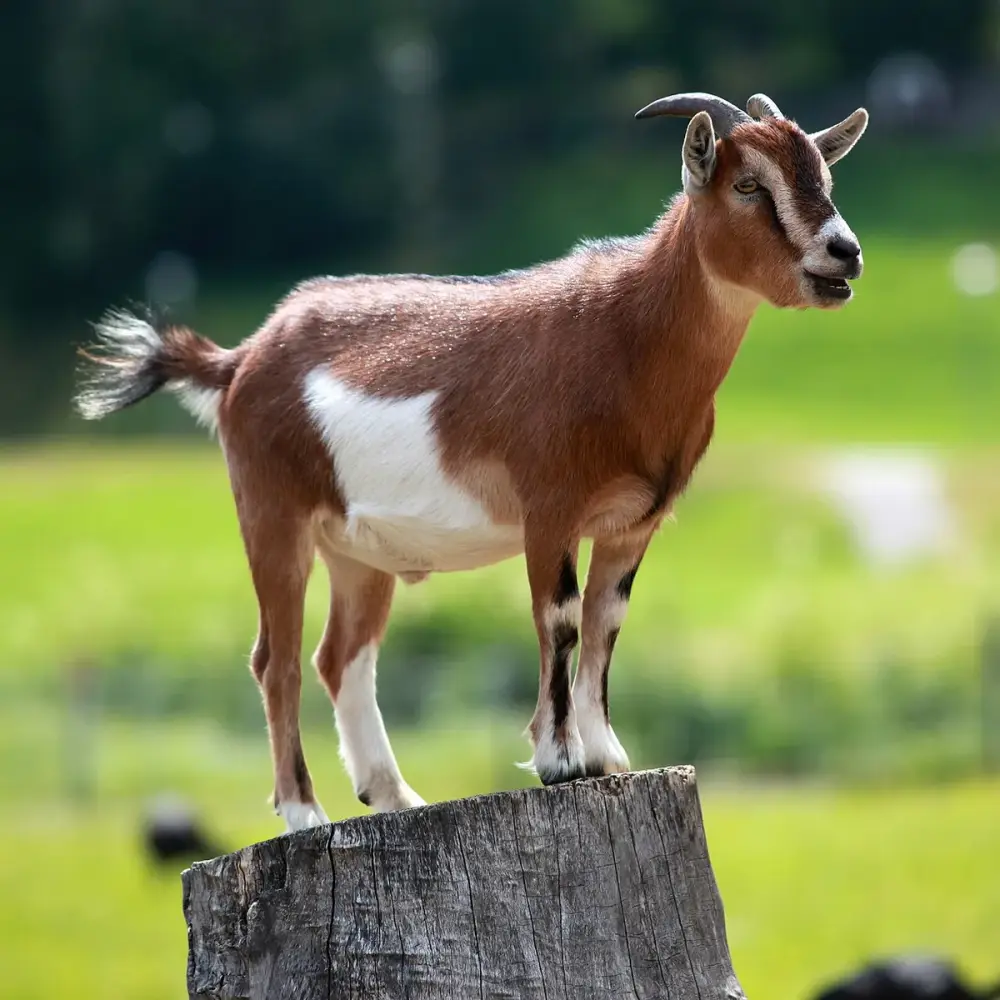
The American Pygmy, also known as the African Pygmy, is a small, compact and stockily built breed of dwarf goat with heavy bone. It descends from West African Dwarf goats imported to the United States between 1930 and 1960, some of them for research. Others were bred as companion animals, and a breed society was established in 1975. Adults usually stand 40 to 50 cm at the withers and weigh 25 to 40 kg. Seven colour variations are recognised, including caramel with black markings, agouti shades and solid black. The goats are prolific and precocious, with gestation of 145 to 153 days, and are kept as companion animals and for meat.
About the pygmy goat
The pygmy goat is a miniature breed of the domestic goat, Capra hircus, a species that belongs to the family Bovidae and is closely related to sheep. Goats were domesticated from the wild bezoar ibex (Capra aegagrus) of Southwest Asia and Eastern Europe and were among the very first animals humans ever domesticated, with archaeological remains from Ganj Dareh in Iran dating that history back roughly 10,000 years. Domestic goats overall vary enormously in size by breed, ranging from bucks of larger breeds like the Boer at more than 140 kg (310 lb) down to miniature breeds. The African Pygmy sits at that small end of the scale, standing just 16 to 23 inches (41–58 cm) at the shoulder as an adult.
Like other domestic goats, pygmy goats typically carry two horns made of living bone wrapped in keratin, used for defense, dominance, territory, and regulating body temperature; breeding goats to be reliably hornless (polled) has proven difficult, since the genes controlling horns and sex are closely linked. Both sexes may grow a beard, and many types of goat — pygmy goats among the most common — also grow a dangling wattle on each side of the neck. Their eyes have horizontal, slit-shaped pupils, giving them a wide field of view to watch for predators from either side without being blinded by overhead sun, and unlike humans they have no tear ducts.
As ruminants, goats digest food through a four-chambered stomach — the rumen, reticulum, omasum, and abomasum — the same basic system found in cattle and sheep, and they are even-toed ungulates with two sets of 30 chromosomes. Females have an udder with two teats, compared with four in cattle.
Behavior and diet
Diet
browses almost any vegetation; a ruminant with a four-chambered stomach
Goats, including pygmy goats, are naturally curious, agile animals, able to climb and balance in places most hoofed animals wouldn't attempt — making them the only ruminant that regularly climbs trees. That same curiosity and agility gives them a well-earned reputation for testing fences and escaping enclosures whenever a weak point exists. Some studies rank goats as being about as intelligent as dogs, and a 2016 study found that goats try to communicate with people the way dogs and horses do, looking to a human for help when faced with an unfamiliar challenge.
Goats show less herding behavior than sheep: when grazing without disturbance, they spread out across a field rather than feeding side by side, and mothers tend to leave their kids apart from one another ("lying out") rather than clumped together the way sheep do. Faced with an intruder, goats generally turn to confront it, and bucks are more likely than rams to charge or butt at a person.
Diet is broad and opportunistic. Goats are browsers rather than grazers, meaning they favor shrubs, leaves, and varied vegetation over grass alone, and their curiosity extends to chewing on nearly anything plant-like — including cardboard and paper — to test whether it's worth eating. Adult size within any breed reflects both genetics and nutrition: goats fed higher-protein diets during their growth period reach a larger mature size, and large-framed breeds take longer to mature (36–42 months) than small-framed breeds like the pygmy goat (18–24 months).
Reproduction follows a roughly 150-day gestation. Twins are the typical outcome of a pregnancy, with single births and triplets also common, and litters of four, five, or even six kids occur less often. Just before giving birth — a process called kidding — a doe develops a sunken area near the tail and hip, breathes heavily, and often becomes restless and unusually affectionate toward her keeper. She typically eats the afterbirth, which supplies nutrients, helps stop her bleeding, and mirrors behavior seen in wild herbivores working to reduce the scent that could draw in predators. Goats reach puberty between three and 15 months of age, depending on breed and nutrition.
Range and habitat
Habitat
kept worldwide as livestock
Domestic goats have no true native range today, since the species has been fully domesticated and dispersed by humans; its wild ancestor, the bezoar ibex, came from Southwest Asia and Eastern Europe. As livestock, goats are now kept across most of the world — as of 2022, more than 1.1 billion goats were alive globally, with roughly 150 million of those in India alone. Husbandry varies widely by region and setting, from open grazing land to penned, hand-fed animals. Given the opportunity, goats will also revert to a wild, feral state, and feral populations have become established in places such as Australia, New Zealand, Great Britain, and the Galápagos.
Conservation status
The pygmy goat is a domestic breed, and domestic animals aren't assessed on the IUCN Red List, so it has no Red List category. If anything, the opposite concern applies at a global scale: with more than 1.1 billion goats alive worldwide as of 2022, the domestic goat is an exceptionally abundant animal.
Life expectancy for goats generally runs 15 to 18 years, with one individual reported to have reached 24, though complications during kidding can shorten a doe's expected lifespan to 10 or 11 years, and the physical toll of rut can shorten a buck's to 8 to 10 years. Goats are considered hardy animals overall, though they remain susceptible to a range of respiratory and parasitic conditions, along with several diseases that can pass to people, including tuberculosis and brucellosis.
Where to see pygmy goat in the U.S.
31 zoos across 18 states
Find the closest one
Rank the 27 zoos holding pygmy goat by how far they are from you. Your location is used in your browser to sort this list and is never sent to us.
4 more zoos hold pygmy goat but have no coordinates on file yet, so they aren't ranked here. They're in the full list below.
Arkansas· 1
California· 1
Florida· 2
Georgia· 1
Illinois· 3
Louisiana· 1
Maine· 1
Maryland· 3
Michigan· 2
New York· 2
Ohio· 3
Oregon· 1
Pennsylvania· 2
South Dakota· 2
Texas· 3
Virginia· 1
West Virginia· 1
Wisconsin· 1
AZAThe Association of Zoos and Aquariums. Accredited members have passed an independent inspection of animal care and welfare, safety, conservation and education, repeated every five years. Many smaller facilities never apply, so “not accredited” isn't a verdict on its own. What accreditation means · How we check this
Built from each zoo's own published animal list.
Pygmy Goat: common questions
Is the pygmy goat endangered?
No. As a domestic breed, it isn't assessed on the IUCN Red List, and the domestic goat overall is extremely abundant worldwide.
How big does a pygmy goat get?
Miniature breeds such as the African Pygmy stand about 16 to 23 inches (41–58 cm) at the shoulder as adults, well below the size of most standard goat breeds.
What does a pygmy goat eat?
Like other domestic goats, it browses on a wide variety of vegetation, including shrubs and leaves, and will investigate almost any plant-like material as a possible food source.
How long do pygmy goats live?
Goats generally live 15 to 18 years, with one documented individual reaching 24.
Which U.S. zoos have pygmy goats?
10 U.S. zoos keep them, including the Oregon Zoo, The Maryland Zoo in Baltimore, and NOVA Wild.
Are pygmy goats good climbers?
Yes. Goats are the only ruminant known to regularly climb trees, and their agility and curiosity also make them notorious for escaping enclosures.