- Where to see one
- 17 U.S. zoos in our directory hold watusi cattle, confirmed against each zoo's own animal list.
- Origin
- Ankole cattle of east and central Africa, part of the Sanga group; developed as a modern breed in the United States
- Size
- Cows 410–550 kg (900–1,210 lb); bulls 450–730 kg (990–1,610 lb)
- Horns
- Long, thick-based and symmetrical; record circumference 103.5 cm (40.7 in)
- Calves
- 15–25 kg (33–55 lb) at birth
- Other names
- Ankole-Watusi, Watusi
Conservation status
Not Evaluated
This species has not been assessed for the IUCN Red List, so it sits outside the threat scale entirely.
Not Evaluated (NE) by the IUCN; listed as "recovering" by the Livestock Conservancy
The Ankole-Watusi is a modern American breed of domestic cattle that derives from the Ankole group of Sanga cattle breeds of east and central Africa. It is characterised by very large horns, which have the largest circumference found in any cattle breed. The coat comes in several colours but is usually red. Cows weigh 410 to 550 kg and bulls 450 to 730 kg, and calves weigh 15 to 25 kg at birth. Some Ankole cattle were imported to the United States, where a herd was started in New York State in 1960 by cross-breeding them with an unrelated Canadian bull. A breed society was set up in 1983 and a breed standard drawn up in 1989.
About the Watusi cattle
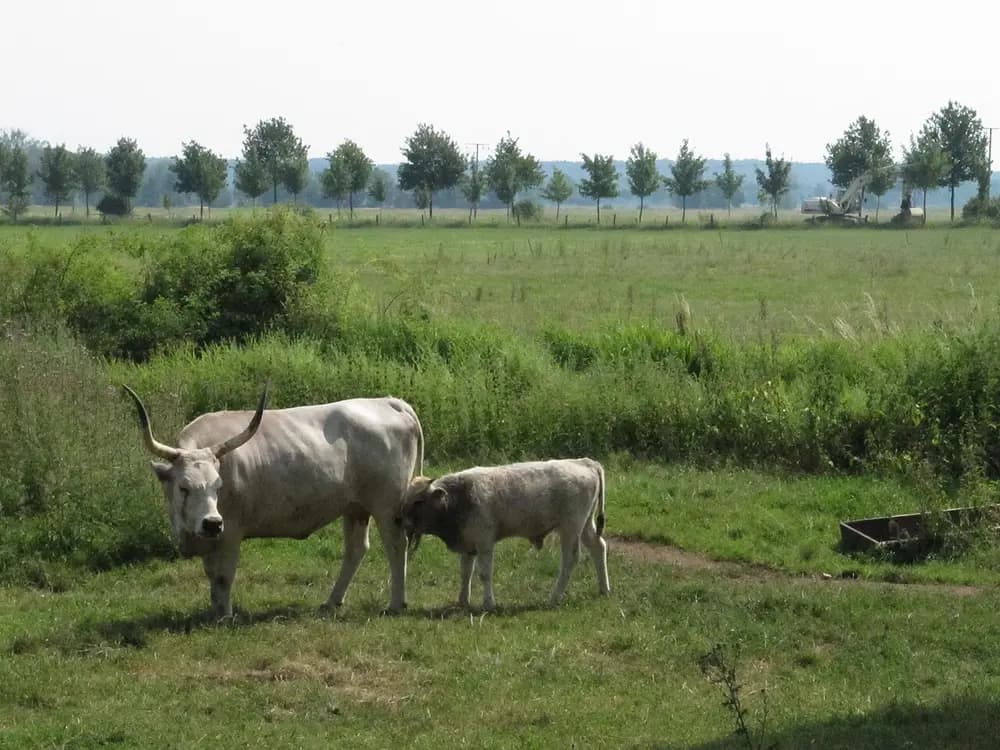
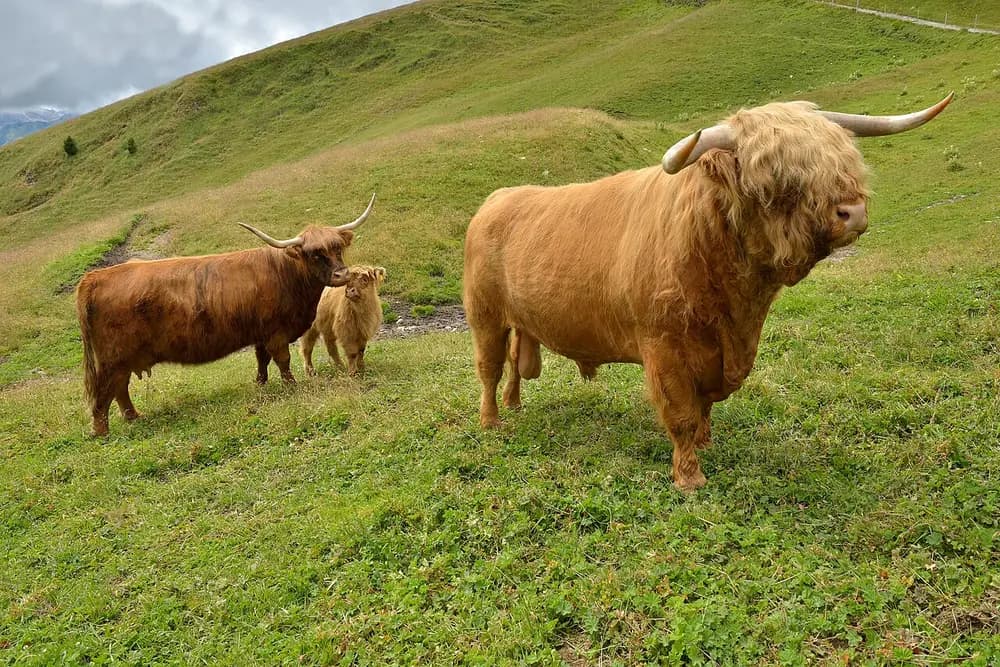
Watusi cattle, properly the Ankole-Watusi, are a modern American breed of domestic cattle descended from the Ankole cattle of east and central Africa. They belong to the Sanga group of African cattle and are best known for enormous horns, which have the largest circumference of any cattle breed and help keep the animals cool.
The breed's name joins two African strains. In Uganda, the Nkole people's cattle are called Ankole, while in Rwanda and Burundi the Tutsi people's cattle are called Watusi. When the animals were exported, first to Europe and later to America, these strains were combined. Similar cattle kept in Europe are simply called Watusi and are treated as a strain of the African Ankole.
Like all cattle, Watusi are cloven-hoofed ruminants that digest tough plants with the help of microbes in a four-compartment stomach. They are medium-sized and elegant, with a straight back line and sloping rump, and some have a hump on the neck. Cows weigh 410–550 kg (900–1,210 lb) and bulls 450–730 kg (990–1,610 lb). For comparison, Hereford cows weigh 600–800 kg (1,300–1,800 lb).
The horns
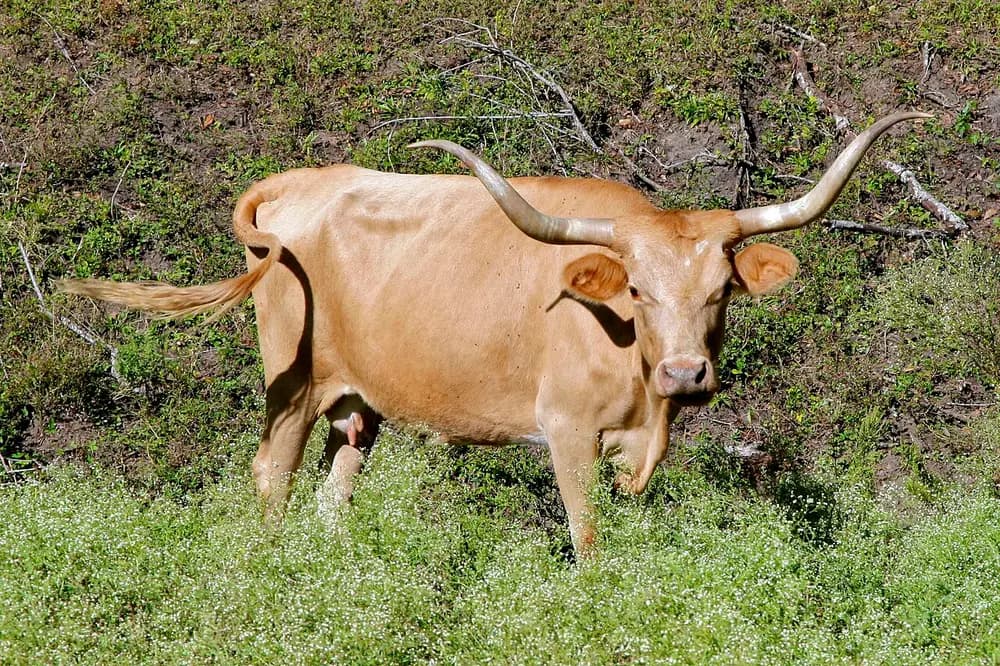
The horns are the breed's defining feature. They grow from a very large base and are long and symmetrical. In Africa, crescent- and lyre-shaped horns are prized, while American breeders have also selected for horns that sweep out sideways, increasing the distance from tip to tip. Like other cattle horns they are unbranched and never shed.
Guinness World Records has listed a bull named CT Woodie, with a horn circumference of 103.5 cm (40.7 in), and a steer named Lurch, with horns measuring 95.25 cm (37.5 in), as record-holders.
The horns are not just for show. Blood flows through them, cools, and returns to the body, letting the animal dump excess heat. That helps Watusi cope with the African climate, where temperatures can range from about −7 to 49 °C (20–120 °F).
Coat colors
The coat comes in several colors, but red, usually dark red, is most common; dun and black also occur. Watusi can be solid-colored or spotted, and some carry unusual patterns, such as color across the top of the body with white below, or many kinds of speckling.
Behavior and diet
Diet
Grass and other forage
The Livestock Conservancy describes Watusi as docile and gentle, though best suited to people used to handling horned cattle. In general, horned cattle tend to keep more distance from one another and have fewer physical clashes than hornless cattle, which makes for more stable social relationships. Cattle live in a dominance hierarchy, and in semi-wild herds older animals are usually dominant over younger ones.
Watusi were shaped by both people and nature. Herders in Africa valued cattle as ceremonial animals and symbols of wealth and status, and the beauty of a herd, especially the size and shape of its horns, mattered. At the same time, natural selection produced hardy, efficient grazers that thrive on rough forage.
Diet and calves
Like other cattle, Watusi are grazers. They swallow grass and forage with little chewing, then bring it back up later to chew as cud before digesting it with the help of microbes in the rumen.
Calves are small, weighing 15–25 kg (33–55 lb) at birth, which is useful when Watusi bulls are bred to cows of other breeds. Heifers usually give birth for the first time at about 24 months. Watusi milk is around 10% fat, so some farmers cross the breed into their herds to raise butterfat. The Livestock Conservancy also lists adaptation to harsh environments, strong mothering ability and lean beef among the breed's assets.
Range and habitat
Habitat
Farms and pasture; adapted to rough forage and temperatures from about −7 to 49 °C (20–120 °F)
The Watusi's roots lie in the Sanga cattle of eastern Africa. According to the Livestock Conservancy, Sanga cattle arose over 2,000 years ago from a mix of Egyptian longhorn cattle and longhorned zebu that came from India. Sanga cattle are hybrids of taurine cattle and zebu, and the breed is classed as Bos taurus by some authorities and Bos indicus by others. The Ankole group was probably brought to that region between 500 and 700 years ago by nomadic pastoralists from farther north.
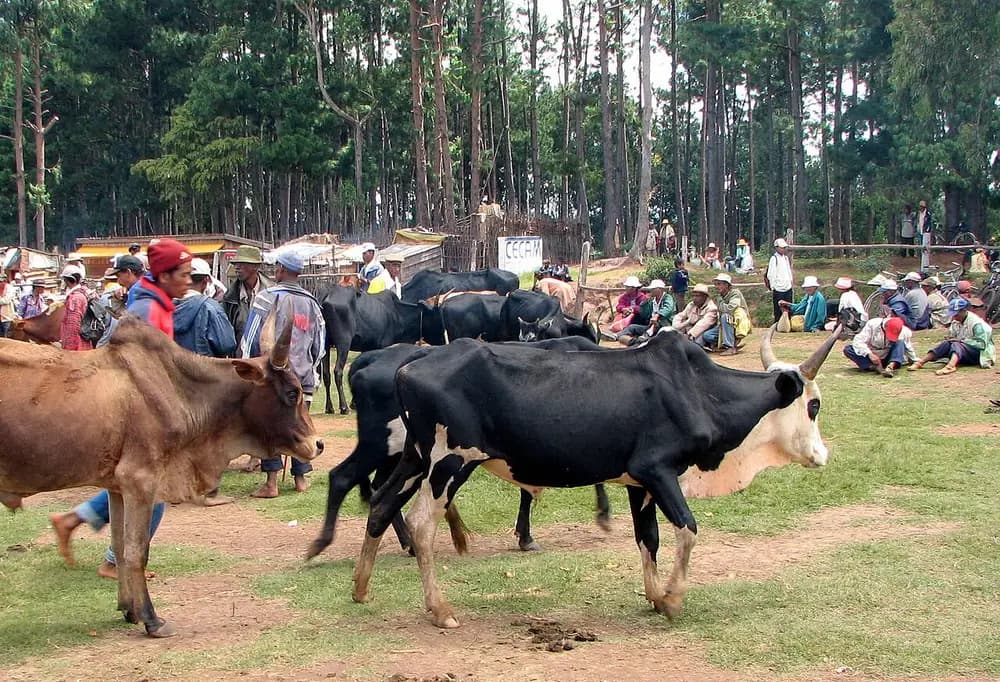
Ankole cattle still live across much of eastern and central Africa, especially in Uganda, the Democratic Republic of the Congo, Rwanda, Burundi and parts of Tanzania. There are at least five regional strains: Bahima, Bashi, Kigezi, Ruzizi and Watusi. The Watusi strain is found in Burundi, Congo, Rwanda, Uganda and parts of Tanzania. Two small herds of the Inyambo strain of Watusi are kept in Rwanda.
Some of these cattle went to Germany as exhibition animals in the early 20th century and spread across Europe, and U.S. breeders imported them from Europe in the 1920s and 1930s. In 1960 a herd was started in New York State by crossing imported animals with an unrelated Canadian bull. The Ankole Watusi International Registry was founded in 1983, and a breed standard followed in 1989. By 2016 about 80% of the breed lived in the United States, most of it with private breeders. For the wider story of domestic cattle, see cow.
Watusi vs other cattle
Watusi are the same species as other domestic cattle, which can even hybridize with relatives such as the American bison, but they differ from common European-type breeds in several ways.
| Feature | Ankole-Watusi | Hereford |
|---|---|---|
| Cattle type | Sanga (taurine and zebu hybrid group) | Taurine |
| Cow weight | 410–550 kg (900–1,210 lb) | 600–800 kg (1,300–1,800 lb) |
| Bull weight | 450–730 kg (990–1,610 lb) | 1,000–1,200 kg (2,200–2,600 lb) |
Conservation status
Domestic cattle are not assessed on the IUCN Red List, so the Watusi is Not Evaluated there. Breed-level groups do track it. The Livestock Conservancy, which keeps a watchlist of heritage livestock, lists the Ankole-Watusi as "recovering." The FAO's DAD-IS database listed the breed in 2025 as "at risk/critical maintained," based on an estimated 100 to 500 animals in 2022.
Numbers have risen from a low base. There were an estimated 120 purebred animals in 1984, and about 1,500 by 2016. In the breed's African homeland of Rwanda, Burundi and Uganda, cattle populations have been large but have declined sharply because of civil war, economic upheaval and government-backed crossbreeding schemes.
Where to see watusi cattle in the U.S.
17 zoos across 13 states
Find the closest one
Rank the 12 zoos holding watusi cattle by how far they are from you. Your location is used in your browser to sort this list and is never sent to us.
5 more zoos hold watusi cattle but have no coordinates on file yet, so they aren't ranked here. They're in the full list below.
Florida· 3
Illinois· 1
Kansas· 1
Maine· 1
Maryland· 1
Michigan· 1
North Carolina· 1
Ohio· 1
Pennsylvania· 1
Rhode Island· 1
Tennessee· 1
Texas· 3
Virginia· 1
AZAThe Association of Zoos and Aquariums. Accredited members have passed an independent inspection of animal care and welfare, safety, conservation and education, repeated every five years. Many smaller facilities never apply, so “not accredited” isn't a verdict on its own. What accreditation means · How we check this
Built from each zoo's own published animal list.
Watusi Cattle: common questions
Why do Watusi cattle have such big horns?
Partly to keep cool. Blood circulating through the large horns is cooled before returning to the body, helping the cattle shed heat in hot climates; African herders also prized big, beautiful horns.
How big are Watusi horns?
Very big. The record-holding bull CT Woodie had a horn circumference of 103.5 cm (40.7 in), the largest circumference found in any cattle breed.
Are Watusi cattle aggressive?
No. The breed is described as docile and gentle, though its large horns mean it suits handlers experienced with horned cattle.
How much do Watusi cattle weigh?
Cows weigh 410–550 kg (900–1,210 lb) and bulls 450–730 kg (990–1,610 lb).
Where do Watusi cattle come from?
From the Ankole cattle of east and central Africa, especially Uganda, Rwanda and Burundi. The modern Ankole-Watusi breed was developed in the United States, where most of the population now lives.
What color are Watusi cattle?
Usually red, especially dark red, though dun, black, spotted and speckled animals also occur.
Are Watusi cattle endangered?
They are not on the IUCN Red List, which does not assess domestic breeds. The Livestock Conservancy lists them as recovering, while DAD-IS rated the breed at risk in 2025.