- Where to see one
- 6 U.S. zoos in our directory hold flemish giant rabbit, confirmed against each zoo's own animal list.
- Origin
- Flanders, around the city of Ghent in Belgium
- Size
- Adults usually weigh 6–7.5 kg (13–16.5 lb), and some have been weighed at 10 kg (22 lb); ears 17–21 cm (6.7–8.3 in) long
- Lifespan
- No breed-specific figure; few European rabbits, domestic or wild, live past 9 years
- Colors
- Seven recognized by the American Rabbit Breeders Association
- Nicknames
- "Gentle Giant" and "universal rabbit"
Conservation status
Not Evaluated
This species has not been assessed for the IUCN Red List, so it sits outside the threat scale entirely.
Not Evaluated (NE); domestic breeds are not assessed on the IUCN Red List
The Flemish Giant is the largest breed of domestic rabbit. It originated in Flanders and may have been bred as early as the 16th century near Ghent, Belgium, with the first authentic records dating from roughly 1860 and the first breed standards written in 1893. It was exported to America in the early 1890s to increase the size of meat rabbits. The American Rabbit Breeders Association recognises seven colours: black, blue, fawn, sandy, light gray, steel gray and white. Typically docile and tolerant of handling when it is used to people, the breed is kept as a pet, a show animal and for meat, and is often used in 4-H programs as a starter rabbit.
About the Flemish Giant rabbit
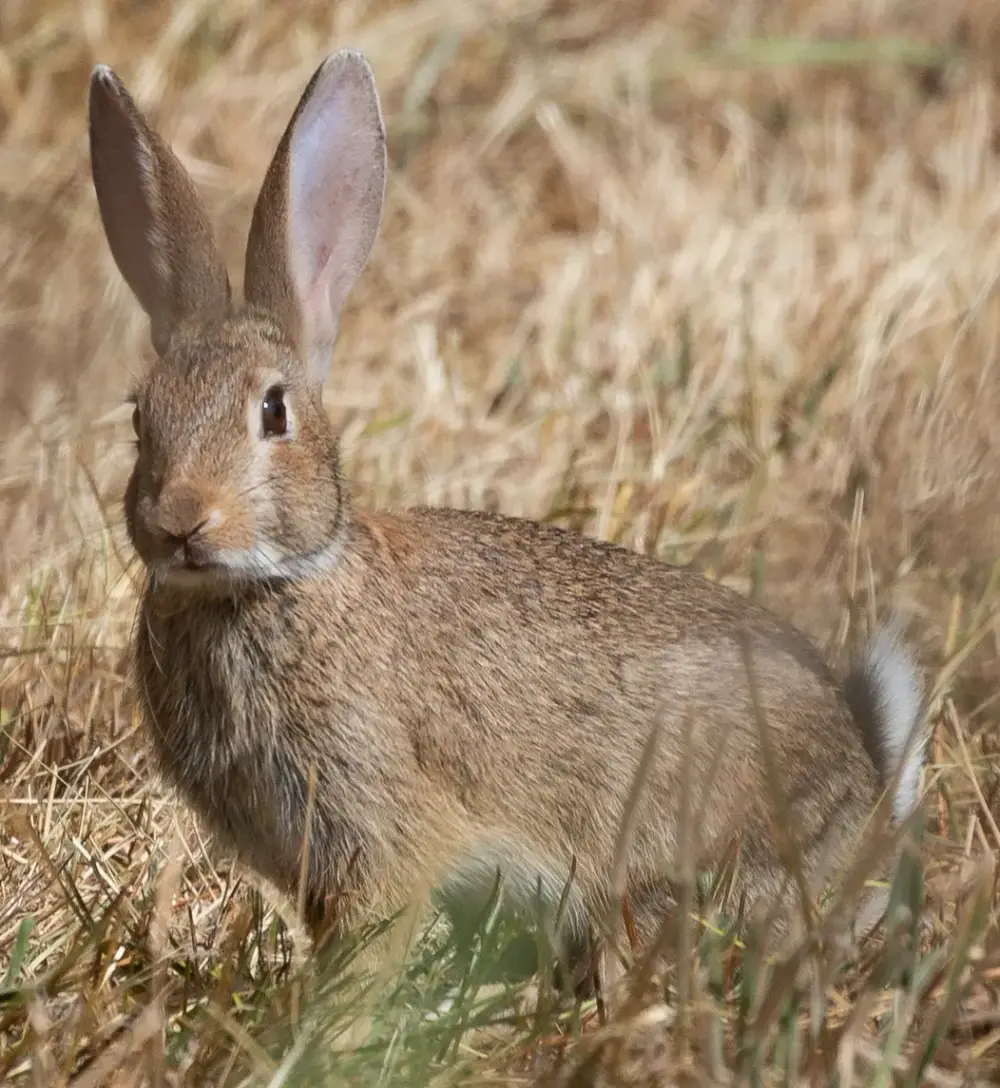
The Flemish Giant is the largest breed of domestic rabbit, a domesticated form of the wild European rabbit. It was developed in Flanders, in what is now Belgium, and is raised today as a pet, show animal and meat rabbit. Its calm temperament has earned it the nickname "Gentle Giant."
All domestic rabbit breeds, including the Flemish Giant, descend from the European rabbit, Oryctolagus cuniculus, a wild species native to the Iberian Peninsula. The domestic form is known as Oryctolagus cuniculus domesticus. For a broader look at the species and its hundreds of breeds, see the domestic rabbit.
Size is what sets this breed apart. An adult Flemish Giant usually weighs 6 to 7.5 kg (13–16.5 lb), and some individuals have been weighed at 10 kg (22 lb). For comparison, a wild European rabbit weighs only 1.2 to 2.5 kg (2.6–5.5 lb). The ears are long too, measuring 17 to 21 cm (6.7–8.3 in).
The sexes can be told apart fairly easily in adults. Bucks (males) develop a broad, heavy head. Does (females) have a narrower head and often a dewlap, a fold of skin and fat under the chin. A dewlap is a normal female trait in rabbits, and larger breeds tend to grow larger ones. Show standards, however, penalize an oversized dewlap in this breed.
The American Rabbit Breeders Association recognizes seven colors for the Flemish Giant: black, blue, fawn, sandy, light gray, steel gray and white. The Dutch-language standard lists ten, including rabbit gray, iron gray, yellow, blue, black, hare color, chinchilla and white. Under that standard, animals with more than one color, such as gray with white patches, are not allowed at shows.
Behavior and diet
Diet
Herbivore: hay, leafy greens and vegetables, and pellets
Flemish Giants are known for a docile, easygoing nature. They can be calm and tolerant of handling, especially when they interact with people often. That temperament is behind the "Gentle Giant" nickname. A Flemish Giant named Alex the Great was chosen for adoption because of his calm nature and trained as a therapy animal.
The breed's other nickname, the "universal rabbit," reflects its many uses. Flemish Giants are kept as pets, shown, used for breeding, and raised for meat and fur. Their simple grooming needs and gentle personalities make them a common starter rabbit in 4-H programs across the United States, where children learn to care for farm animals and pets.
Like all rabbits, Flemish Giants are herbivores. Hay is an essential part of any rabbit's diet, and it is also a major ingredient in commercial rabbit pellets, which are usually based on alfalfa. Grass hays such as timothy, brome, fescue, orchard grass and oat hay are common choices. Alfalfa hay supports growing young rabbits, but it can be too high in protein and calcium for adults.
Flemish Giants need more food than other rabbits. A varied mix of vegetables offered in small amounts is recommended, such as endive, lamb's lettuce, broccoli, fennel, carrots and carrot tops, radish greens, chicory and watercress, with a little parsley or celery. For this breed in particular, fresh greens and good hay both supply the fiber rabbits need for healthy digestion, and a lack of fiber can cause diarrhea or illness. Fruit such as apples and pears should be given only in moderation because of its sugar content.
As a large breed, the Flemish Giant also matures more slowly than small rabbits. Large breeds such as the Flemish Giant reach sexual maturity at about 5 to 8 months, compared with 4 to 5 months for small breeds such as the Netherland Dwarf. In rabbits generally, bucks take longer to mature than does.
Rabbits in general have light, fragile skeletons, especially the spine, and need support under the hindquarters when they are picked up. Careless handling can injure both the rabbit and the person holding it.
Range and habitat
Habitat
Kept as a pet, show animal and meat rabbit in Europe, the British Isles and the United States
The Flemish Giant originated in Flanders, near the Belgian city of Ghent. Breeders there may have raised large rabbits as early as the 16th century, and between 1825 and 1880 Ghent breeders developed a very large rabbit, first called the Ghent giant, through weekly contests for the heaviest animals. The first reliable records of the breed date to around 1860, and the first written breed standard followed in 1893.
Its exact ancestry is uncertain. The breed is believed to come from several meat and fur rabbits, possibly including the Steenkonijn, or "stone rabbit," named for an old Belgian weight of about 3.8 kg (8.4 lb), and a large, now-extinct European breed called the "Patagonian." That European breed was not the same animal as the wild Patagonian rabbit of Argentina, nor the Patagonian mara, a rodent that is sometimes called the Patagonian hare.
From Belgium, the breed spread widely. It was exported to Germany in the late 19th century, where breeders selected for even heavier animals; in 1937 the German line was renamed the German Giant. In the British Isles, it was recognized as distinct from the Continental Giant rabbit as of 1937. The Flemish Giant is an ancestor of the Belgian Hare and of other breeds around the world, including the Spanish giant rabbit.
Flemish Giants reached the United States in the early 1890s, shipped from England and Belgium to increase the size of meat rabbits during a national rabbit boom. The breed drew little attention until about 1910, when it began appearing at small livestock shows. Today it is one of the more popular breeds at American rabbit shows, promoted since 1915 by the National Federation of Flemish Giant Rabbit Breeders. It is the second-oldest domesticated rabbit breed in the United States, after the now-rare Belgian Hare.
Conservation status
The Flemish Giant is a domestic breed, so it has no IUCN Red List assessment and is treated as Not Evaluated (NE). Domestic animals are not assessed on the IUCN Red List. The breed remains one of the more popular breeds at rabbit shows in the United States.
Its welfare depends on care rather than wild threats. Like all domestic rabbits, Flemish Giants can catch viral diseases such as myxomatosis and rabbit hemorrhagic disease, and they tend to gnaw on almost anything, including electrical cords and toxic plants. Improper housing can lead to sore hocks and stress. Good living space with enrichment and places to hide is part of proper rabbit care.
Where to see flemish giant rabbit in the U.S.
6 zoos across 5 states
Find the closest one
Rank the 5 zoos holding flemish giant rabbit by how far they are from you. Your location is used in your browser to sort this list and is never sent to us.
1 more zoo holds flemish giant rabbit but has no coordinates on file yet, so it isn't ranked here. It's in the full list below.
Alabama· 1
Indiana· 1
Montana· 1
New York· 2
Wisconsin· 1
AZAThe Association of Zoos and Aquariums. Accredited members have passed an independent inspection of animal care and welfare, safety, conservation and education, repeated every five years. Many smaller facilities never apply, so “not accredited” isn't a verdict on its own. What accreditation means · How we check this
Built from each zoo's own published animal list.
Flemish Giant Rabbit: common questions
How big do Flemish Giant rabbits get?
Very big for a rabbit. Adults usually weigh 6 to 7.5 kg (13–16.5 lb), and some have been weighed at 10 kg (22 lb), several times the weight of a wild European rabbit.
Is the Flemish Giant the largest rabbit breed?
Yes. It is the largest breed of domestic rabbit.
Are Flemish Giant rabbits good pets?
They can be. They are typically docile and tolerant of handling when they spend time with people, which is why 4-H programs use them as starter rabbits, but like all rabbits they need dedicated care.
What do Flemish Giant rabbits eat?
Mostly hay, plus fresh greens, vegetables and rabbit pellets. Because of their size, they eat more than smaller rabbits, and fruit should be only an occasional treat.
How long do Flemish Giant rabbits live?
There is no breed-specific figure. Few European rabbits, domestic or wild, live past 9 years, and captive records put their maximum age at roughly 13 years.
Where do Flemish Giant rabbits come from?
Flanders in Belgium, around the city of Ghent. The breed reached the United States in the early 1890s.
What colors do Flemish Giants come in?
The American standard recognizes seven: black, blue, fawn, sandy, light gray, steel gray and white.