- Where to see one
- 9 U.S. zoos in our directory hold pony, confirmed against each zoo's own animal list.
- Origin
- Hardy landraces that developed worldwide, especially in cold, harsh climates; once grouped with the Northern European "draft" type
- Size
- Under 14.2 hands (58 in, 147 cm) at the withers for most competitions
- Lifespan
- Domestic horses typically live 25–30 years
- Gestation
- About 11 months
- Show sizes
- Small ponies 12.2 hands (50 in, 127 cm) and under; medium up to 13.2 hands (54 in, 137 cm); large up to 14.2 hands (58 in, 147 cm)
Conservation status
Not Evaluated
This species has not been assessed for the IUCN Red List, so it sits outside the threat scale entirely.
Not Evaluated (NE); domestic animals are not assessed on the IUCN Red List
A pony is a small type of horse, usually defined by a height limit at the withers; for many competitions the cutoff is 14.2 hands, or 147 cm. Ponies are stocky, with dense bone, shorter legs, a short head, large eyes and small ears, and they grow a thick mane, tail and heavy winter coat. Breeds developed worldwide, particularly in cold and harsh climates where hardy working animals were needed. They are easy keepers that thrive on a more limited diet than a full-sized horse, needing half the hay for their weight. Ponies are generally considered intelligent and friendly.
About the pony
A pony is a small domestic horse, not a separate species and not a young horse. Ponies belong to the same species as all domestic horses, Equus caballus, and are usually defined as horses under 14.2 hands (58 inches, 147 cm) at the withers. Stocky, thick-coated pony breeds developed worldwide, especially in cold, harsh climates.
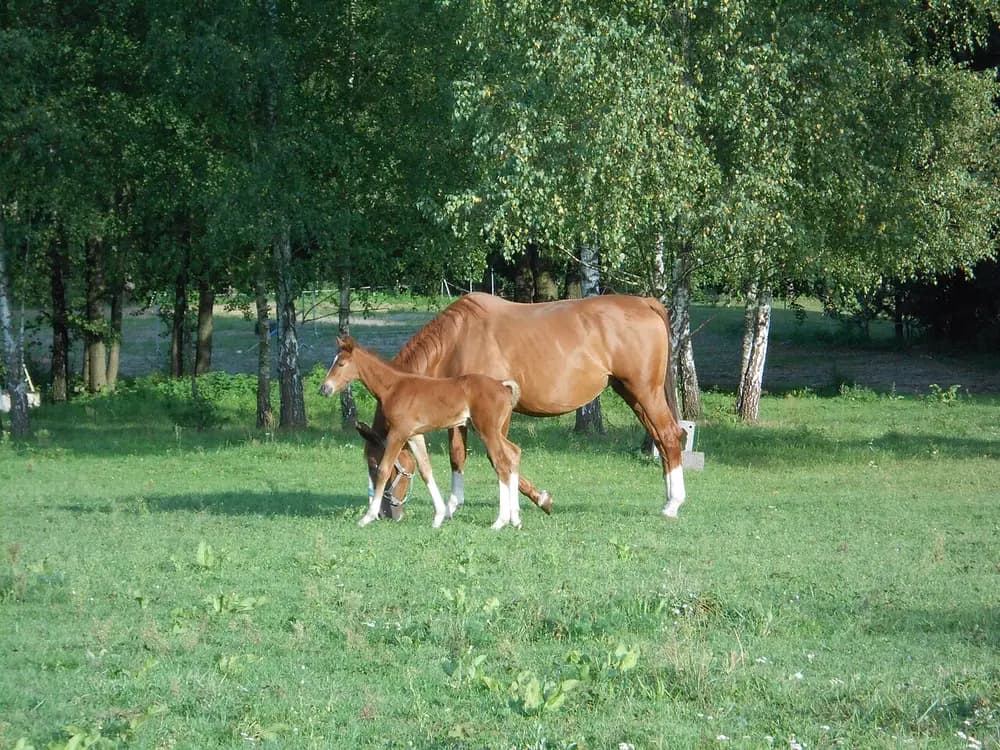
The name comes from the old French poulenet, a diminutive of poulain, meaning "foal." That history causes the most common mix-up: a foal is a baby horse of any size, while a pony is fully grown and simply small.
Size alone does not make a pony, though. Ponies are usually recognized by their build as well as their height. They have a stocky body, dense bone, a rounded shape and well-sprung ribs. The head is short, with large eyes and small ears, and the legs are proportionately shorter than a horse's. Their necks are thicker and their barrels wider.
Ponies also grow more hair. The mane and tail are thicker, and the winter coat is especially heavy, an adaptation to the cold, exposed places where many pony breeds took shape. Their hooves are strong.
Height is measured at the withers, the highest point of the shoulders where the neck meets the back, because that point stays still while the head and neck move. One hand equals 4 inches (10.16 cm). A pony listed as "13.2 hands" stands 13 hands plus 2 inches, or 54 inches (137 cm).
Behavior and diet
Diet
Grass, hay and other forage; often needs little or no grain
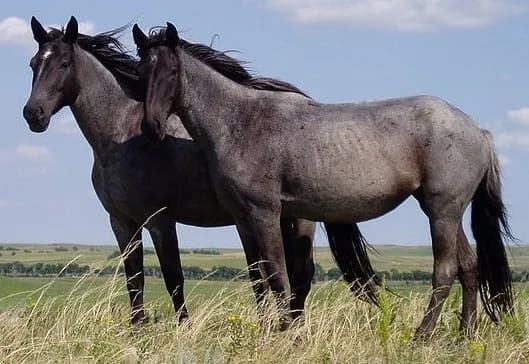
Like all horses, ponies are herd animals with a clear ranking, usually led by a dominant mare. They form strong companionship bonds with other horses and with other animals, including people, and communicate through nickers and whinnies, mutual grooming and body language. A horse kept alone often becomes hard to manage and does not sleep well, because it relies on herd mates to keep watch.
Horses are prey animals with a strong fight-or-flight response. Their eyes sit on the sides of the head, giving a field of view of more than 350 degrees, and each ear can swivel up to 180 degrees. They can doze standing up by locking their legs with a "stay apparatus," but they must lie down to reach REM sleep.
Ponies are generally described as intelligent and friendly, though some get a reputation for being stubborn or cunning. Much of that difference comes down to training. Ponies ridden only by beginners can pick up bad habits their riders can't correct, while well-trained ponies make suitable mounts for children learning to ride.
They are herbivores built for grazing, with 12 front incisors for biting off grass and 24 premolars and molars for grinding it. Horses have one stomach and digest the cellulose in grass through fermentation in the hindgut. They cannot vomit, so digestive problems can quickly turn into colic.
Nearly all pony breeds are hardy "easy keepers." They thrive on a more limited diet than a full-sized horse, needing about half the hay for their body weight and often no grain at all. That efficiency has a downside: ponies are more prone to laminitis, a painful hoof condition, and to Cushing's syndrome and high blood fats (hyperlipidemia).
They are also remarkably strong. Pound for pound, a pony can pull and carry more than a horse. Draft-type ponies can pull loads well beyond their own body weight, and even very small ponies can pull up to 450 percent of their weight. Larger breeds such as the Connemara pony can carry a full-grown adult rider.
Range and habitat
Habitat
Raised on farms, pastures and stables worldwide
Ponies first developed as landraces, local populations shaped by harsh natural environments, and were long grouped with the "draft" type typical of Northern Europe. Pony breeds arose around the world wherever people needed sturdy working animals that could survive tough conditions. Farmers noticed that on small farms a pony could outwork a draft horse.
Horse domestication probably began on the Eurasian steppes with animals of about 13 to just over 14 hands (52 to 56 inches, 132 to 142 cm), roughly pony height. DNA studies suggest many wild mares contributed to modern breeds, but possibly only one male line. By the 20th century, many pony breeds had Arabian and other blood added to make more refined riding ponies.
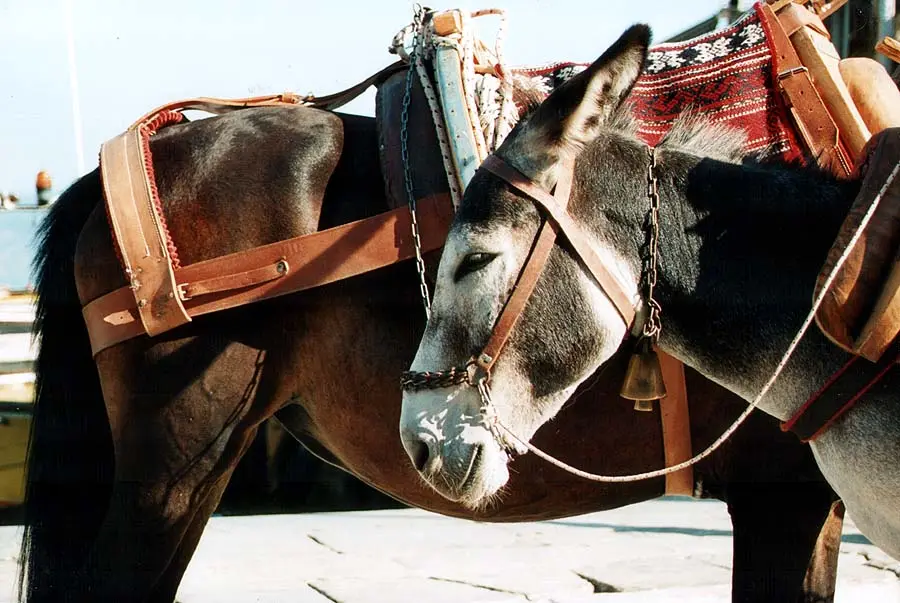
Today ponies are raised on farms and in stables worldwide. They work as pack animals, pull carts and other vehicles, and compete in many equestrian sports. The Hackney pony is bred mainly for driving, the Connemara and Australian Pony mainly for riding, and the Welsh pony for both.
One well-known American example is the Chincoteague pony, a feral horse that lives on Assateague Island off Maryland and Virginia. Its small size is partly environmental: a Chincoteague foal raised in domestic conditions often grows to the height of a small horse.
Pony vs horse
Ponies and horses are the same species, so the line between them is set by people, mainly breed registries and horse-show rules. Height is the usual test, but build and breed matter too. The Arabian, Icelandic horse, American Quarter Horse and Morgan are always called horses, even when an individual stands under 14.2 hands. Polo ponies, meanwhile, are often full-height Thoroughbreds.
| Feature | Pony | Horse |
|---|---|---|
| Species | Equus caballus | Equus caballus |
| Usual height at the withers | Under 14.2 hands (58 in, 147 cm); under 14 hands (56 in, 142 cm) in Australia | 14.2 hands (58 in, 147 cm) and over |
| Official cutoff (FEI) | Up to 148 cm (58.3 in) without shoes, 149 cm (58.7 in) with shoes | Taller than the cutoff |
| Build | Stocky, heavy bone, wide barrel, thick neck, short head, shorter legs | Lighter bone, narrower barrel, proportionally longer legs |
| Coat | Thicker mane and tail, very heavy winter coat | Thinner mane, tail and coat |
| Feed needs | About half the hay per unit of body weight; often no grain | About twice as much hay per unit of body weight |
| Strength for size | Pulls and carries more, pound for pound | Less, pound for pound |
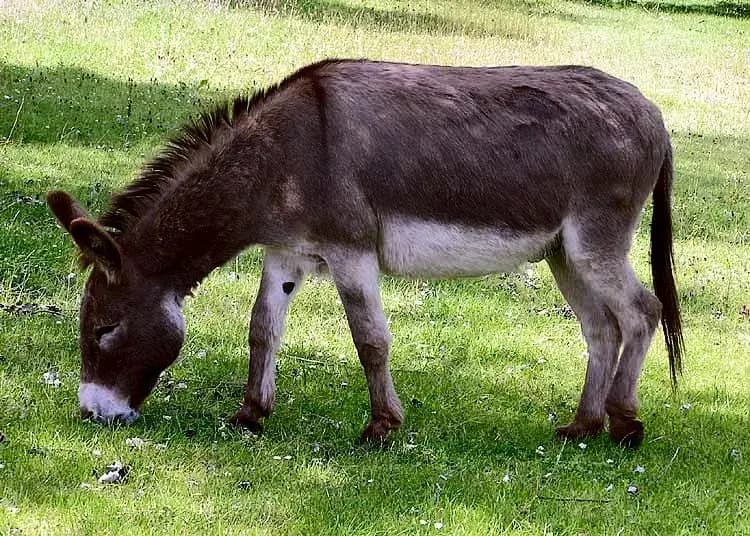
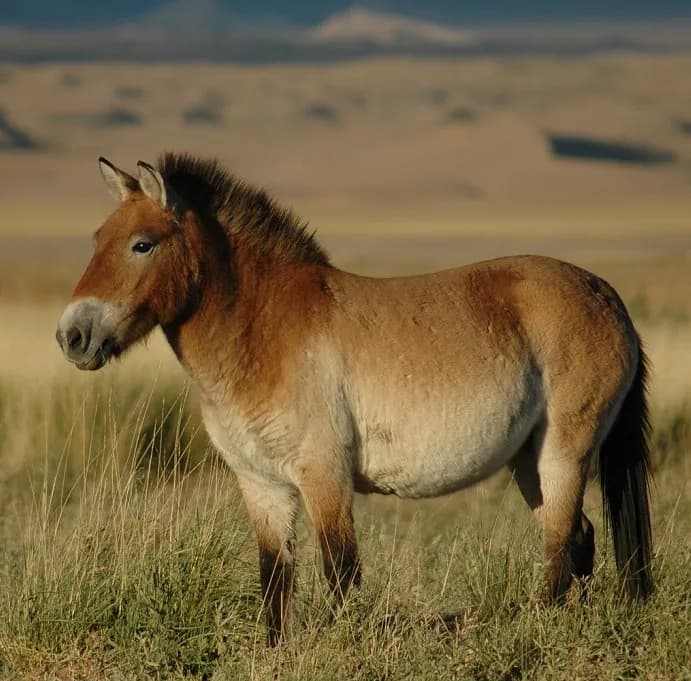
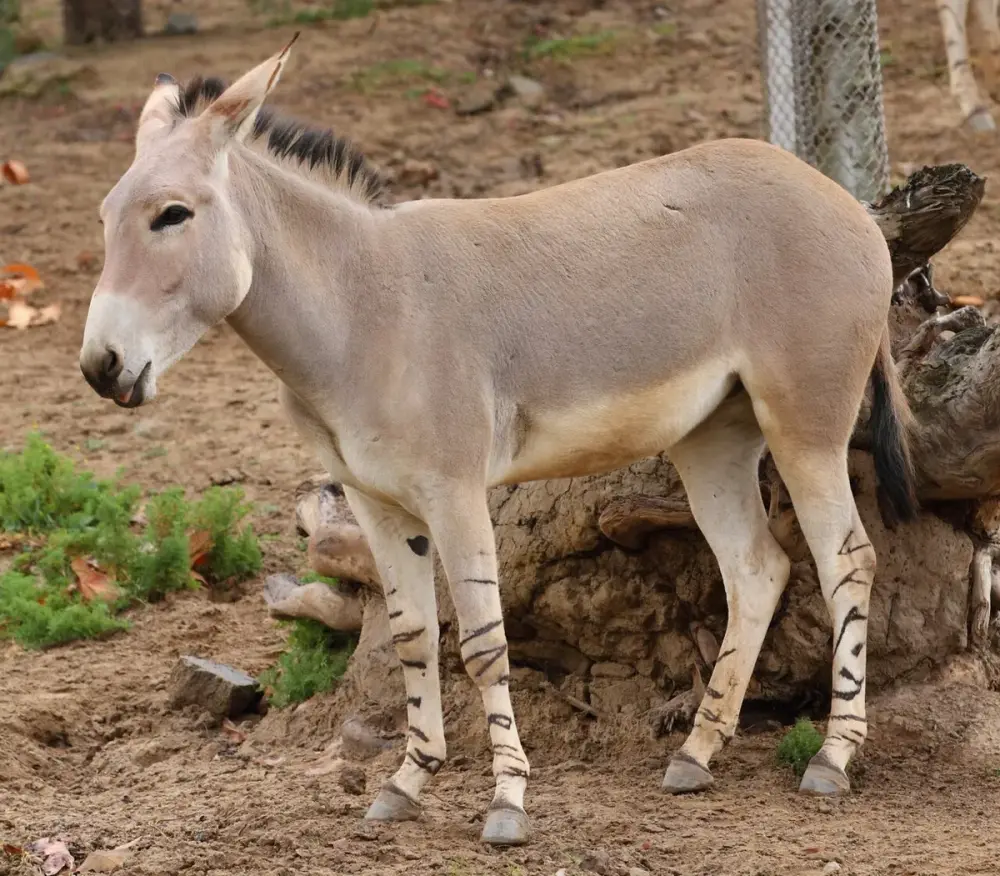
The very smallest equines, usually no taller than 38 inches (97 cm), are called miniature horses by their breeders rather than ponies, although miniature pony breeds also exist. A pony is also not a donkey, which is a different species in the same family. The only truly wild horse surviving today is Przewalski's horse of Asia; feral ponies like those on Assateague descend from domestic stock.
Conservation status
Ponies are domestic animals, and domestic horses are not assessed on the IUCN Red List, so the pony's status is Not Evaluated. The sources used here give no breed-level conservation status for ponies as a group.
Domestic horses as a whole are common, with an estimated 9.5 million in the United States alone. The closest wild relative is Przewalski's horse, the only wild horse subspecies that survives today, described as a rare Asian animal. The other wild subspecies known from recorded history, the tarpan, died out in 1909.
Where to see pony in the U.S.
9 zoos across 8 states
Find the closest one
Rank the 6 zoos holding pony by how far they are from you. Your location is used in your browser to sort this list and is never sent to us.
3 more zoos hold pony but have no coordinates on file yet, so they aren't ranked here. They're in the full list below.
California· 1
Florida· 1
Hawaii· 1
Illinois· 1
Maine· 1
New Mexico· 1
New York· 2
Texas· 1
AZAThe Association of Zoos and Aquariums. Accredited members have passed an independent inspection of animal care and welfare, safety, conservation and education, repeated every five years. Many smaller facilities never apply, so “not accredited” isn't a verdict on its own. What accreditation means · How we check this
Built from each zoo's own published animal list.
Pony: common questions
Is a pony a baby horse?
No. A pony is a fully grown horse that stays small, usually under 14.2 hands (58 inches, 147 cm). A baby horse of any size is a foal.
How tall is a pony?
Under 14.2 hands (58 inches, 147 cm) at the withers by the most common competition standard. Show classes split ponies into small (12.2 hands, 127 cm, and under), medium and large.
Are ponies and horses the same species?
Yes. Ponies and horses are both Equus caballus. The difference is set by height and body type, and breed registries decide borderline cases.
What do ponies eat?
Grass, hay and other forage. Ponies need about half as much hay for their weight as a full-sized horse and often need no grain. The same thrifty build makes them more vulnerable to laminitis.
How long do ponies live?
Domestic horses, ponies included, typically live 25 to 30 years, and a few reach their 40s.
Can adults ride ponies?
Yes, larger ones. Ponies are strong for their size, and breeds such as the Connemara can carry a full-sized adult rider.
Are ponies good for children?
Properly trained ponies are suitable mounts for children learning to ride. Ponies handled only by beginners can become spoiled, so training matters more than size.