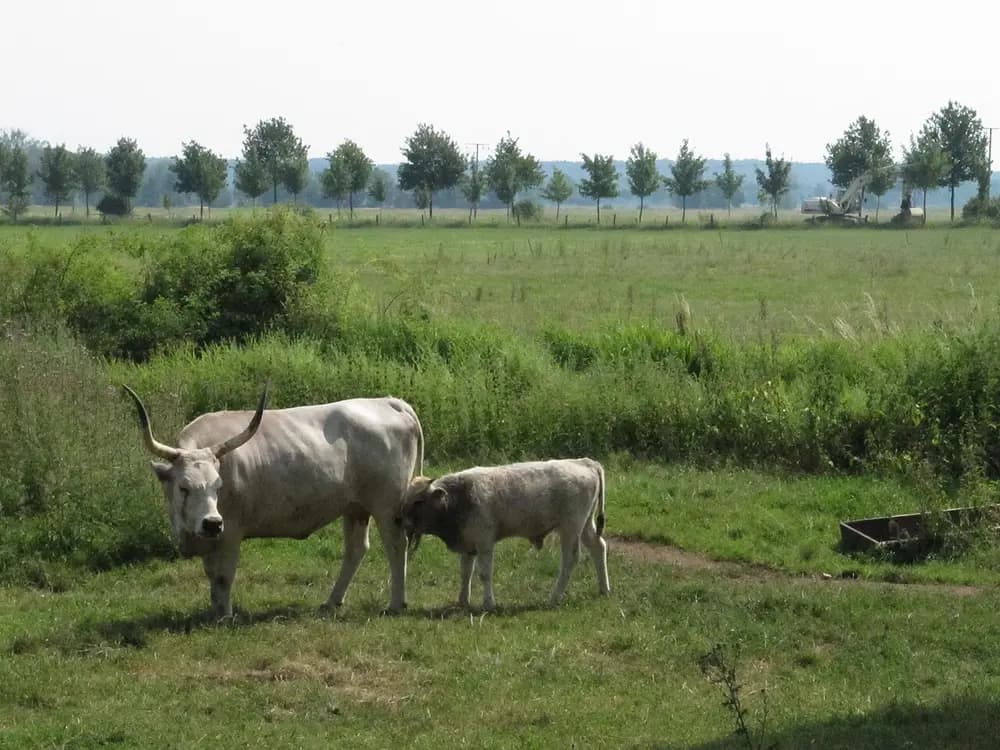
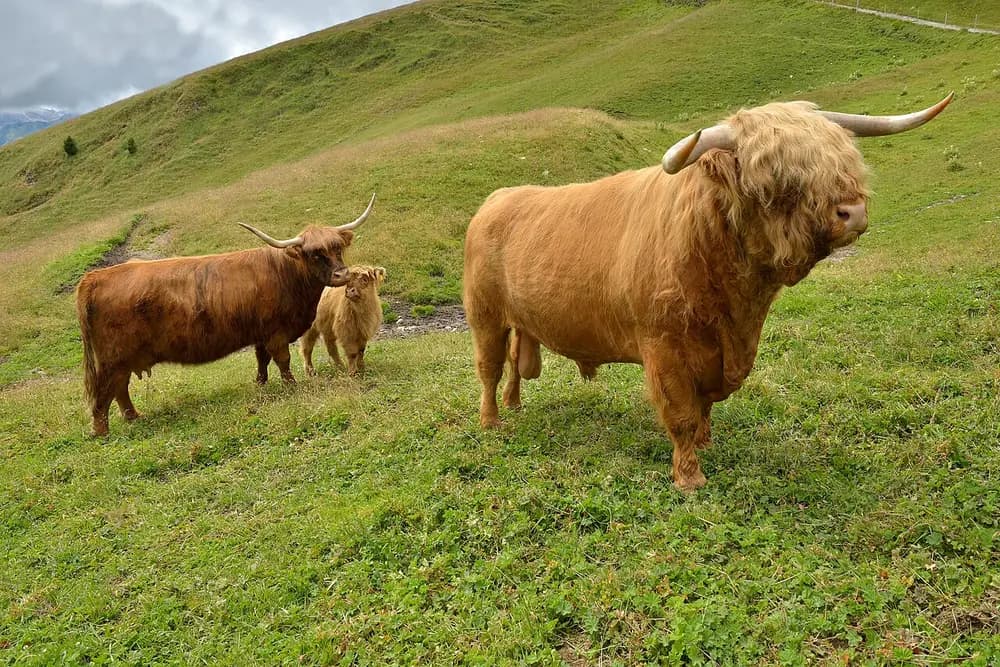
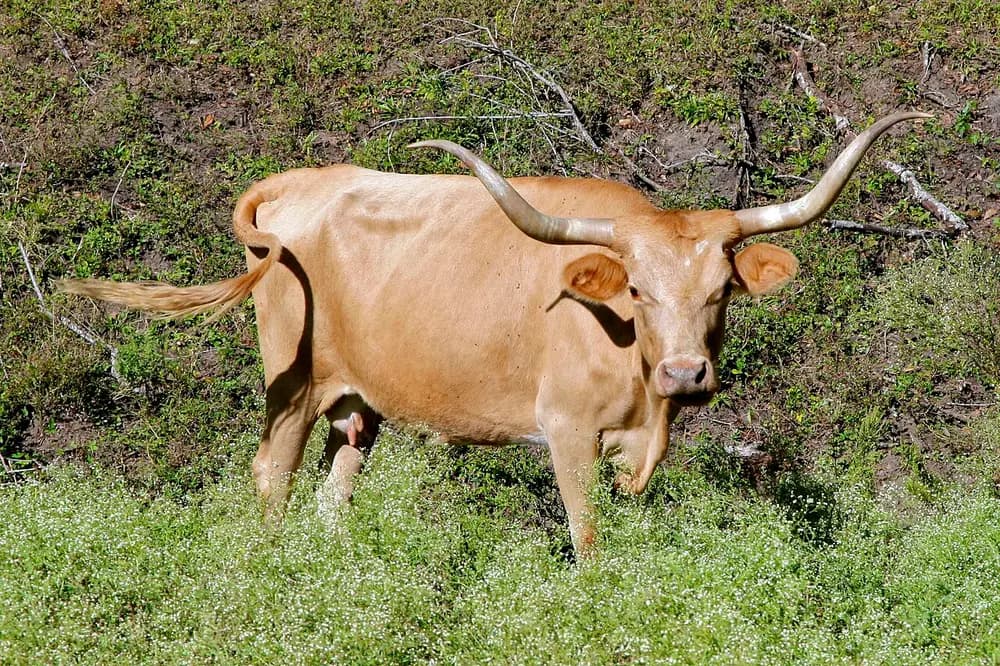
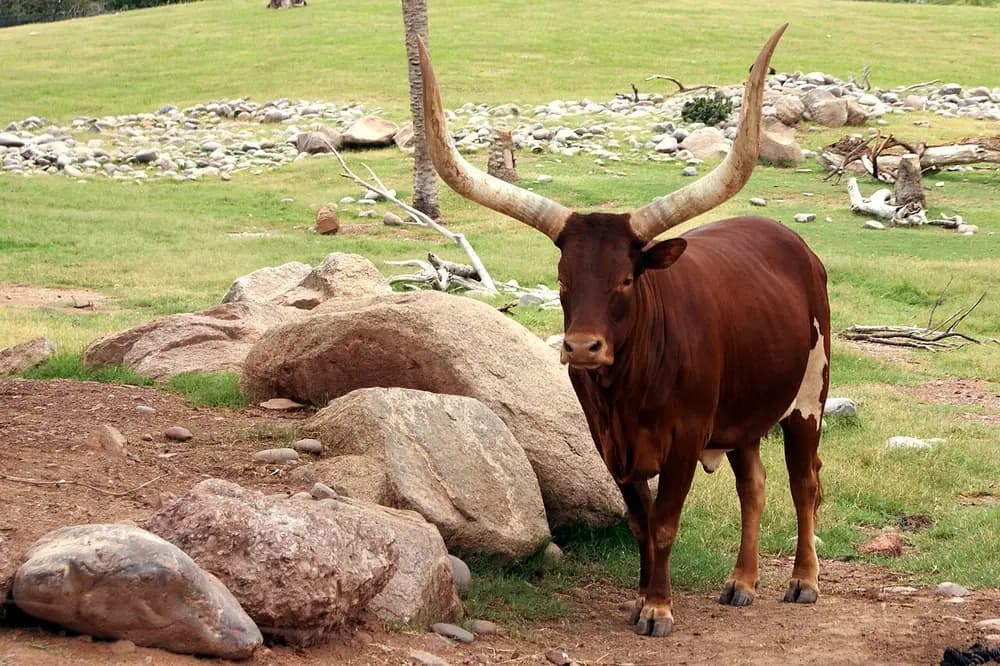
- Where to see one
- 15 U.S. zoos in our directory hold zebu, confirmed against each zoo's own animal list.
- Native range
- Domesticated in South Asia, at Mehrgarh in what is now Pakistan; now raised throughout the tropics
- Size
- Varies widely by breed, from the small miniature zebu kept as a pet to large beef breeds
- Lifespan
- The natural life of domestic cattle is about 25–30 years
- Gestation
- About 285 days on average
- Other names
- Indicine cattle, humped cattle
Conservation status
Not Evaluated
This species has not been assessed for the IUCN Red List, so it sits outside the threat scale entirely.
Not Evaluated (NE); domestic cattle are not assessed on the IUCN Red List
The zebu, also called indicine or humped cattle, is a species or subspecies of domestic cattle that originated in South Asia. It differs from taurine cattle in its fatty hump on the shoulders, large dewlap and sometimes drooping ears, and it is well adapted to high temperatures and raised throughout the tropics. Zebu cattle descend from the Indian aurochs and were domesticated between 6,000 and 7,000 years ago at Mehrgarh in what is now northwestern Pakistan. They serve as draught and riding animals, as dairy and beef cattle, and for hides and dung used as fuel and manure. Some breeds have significant religious meaning in certain regions.
About the zebu
The zebu (Bos indicus) is a type of domestic cattle that originated in South Asia, recognized by the fatty hump over its shoulders, a large dewlap and often drooping ears. Treated as either its own species or a subspecies of domestic cattle, it is adapted to heat and raised across the world's tropics.
Like all domestic cattle, the zebu descends from the extinct wild aurochs. That wild ox is thought to have split into two genetic strains, the humped zebu and the humpless taurine cattle of Europe and northern Asia. Taxonomists have gone back and forth on its rank: Juliet Clutton-Brock treated the zebu as a distinct species in 1999, several authors classified it as a subspecies, Bos taurus indicus, in the mid-2000s, and Colin Groves and Peter Grubb returned it to full species in 2011. The American Society of Mammalogists places it within Bos taurus.
Three features set the zebu apart from taurine cattle. The first is the hump on the shoulders, a fatty structure it shares with many of Africa's Sanga cattle breeds. The second is a large dewlap, the loose fold of skin hanging under the neck. The third is ears that are frequently long and drooping.
Size depends heavily on breed. About 75 zebu breeds are known, split roughly evenly between African and Indian types. At one end are small breeds such as the miniature zebu, which are kept as pets. At the other are big working and beef animals: one of the two gray bulls brought from India to Texas in 1885 to found the American Brahman breed weighed over 800 kg (1,760 lb).
Behavior and diet
Diet
Grazer; grasses and other forage, digested as a ruminant
Zebu are grazing animals and, like all cattle, ruminants. Their digestive system is specialized for breaking down grass rich in cellulose, a tough material many animals cannot digest. Cattle have one large stomach with four compartments: the rumen, reticulum, omasum and abomasum. They swallow food quickly while feeding, store it in the rumen, then bring it back up and chew it again as cud.
The zebu's great strength is coping with conditions that wear down other cattle. Compared with taurine breeds, it tolerates drought, heat and strong sun better, and it is considered resilient to parasites. The American Brahman, built largely from zebu stock, is noted for tolerating heat, humidity, insects and poor feed. One weakness is nagana, a disease to which the zebu shows no natural tolerance.
Zebu mothers stay closely bonded to their calves. Studies of natural weaning found that cows wean a calf over about two weeks, but keep choosing that offspring as a grooming and grazing partner for at least four to five years afterward.
Zebu cows are generally ready to give birth at about 29 months, when their bodies can handle pregnancy and nursing; calving too early can strain the cow and may shorten her life. Gestation averages 285 days, varying with the mother's age and nutrition, and male calves are carried slightly longer than females. Milk production is typically low and starts late, which is one reason zebu are often crossed with taurine cattle.
Range and habitat
Habitat
Farms and rangeland, especially in hot tropical savanna and steppe climates
Zebu cattle were domesticated from the Indian aurochs between 6,000 and 7,000 years ago at Mehrgarh, in northwestern Pakistan, with possible later domestication events elsewhere in South Asia. The wild Indian aurochs died out during the Indus Valley Civilisation, probably from habitat loss and interbreeding with domestic zebu.
From South Asia, humped cattle spread widely. They appear in Egypt's Middle Kingdom around 4,000 years ago, reached sub-Saharan Africa after 700 AD and the Horn of Africa around 1000 AD. Today zebu are very common across Pakistan, India, Nepal, Bangladesh and southern China, while taurine cattle dominate in Japan, Korea, northern China and Mongolia. In Madagascar, zebu outnumber people.
The Americas took to zebu in a big way. Brazil began importing them in the early 20th century, and from the 1960s the Nelore, a zebu breed derived from Ongole cattle, became the country's main cattle breed. More than 80% of Brazil's beef cattle, roughly 167 million animals, are purebred or hybrid Ongole cattle.
In the United States, a single Indian bull reached South Carolina in 1849, and more zebu arrived in Texas from 1885, some originally as circus animals. Crossed with local cattle, they produced the American Brahman, which does well in the southern coastal U.S. The Brahman is now reported from 55 countries and is the most numerous cattle breed in Australia.
Zebu vs taurine cattle
European cattle descend largely from the taurine line, so next to them the zebu's hump and loose skin stand out. The two types interbreed freely, and many modern breeds are hybrids.
| Feature | Zebu (indicine) | Taurine cattle |
|---|---|---|
| Hump | Fatty hump over the shoulders | No hump |
| Dewlap and ears | Large dewlap; ears often drooping | Smaller dewlap |
| Place of domestication | Pakistan (Mehrgarh) | Central Anatolia, the Levant and western Iran |
| Climate strengths | High tolerance of drought, heat and sun | Widespread in Europe and temperate parts of Asia, the Americas and Australia |
| Milk | Typically low production | Crossing zebu with taurine cattle generally raises milk yield |
Sanga cattle of Africa, including the Ankole and Boran, are thought to come from crosses between zebu and taurine cattle, and American hybrid breeds such as the Brangus and Brahmousin descend from the Brahman.
Conservation status
The zebu is a domestic animal, so it is not assessed on the IUCN Red List. Its wild ancestor, the aurochs, is extinct; the Indian aurochs, the form zebu came from, was the first of the three aurochs subspecies to die out, with its latest remains dated to about 3,800 years ago.
As a domestic type, the zebu is far from rare. It is common across much of Asia, central to cattle ranching in Brazil, and spread through Africa and Australia. Some breeds are quite local, such as the Hariana of Haryana or the Rath of Rajasthan's Alwar district.
Where to see zebu in the U.S.
15 zoos across 11 states
Find the closest one
Rank the 11 zoos holding zebu by how far they are from you. Your location is used in your browser to sort this list and is never sent to us.
4 more zoos hold zebu but have no coordinates on file yet, so they aren't ranked here. They're in the full list below.
Florida· 2
Georgia· 1
Illinois· 1
Kansas· 1
Louisiana· 1
Maryland· 1
New York· 2
North Carolina· 2
Pennsylvania· 1
Virginia· 2
Washington· 1
AZAThe Association of Zoos and Aquariums. Accredited members have passed an independent inspection of animal care and welfare, safety, conservation and education, repeated every five years. Many smaller facilities never apply, so “not accredited” isn't a verdict on its own. What accreditation means · How we check this
Built from each zoo's own published animal list.
Zebu: common questions
What is a zebu?
A zebu is a humped type of domestic cattle from South Asia, known scientifically as Bos indicus. It has a shoulder hump, a large dewlap and drooping ears, and it handles heat better than European cattle.
What is the hump on a zebu for?
The hump is a fatty structure over the shoulders. It is one of the traits that distinguish zebu, along with many Sanga cattle, from humpless taurine cattle.
How big do zebu get?
It depends on the breed. Miniature zebu are small enough to be kept as pets, while one of the two bulls that founded the American Brahman breed weighed over 800 kg (1,760 lb).
What do zebu eat?
Grass and other forage. Like all cattle, zebu are ruminants with a four-compartment stomach and chew their cud.
How long do zebu live?
The natural life of domestic cattle, including zebu, is about 25 to 30 years.
Are zebu used for milk?
Sometimes, but zebu cows usually produce little milk and start late, so they are often crossed with taurine cattle to increase yield. They are mainly used for draught work, riding, beef, hides and dung.
Can you keep a zebu as a pet?
Yes. Small breeds such as the miniature zebu are kept as pets.