- Where to see one
- 8 U.S. zoos in our directory hold horse, confirmed against each zoo's own animal list.
- Origin
- Domesticated on the Western Eurasian steppes, with the lower Volga-Don region pointed to as the homeland of modern horses
- Size
- Light riding horses 142–163 cm (56–64 in) at the withers and 380–550 kg (840–1,210 lb); draft horses up to 183 cm (72 in) and 700–1,000 kg (1,540–2,200 lb)
- Lifespan
- 25–30 years; a few live into their 40s
- Gestation
- About 340 days, usually one foal
- Top speed
- Gallop averages 40–48 km/h (25–30 mph); sprint record 70.76 km/h (43.97 mph)
Conservation status
Not Evaluated
This species has not been assessed for the IUCN Red List, so it sits outside the threat scale entirely.
Not Evaluated (NE); domestic animals are not assessed on the IUCN Red List
The horse is a domesticated, one-toed, hoofed mammal of the family Equidae, with more than 300 breeds developed for many different uses. Humans began domesticating horses around 4000 BCE in Central Asia, and domestication is believed to have been widespread by 3000 BCE. Horses are herbivores with a digestive system adapted to a forage diet of grasses and other plants eaten steadily through the day. As prey animals, they have one of the largest eyes of any land mammal, set on the sides of the head for a range of vision of more than 350 degrees. They can sleep both standing and lying down, and a foal can stand and run shortly after birth.
About the horse
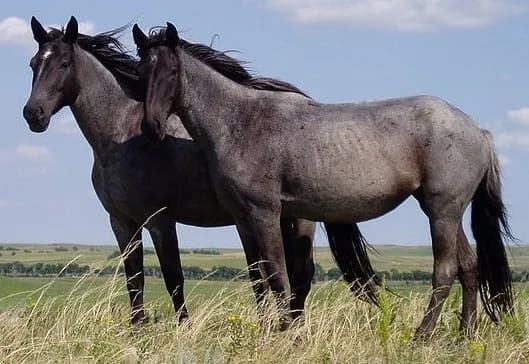
The horse is a domesticated, one-toed hoofed mammal of the family Equidae, a subspecies of Equus ferus alongside the wild Przewalski's horse. Its relatives in the genus Equus include donkeys and zebras. Domesticated on the Eurasian steppes thousands of years ago, it now lives worldwide, with more than 300 breeds and feral herds in many parts of the world.
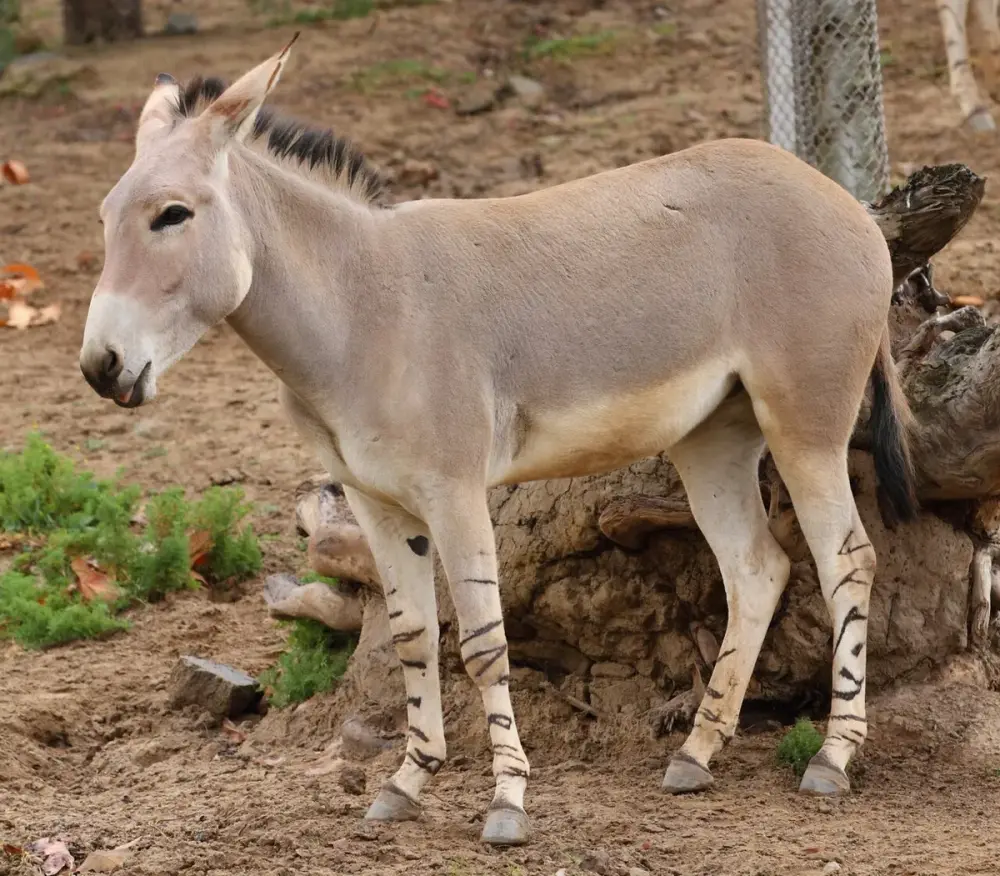
Its scientific name is Equus ferus caballus. Horses belong to the odd-toed ungulates, order Perissodactyla, whose only other surviving families are the tapirs and the rhinoceroses. Besides the horse, the genus Equus holds six species: the donkey, the mountain, plains and Grévy's zebras, the kiang and the onager. Horses can crossbreed with them. A mule is a male donkey crossed with a mare, a hinny is a stallion crossed with a female donkey, and almost all such hybrids are sterile.
The horse's family tree reaches back 45 to 55 million years to a small, multi-toed ancestor in North America. Over time the side toes shrank and vanished, leaving only the small splint bones on the lower leg, while the legs lengthened for speed. Modern Equus had evolved by about 5 million years ago and spread from North America into the Old World, but horses died out in North America between 10,000 and 7,600 years ago.
Body and senses
A horse's skeleton averages 205 bones and has no collarbone; the front legs are attached to the body by muscle, tendon and ligament. There are no muscles below the knees and hocks, and the hoof wall is made of keratin, the same material as a fingernail. Inside, each hoof is built around the equivalent of a human fingertip or the tip of a toe. Hooves keep growing and on most domestic horses need trimming every five to eight weeks.
The equine eye is one of the largest of any land mammal. Set on the sides of the head, the eyes give a field of view of more than 350°, and horses see well by day and night, though their color vision resembles red-green color blindness. Each ear can rotate 180°, and touch is sensitive enough to feel an insect land anywhere on the body. Adult horses have 12 incisors for biting grass and 24 cheek teeth for grinding, and because the teeth wear in a pattern, they can give a rough idea of a horse's age.
Behavior and diet
Diet
Herbivore; grass and other forage, about 7–11 kg (15–24 lb) of food a day for a 450 kg (990 lb) horse
Horses are prey animals with a strong fight-or-flight response. Their first reaction to a threat is to startle and usually run, but they are also curious and often pause a moment to check what frightened them. They will stand and fight when they cannot flee or when a foal is in danger.
They are herd animals with a clear ranking, usually led by a dominant mare. Horses bond with other horses, with other species and with people, and they communicate by nickering and whinnying, mutual grooming and body language. Kept alone or without enough exercise and stimulation, a horse may develop stable vices such as wood chewing, wall kicking or weaving, a rocking back and forth.
Sleeping standing up
A horse can doze on its feet using a "stay apparatus" in its legs that keeps it from collapsing. Sleep comes in many short bouts, often about 15 minutes each, averaging 2.9 hours a day for a domestic horse. Horses must lie down for deep REM sleep, but only need an hour or two every few days. They sleep better in groups, where some animals keep watch while others rest.
What horses eat
Horses are grazing herbivores built to eat grass and other forage steadily through the day. They have a single, relatively small stomach and very long intestines, and they digest cellulose by hindgut fermentation, with microbes in the cecum and large intestine doing the work. A 450 kg (990 lb) horse eats 7 to 11 kg (15 to 24 lb) of food a day and drinks 38 to 45 liters (10 to 12 U.S. gallons) of water. Horses cannot vomit, so digestive trouble can quickly become colic, a leading cause of death.
Gaits and speed
Every horse has four natural gaits. The walk averages 6.4 km/h (4 mph), the trot 13 to 19 km/h (8 to 12 mph), the canter 19 to 24 km/h (12 to 15 mph) and the gallop 40 to 48 km/h (25 to 30 mph). The sprint record is 70.76 km/h (43.97 mph). Some breeds, known as gaited horses, replace the trot with smooth four-beat ambling gaits such as the running walk or tölt.
Foals
Mares carry a foal for about 340 days, usually one at a time; twins are rare. Foals are born mostly in spring and can stand and run soon after birth. They are usually weaned at four to six months. Most horses start training under saddle between two and four years old and reach full adult development by about five. A foal is a horse under one year old, a colt a male and a filly a female under four, a mare a female four or older, and a stallion an uncastrated male four or older.
Range and habitat
Habitat
Raised worldwide on pasture, ranches and farms; feral herds live wild in many countries
Horses were adapted to wide-open country with sparse vegetation. Domestication began on the Eurasian steppes. Early horses were domesticated by the Botai culture of Central Asia around 4000 BCE, but genetic evidence shows those were Przewalski's horses and not the ancestors of today's breeds. Instead, the lower Volga-Don region of the Western Eurasian steppes is pointed to as the homeland of modern domestic horses, which spread rapidly across Eurasia from about 2000 BCE.
Today horses are raised almost everywhere people are. The Food and Agriculture Organization estimated almost 59 million horses in the world in 2008, about 33.5 million of them in the Americas, with an estimated 9.5 million in the United States alone. Feral horses, descended from domestic stock but born and living wild, are found in many parts of the world, and semi-feral, privately owned herds roam places such as Dartmoor and the New Forest in Britain.
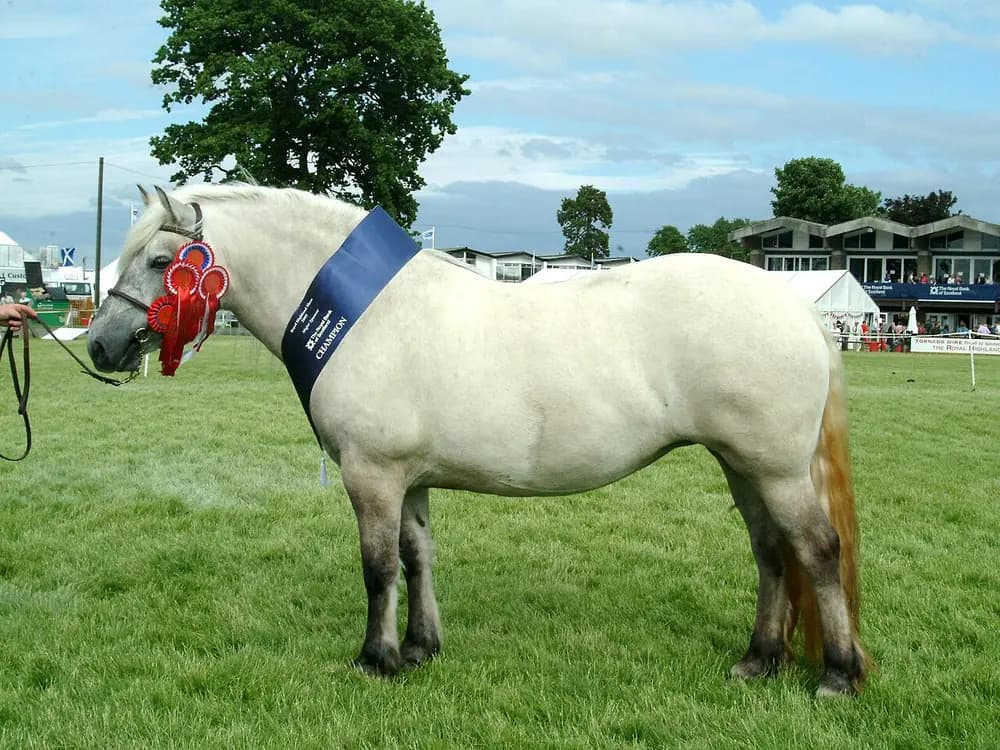
Breeds are grouped by temperament. "Hot-bloods" such as the Arabian and Thoroughbred are spirited and fast, "cold-bloods" such as the Belgian, Clydesdale and Shire are calm, heavy draft horses, and "warmbloods" such as the Hanoverian are crosses bred mainly for riding sport. At the small end are ponies and miniature horses.
Horse vs pony vs miniature horse
Ponies and horses are the same animal taxonomically, and the line between them is drawn mostly by height and build.
| Feature | Horse | Pony | Miniature horse |
|---|---|---|---|
| Typical height | 14.2 hands, 147 cm (58 in), or taller | Under 14.2 hands, 147 cm (58 in) | No taller than 76 cm (30 in) in breeds such as the Falabella |
| Build | Varies widely by breed | Thicker mane, tail and coat; shorter legs, wider barrel, heavier bone | Very small; includes the Falabella |
| Classification | Horse; some breeds count every animal as a horse, whatever its height | Pony; in some pony breeds an individual that tops 14.2 hands is still a pony | Registries class it as a very small horse, not a pony |
Conservation status
The domestic horse is not evaluated on the IUCN Red List because domestic animals are not assessed there. With almost 59 million horses estimated worldwide in 2008, the animal is anything but rare.
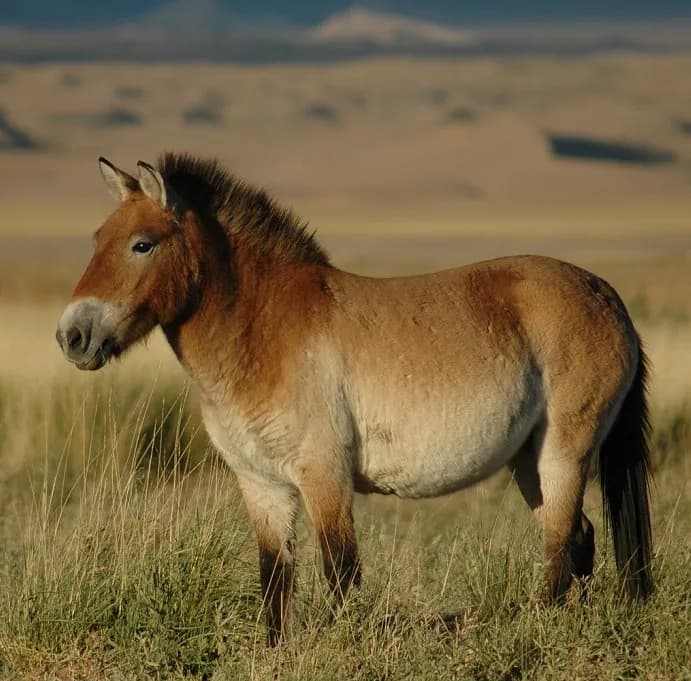
A truly wild horse is one whose ancestors were never domesticated, so most "wild" horses today are feral horses, not wild ones in that sense. Only two wild forms survived into recorded history. The tarpan of Europe went extinct in 1909 when the last captive died. The Przewalski's horse of Mongolia was presumed extinct in the wild from 1969 until 1992, when conservation breeding reestablished it there, and a small wild breeding population now lives in Mongolia.
Where to see horse in the U.S.
8 zoos across 7 states
Find the closest one
Rank the 6 zoos holding horse by how far they are from you. Your location is used in your browser to sort this list and is never sent to us.
2 more zoos hold horse but have no coordinates on file yet, so they aren't ranked here. They're in the full list below.
Alaska· 1
Iowa· 1
Minnesota· 1
New Jersey· 1
South Dakota· 1
Virginia· 2
Wisconsin· 1
AZAThe Association of Zoos and Aquariums. Accredited members have passed an independent inspection of animal care and welfare, safety, conservation and education, repeated every five years. Many smaller facilities never apply, so “not accredited” isn't a verdict on its own. What accreditation means · How we check this
Built from each zoo's own published animal list.
Horse: common questions
How long do horses live?
Usually 25 to 30 years, depending on breed, care and environment. A few live into their 40s, and the oldest verified horse, Old Billy, reached 62.
How big do horses get?
Light riding horses stand 142 to 163 cm (56 to 64 in) at the withers and weigh 380 to 550 kg (840 to 1,210 lb). Draft horses can reach 183 cm (72 in) and 700 to 1,000 kg (1,540 to 2,200 lb).
What do horses eat?
Grass and other forage, eaten steadily through the day. A 450 kg (990 lb) horse eats 7 to 11 kg (15 to 24 lb) of food and drinks 38 to 45 liters (10 to 12 gallons) of water daily.
Do horses sleep standing up?
Yes, for light sleep. A "stay apparatus" in the legs lets them doze without falling, but they must lie down to get REM sleep.
How fast can a horse run?
A gallop averages 40 to 48 km/h (25 to 30 mph). The sprint record is 70.76 km/h (43.97 mph).
What is the difference between a horse and a pony?
Mostly height and build. A pony is usually under 14.2 hands (147 cm, 58 in) and has a thicker coat, shorter legs and heavier bone, though breed registries make exceptions.
Are there still wild horses?
Only one truly wild horse survives: the Przewalski's horse of Mongolia, though some genetic studies question even its wild status. Most free-living herds elsewhere are feral horses descended from domestic animals.
How many horse breeds are there?
More than 300 worldwide, developed for riding, racing, farm work, driving and companionship.