
Waterfowl in U.S. zoos
Waterfowl are the bird order Anseriformes: about 178 species of ducks, geese, swans, the magpie goose and the South American screamers. Most have webbed feet, water-shedding plumage and flattened bills lined with serrated plates. They live on every continent except Antarctica, and a number of species migrate each year.
Most widely held
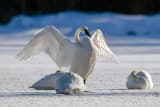 Trumpeter SwanCygnus buccinatorAt 20 zoos · Least Concern
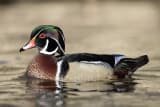 Wood DuckAix sponsaAt 17 zoos · Least Concern
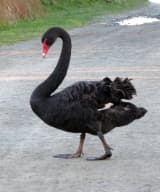 Black SwanCygnus atratusAt 16 zoos · Least Concern
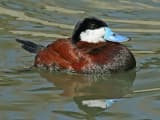 Ruddy DuckOxyura jamaicensisAt 16 zoos · Least Concern
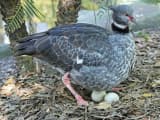 Southern ScreamerChauna torquataAt 16 zoos · Least Concern
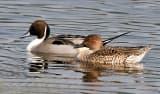 Northern PintailAnas acutaAt 15 zoos · Least Concern
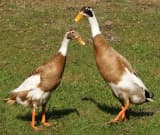 DuckAnas platyrhynchos domesticusAt 14 zoos
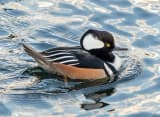 Hooded MerganserLophodytes cucullatusAt 14 zoos · Least Concern
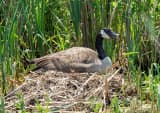 Canada GooseBranta canadensisAt 12 zoos · Least Concern
 White-faced Whistling DuckDendrocygna viduataAt 12 zoos · Least Concern
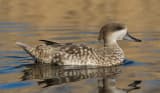 Marbled TealMarmaronetta angustirostrisAt 10 zoos · Near Threatened
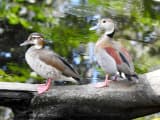 Ringed TealCallonetta leucophrysAt 10 zoos · Least Concern
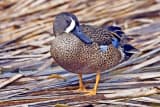 Blue-winged TealSpatula discorsAt 9 zoos · Least Concern
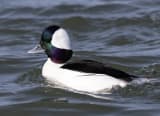 BuffleheadBucephala albeolaAt 9 zoos · Least Concern
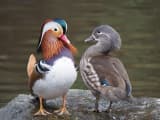 Mandarin DuckAix galericulataAt 9 zoos · Least Concern
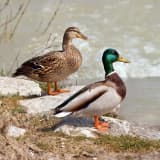 MallardAnas platyrhynchosAt 8 zoos · Least Concern
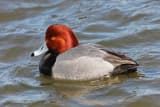 RedheadAythya americanaAt 8 zoos · Least Concern
 Black-bellied Whistling DuckDendrocygna autumnalisAt 7 zoos · Least Concern
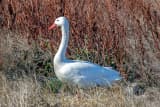 Coscoroba SwanCoscoroba coscorobaAt 7 zoos · Least Concern
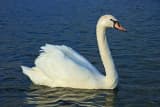 Mute SwanCygnus olorAt 7 zoos · Least Concern
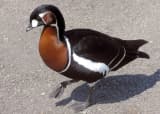 Red-breasted GooseBranta ruficollisAt 7 zoos · Vulnerable
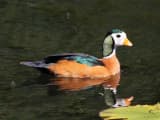 African Pygmy GooseNettapus auritusAt 6 zoos · Least Concern
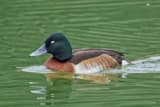 Baer's PochardAythya baeriAt 6 zoos · Critically Endangered
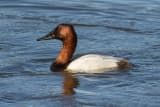 CanvasbackAythya valisineriaAt 6 zoos · Least Concern
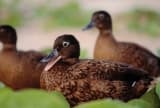 Laysan DuckAnas laysanensisAt 6 zoos · Critically Endangered
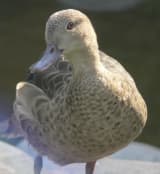 Madagascar TealAnas bernieriAt 6 zoos · Endangered
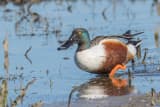 Northern ShovelerSpatula clypeataAt 6 zoos · Least Concern
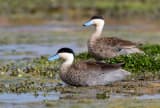 Puna TealSpatula punaAt 6 zoos · Least Concern
What makes a waterfowl
Ducks, geese and swans make up the family Anatidae, around 174 species found on every continent except Antarctica. With the magpie goose and three species of screamers, they form the order Anseriformes, one of only two modern bird groups confirmed to have lived alongside the dinosaurs. The southern screamer looks little like a duck, but genetics confirms it is a close relative of geese.
Most waterfowl are built for life on the water surface. Their short, strong legs sit far back on the body, their feet are webbed and special oils make their feathers shed water. The bill is covered in soft, sensitive skin and lined with serrated plates, the lamellae, which are especially well developed in filter-feeders. Sizes range from the cotton pygmy goose, as light as 164 g (5.8 oz), to the trumpeter swan, at up to 17.2 kg (38 lb).
Dabblers, divers, geese and swans
The easiest way to sort ducks is by how they feed. Dabbling ducks, such as the mallard, tip forward to graze plants just under the surface and only rarely dive. The mallard is also the wild ancestor of almost every domestic duck breed. Diving ducks, the pochards and scaups, go fully under; the canvasback can dive more than 9 m (30 ft) deep. Mergansers, such as the hooded merganser, hunt fish underwater with serrated bills.
In many ducks the males are far brighter than the females, as in the mandarin duck and the wood duck, both of which nest in tree holes. Swans, geese and whistling-ducks lack this difference, so males and females look alike. The black swan has the longest neck, relative to its body, of any swan.
Pair bonds vary too. Many small ducks pair for a single season, while swans, geese and some territorial ducks stay together for years. Ducklings and goslings hatch able to feed themselves.
Island ducks and recovery stories
Five duck species have been driven extinct by humans since 1600, most of them island birds with small populations and no fear of predators. Many more are threatened today, and a few species have been domesticated while many others are hunted.
The Laysan duck shows how close an island species can come: by 1912 only twelve birds remained after rabbits stripped their island. It is still Critically Endangered, as is Baer's pochard, an Asian diving duck that may be down to fewer than 1,000 adults. The trumpeter swan fell to fewer than 70 known wild birds by 1933, and reintroduction work has since helped the wild population pass 46,000.
Common questions
What birds are waterfowl?
Waterfowl are ducks, geese and swans (the family Anatidae), plus the magpie goose and the three species of screamers. Together they form the order Anseriformes, with about 178 living species.
What is the largest waterfowl?
The trumpeter swan is the largest living waterfowl, reaching up to 183 cm (6 ft) long and 17.2 kg (38 lb). The smallest is the cotton pygmy goose, at as little as 164 g (5.8 oz).
What is the difference between a dabbling duck and a diving duck?
Dabbling ducks, such as the mallard and teals, feed at the surface by tipping forward to reach plants underwater and rarely dive. Diving ducks, such as pochards and the canvasback, feed by diving beneath the surface.
Do ducks, geese and swans mate for life?
Some do. Many small ducks keep a pair bond for only one season, while larger swans and geese and some territorial ducks stay together for years, in some species for life.
Why are male ducks more colorful than females?
Many ducks show sexual dimorphism, with brighter males, though in a few species such as the paradise shelduck the reverse is true. Swans, geese and whistling-ducks look the same in both sexes.
What do waterfowl eat?
Most adult waterfowl are herbivores that eat water plants, though some also take fish, molluscs or aquatic invertebrates. Mergansers are mainly fish-eaters, with serrated bills for gripping prey.
Are screamers waterfowl?
Yes. Screamers were once thought to be related to pheasants and chickens, but genetic studies confirm they are close relatives of geese within the order Anseriformes.
Sources
Last reviewed