- Where to see one
- 20 U.S. zoos in our directory hold trumpeter swan, confirmed against each zoo's own animal list.
- Native range
- North America
- Size
- Adults typically 138–165 cm (4 ft 6 in – 5 ft 5 in) long; wingspan 185–304.8 cm (6 ft 2 in – 10 ft 2 in); weight 7–13.6 kg (15–30 lb)
- Lifespan
- Up to 33 years in captivity; at least 24 years in the wild
About the trumpeter swan
The trumpeter swan is a species of swan found in North America and is the largest extant species of waterfowl in the world. It is also the heaviest bird native to North America and one of the heaviest living animals capable of flight. It is the American counterpart of the whooper swan of Eurasia, and the two have even been considered the same species by some authorities. Adults are entirely white, while cygnets have light grey plumage and pinkish legs, only gaining full white adult plumage after about a year.
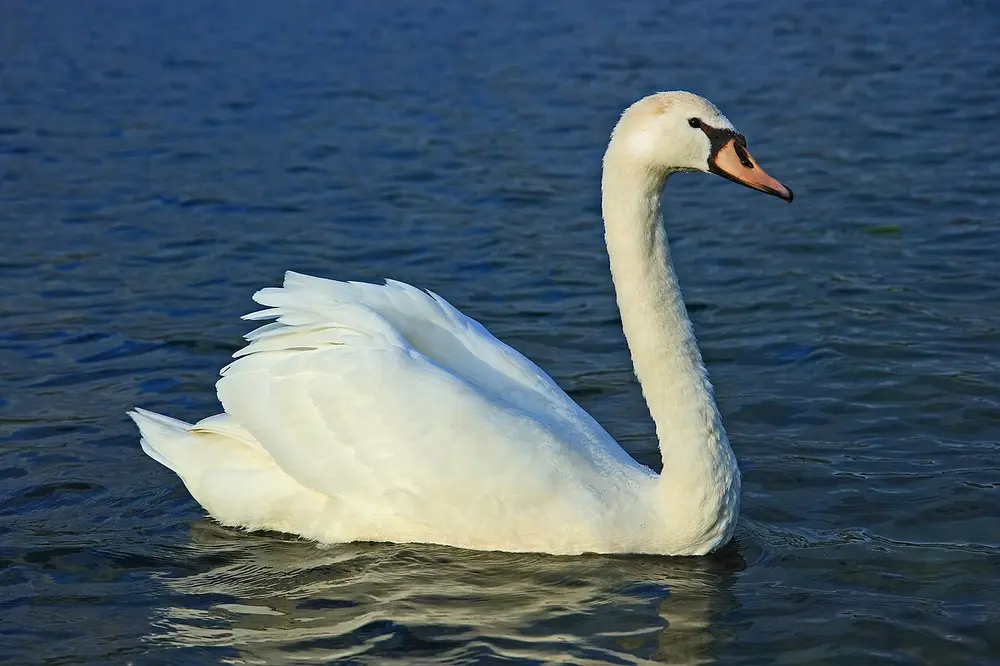
Adults typically measure 138–165 cm (4 ft 6 in – 5 ft 5 in) long, with large males sometimes exceeding 180 cm (5 ft 11 in). Weight for adult birds runs 7–13.6 kg (15–30 lb), with average weights in males reported between 10.9 and 12.7 kg (24–28 lb) and in females between 9.4 and 10.3 kg (21–23 lb). The wingspan ranges from 185 to 304.8 cm (6 ft to 10 ft), and the largest known male reached a length of 183 cm (6 ft), a wingspan of 3.1 m (10 ft 2 in), and a weight of 17.2 kg (38 lb). The trumpeter swan has a large, wedge-shaped black bill measuring 10.5–12 cm (4.1–4.7 in), up to twice the length of a Canada goose's bill, and it is the largest bill of any waterfowl species. Legs are gray-pink, though they can appear yellowish gray to nearly black in some birds. Like the whooper swan, the trumpeter holds an upright posture and swims with a straight neck, distinguishing it from the mute swan, which curves its neck and has an orange bill rather than a black one.
By 1933, fewer than 70 wild trumpeter swans were known to survive, and extinction seemed imminent until aerial surveys found a Pacific population of several thousand birds around Alaska's Copper River. Careful reintroductions by wildlife agencies and the Trumpeter Swan Society gradually rebuilt the North American wild population to over 46,000 birds by 2010, up from about 3,722 in 1968.
Behavior and diet
Diet
Almost entirely aquatic plants, occasionally insects; also grasses and grains in winter
Trumpeter swans feed while swimming, sometimes up-ending or dabbling to reach submerged vegetation, and they will dig into muddy underwater substrates to extract roots and tubers. Their diet is almost entirely aquatic plants, both leaves and stems, occasionally supplemented with insects; in winter they may also eat grasses and grains in fields. They often feed both day and night, with feeding activity and body weight typically peaking in spring as they prepare for the breeding season. Cygnets start out eating insects, small fish, fish eggs, and small crustaceans for extra protein before shifting to a plant-based diet over their first few months.
Trumpeter swans generally mate for life, with both parents helping raise young, though the female does most of the incubating. Most pairs form between five and seven years of age, though some don't pair until nearly 20. Courtship includes several ritualized displays: males pursue females non-aggressively, and when a female allows the approach, the pair touches breasts together while the male raises his neck feathers and points his bill down. Other courtship behaviors include spreading and raising wings, quivering wing motions, head bobbing, and the trumpeting calls that give the species its name, including a synchronized "duet" call performed by mated pairs near breeding season. Nest construction, once a pair connects in late April, takes 11 to 35 days.
When eggs or young are threatened, parents first display aggressively with head bobbing and hissing, and if that fails, they will physically fight a predator by battering it with their powerful wings — even fending off animals as large as coyotes. Predation of adults away from the nest is otherwise rare. Young trumpeter swans face long odds, with as little as a 40% survival chance due to human disturbance, predation, nest flooding, and starvation, though in some areas breeding success is much higher. Adult mortality is low, with an annual survival rate of 80–100% absent hunting. Captive trumpeter swans have lived to 33 years, and wild individuals have lived to at least 24.
Range and habitat
Habitat
Large shallow ponds, undisturbed lakes, pristine wetlands, wide slow rivers, and marshes in northwestern and central North America
The trumpeter swan's breeding habitat spans large and shallow ponds, undisturbed lakes, pristine wetlands, wide and slow rivers, and marshes across northwestern and central North America, with the largest numbers of breeding pairs found in Alaska. The birds prefer nesting sites with enough open water for takeoff, reliable food, shallow unpolluted water, and minimal human disturbance. Natural populations migrate in V-shaped flocks to and from the Pacific coast and parts of the United States, while populations established through reintroduction are mostly non-migratory.
In winter, trumpeter swans move to the southern tier of Canada, the eastern part of the northwest United States — especially the Red Rock Lakes area of Montana — and the northern Puget Sound region of Washington, with migratory birds occasionally seen as far south as Pagosa Springs, Colorado. Historically the range extended as far south as Texas and southern California, and the species is now considered extirpated from Mexico. Since 1992, trumpeter swans have appeared each November through February at Magness Lake near Heber Springs, Arkansas, and in 2017 a juvenile took up residence on the French Broad River in Asheville, North Carolina — the first such sighting in that part of the state. Non-migratory birds have also been introduced to parts of Oregon through programs such as the Oregon Trumpeter Swan Program, intended to draw birdwatchers, though these introductions have also drawn criticism.
Conservation status
The trumpeter swan is classified as Least Concern (LC). Its history, though, includes a genuine brush with extinction: by 1933 fewer than 70 wild individuals were known, and only the discovery of a Pacific population of several thousand near Alaska's Copper River kept the species from disappearing. Reintroduction efforts led by wildlife agencies and the Trumpeter Swan Society have since restored the wild population to more than 46,000 birds as of 2010. Ongoing pressures named here include human disturbance, hunting, and predation, particularly of eggs and cygnets by species such as ravens, raccoons, wolverines, bears, coyotes, wolves, and pumas, though nest placement on islands or floating vegetation offers young swans some protection.
Where to see trumpeter swan in the U.S.
20 zoos across 13 states
Find the closest one
Rank the 19 zoos holding trumpeter swan by how far they are from you. Your location is used in your browser to sort this list and is never sent to us.
1 more zoo holds trumpeter swan but has no coordinates on file yet, so it isn't ranked here. It's in the full list below.
California· 1
Connecticut· 1
Illinois· 1
Kansas· 3
Maryland· 1
Massachusetts· 2
Minnesota· 1
Missouri· 1
New York· 1
Ohio· 3
Oklahoma· 1
Tennessee· 2
Wisconsin· 2
AZAThe Association of Zoos and Aquariums. Accredited members have passed an independent inspection of animal care and welfare, safety, conservation and education, repeated every five years. Many smaller facilities never apply, so “not accredited” isn't a verdict on its own. What accreditation means · How we check this
Built from each zoo's own published animal list.
Trumpeter Swan: common questions
Is the trumpeter swan endangered?
No. It is currently listed as Least Concern, though the wild population fell below 70 birds in 1933 before conservation efforts rebuilt it to over 46,000 by 2010.
How big does a trumpeter swan get?
Adults typically measure 138–165 cm (4 ft 6 in – 5 ft 5 in) long and weigh 7–13.6 kg (15–30 lb), with a wingspan up to 304.8 cm (10 ft 2 in), making it the heaviest bird native to North America.
What does a trumpeter swan eat?
Almost entirely aquatic plants — leaves, stems, roots, and tubers — with occasional insects, and grasses or grains in winter.
How long do trumpeter swans live?
Up to 33 years in captivity and at least 24 years in the wild.
Where do trumpeter swans live in the wild?
Across northwestern and central North America, breeding on shallow ponds, lakes, and wetlands, with Alaska hosting the largest numbers of breeding pairs.
Which U.S. zoos have trumpeter swans?
Eleven zoos in our directory, including the Los Angeles Zoo, the Minnesota Zoo, and the Saint Louis Zoo.