- Where to see one
- 6 U.S. zoos in our directory hold canvasback, confirmed against each zoo's own animal list.
- Native range
- North America, breeding from the northern prairies to Alaska and wintering south to Florida and Mexico
- Size
- 48–56 cm (19–22 in) long; wingspan 79–89 cm (31–35 in); 0.86–1.59 kg (1.9–3.5 lb)
- Lifespan
- Oldest known wild bird was 22 years 7 months
- Flight speed
- Up to about 90 km/h (56 mph) airspeed
- Clutch size
- 5 to 11 eggs, incubated 24 to 29 days
Conservation status
Least Concernassessed 2021
IUCN Red List category LC — step 1 of 7.
The canvasback is a diving duck and the largest diving duck in North America. Males have a chestnut-red head and neck, a black breast and a pale body finely patterned like canvas weave, which gave the bird its name. Canvasbacks breed in prairie potholes and marshes ringed with cattails and bulrushes, then migrate to coastal bays and the Lower Mississippi Alluvial Valley. They dive for seeds, tubers, roots, snails and insect larvae, favouring wild celery and sago pondweed. A small number have even crossed the Atlantic and been recorded in England.
About the canvasback
The canvasback is a large North American diving duck in the genus Aythya, the pochards, which also includes the redhead and the scaups. It is the largest diving duck in North America and the largest member of its genus. It breeds in prairie and northern wetlands and winters on bays, lakes and estuaries.
Aythya valisineria was described in 1814. Its species name comes from wild celery, Vallisneria americana, whose winter buds and roots are the duck's favorite food outside the breeding season. The common name comes from early European settlers, who thought the male's back looked like the color and weave of canvas. In French and Spanish, it is simply called the white-backed duck.
Canvasbacks measure 48 to 56 cm (19–22 in) long, with a wingspan of 79 to 89 cm (31–35 in), and weigh 862 to 1,588 g (1.9–3.5 lb). They are about the size of a mallard but heavier and more compact. Males are slightly larger than females.
The shape of the head is the best field mark. A canvasback has a long, sloping profile, with a wedge-shaped head held up on a long, graceful neck. The bill is black, and this sloping profile sets it apart from other ducks.
The male is striking. His head and neck are chestnut red, the breast is black, and the rump and tail are black to blackish brown. The back, sides and belly are white with fine wavy markings, the canvas-like pattern behind the name. His eyes are bright red in spring and duller in winter.
The female is more subdued. Her head and neck are light brown, fading into a darker brown chest, with grayish-brown sides and back. Both sexes have bluish-gray to dark gray legs and feet. Canvasbacks keep their breeding plumage for most of the year.
Behavior and diet
Diet
Mostly aquatic plants, especially wild celery and pondweed tubers, plus snails, clams and insect larvae
Canvasbacks are diurnal, social and migratory. They are strong, efficient swimmers, with legs set far back on the body, and may spend up to 20% of the day swimming. Like other diving ducks, they must run across the water for some distance before taking off. Once airborne, they are among the fastest ducks, reaching about 90 km/h (56 mph) airspeed, and they migrate in loose V-shaped flocks.
These ducks feed mostly by diving. They usually dive 0.5 to 2 m (1.6–6.6 ft) deep but can go deeper than 9 m (30 ft), staying under for 10 to 20 seconds. Large webbed feet power the dive, and the bird uses its wedge-shaped head and bill to probe and dig plant roots and tubers out of the bottom. Outside the breeding season, they often forage in flocks that can number over 1,000 birds, mainly in the morning and evening.
Plants make up most of the diet. Canvasbacks eat seeds, buds, leaves, tubers and roots, with a special taste for wild celery and for the tubers of sago pondweed. At times, sago pondweed tubers make up their entire diet. They also eat snails, clams and insect larvae, including caddisfly, mayfly, damselfly and dragonfly larvae and midges.
The canvasback has shown it can change its menu. When underwater plants declined in Chesapeake Bay, canvasbacks switched to eating Baltic clams, which by the 1970s made up about four-fifths of their diet there. The redhead, which also depends on underwater plants, did not adapt as well.
Canvasbacks are generally quiet, though they give distress calls and a range of coos and rattles during courtship. Pairs form each year, usually in late winter or during spring migration. At the height of courtship, a female may be surrounded by 3 to 8 males performing neck-stretches, head-throws and other displays.
Females often return to the same areas to nest. The bulky nest is built of plants over water in dense cattails, bulrushes or reeds, lined with down. A clutch holds 5 to 11 greenish-drab eggs, incubated for 24 to 29 days. Ducklings can swim and feed soon after hatching and fledge at 56 to 68 days. Canvasbacks sometimes lay eggs in each other's nests, and redheads often lay theirs in canvasback nests.
Raccoons, striped skunks, red foxes, mink, crows, magpies, ravens and gulls prey on eggs and young. The oldest wild canvasback on record was 22 years and 7 months old.
Range and habitat
Habitat
Prairie potholes and marshes in summer; estuaries, large lakes, bays and river deltas in winter
Canvasbacks breed in the prairie pothole region of central North America, from Colorado and Nevada north through the Canadian prairie provinces and British Columbia to the Northwest Territories, the Yukon and central Alaska. Most breeding takes place in the aspen parklands of central Canada, among small lakes, ponds and marshes with dense emergent plants. Subarctic river deltas in Saskatchewan and interior Alaska are also important.
In winter, they spread from the coastal Pacific Northwest across the central states to the southern Great Lakes, and south to Florida, Mexico and Baja California. Large wintering groups gather on places such as Lake St. Clair, the Detroit River, Puget Sound, San Francisco Bay, the Mississippi River delta, Chesapeake Bay and the sounds of North Carolina. Brackish bays and marshes rich in underwater plants and invertebrates are ideal winter habitat.
Chesapeake Bay once hosted most of the population. In the early 1950s, about 225,000 canvasbacks, half of the North American total, wintered there. By 1985, only about 50,000 remained, as underwater plant beds declined, and the wintering range has shifted south toward the Lower Mississippi Valley. A few canvasbacks have even crossed the Atlantic and been seen in England.
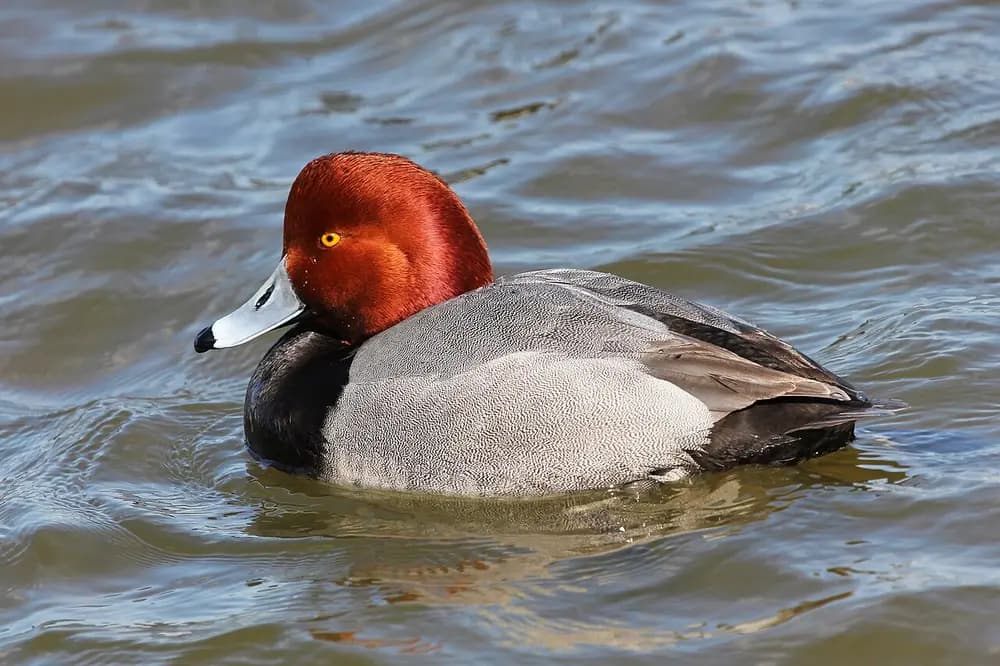
Canvasback vs redhead
The canvasback is often confused with its close relative the redhead, another North American diving duck with a reddish head on the male. A few features tell them apart.
| Trait | Canvasback | Redhead |
|---|---|---|
| Scientific name | Aythya valisineria | Aythya americana |
| Profile | Long, sloping, wedge-shaped head | Lacks the canvasback's sloping profile |
| Male's head | Chestnut red | Copper |
| Male's bill | Black | Pale blue with a black tip |
| Male's eyes | Red | Yellow |
| Male's back and sides | White with fine canvas-like markings | Gray |
| Length | 48–56 cm (19–22 in) | 40–56 cm (16–22 in) |
Conservation status
The canvasback is listed as Least Concern on the IUCN Red List, assessed by BirdLife International in 2021. Its numbers have swung widely over the past century.
In the mid-1800s, canvasback was a prestigious dish at American banquets, and by the end of that century it had become scarce and expensive. The species was hunted heavily around the start of the 20th century. Federal hunting rules now limit the harvest. Low numbers in the 1980s put the canvasback on lists of special concern, but the population increased greatly in the 1990s and has since stabilized, though it remains below historic levels.
Habitat is now the main issue. Loss of nesting habitat has caused declines, and the species is especially vulnerable to drought and the draining of prairie wetlands. Loss of underwater plant beds in wintering areas such as Chesapeake Bay has also hurt. Because canvasbacks migrate long distances, protecting their key breeding and feeding wetlands is central to their conservation.
Where to see canvasback in the U.S.
6 zoos across 5 states
Find the closest one
Rank the 5 zoos holding canvasback by how far they are from you. Your location is used in your browser to sort this list and is never sent to us.
1 more zoo holds canvasback but has no coordinates on file yet, so it isn't ranked here. It's in the full list below.
Connecticut· 1
District of Columbia· 1
Massachusetts· 2
Missouri· 1
South Dakota· 1
AZAThe Association of Zoos and Aquariums. Accredited members have passed an independent inspection of animal care and welfare, safety, conservation and education, repeated every five years. Many smaller facilities never apply, so “not accredited” isn't a verdict on its own. What accreditation means · How we check this
Built from each zoo's own published animal list.
Canvasback: common questions
Why is it called a canvasback?
Because the male's white back has fine wavy markings that early settlers thought looked like canvas.
How big is a canvasback?
About 48 to 56 cm (19–22 in) long with a wingspan of 79 to 89 cm (31–35 in), weighing 0.86 to 1.59 kg (1.9–3.5 lb). It is North America's largest diving duck.
What do canvasbacks eat?
Mostly aquatic plants, especially wild celery and the tubers of sago pondweed. They also eat snails, clams and insect larvae.
How deep can a canvasback dive?
Usually 0.5 to 2 m (1.6–6.6 ft), but they can dive deeper than 9 m (30 ft) and stay under for 10 to 20 seconds.
How fast can a canvasback fly?
Up to about 90 km/h (56 mph) airspeed, making it one of the fastest ducks.
How long do canvasbacks live?
The oldest known wild canvasback was 22 years and 7 months old.
Where do canvasbacks live?
They breed in prairie potholes and northern wetlands from the western U.S. to Alaska and winter on coasts, bays and large lakes south to Florida and Mexico.
Is the canvasback endangered?
No. It is listed as Least Concern, though it depends on healthy prairie wetlands and underwater plant beds.