
Flamingos and wading birds in U.S. zoos
Wading birds are long-legged birds that feed in shallow water, wetlands and open plains: flamingos, cranes, storks, herons, egrets, ibises and spoonbills. They look alike but come from several unrelated lineages: flamingos are closest to grebes, while herons, ibises and spoonbills sit in the pelican order. Herons fly with the neck folded; cranes, storks and ibises fly with it outstretched.
Most widely held
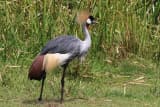 Grey Crowned CraneBalearica regulorumAt 32 zoos · Endangered
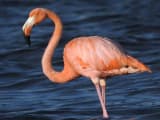 Caribbean FlamingoPhoenicopterus ruberAt 30 zoos · Least Concern
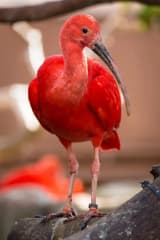 Scarlet IbisEudocimus ruberAt 27 zoos · Least Concern
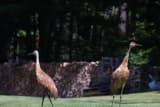 Sandhill CraneAntigone canadensisAt 25 zoos · Least Concern
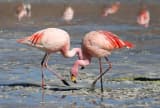 FlamingoPhoenicopteridaeAt 21 zoos
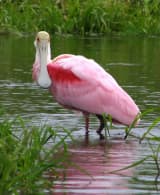 Roseate SpoonbillPlatalea ajajaAt 17 zoos · Least Concern
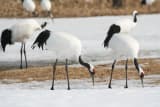 Red-crowned CraneGrus japonensisAt 13 zoos · Vulnerable
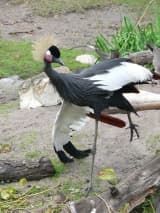 Black Crowned CraneBalearica pavoninaAt 12 zoos · Vulnerable
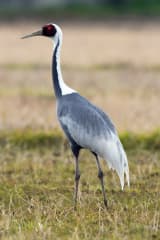 White-naped CraneAntigone vipioAt 12 zoos · Vulnerable
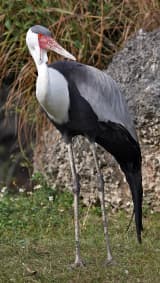 Wattled CraneBugeranus carunculatusAt 11 zoos · Vulnerable
 Black-crowned Night HeronNycticorax nycticoraxAt 10 zoos · Least Concern
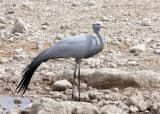 Blue CraneGrus paradiseaAt 10 zoos · Vulnerable
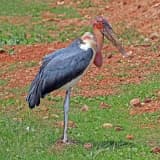 Marabou StorkLeptoptilos crumeniferAt 10 zoos · Least Concern
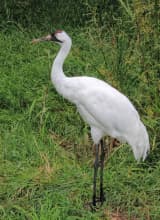 Whooping CraneAntigone americanaAt 10 zoos · Endangered
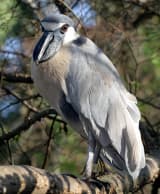 Boat-billed HeronCochlearius cochleariusAt 9 zoos · Least Concern
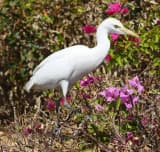 Cattle EgretBubulcus ibisAt 9 zoos · Least Concern
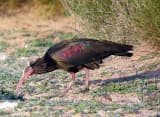 Northern Bald IbisGeronticus eremitaAt 9 zoos · Endangered
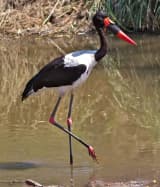 Saddle-billed StorkEphippiorhynchus senegalensisAt 9 zoos · Least Concern
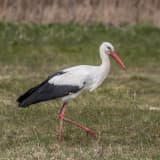 White StorkCiconia ciconiaAt 9 zoos · Least Concern
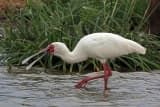 African SpoonbillPlatalea albaAt 8 zoos · Least Concern
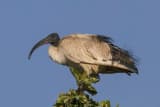 Sacred IbisThreskiornis aethiopicusAt 8 zoos · Least Concern
 Hadada IbisBostrychia hagedashAt 7 zoos · Least Concern
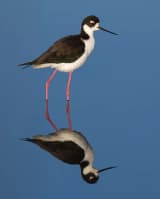 Black-necked StiltHimantopus mexicanusAt 6 zoos · Least Concern
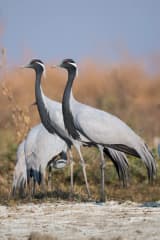 Demoiselle CraneAnthropoides virgoAt 6 zoos · Least Concern
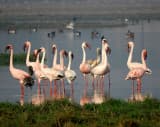 Lesser FlamingoPhoeniconaias minorAt 6 zoos · Near Threatened
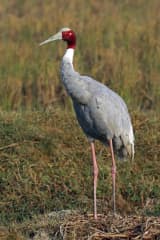 Sarus CraneAntigone antigoneAt 6 zoos · Vulnerable
Lookalikes from different families
Long legs, long necks and a habit of wading have evolved several times, so this group is defined by lifestyle rather than ancestry. Flamingos are most closely related to grebes. Cranes belong to a separate order, Gruiformes. Storks form their own order, while herons, ibises and spoonbills have been moved to the order that holds the pelicans. In North America "wader" may refer to these long-legged birds, while in Europe the word means sandpipers and other shorebirds.
The easiest field mark is the neck in flight. Herons fold the neck into a tight S-shape when flying; cranes, storks, ibises and spoonbills fly with it stretched straight out. Ibises have long, downcurved bills for probing mud, while the roseate spoonbill has a flat, spoon-shaped bill.
Flamingos
Flamingos form a single family of six species: four in the Americas and two in Africa and Eurasia. They filter-feed with the bill held upside down, straining brine shrimp, blue-green algae, insect larvae and small molluscs through comb-like lamellae. Their pink comes from carotenoid pigments in that food, and well-fed birds are the brightest. The Caribbean flamingo is the only flamingo native to North America, and the lesser flamingo is the smallest species. Flamingos live in colonies that can number in the thousands.
Cranes, storks, herons and ibises
Cranes are often considered the tallest flying birds. Most are gray or white with red bare skin on the face, but the crowned cranes, such as the grey crowned crane, wear golden feather crowns. Cranes are known for elaborate mating dances.
Storks are heavy birds that soar on rising warm air to save energy, and they communicate at the nest by clattering their bills. The marabou stork is often credited with the largest wingspan of any land bird. Herons usually stand still and wait for prey; the boat-billed heron is a nocturnal hunter with a broad, scoop-like bill. The scarlet ibis gets its color from a diet rich in crustaceans.
Wetlands under pressure
Many cranes depend on wetlands and grasslands, and most nest in shallow marshes. Most crane species are classified as threatened or worse, and the whooping crane fell to just 21 wild birds by 1941 after hunting and wetland loss. Hunting bans, habitat protection and captive breeding have brought it back from that low, and its plight inspired some of the first U.S. laws protecting endangered species.
The northern bald ibis lost 98% of its population between 1900 and 2002. Protection in Morocco helped numbers grow enough for it to move from Critically Endangered to Endangered in 2018.
Common questions
Why are flamingos pink?
Flamingos get their pink to red color from carotenoid pigments in their food, such as algae and small crustaceans. Chicks hatch greyish, and a pale adult is usually unhealthy or underfed.
Why do flamingos stand on one leg?
No one knows for certain. One theory is that it saves body heat while wading in cold water, but flamingos also do it in warm water.
How do you tell a crane from a heron?
Watch them fly: cranes fly with the neck stretched straight out, while herons fold the neck into a tight S-shape. Herons also tend to stand still and wait for prey, while cranes walk slowly as they forage.
What is the tallest flying bird?
Cranes are often considered the world's tallest flying birds. The sarus crane can reach 176 cm (69 in) in length, and the red-crowned crane is the heaviest crane, at up to 12 kg (26 lb).
What is a group of flamingos called?
A group of flamingos is called a flamboyance or a stand.
Are cranes endangered?
Most crane species have been affected by human activity and are classified as threatened or worse. The plight of the whooping crane inspired some of the first U.S. laws to protect endangered species.
What is the difference between an ibis and a spoonbill?
Both belong to the same family. Ibises have long, downcurved bills for probing mud, while spoonbills have a flat, spoon-shaped tip to the bill.
Sources
- Flamingo — Wikipedia
- Crane (bird) — Wikipedia
- Heron — Wikipedia
- Stork — Wikipedia
- Ibis — Wikipedia
- Wader — Wikipedia
Last reviewed