- Where to see one
- 17 U.S. zoos in our directory hold gopher tortoise, confirmed against each zoo's own animal list.
- Native range
- Southeastern United States
- Size
- Carapace length usually 6 to 11 in (15 to 28 cm), up to a maximum of 17.32 in (44.0 cm); body mass averages 4 kg (8.8 lb), ranging 2–6 kg (4.4–13.2 lb)
- Lifespan
- More than 40 years; the oldest known living individual, Gus, is 104 as of 2026
Conservation status
IUCN Red List category VU — step 3 of 7.
Vulnerable (VU), per the current IUCN listing; also described elsewhere as critically endangered, with some groups recommending reclassification as endangered
About the gopher tortoise
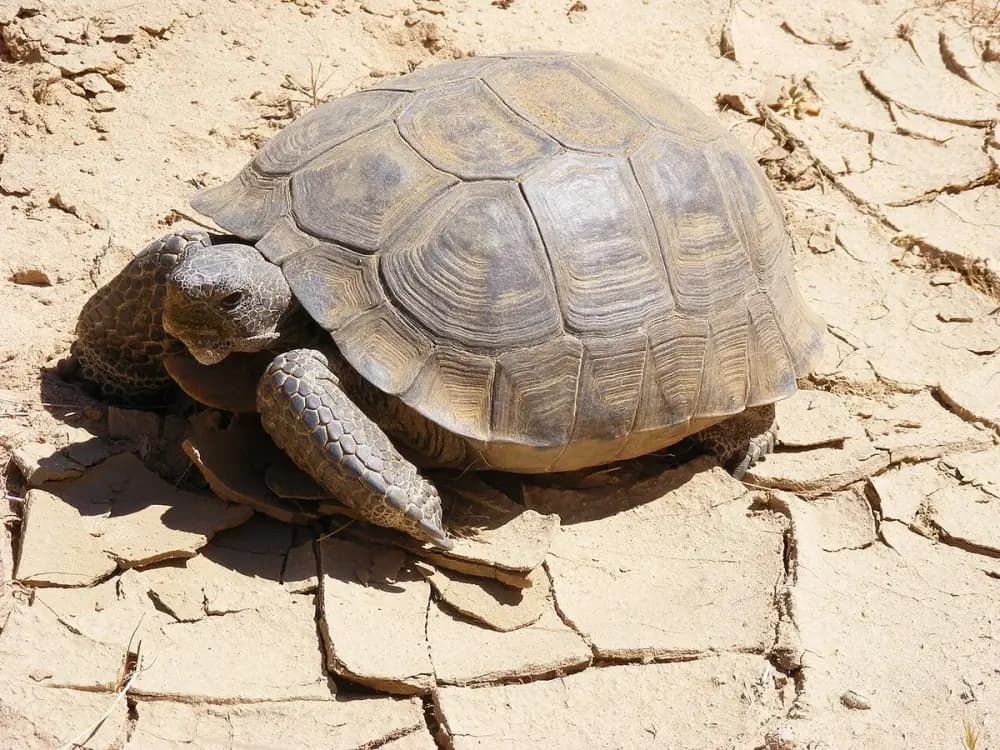
The gopher tortoise is a species of tortoise in the family Testudinidae, native to the Southeastern United States. It belongs to the genus Gopherus, the only tortoise genus native to North America, and it holds an official distinction in two states: it is the state reptile of Georgia and the state tortoise of Florida. Its common name, like that of the genus, comes from its habit of digging large, deep burrows resembling those of gophers, while its species name, polyphemus, references the cave-dwelling giant of Greek mythology.
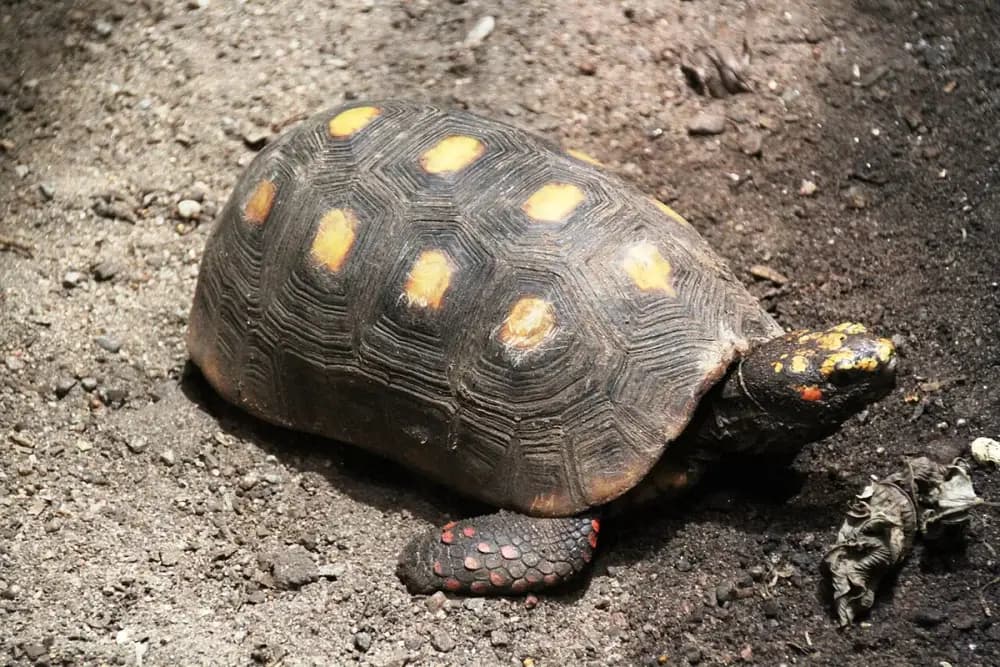
Physically, the gopher tortoise is built for burrowing. Its forefeet are well adapted for digging, its hind feet are elephantine, and scales on the front legs protect it while it burrows. The shell and skin are dark brown to gray-black, with a yellow plastron (bottom shell) and a gular projection at the front of the plastron, beneath where the head emerges. The species shows sexual dimorphism: males have a concave plastron and a longer gular projection than females, whose plastron is flat. Straight carapace length in adults usually runs 6 to 11 in (15 to 28 cm), with a maximum recorded length of 17.32 in (44.0 cm); the carapace is at least twice as long as it is tall. Body mass averages 4 kg (8.8 lb), typically ranging from 2 to 6 kg (4.4 to 13.2 lb). The gopher tortoise is the only living species of its genus found east of the Mississippi River.
The species is considered a keystone species because its burrows provide shelter for a huge range of other animals — at least 360 species by one estimate. These burrows average 15 feet (4.6 m) long and 6.5 feet (2.0 m) deep, though they can extend up to 48 feet (15 m) long and 9.8 feet (3.0 m) deep depending on sand depth and the water table, and they shelter tortoises from summer heat, winter cold, fire, and predators.
Behavior and diet
Diet
Herbivore; broad-leaved and regular grass, wiregrass, legumes, and fruit
Gopher tortoises are herbivorous scavengers and opportunistic grazers with a remarkably broad diet — more than 300 plant species have been recorded in their feeding, dominated by broad-leaved grass, regular grass, wiregrass, and terrestrial legumes, along with shoots, stems, leaves, pine needles, mushrooms, and fruits such as gopher apple, pawpaw, blackberries, and saw palmetto berries. A small share of the diet consists of fungi, lichens, carrion, bones, insects, and feces, eaten more often by females around nesting time. Juveniles favor protein-rich legumes over tougher, more fibrous grasses. Because tortoises get most of their water from food, they rarely drink standing water except during extreme drought, and during wetter seasons they may shift toward a more fruit-heavy diet for its sugar and easily digestible carbohydrates.
Gopher tortoises spend up to 80 percent of their time in their burrows, and each individual maintains several burrows across a home range of about 4 acres (16,000 m²). Outside of the breeding season they are largely solitary, though they show more social structure than most tortoises, living in loosely organized colonies and communicating through chemical signals secreted from a gland on the chin. They usually stay within about 100 m while foraging but can travel up to 2 miles when searching for a new burrow site, with activity rising in the warmer spring and summer months.
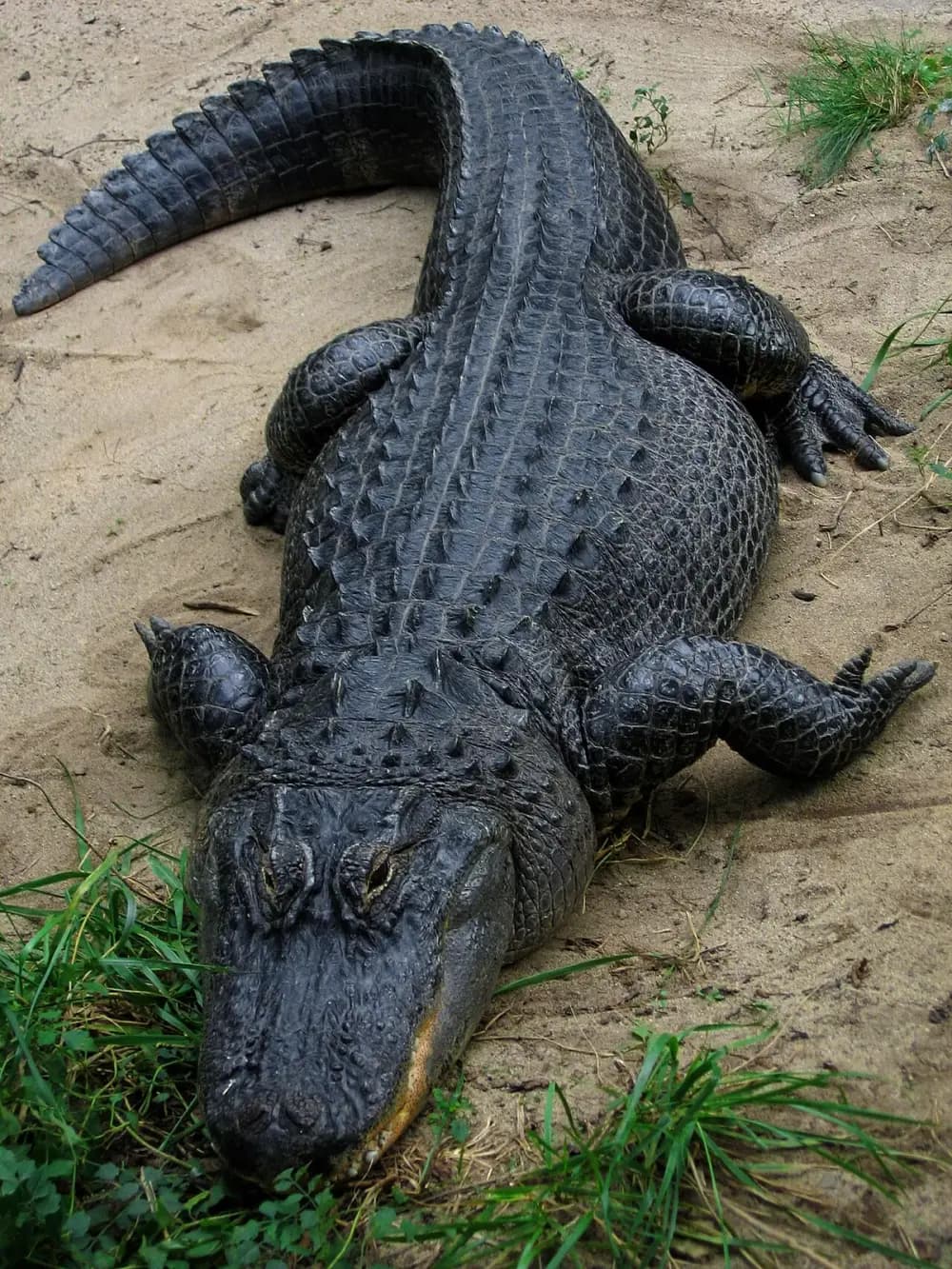
Breeding season runs roughly from February through September, peaking in May and June, with courtship rituals preceding mating. Females lay one clutch per year, typically 3 to 14 eggs, though clutches of up to 25 have been recorded, laid in a sandy mound near the burrow entrance; clutch size rises with female body size and with warmer temperatures, which help trigger the hormonal process behind yolk formation. Eggs incubate underground for 70 to 100 days, with incubation temperature determining sex: eggs above 30°C (86°F) produce females, those below produce males. About 90 percent of clutches fall to predators such as armadillos, raccoons, foxes, skunks, and alligators before hatching, and fewer than 6 percent of eggs produce tortoises that survive at least a year. Hatchlings measure 1 to 2 in (2.5 to 5.1 cm) in carapace length, and tortoises do not reach sexual maturity until roughly 9 to 21 years of age.
Range and habitat
Habitat
Longleaf pine savannas and other sandy, well-drained upland habitats
The gopher tortoise is native to the Southeastern United States, where it is closely tied to longleaf pine savannas and other sandy, well-drained upland habitats that support extensive burrowing. Within this range, males and females can travel up to about 500 m (1,600 ft) to visit one another during the spring breeding period, and larger males typically dig their burrows near those of females. The species is federally listed as "threatened" west of the Mobile and Tombigbee Rivers in Alabama, Mississippi, and Louisiana, while its status in the rest of its range east of those rivers has gone through repeated regulatory review without a formal federal listing being finalized as of the most recent 2022 decision.
Conservation status
The gopher tortoise's conservation status carries some genuine complexity. The current IUCN Red List entry lists the species as Vulnerable (VU), though that assessment has not been updated since 1996, and in 2018 the IUCN Tortoise and Freshwater Turtle Specialist Group recommended reclassifying it, along with the other Gopherus species, from vulnerable to endangered; NatureServe, meanwhile, continues to rate it as Vulnerable. Under the U.S. Endangered Species Act, the western population (in Alabama, Mississippi, and Louisiana, west of the Mobile and Tombigbee Rivers) has been listed as threatened since 1987. The eastern population has a longer, unresolved regulatory history: proposed for listing in 2009, found in 2011 to warrant listing as threatened but placed on a candidate list due to funding constraints, and ultimately determined in October 2022 not to warrant listing at that time.
The species faces five main threats, as described by the University of Florida's Conservation Clinic: habitat loss to development, habitat loss from poor land management, human demand for tortoises as pets or food, disruption from relocation efforts, and disease linked to relocation. Because so many other species depend on gopher tortoise burrows — including the eastern indigo snake, gopher frog, and Florida mouse, several of which carry their own protected status — conservation efforts aimed at the tortoise also protect this wider community. Mitigation measures include roadside exclusion fencing, such as installations along Mississippi's State Route 63, which had no reported roadside tortoise deaths as of 2003, and head-start and release programs, such as one in Georgia's Yuchi Wildlife Management Area that tracked 145 released tortoises with generally high site fidelity. Florida has also made it illegal to paint a gopher tortoise's shell, since paint can interfere with its ability to process vitamins from sunlight.
Where to see gopher tortoise in the U.S.
17 zoos across 11 states
Find the closest one
Rank the 17 zoos holding gopher tortoise by how far they are from you. Your location is used in your browser to sort this list and is never sent to us.
Connecticut· 1
Florida· 5
Georgia· 1
Kentucky· 1
Louisiana· 1
Maryland· 1
Minnesota· 1
Mississippi· 2
New York· 1
Ohio· 1
Pennsylvania· 2
AZAThe Association of Zoos and Aquariums. Accredited members have passed an independent inspection of animal care and welfare, safety, conservation and education, repeated every five years. Many smaller facilities never apply, so “not accredited” isn't a verdict on its own. What accreditation means · How we check this
Built from each zoo's own published animal list.
Gopher Tortoise: common questions
Is the gopher tortoise endangered?
It is currently listed as Vulnerable by the IUCN, though that assessment dates to 1996, and specialists have since recommended reclassifying the species as endangered; in the U.S., its western population is federally listed as threatened.
How big does a gopher tortoise get?
Carapace length usually runs 6 to 11 in (15 to 28 cm), up to a maximum of 17.32 in (44.0 cm), with body mass averaging 4 kg (8.8 lb).
What does a gopher tortoise eat?
Mostly grasses, wiregrass, and legumes, along with fruits such as blackberries, pawpaw, and saw palmetto berries, plus small amounts of fungi, carrion, and insects.
How long do gopher tortoises live?
More than 40 years; the oldest known living individual, a tortoise named Gus, is 104 years old as of 2026.
Where do gopher tortoises live in the wild?
Across the Southeastern United States, in longleaf pine savannas and other sandy upland habitats where they can dig extensive burrows.
Which U.S. zoos have gopher tortoises?
Our directory lists 9 zoos with gopher tortoises, including Lion Country Safari in Florida, the Cincinnati Zoo and Botanical Garden, and the Buffalo Zoo.