
Bears in U.S. zoos
Bears are the family Ursidae, a group of large carnivorans with only eight living species, found across North America, South America and Eurasia. They walk on flat, plantigrade feet with five non-retractile claws, have an exceptional sense of smell, and most are omnivores. Six of the eight species are listed as Vulnerable or Endangered.
Most widely held
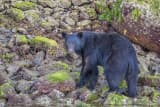 American Black BearUrsus americanusAt 71 zoos · Least Concern
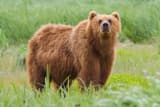 Grizzly bearUrsus arctosAt 28 zoos · Least Concern
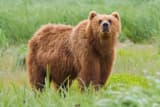 Brown BearUrsus arctosAt 16 zoos · Least Concern
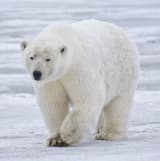 Polar BearUrsus maritimusAt 15 zoos · Vulnerable
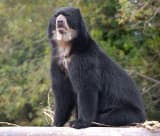 Andean BearTremarctos ornatusAt 13 zoos · Vulnerable
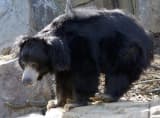 Sloth BearMelursus ursinusAt 11 zoos · Vulnerable
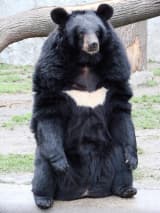 Asiatic Black BearUrsus thibetanusAt 6 zoos · Vulnerable
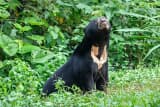 Sun BearHelarctos malayanusAt 6 zoos · Vulnerable
What makes a bear a bear
Bears share large bodies on stocky legs, long snouts, small rounded ears, shaggy hair and short tails. Unlike most other land carnivorans they are plantigrade, walking on the whole sole of the foot, and each paw has five non-retractile claws. They are the only carnivorans without touch-sensitive whiskers on the muzzle, but their sense of smell is better than a dog's and lets them find carcasses several kilometers away.
Apart from courting pairs and mothers with cubs, bears are typically solitary. Despite their heavy build they are good runners, climbers and swimmers. Bears of northern regions hibernate, and during that time they can go the whole period without eating or drinking.
Eight species, very different diets
The family's diets stretch from meat to bamboo. The polar bear of the Arctic is mostly carnivorous and lives largely on seals, especially ringed seals. The brown bear of Eurasia and North America eats roughly 90 percent plant material, though coastal populations feed heavily on spawning salmon. The Andean bear, also called the spectacled bear, is mostly herbivorous and is the only bear native to South America.
Two Asian species have turned to insects. The sloth bear has long, mobile lips and no upper incisors, a combination that turns its mouth into a vacuum for termites and ants. The sun bear, the smallest bear, uses its long tongue to lick up insects and honey and is the most tree-dwelling of all bears.
Telling the bears apart
Chest marks help with several species. The Asiatic black bear is called the moon bear for the pale crescent on its chest, the sun bear carries an orange to cream crescent, and most sloth bears show a whitish Y or V. The Andean bear's pale face markings can look like spectacles.
In North America, the grizzly bear and the American black bear share much of their range. Brown bears, including grizzlies, carry a muscular hump at the top of the shoulders that adds digging power and that black bears lack. Fur color is no reliable guide, since grizzlies alone run from nearly black to nearly white.
Conservation picture
The IUCN lists six of the eight bear species as Vulnerable or Endangered, including the polar, sloth, sun, Andean and Asiatic black bears. Even species of Least Concern, such as the brown bear, are at risk of disappearing from some countries. The main pressures are encroachment on habitat and illegal trade in bear parts, including the Asian bile bear market. The IUCN Red List explains how these categories are assigned.
Common questions
How many species of bears are there?
There are eight living bear species. They are the giant panda, the spectacled or Andean bear, and six species in the subfamily Ursinae, including the brown, American black, Asiatic black, polar, sloth and sun bears.
What is the largest bear?
The polar bear is considered the largest living bear species, with adult males weighing 350–700 kg (770–1,540 lb). The smallest is the sun bear, at 25–65 kg (55–143 lb).
What is the difference between a grizzly bear and a brown bear?
A grizzly is a brown bear. The grizzly, or North American brown bear, is a population or subspecies of the brown bear, Ursus arctos.
How do you tell a grizzly from a black bear?
Look at the shoulders and face. Grizzlies have a pronounced muscular shoulder hump and a dished facial profile with short, rounded ears, while American black bears lack the hump and have a straighter profile and longer ears.
Do all bears hibernate?
Not all of them. Most bear species den through winter for up to 100 days, and bears of northern regions, such as the American black bear and the grizzly, hibernate, often going the whole period without eating or drinking.
Are bears carnivores?
Bears belong to the order Carnivora, but most eat a mixed diet. The polar bear is mostly carnivorous and the giant panda mostly herbivorous, while the other six species are omnivores.
Sources
Last reviewed