
Monkeys in U.S. zoos
Monkeys are the simian primates other than apes, split into two groups: New World monkeys of Central and South America, such as tamarins, capuchins and howlers, and Old World monkeys of Africa and Asia, such as baboons, macaques and colobus. Many live in trees, and most are active by day.
Most widely held
 Black-handed Spider MonkeyAteles geoffroyiAt 41 zoos · Endangered
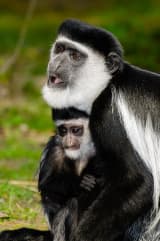 Black-and-white ColobusColobus guerezaAt 39 zoos · Least Concern
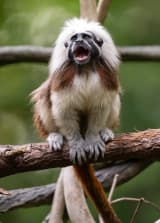 Cotton-top TamarinSaguinus oedipusAt 34 zoos · Critically Endangered
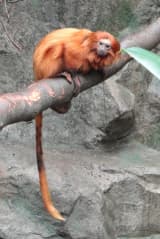 Golden Lion TamarinLeontopithecus rosaliaAt 29 zoos · Endangered
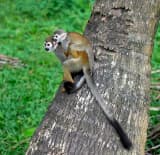 Squirrel MonkeySaimiri sciureusAt 27 zoos · Least Concern
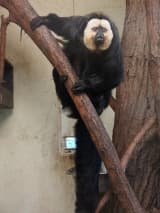 White-faced SakiPithecia pitheciaAt 22 zoos · Least Concern
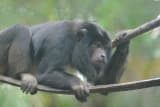 Black Howler MonkeyAlouatta carayaAt 19 zoos · Near Threatened
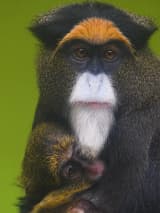 De Brazza's MonkeyCercopithecus neglectusAt 13 zoos · Least Concern
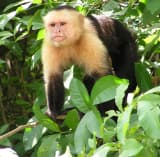 Capuchin MonkeyCebinaeAt 11 zoos
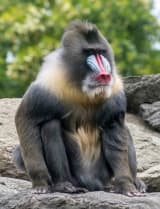 MandrillMandrillus sphinxAt 11 zoos · Vulnerable
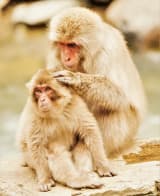 Japanese MacaqueMacaca fuscataAt 10 zoos · Least Concern
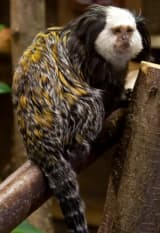 Geoffroy's MarmosetCallithrix geoffroyiAt 9 zoos · Least Concern
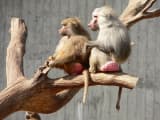 Hamadryas BaboonPapio hamadryasAt 9 zoos · Least Concern
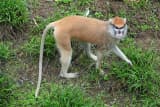 Patas MonkeyErythrocebus patasAt 9 zoos · Near Threatened
 Emperor TamarinSaguinus imperatorAt 8 zoos · Least Concern
 Golden-headed Lion TamarinLeontopithecus chrysomelasAt 7 zoos · Endangered
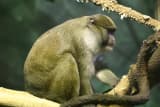 Allen's Swamp MonkeyAllenopithecus nigroviridisAt 6 zoos · Least Concern
 Bolivian Gray Titi MonkeyPlecturocebus donacophilusAt 6 zoos · Least Concern
What counts as a monkey
"Monkey" is a common name rather than a single scientific group. It covers the simians, the primate branch that also includes apes, minus the apes themselves. Lemurs, lorises, galagos and tarsiers are primates but not monkeys. Monkeys range in size from the pygmy marmoset, at just over 100 g (3.5 oz), to the male mandrill, which can weigh up to 36 kg (79 lb).
Many monkey species live in trees, and most are active during the day. Some spend most of their time on the ground, such as the baboons. The hamadryas baboon lives in harems of one male and up to ten females that combine into clans, bands and troops sharing sleeping cliffs.
New World or Old World: how to tell
New World monkeys, from Central and South America, reached South America tens of millions of years ago, probably by crossing the ocean. Their nostrils face sideways, and most have long tails. In the howler and spider monkey family, and in the capuchins, the tail is prehensile and can grip branches. The black-handed spider monkey uses its tail as a fifth limb, and the black howler monkey has a bare patch on the underside of its tail that improves grip.
Old World monkeys, from Africa and Asia, have nostrils that point downward and tails that cannot grip, or no visible tail at all. They also see color the way humans do, while New World monkeys vary. The black-and-white colobus eats mostly leaves, digested in a large, multi-chambered stomach, and has only a vestigial thumb. The patas monkey of the African savanna is the fastest runner of any primate, at up to 55 km/h (34 mph).
Tools, troops and tamarins
Some monkeys solve problems in striking ways. The capuchin monkey is the only New World primate that regularly uses tools in the wild, cracking nuts with stone hammers, a practice dating back at least 3,000 years. The Japanese macaque, the northernmost non-human primate, is known for bathing in hot springs in winter.
Tamarins and marmosets are small monkeys, and the pygmy marmoset is the smallest of all. The golden lion tamarin, with its fiery mane, weighs around 620 g (1.37 lb) and comes from Brazil's Atlantic coastal forests, and the cotton-top tamarin from a small area of northwestern Colombia.
Conservation pressures
Primates as a whole are in trouble: about 60% of species are threatened with extinction, including 36% in South and Central America, 37% in Africa and 73% in Asia. In Central and South America, forest fragmentation and hunting are the two main problems, and large unbroken forests are now rare in Central America. Monkeys that raid crops are often persecuted, which can work against efforts to protect endangered species.
The cotton-top tamarin is listed as Critically Endangered, with fewer than 6,000 left in the wild. The golden lion tamarin shows what recovery can look like: from a few hundred animals it has grown to roughly 4,800, helped by the reintroduction of zoo-born tamarins and reforestation that reconnects isolated patches of habitat.
Common questions
What is the difference between New World and Old World monkeys?
New World monkeys live in Central and South America, have nostrils that face sideways and mostly long tails, some of them prehensile. Old World monkeys live in Africa and Asia, have downward-facing nostrils and tails that cannot grip, or no visible tail.
What is the largest monkey?
The mandrill is the largest monkey; a male can be almost 1 m (3 ft 3 in) long and weigh up to 36 kg (79 lb). The smallest is the pygmy marmoset, at just over 100 g (3.5 oz).
Is an ape a monkey?
Traditionally no: apes such as gibbons, orangutans, gorillas and chimpanzees are counted separately. In evolutionary terms, though, apes branched off within the Old World monkey lineage, so some scientists group them with monkeys.
Are lemurs monkeys?
No. Lemurs, lorises and galagos are strepsirrhine primates, and tarsiers are also not monkeys.
Which monkeys have prehensile tails?
Only some New World monkeys: the howler, spider, woolly and woolly spider monkeys, plus the capuchins. No Old World monkey has a gripping tail.
What do monkeys eat?
Diets vary by species but can include fruit, leaves, seeds, nuts, flowers, eggs and small animals such as insects and spiders. Some, like the colobus monkeys, eat mostly leaves.
What is a group of monkeys called?
A group of monkeys is commonly called a troop or a tribe.
Sources
Last reviewed