
Marine mammals in U.S. zoos
Marine mammals are mammals that rely on the ocean for their existence, a diverse group of 129 species that includes whales and dolphins, seals and sea lions, manatees and dugongs, sea otters and polar bears. Their dependence on the sea varies: whales never leave the water, seals breed on land, and polar bears hunt from sea ice.
Most widely held
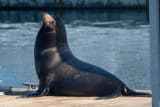 California Sea LionZalophus californianusAt 18 zoos · Least Concern
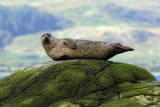 Harbor SealPhoca vitulinaAt 15 zoos · Least Concern
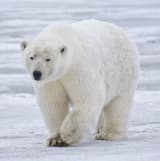 Polar BearUrsus maritimusAt 15 zoos · Vulnerable
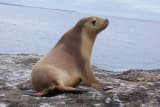 Sea LionOtariidaeAt 6 zoos
A group defined by the sea
Marine mammals are not a single family but several unrelated lineages that took to the ocean: cetaceans (whales and dolphins), pinnipeds (seals, sea lions and the walrus), sirenians (manatees and dugongs), sea otters and marine otters, and the polar bear. How far they have adapted varies. Cetaceans and sirenians are fully aquatic, pinnipeds spend most of their time in water but return to land to mate, breed and molt, and the polar bear is mostly terrestrial.
Seals and sea lions
Pinnipeds are fin-footed carnivores in three families: the walrus, the eared seals (sea lions and fur seals) and the earless or true seals. Most prefer cold waters, and all keep warm with a layer of blubber. Five genera of sea lions are found on subarctic to tropical coasts in both hemispheres, everywhere except the northern Atlantic.
The two families move very differently. The California sea lion has visible ear flaps and large foreflippers that drive it through the water, and it can pull its hind flippers under its body to walk on land. The harbor seal, a true seal, has no visible ear flap and swims mainly with its hind limbs. Among pinnipeds, only eared seals and the walrus can use their hind limbs as legs on land.
What to look and listen for
Sound is a quick clue. The bark of the California sea lion is one of the best-known pinniped calls, and territorial males bark almost constantly in the breeding season. Harbor seals are more reserved vocally than many other pinnipeds. Harbor seal pups are born well developed and can swim and dive within hours of birth.
The polar bear has its own marine toolkit: large, furred paws for walking on ice and paddling, and small hooked claws for snatching prey and climbing onto ice. In the wild it hunts mainly ringed seals, often waiting motionless at a breathing hole for one to surface.
Conservation picture
About 23 percent of marine mammal species are threatened. Commercial hunting once caused steep declines in whales and seals; some species recovered after it ended, while others remain critically endangered. Habitat degradation also affects their ability to find food. The polar bear is listed as Vulnerable on the IUCN Red List, and climate change is shrinking the sea ice it needs for hunting. Harbor seals, by contrast, have returned to cleaned-up waters such as New York Harbor and Boston Harbor.
Common questions
What is the difference between a seal and a sea lion?
Sea lions are eared seals with visible external ears, and they can turn their hind flippers under the body to walk on land. True seals, such as the harbor seal, have no ear flaps and swim mainly with their hind limbs.
Is a polar bear a marine mammal?
Yes. The polar bear is counted as a marine mammal because it depends on Arctic sea ice and the ocean beneath it to hunt seals, although it is mostly terrestrial and much less adapted to life in water than whales or seals.
How many marine mammal species are there?
Marine mammals form a group of 129 species. Pinnipeds alone, the seals, sea lions and walrus, number 34 living species.
Why do sea lions bark?
The bark is the California sea lion's best-known call. Territorial males bark almost constantly during the height of the breeding season to hold their space.
How do seals stay warm in cold water?
Pinnipeds have a layer of fat called blubber under the skin, and every species except the walrus is also covered in fur.
Are marine mammals endangered?
About 23 percent of marine mammal species are currently threatened. Some, such as the northern elephant seal and gray whale, rebounded after commercial hunting ended, while others, such as the North Atlantic right whale, are critically endangered.
Sources
Last reviewed