- Where to see one
- 13 U.S. zoos in our directory hold macaw, confirmed against each zoo's own animal list.
- Native range
- Central America, Mexico, and South America; formerly the Caribbean
Conservation status
Not Evaluated
This species has not been assessed for the IUCN Red List, so it sits outside the threat scale entirely.
Varies by species; most are threatened in the wild and some are extinct
About the macaw
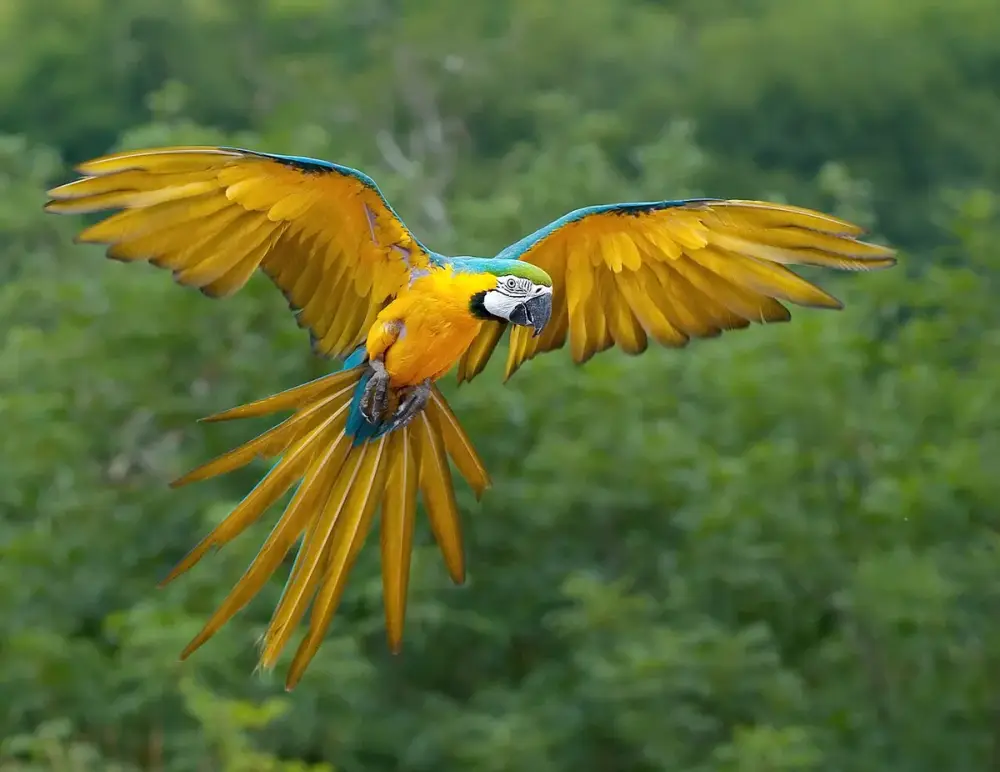
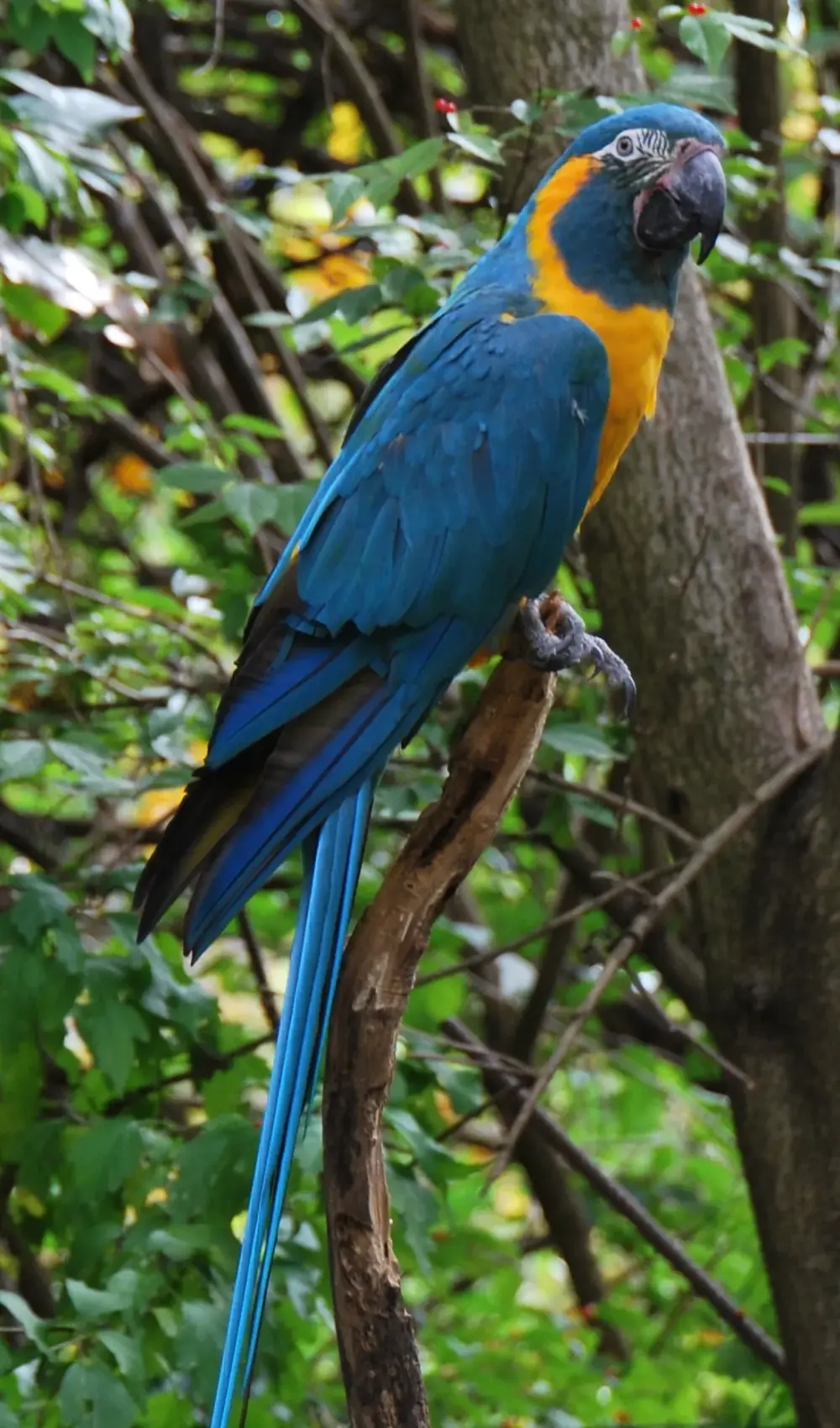
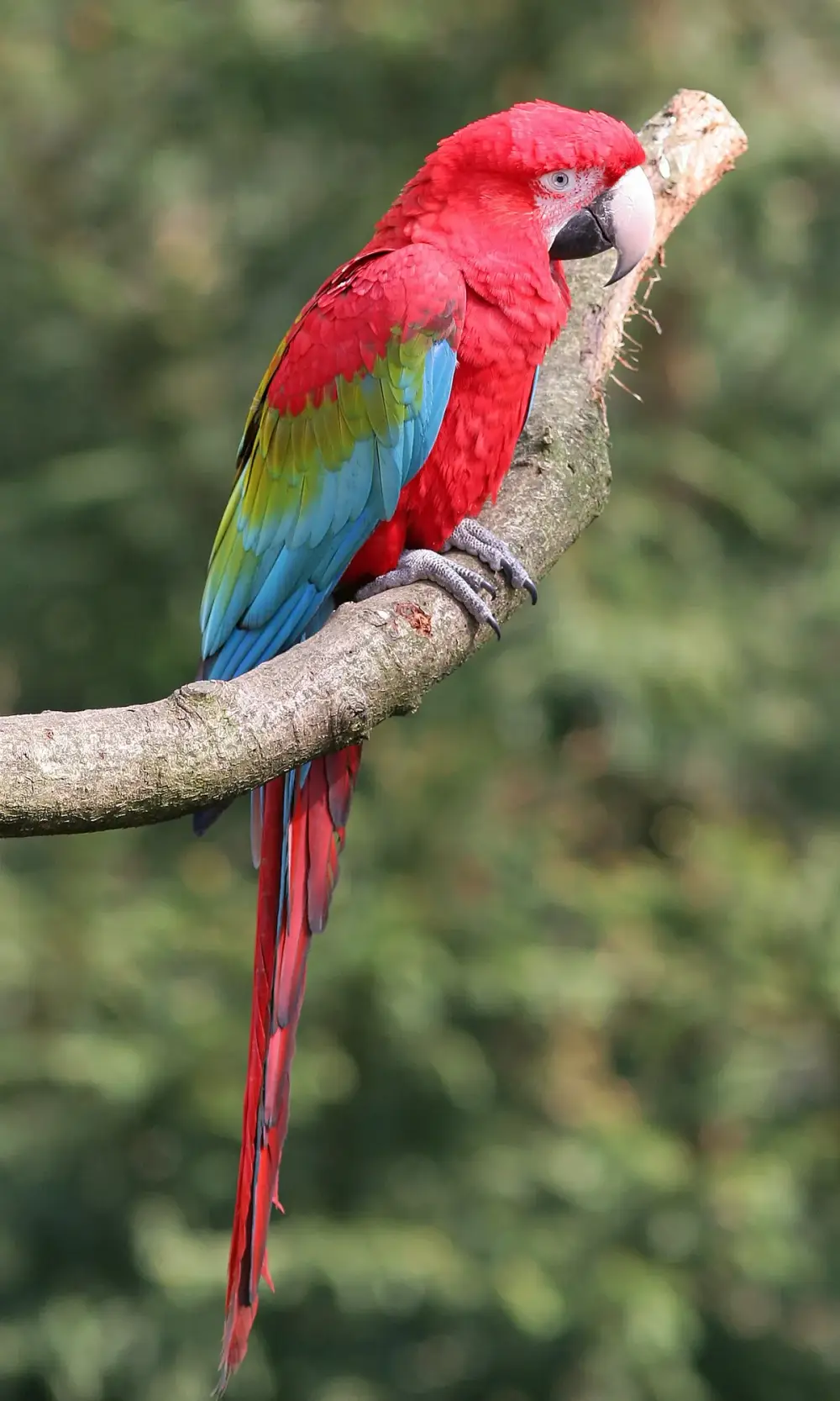
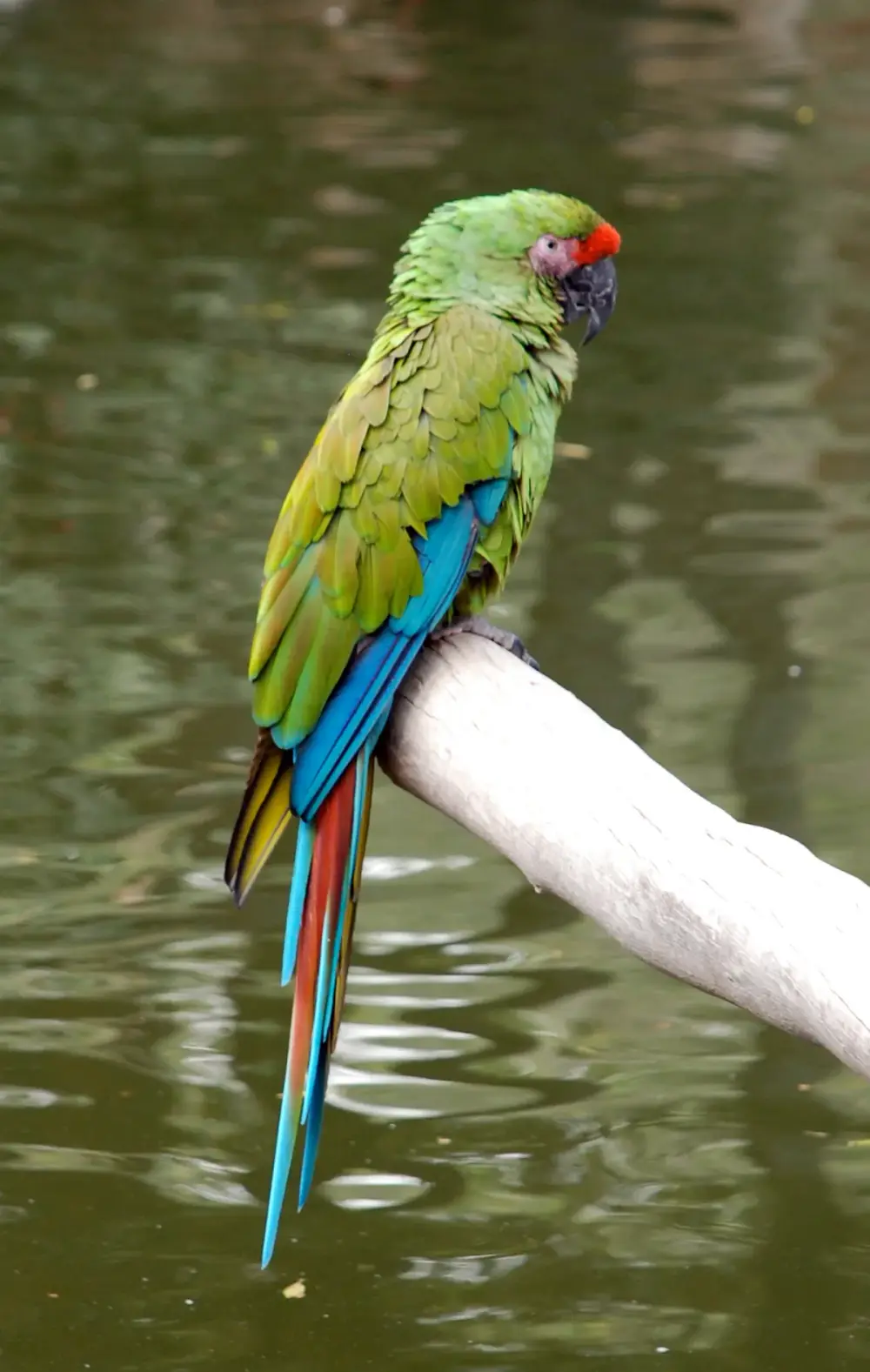
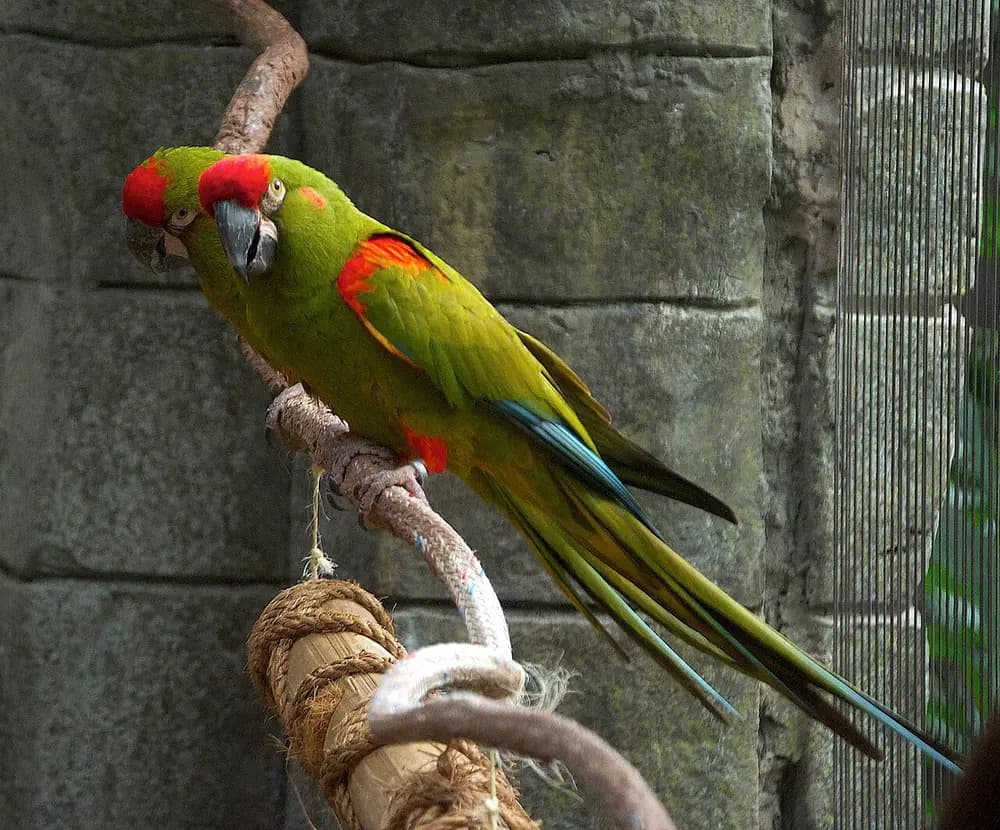
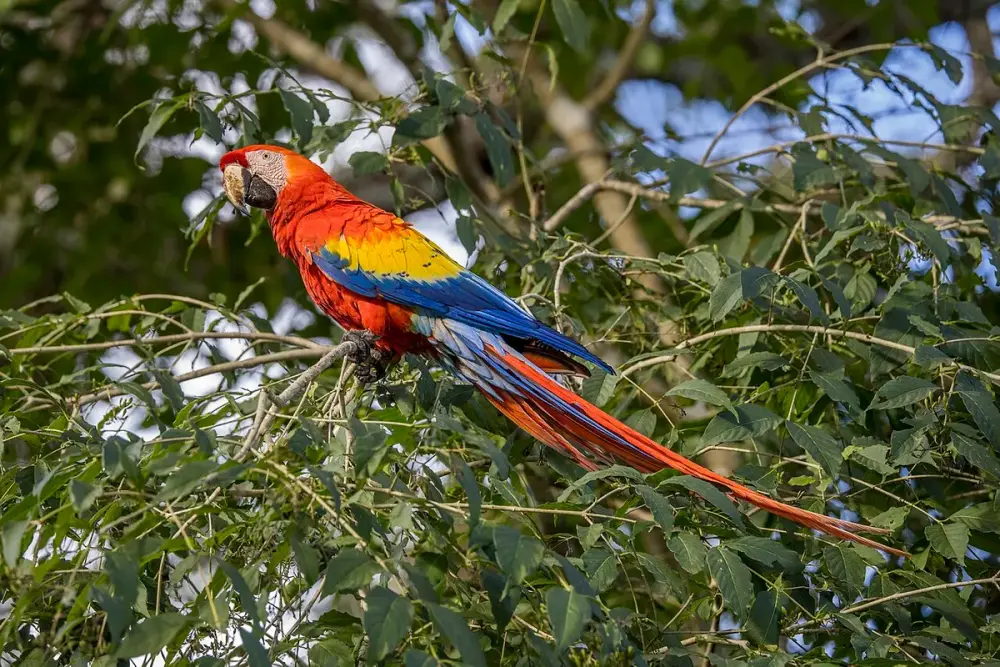
Macaws are a group of large New World parrots, long-tailed and often brilliantly colored, classified in the tribe Arini. Six genera are recognized as macaws — Ara, Anodorhynchus, Cyanopsitta, Primolius, Orthopsittaca, and Diopsittaca — and 19 species exist in total, counting extinct and critically endangered ones. The related thick-billed parrot is sometimes casually called a macaw, though it isn't considered one phylogenetically. Macaws are native to Central America, Mexico (the only part of North America where they occur), and South America, with a former range that included the Caribbean. Most species are tied to forest, though some prefer woodland or savanna-like habitat instead.
A handful of features set macaws apart from other parrots: proportionately large beaks, long tails, and areas of bare, light-colored facial skin — a facial patch pattern that is as individual to each bird as a fingerprint. In some species, including those in the genus Anodorhynchus, that bare patch shrinks to little more than a yellow ring around the eye and a second small patch near the base of the bill. Size varies enormously across the group: the hyacinth macaw, Buffon's (great green) macaw, and green-winged macaw are the largest macaws, while the mini-macaws — genera Cyanopsitta, Orthopsittaca, and Primolius — are considerably smaller. The smallest macaw of all, the red-shouldered macaw, is no bigger than some parakeets. Like other parrots, as well as toucans and woodpeckers, macaws are zygodactyl, meaning the first and fourth toes on each foot point backward.
Macaws and their feathers have drawn human attention for a very long time, especially in pre-Columbian civilizations such as the Inca, Wari, and Nazca, who prized the birds' bright plumage for ceremonial and burial use and wove their feathers into textiles like feathered panels and tabards. Genomic and isotopic analysis of ancient featherwork has since shown just how far that trade reached: during the Late Intermediate Period, coastal societies such as the Ychsma at the Pachacamac site in Peru acquired live macaws — including the scarlet macaw, the blue-and-yellow macaw, and the red-and-green macaw — and carried them across the Andes from wild populations in the Amazon Basin, keeping the birds alive on a coastal diet to guarantee a steady supply of feathers for elite funerary bundles. Centuries later, prehistoric peoples in the American Southwest kept macaws in dedicated "feather factories" for the same basic purpose.
Behavior and diet
Diet
Seeds, nuts, fruits, palm fruits, leaves, flowers, young shoots, and stems
In the wild, macaws eat a wide range of plant food: seeds, nuts, fruits, palm fruits, leaves, flowers, young shoots, and stems. Some of the larger species, including the blue-and-yellow macaw and the great green macaw, will forage over distances of more than 100 km (62 mi) in search of food that's only seasonally available.
One of the more striking macaw behaviors happens at clay licks along exposed river banks in the western Amazon, where hundreds of macaws and other parrots gather almost daily, except in rain, to eat clay. Some of what the birds eat in the wild contains toxic or caustic compounds, and one long-standing idea held that the clay neutralizes those toxins before they can do harm. Research led by Donald Brightsmith at the Tambopata Research Center in Peru complicated that story: the clays macaws actually choose to eat don't show a higher capacity to absorb toxins than clay from unused parts of the same river banks. Instead, the birds appear to prefer clays richer in sodium, an element that's naturally scarce more than 100 km from the ocean — which lines up with the fact that the largest, most species-rich clay licks are found on the western side of the Amazon Basin, farthest from any coast. Clay-lick use also rises during breeding season and peaks after eggs hatch, when parents feed clay heavily to nestlings, and a separate theory suggests the clay may serve as a source of vitamin B12 rather than, or in addition to, sodium.
In captivity, macaws are also commonly hybridized for the pet trade. An oversupply of female blue-and-yellow macaws in captivity — the reverse of the usual pattern, where males are more numerous — may explain why that species is the most frequently hybridized macaw. Known hybrids include the harlequin (a cross of the blue-and-yellow and green-winged macaws), the miligold (blue-and-yellow and military macaws), and the Catalina, also called the rainbow in Australia (blue-and-yellow and scarlet macaws).
Range and habitat
Habitat
Mostly forest, with some species in woodland or savanna-like habitat
Macaws are native to Central America, to Mexico within North America, and to South America, with a range that once extended into the Caribbean as well. Most species live in forest habitat, though some occupy woodland or savanna-like environments instead.
Conservation status
Macaws have no single conservation status, because the IUCN Red List assesses each species separately, and they range from common birds to species already gone from the wild. The blue-and-yellow macaw and scarlet macaw are Least Concern, the hyacinth macaw and military macaw are Vulnerable, and the blue-throated macaw and red-fronted macaw are Critically Endangered.
Most macaw species are now endangered in the wild, and a few are extinct or nearly so. The Spix's macaw is most likely extinct in the wild, and the glaucous macaw is probably extinct, with only two reliable sightings in the whole 20th century. Rapid deforestation and illegal trapping for the bird trade are the greatest threats.
International trade in every macaw species is regulated under CITES. Some, such as the scarlet macaw, are on Appendix I and cannot be traded commercially, while others, such as the red-shouldered macaw, are on Appendix II and can be traded only under export quotas and permits.
Where to see macaw in the U.S.
13 zoos across 10 states
Find the closest one
Rank the 10 zoos holding macaw by how far they are from you. Your location is used in your browser to sort this list and is never sent to us.
3 more zoos hold macaw but have no coordinates on file yet, so they aren't ranked here. They're in the full list below.
Alabama· 1
California· 2
Florida· 2
Illinois· 1
Indiana· 1
Louisiana· 1
Missouri· 1
Nebraska· 1
North Carolina· 2
Pennsylvania· 1
AZAThe Association of Zoos and Aquariums. Accredited members have passed an independent inspection of animal care and welfare, safety, conservation and education, repeated every five years. Many smaller facilities never apply, so “not accredited” isn't a verdict on its own. What accreditation means · How we check this
Built from each zoo's own published animal list.
Macaw: common questions
Is the macaw endangered?
Most macaw species are threatened in the wild, though some, like the scarlet macaw, are Least Concern. The Spix's macaw is most likely extinct in the wild and the glaucous macaw is probably extinct. Deforestation and illegal trapping are the biggest drivers.
What does a macaw eat?
Seeds, nuts, fruits, palm fruits, leaves, flowers, shoots, and stems; some species also travel to riverbank clay licks, likely for the sodium the clay provides.
Where do macaws live in the wild?
In forest, woodland, and savanna-like habitats across Central America, Mexico, and South America; the group formerly also occurred in the Caribbean.
Why do macaws eat clay?
Research at clay licks in Peru points to sodium, which is scarce far from the ocean, as the main draw, rather than the toxin-neutralizing role once assumed.
Which U.S. zoos have macaws?
Six U.S. zoos, including the San Diego Zoo, the Los Angeles Zoo, and the Indianapolis Zoo.