
Riverside Discovery Center
Scottsbluff, NE
- Admission
- $14
- Accreditation
- None listed
not accredited by the Association of Zoos and Aquariums
Everything below is directory information drawn from public sources and the zoo's own site.
Animals at Riverside Discovery Center
4 confirmedMammals3
Feathers & Fangs from visitors
What people who've been to Riverside Discovery Center say
A Feather is something this zoo does well; a Fang is something it gets wrong. Left by people who've been, and read by us before they appear.
Loading…
About Riverside Discovery Center
Riverside Discovery Center, formerly known as Riverside Park and Zoo, is a park and zoo complex along the North Platte River in Scottsbluff, Nebraska. It sits inside Riverside Park, the city's own park, which also includes three lakes with camping and recreation areas, a riverside trail along the North Platte, and more than 30 garden spots. Riverside Discovery Center is the only zoo in western Nebraska and, according to the Zoo, has been operating for 75 years, making it the second-oldest zoo in the state.
The Zoo describes its collection as more than 125 animals representing 50 or more species, organized into a series of named exhibit areas across the grounds. It is community-supported and operates as a nonprofit. As of September 2023, Riverside Discovery Center was not re-accredited by the AZA, so it is not currently an AZA-accredited facility.
History
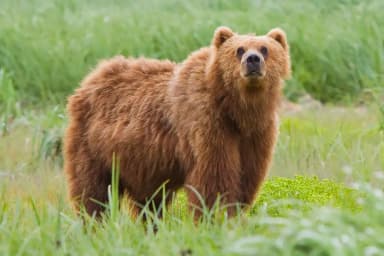
The site was directly in the path of the total solar eclipse of August 21, 2017. Later that year, on December 16, 2017, two brother grizzly bear cubs went on exhibit at the Zoo after a rescue effort: their mother had been illegally killed in Wyoming in the spring of that year, and after several months surviving on their own, the cubs became increasingly habituated to humans in search of food. Concerned about public safety and the cubs' welfare, state and federal wildlife officials decided to capture them rather than leave them in the wild, and Riverside Discovery Center offered to provide the cubs a permanent home.
Exhibits and habitats
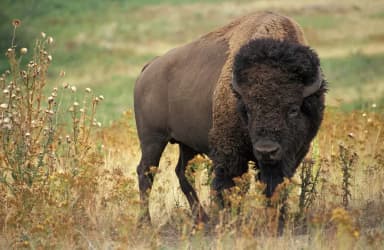
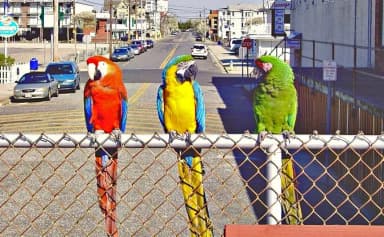
Riverside Discovery Center organizes its collection into distinct named areas. The North American Grasslands houses animals once common to the region's grasslands, including American bison. The Garden Walk includes tortoises and the blue-and-yellow macaw. The Slither Inn holds mostly education animals behind the scenes, such as bearded dragons, boa constrictors, and a Chinese water dragon. Raptor Row is home to a collection of birds of prey, including the bald eagle, turkey vulture, Swainson's hawk, red-tailed hawk, and rough-legged buzzard.
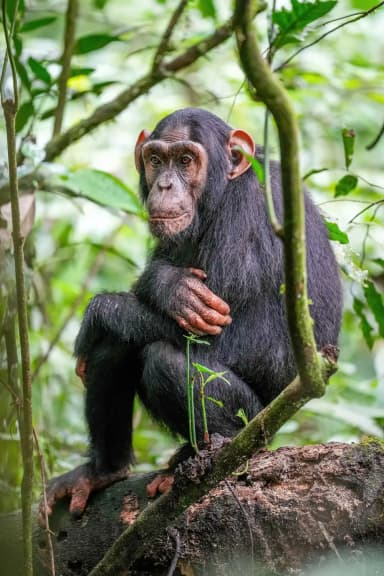
The Rainforest Discovery Center focuses on smaller rainforest species, including the Waldrapp ibis and squirrel monkey. The Chimpanzee Building houses the Zoo's chimpanzee alongside other animals such as ball pythons and leopard geckos. The Cat Complex is home to big cats and includes a hyena and bobcat, while the Primate Building holds a small primate collection including the Colombian spider monkey and red ruffed lemur. Zebra Circle houses zebra, swift fox, and muntjac, and the Children's Zoo features domestic animals such as donkeys, pot-bellied pigs, and Highland cattle. A pond area is home to trumpeter swans, and additional miscellaneous exhibits house animals including a grizzly bear, marbled fox, and porcupine.
Animal highlights
Riverside Discovery Center describes its collection as more than 125 animals representing 50 or more species, though the Zoo's own about page also describes the collection as "over 150 animals," so the exact current figure varies by page. Beyond the grizzly bear cubs, notable species include chimpanzees — the Zoo says it is the only zoo in Nebraska with chimpanzees — bald eagles, bison, macaws, and a range of reptiles and primates spread across its named exhibit buildings. The species pack for this page confirms bison, chimpanzee, grizzly bear, and macaw among the collection.
The Zoo's FAQ page separately highlights a brown bear, mountain lions, a tiger, a spotted hyena, spider monkeys, and red ruffed lemurs as rare and exciting species to see, and notes that keeper demonstrations sometimes feature the chimpanzees and bears together with staff talks. Visitors have also described feeding turkeys and peacocks that wander the grounds by hand, using food provided by the Zoo, and watching keeper-led encounters bring out smaller animals such as a baby porcupine, chinchilla, and opossum for guests to see up close.
Conservation and programs
Riverside Discovery Center takes part in the Species Survival Plan program for several species of imperiled wildlife on display. The Zoo lists its Species Survival Plan participation as including the Waldrapp ibis, robust black spider monkey, Reeve's muntjac, swift fox, and red ruffed lemur, among others, aimed at improving genetic variability within endangered and threatened captive populations.
Planning your visit
As listed on the Zoo's website, Riverside Discovery Center opens daily at 9:30 a.m. and closes at 4:30 p.m. in summer and 4 p.m. in winter. The Zoo says it is fully wheelchair accessible. Group admission rates are available for schools and community groups by contacting the front desk in advance.
The Zoo sits less than four miles from Scotts Bluff National Monument. Family activities on site include a playground, the Discovery Barn, and a seasonal splash pad. Weekly programming includes the Little Explorers Club, held every Wednesday and focused on teaching young children and their parents about a different species each week; the Zoo also offers internship and docent programs for those wanting more involvement.
Confirm current hours, admission prices, and accessibility details on the Zoo's official website before visiting.
What we haven't confirmed
Everything above came from public sources. These specifics we haven't stood behind yet:
- Current ticket prices
- Exact year the zoo opened
- Total acreage
- Parking availability and cost
- Phone number for general inquiries
- Average time needed for a visit
Riverside Discovery Center compared with nearby zoos
How Riverside Discovery Center lines up against the closest zoos we have details for — useful if you're deciding between them for the same day out.
| Zoo | Distance | Admission | Hours | Size | AZA |
|---|---|---|---|---|---|
| Riverside Discovery CenterThis zooScottsbluff, NE | — | $14 | Open every day at 9:30 AM. Summer: 9:30 AM – 4:30 PM (no entry after 4 PM). Winter: 9:30 AM – 4:00 PM (no entry after 3:30 PM). | — | No |
| Bear Country USARapid City, SD | 148 mi | $25 | Oct 1 – Nov 29, 2026: daily 9:00 AM, last entry 3:00 PM (park closes 1.5 hours after admissions gate closes). Drive-through park plus walk-through area. Closed Thanksgiving Day (Nov 26, 2026); may close in Oct–Nov for snow/weather. | 250 acres | No |
| Denver ZooDenver, CO | 160 mi | $27 | 9 am – 4 pm | 80 acres | Yes |
| Cheyenne Mountain ZooColorado Springs, CO | 222 mi | $34 | 9 am – 5 pm | 140 acres | Yes |
Distances are straight-line. A dash means we haven't confirmed that detail yet, not that the zoo lacks it.
AZAThe Association of Zoos and Aquariums. Accredited members have passed an independent inspection of animal care and welfare, safety, conservation and education, repeated every five years. Many smaller facilities never apply, so “not accredited” isn't a verdict on its own. What accreditation means · How we check this
Riverside Discovery Center: common questions
Is Riverside Discovery Center AZA accredited?
No. As of September 2023, it was not re-accredited by the AZA.
When did Riverside Discovery Center open?
The Zoo says it has been operating for 75 years, making it the second-oldest zoo in Nebraska, though an exact founding year was not given in the sources for this page.
How many animals and species does the Zoo have?
More than 125 animals representing 50 or more species, according to the Zoo.
What animals can visitors see?
Highlights include chimpanzees (the only ones at a Nebraska zoo), grizzly bears, bison, macaws, bald eagles, and a range of reptiles and primates across named exhibit buildings.
Is the Zoo wheelchair accessible?
Yes. The Zoo describes itself as fully accessible to visitors in wheelchairs.
Is there a discount for school or group visits?
Yes, group admission rates are available for schools and community groups that contact the front desk to book in advance.
What conservation work does the Zoo do?
It participates in Species Survival Plans for species including the Waldrapp ibis, robust black spider monkey, Reeve's muntjac, swift fox, and red ruffed lemur.
Something wrong here? Tell us — we correct in place, with a dated note.